


 English
 中文简体
中文简体 русский
 عربى
عربىDegradable Nonwoven: Materials, Specs, Testing & Use Cases
Content
- 1 What “Degradable Nonwoven” Means in Practice
- 2 Material Options for Degradable Nonwoven (and What They’re Good At)
- 3 Nonwoven Construction Choices That Drive Performance
- 4 Specification Checklist for Buying Degradable Nonwoven
- 5 Testing and Verification: How to Avoid “Degradable” Claims That Fail
- 6 Application Playbooks: Matching Degradable Nonwoven to Use Cases
- 7 Step-by-Step: How to Qualify a Degradable Nonwoven Supplier
- 8 Common Pitfalls and How to Prevent Them
What “Degradable Nonwoven” Means in Practice
A degradable nonwoven is a nonwoven fabric engineered to break down under specific environmental conditions (most commonly industrial composting, sometimes home composting, soil, marine, or anaerobic digestion). In procurement and product design, “degradable” is not a single performance claim—it is a combination of end-of-life pathway, test method, and time/condition limits.
If you need a claim that can be validated globally, specify the intended pathway and a recognized standard. Commonly referenced frameworks include EN 13432 / EN 14995 (EU), ASTM D6400 / ASTM D6868 (US), and ISO 17088 (international) for industrial compostability. These standards typically evaluate disintegration, biodegradation, ecotoxicity, and heavy metals in controlled composting conditions.
Key takeaway: “Degradable” without conditions is not actionable. Always pair the material claim with a test standard and disposal route.
Material Options for Degradable Nonwoven (and What They’re Good At)
The material family strongly influences softness, wet strength, heat resistance, and how reliably the nonwoven will disintegrate or biodegrade in a target environment. Many commercial degradable nonwovens are either cellulose-based, biopolymer-based, or blended structures.
| Material family | Typical strengths | Typical limitations | Best-fit applications |
|---|---|---|---|
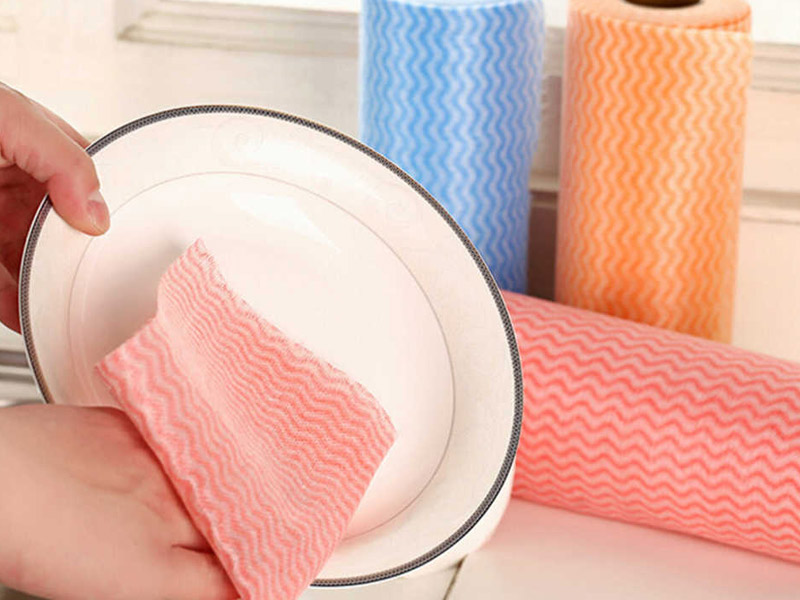
| Cellulose / wood pulp (often hydroentangled) | High absorbency, soft handfeel, good disintegration | Lower wet strength unless reinforced; lint control may be needed | Wipes, hygiene topsheets, cleaning cloths |
| Regenerated cellulose (viscose/lyocell) | Softness, drape, absorbency, consistent fiber quality | Cost sensitivity; processing can affect shrink/strength | Premium wipes, cosmetic pads, medical nonwovens |
| PLA (polylactic acid) nonwoven | Good stiffness, processability in spunbond, industrial compost fit | Lower heat resistance vs PP; hydrolysis sensitivity in hot/wet storage | Packaging liners, agricultural covers, some hygiene layers |
| PHA (polyhydroxyalkanoates) | Broader biodegradation potential, including some natural environments | Higher cost, supply variability, processing window can be narrow | Specialty wipes, premium compostable items |
| PBS / PBAT blends (biodegradable polyesters) | Toughness and flexibility; can improve tear strength in blends | End-of-life claims depend heavily on formulation and thickness | Compostable packaging layers, liners, flexible structures |
Practical rule: if the product must feel soft and absorbent (wipes), cellulose-rich degradable nonwoven structures are often the most straightforward. If you need shape stability or thermal bonding in a spunbond line, biopolymers like PLA or blends may be preferred.
Nonwoven Construction Choices That Drive Performance
“Degradable” is only half the story—the web formation and bonding method determine tensile strength, lint, thickness, and how the fabric behaves when wet.
Hydroentangled (spunlace)
High-pressure water jets entangle fibers for a textile-like handfeel. Spunlace is widely used for wipes because it can combine softness with decent strength without chemical binders. However, fiber selection matters: a higher cellulose fraction often improves disintegration, while reinforcement fibers improve wet strength.
Airlaid
Airlaid excels in bulk and absorbency. It can be binder-bonded or latex-free depending on design goals. If compostability is required, verify that any binder system and additives are compatible with the target certification.
Spunbond / Meltblown biopolymer webs
These webs are common in medical and filtration structures. When using biopolymers, the thermal window and hydrolytic stability can differ from polypropylene. Validate bonding strength after accelerated aging (heat/humidity) if the supply chain involves warm warehouses.
Specification Checklist for Buying Degradable Nonwoven
Below is a practical spec framework you can give suppliers. It reduces ambiguity and helps ensure the delivered roll stock matches both performance needs and degradability claims.
- Basis weight (GSM): set target and tolerance (example: 60 gsm ± 5%). GSM directly impacts cost, strength, and disintegration behavior.
- Composition disclosure: fiber/polymer percentages, including binders, finishes, and pigments. Blends can be valid, but they must be transparent.
- Tensile targets: specify MD/CD dry and wet tensile (and test method). For wipes, wet tensile is often the gating requirement.
- Absorbency & liquid hold: grams of liquid per gram of fabric, plus rewet behavior if used on skin-contact layers.
- Lint and particle control: critical for medical/cosmetic use; ask for linting test results and process controls.
- End-of-life claim and standard: e.g., “industrial compostable per EN 13432 / ISO 17088” or equivalent, with a valid certificate for the finished structure.
- Traceability: lot coding, certificate of analysis (CoA), and retention samples for dispute resolution.
Cost-control example: if you reduce basis weight from 80 gsm to 60 gsm while meeting tensile targets, you cut material mass by 25% (20/80), which often delivers a direct raw-material saving—provided performance remains acceptable.
Testing and Verification: How to Avoid “Degradable” Claims That Fail
Degradable nonwoven claims can fail for two common reasons: (1) the claim is made for a resin or fiber but not the finished nonwoven structure, or (2) additives, binders, inks, or thickness invalidate the intended pathway.
Ask for structure-level evidence
- Request certificates that reference the finished nonwoven (including bonding/binder system), not only the raw polymer pellet.
- Verify the certificate scope: basis weight range, thickness, colorants, and any coatings should match what you purchase.
- If printing is involved, confirm ink compliance for compostability or low-toxicity requirements in the target market.
Run a simple incoming QA gate
Even without building a full lab program, you can apply a lightweight QA gate: confirm GSM, thickness, dry/wet tensile, and absorbency per lot, then periodically send samples to a third-party lab for pathway-specific tests aligned to your claim. The operational benefit is clear: early detection of out-of-spec binder/additive changes reduces the risk of a full product recall.
Avoid misleading degradability categories
Be cautious with “oxo-degradable” or “fragmentable” claims that focus on breaking into smaller pieces rather than verified biodegradation. For products exposed to waterways or used in wipes, the difference between fragmentation and biodegradation is material to both compliance and brand risk.
Application Playbooks: Matching Degradable Nonwoven to Use Cases
Selecting a degradable nonwoven is easiest when you work backward from performance-critical requirements in the field. Below are practical match rules used in product development.
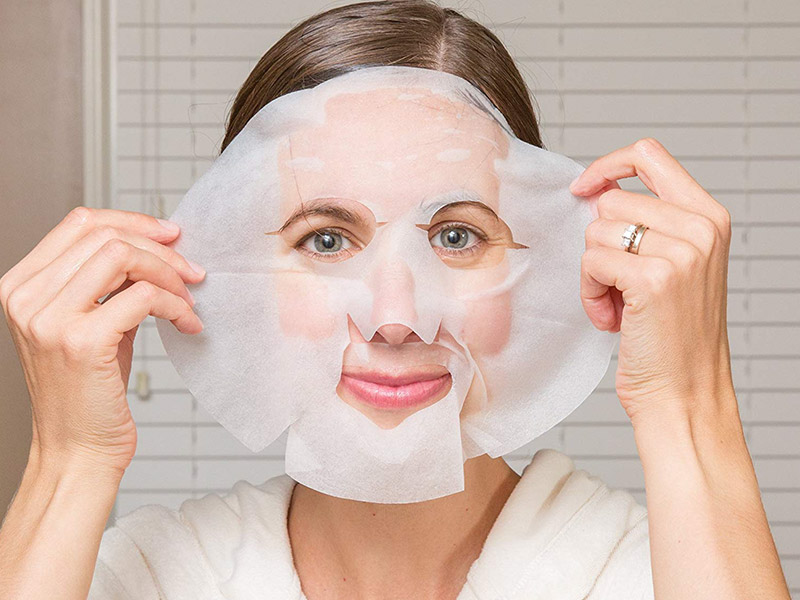
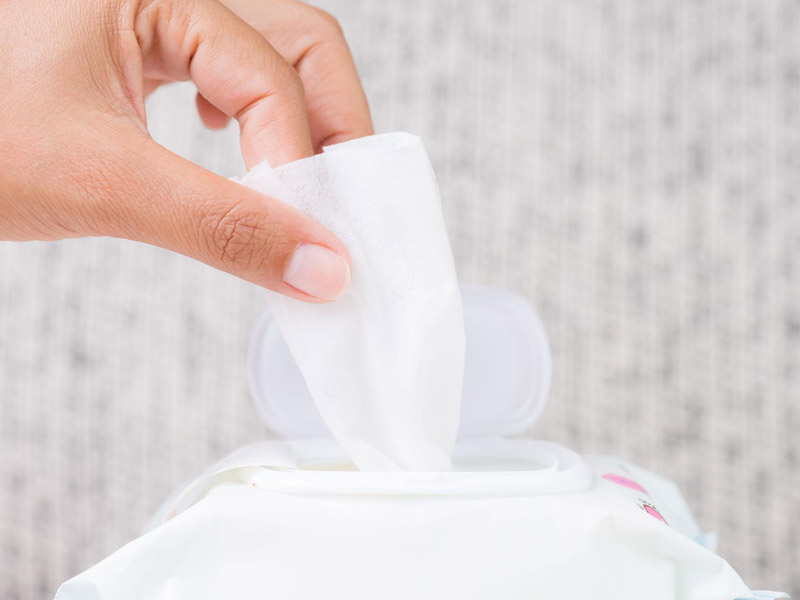
Wipes (consumer, institutional, personal care)
- Prioritize wet tensile, softness, absorbency, and dispersion/disintegration appropriate to disposal guidance.
- Cellulose/regenerated-cellulose spunlace structures are common where a natural-fiber profile is desired.
- If lotions or surfactants are used, validate that they do not materially reduce tensile integrity over shelf life.
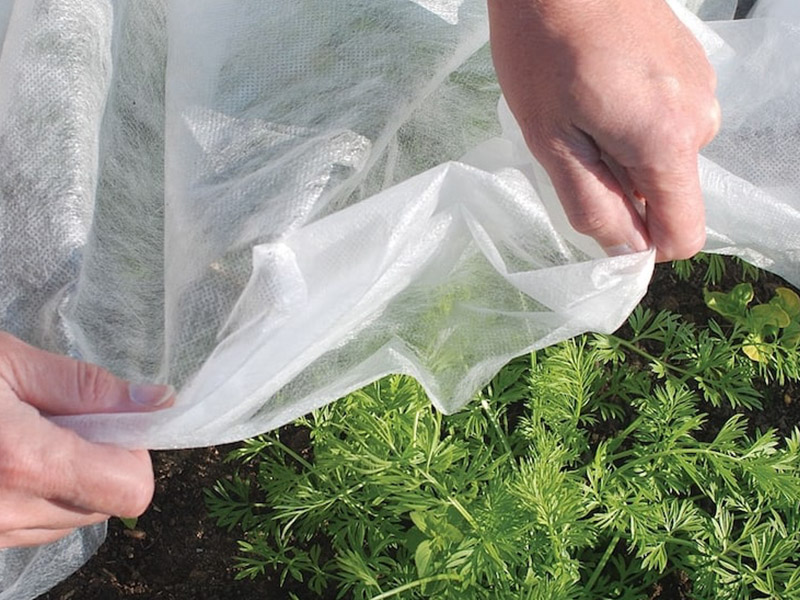
Agricultural and horticultural covers
- UV, moisture cycling, and mechanical abrasion drive real-world failure modes; require field trial data where possible.
- If “soil biodegradation” is claimed, ensure the evidence matches the local climate and agricultural practice, not only controlled compost tests.
Medical and hygiene layers
- Bioburden control, skin sensitivity, and lint are often more important than end-of-life claims.
- Confirm that switching to a degradable nonwoven does not compromise sterilization compatibility or barrier performance.
Step-by-Step: How to Qualify a Degradable Nonwoven Supplier
A structured qualification process reduces surprises and makes cost/performance trade-offs explicit. The steps below can be executed within a typical sourcing cycle.
- Define the end-of-life route (industrial composting, home composting, soil, etc.) and lock the claim language to a recognized standard.
- Issue a specification sheet with GSM, composition disclosure, tensile targets, absorbency, and lint requirements.
- Request supplier evidence: certificate scope for the finished nonwoven, CoA templates, and change-control commitments for binders/additives.
- Conduct pilot conversion trials (cutting, folding, embossing, sealing) to validate runnability and scrap rates.
- Validate shelf-life risks: accelerated aging under heat/humidity if the product is stored warm or shipped long distances.
- Finalize quality gates: incoming checks per lot, periodic third-party pathway verification, and nonconformance handling.
Qualification goal: treat degradability as a verified performance attribute, not a marketing descriptor—especially when the finished structure includes binders, coatings, or printing.
Common Pitfalls and How to Prevent Them
Degradable nonwoven projects fail most often due to preventable mismatches between product use, disposal reality, and claim language.
- Pitfall: Certifying the resin but not the finished nonwoven. Prevention: require structure-level certificates and confirm scope (GSM, inks, binders).
- Pitfall: Overbuilding GSM for safety margins and losing disintegration performance. Prevention: run a strength-to-mass optimization and test disintegration in the intended pathway.
- Pitfall: Assuming consumers have access to industrial composting. Prevention: align disposal instructions to real infrastructure, or choose a pathway that matches your distribution markets.
- Pitfall: Additive drift over time (binder, softener, pigment changes). Prevention: implement supplier change-control and periodic third-party verification.
If you do only one thing: lock the claim to a standard and verify the exact finished structure you ship.


 +8613621544385
 No.29 Xinhua Road, Jiashan Village,Jiaxing City Zhejiang P.R., China