




 English
 中文简体
 русский
 عربى
3D Nonwovens Market: What Machine Buyers Should Know Before Ordering a Line
Content
- 1 What "3D Nonwovens" Actually Describes
- 2 Where the Demand Is Coming From
- 3 Why the Machine, Not the Sample, Decides Your Margin
- 4 Four Routes to a 3D Structure, and Their Trade-offs
- 5 Questions Worth Settling Before You Sign
- 6 Configuration Choices That Leave Room to Grow
- 7 A Closing Word From the Shop Floor
Put a diaper topsheet from a few seasons ago next to one from this year's sample bag and your fingertips will notice the difference before any spec sheet does. The newer fabric has a shaped, pillowed surface; the older one is flat. That small change in feel is the visible end of a long conversation happening across the 3D nonwovens market — between brand owners who want performance they can advertise, converters who want runnability, and machine builders who have to make both possible on the same line.
We build spunbond and spunmelt equipment, so we spend most of our working hours on the machine side of that conversation. This article is our attempt to lay out where the 3D nonwovens market is heading, what it actually asks of a production line, and which questions are worth settling before anyone signs a purchase order.
What "3D Nonwovens" Actually Describes
The phrase is used loosely, and that looseness causes real confusion during equipment discussions. In practice, three different product ideas get filed under the same label:
- Surface-textured fabric. The third dimension is embossed or engraved into the sheet during calender bonding — dimples, ribs, hexagons, or a fine knurl that gives softness and a drier hand.
- Apertured or shaped fabric. Holes, cones, or channels are formed mechanically or by a patterned belt, so liquid passes quickly while the raised land areas keep the skin side drier.
- Lofted or multi-layer fabric. Bulk comes from the web structure itself — crimped or bicomponent fibres, differential cooling, or a spunmelt stack where the meltblown layer acts as a barrier and the spunbond layers supply volume and strength.
Most of what sells today is still produced on spunbond or spunmelt lines. The third dimension is added at the bonding calender, at the forming belt, or through the layer architecture — not by a separate process bolted onto the end of the line.
Where the Demand Is Coming From
Rather than quote a headline growth figure, it is more useful to look at what each end use is buying when it buys a 3D structure.
| Segment | Function of the 3D structure | Common line base |
|---|---|---|
| Baby diapers and training pants | Faster acquisition, drier top layer, softer hand | SS or SSS spunbond with engraved calender |
| Feminine care and adult incontinence | Masking, comfort, controlled wicking | SS / SSS, apertured variants |
| Wipes and kitchen towel | Bulk, absorbency, cloth-like texture | Spunlace or spunbond, embossed |
| HVAC and air filtration | Pleat support, dust holding capacity | Meltblown plus spunbond support layers |
| Automotive and acoustics | Sound absorption through open, bulky structure | SMS / SMMS |
| Bedding, mattress and furniture | Loft, resilience, quilt-like surface | Spunbond with high-bulk bonding |
| Medical drapes and gowns | Barrier plus drape and softness | SMS / SMMS |
| Packaging, agriculture, geotextiles | Drainage paths, texture, strength | Heavier spunbond, sometimes needle-punched |
Why the Machine, Not the Sample, Decides Your Margin
Anyone can produce a promising 3D sample on a pilot line running at a fraction of commercial speed. The difficulty is holding that structure at 300 metres per minute, shift after shift, on a roll that a converter can actually unwind. Three machine-level details decide whether that happens.
Web formation sets the ceiling
If the filament web arrives at the calender with inconsistent mass distribution, no amount of pattern engraving will rescue it. Quench air uniformity, filament denier spread, and the choice between forming belt and wire all feed directly into how crisp a raised pattern will look after bonding. Beam architecture matters here too — a single-beam line gives you one spin beam's worth of control, while multi-beam configurations open options for layer-by-layer structures. We covered the practical differences in a technical note on how beam configurations shape spunmelt output.
Bonding without flattening
Thermal bonding is where most 3D ambition is lost. An engraved calender can produce beautiful pillars, but if oil temperature drifts across the face width or nip pressure is set too high, the raised areas collapse and the fabric reads as flat under a microscope and in the hand. Stable thermal fluid circuits, even pressure across the full working width, and a pattern depth chosen for the target fabric weight matter far more than the number of embossing patterns offered in a brochure.
The unglamorous parts: winding, slitting, converting
Bulky, textured fabric behaves differently on a winder than flat fabric — it traps air, builds softer rolls, and can telescope if tension control is crude. Buyers who test only the forming and bonding sections frequently discover this in the first month of production. Ask how the winder and slitter handle low-density, high-loft material at full line speed.
Four Routes to a 3D Structure, and Their Trade-offs
There is no single correct answer; the right route depends on the hand you want, the weight you run, and the downstream converting equipment your customers already own.
| Route | Where the 3D comes from | Best suited to | Watch out for |
|---|---|---|---|
| Engraved calender | Patterned bonding roll | Topsheets, wipes, hygiene covers | Pattern wear over time; loft loss at high nip pressure |
| Apertured or belt-formed | Patterned forming surface or mechanical perforation | Acquisition layers, fast-wicking topsheets | Belt life and cleaning; hole definition at high speed |
| Lofted multilayer spunmelt | Layer stack plus controlled bonding | Medical, filtration, automotive | Higher capital cost; more complex quality control |
| Lamination or spacer combining | Separate forming step, then bonding | Mattress, acoustics, technical textiles | Extra equipment, extra cost per square metre |
Questions Worth Settling Before You Sign
We have sat through enough technical reviews to notice that the projects that run smoothly tend to be the ones where these questions were asked early, not after installation:
- What fabric weight range must the line hold the 3D structure across — not just at the sweet spot?
- Which pattern depth and land-to-hole ratio matches the hand feel your customer has already approved?
- How much loft loss is acceptable after winding, storage, and converting?
- What is the realistic changeover time between a textured and a flat product on the same line?
- Which control elements and drive brands are specified, and what is the local spare parts path?
- Who trains the operators, and for how long, on pattern adjustment and calender temperature settings?
Configuration Choices That Leave Room to Grow
Most of our customers arrive with one product in mind and leave with a line that can produce three or four. That is usually the right instinct in a market where texture, weight, and layer structure keep shifting. A sensible build-up looks like this.
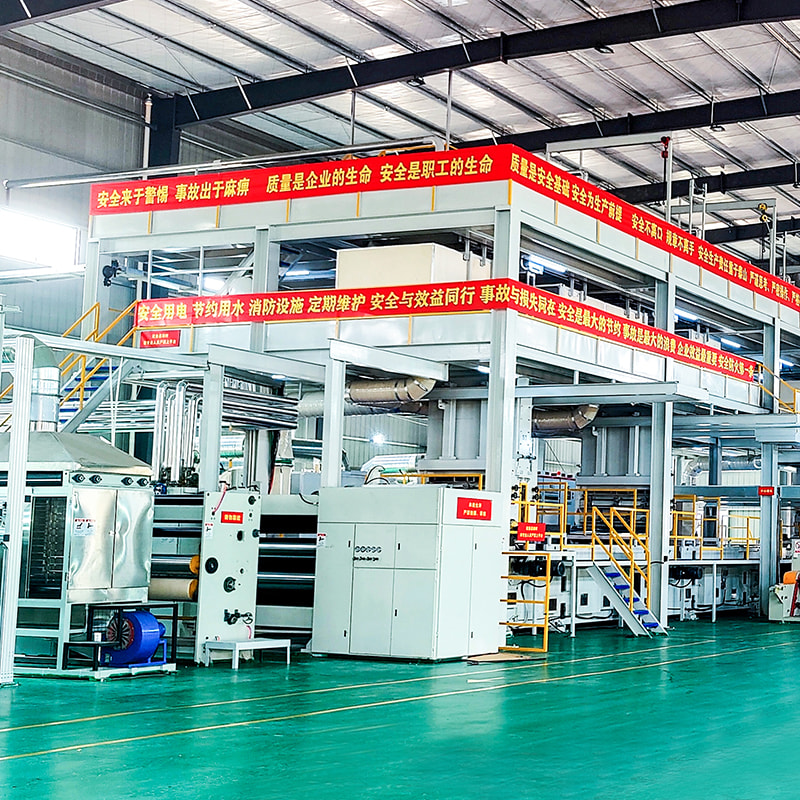
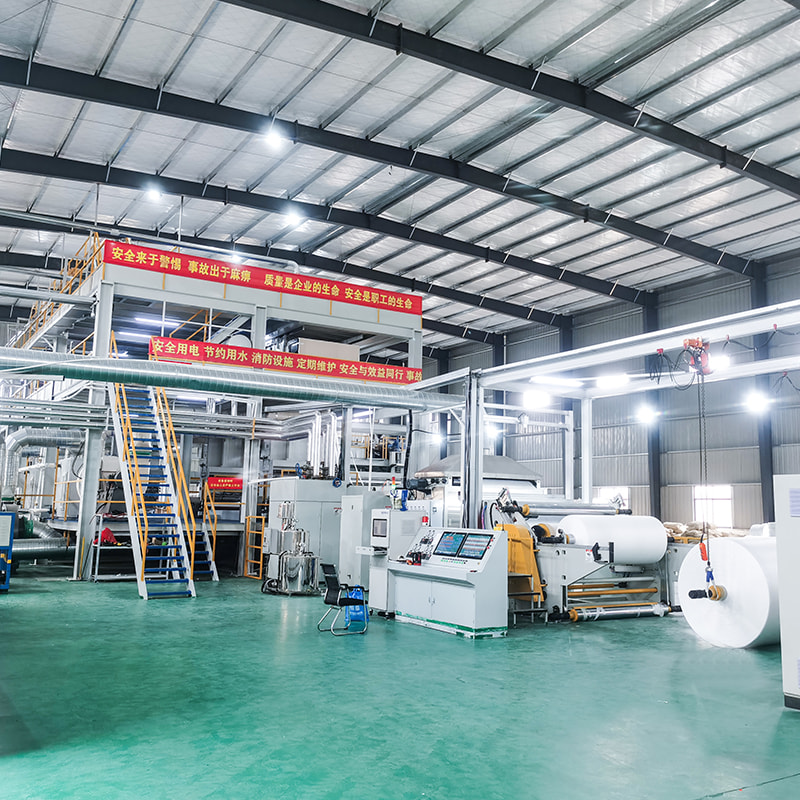
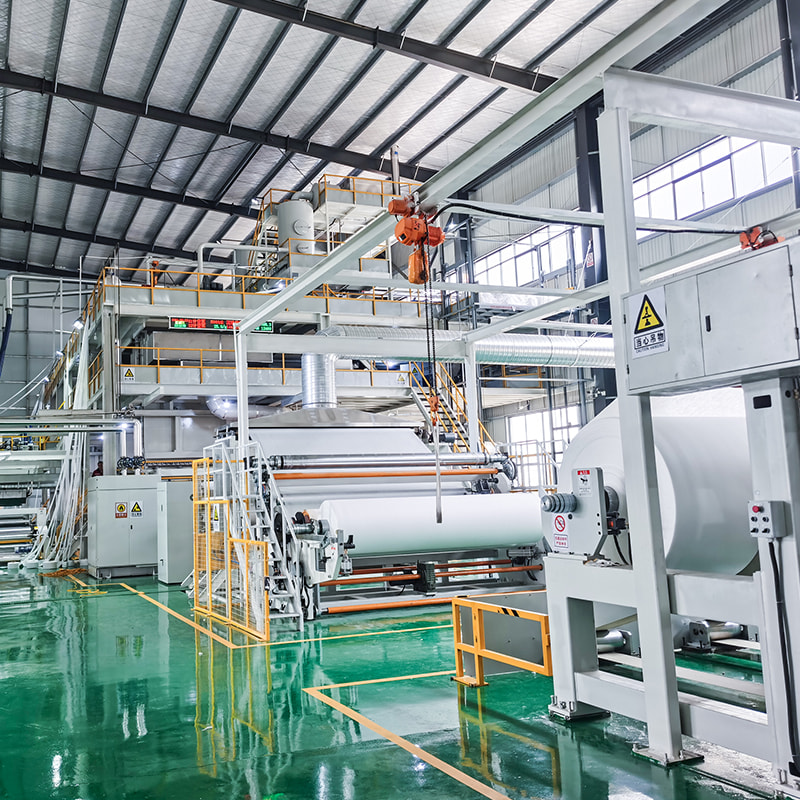
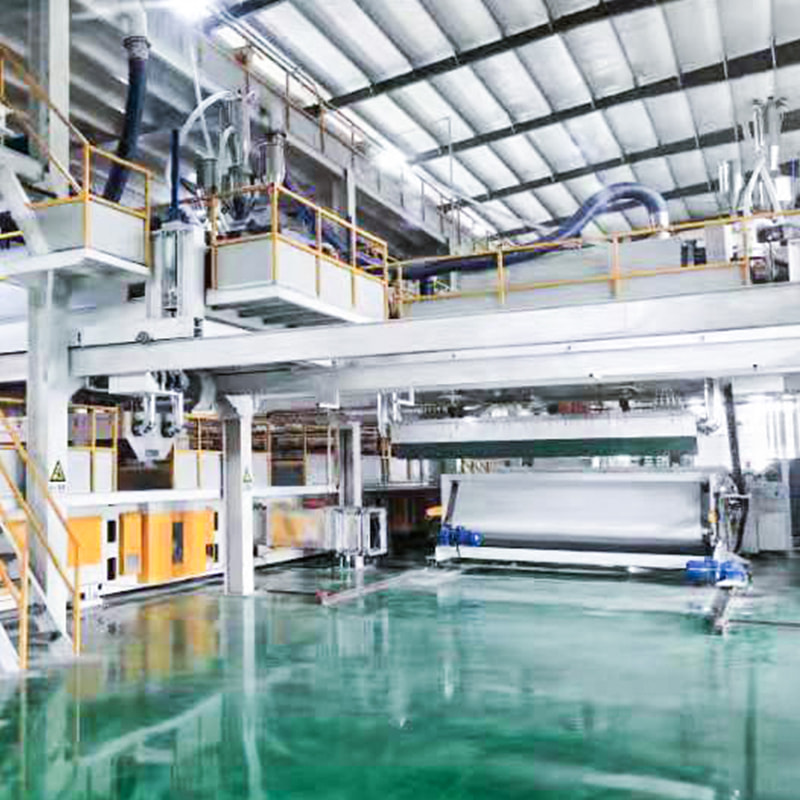
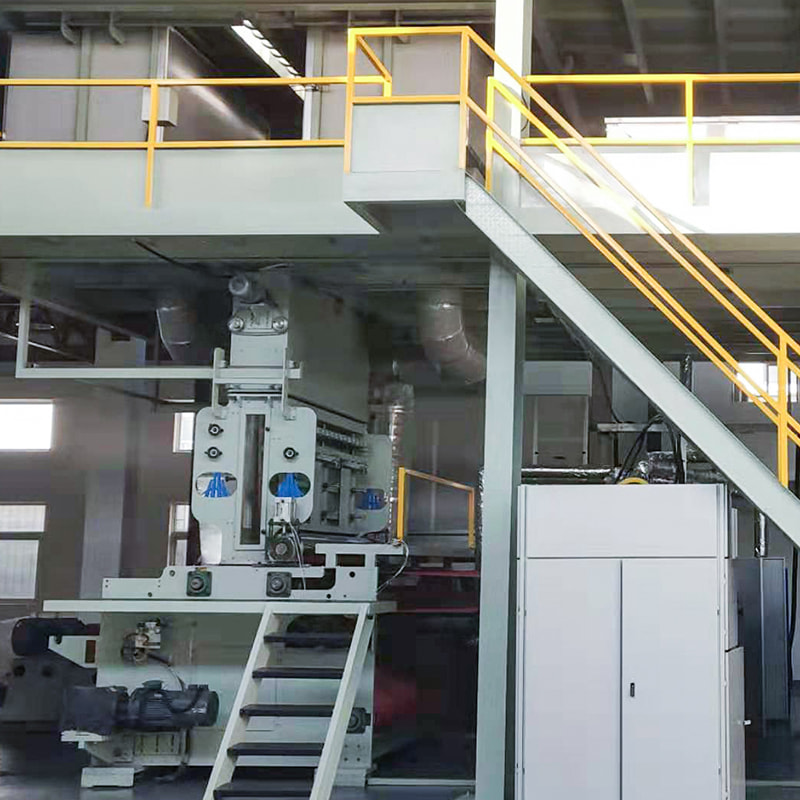 Single-Beam Spunbond Nonwoven Line for Entry-Level Pattern BondingCompact S-line for producers starting textured hygiene or wipe fabrics, with 1600–3200 mm widths and PLC touch-screen control for learning pattern bonding.View Product →
A single-beam S line is the honest starting point for a producer entering textured hygiene or wipe fabrics. It is compact, fast to commission, and easy to operate — the sort of machine that lets a team learn pattern bonding without burning capital on capacity it cannot yet sell. Widths from 1600 mm upward cover most regional demand.
When volume and consistency start to matter, a double-beam SS configuration gives you two spin beams feeding one bonding section, which improves layer control and production stability at higher output. For topsheet work where a soft, uniform 3D surface is the selling point, this is often the sweet spot between investment and flexibility.
For barrier-critical applications — medical, filtration, automotive — an SMMS configuration places meltblown layers between spunbond webs while keeping enough bulk in the outer layers to preserve a soft, structured surface. It is a bigger commitment, but it opens product categories that a single-layer line simply cannot reach.
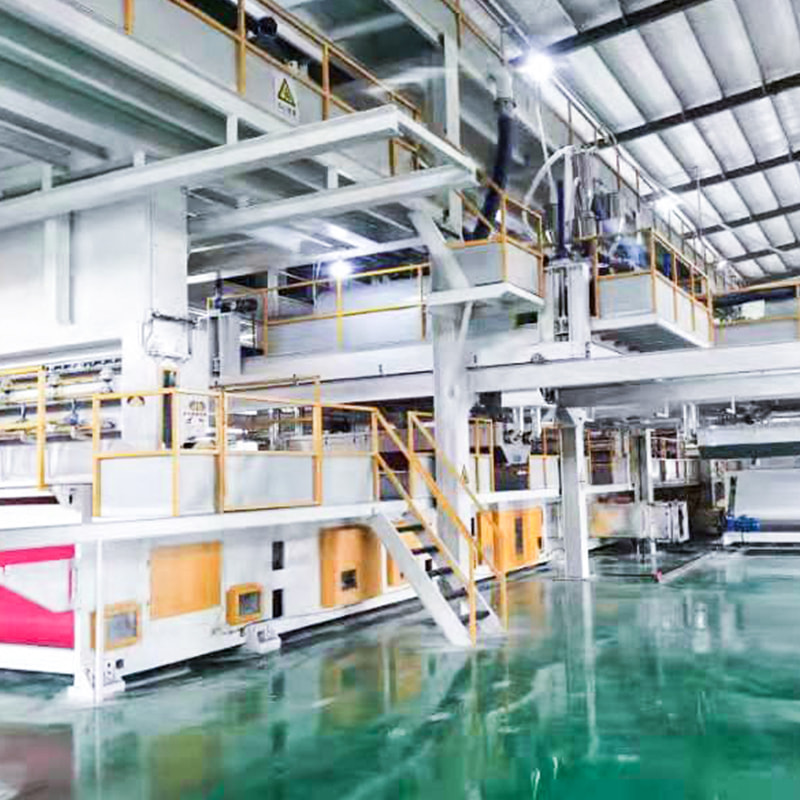
Across all three, we keep the specification conversation open: main and auxiliary equipment can be adapted to a customer's particular fibre mix, fabric weight band, and available floor space, and control systems are built around PLC and touchscreen operation so pattern changes do not require an engineer on site.
A Closing Word From the Shop Floor
The 3D nonwovens market rewards producers who can promise a structure and then deliver it consistently at commercial speed. That is mostly a machine question, and it is worth treating it as one from the first technical meeting rather than the last. If you want to walk through pattern options, calender temperature control, or width and beam choices against your own product plan, our team is happy to talk it through — you can find our background and locations on the about page, and we answer enquiries directly rather than routing them through a call centre. Bring fabric samples. They make the conversation much shorter.


 +8613621544385
 No.29 Xinhua Road, Jiashan Village,Jiaxing City Zhejiang P.R., China
