



 English
 中文简体
 русский
 عربى
Absorbent Material in Diapers: SAP, Fluff Pulp and the Nonwovens Behind Them
Content
Ask most people what makes a diaper absorbent and they will describe a powder that turns liquid into gel. They are not wrong, but they are only partway there. A modern diaper is a stack of thin layers, each with a different job, and that powder only performs well because the layers around it move liquid quickly, hold it in position and keep it away from skin. After years of building nonwoven production lines for hygiene customers, we have found that understanding the whole stack is the fastest route to choosing the right equipment.
What Actually Holds the Liquid
The storage layer is a blend of two very different materials. Sodium polyacrylate, usually shortened to SAP, is a superabsorbent polymer in the form of fine white granules. It can take up many times its own weight in liquid and lock it into a gel that resists squeezing, which is why a wet diaper does not drip when a baby sits down. Because the liquid is held inside the polymer network rather than floating free, the surface next to skin stays comparatively dry.
Cellulose fluff pulp does the opposite job. Made from wood fibre and fluffed into a soft, airy mat, it grabs liquid on contact and wicks it sideways, giving the SAP time to swell instead of being flooded in a single spot. Thinner, premium products have shifted the balance towards more SAP and less pulp, and pulp-free cores now exist for buyers who want a slimmer product. Either way, the blend is wrapped in a lightweight nonwoven or tissue core wrap that keeps granules from migrating to the surface.
A Layer-by-Layer View of the Material Stack
Absorbency is a system property, not a single ingredient. Each layer has a distinct role, and the balance between them is what separates a diaper that leaks at night from one that does not.
| Layer | Commonly used material | What it does |
|---|---|---|
| Topsheet | Hydrophilic PP spunbond, roughly 10 to 18 gsm | Lets liquid pass quickly and keeps the surface feeling dry |
| Acquisition and distribution layer | Bulky, low-density spunbond or carded web | Slows a sudden surge and spreads it sideways before the core takes over |
| Core wrap | Light spunbond or tissue | Holds SAP and fluff together and stops gel escaping |
| Absorbent core | Sodium polyacrylate SAP plus cellulose fluff pulp | Stores liquid as a gel and keeps it locked under pressure |
| Barrier cuffs | SMS or SMMS nonwoven, often elasticised | Forms a soft physical wall against sideways leaks |
| Backsheet | Film laminated to a light nonwoven, or an SMS web | Prevents strike-through while allowing some breathability |
Reading the table from top to bottom is also a useful way to think about capital spending. The core is bought as SAP and pulp, but three of the six layers are nonwovens that a hygiene producer can make in-house, and their quality sets the ceiling on what the core can do.
Where Nonwovens Decide How the Core Behaves
The topsheet is the layer you actually feel, and it is almost always a hydrophilic spunbond polypropylene. Its job sounds simple, yet fast strike-through and low rewet depend on fibre denier, web uniformity and a hydrophilic finish that survives storage. If the finish fades or the web has thin spots, liquid lingers on the surface and the expensive SAP underneath sits underused.
Between topsheet and core sits the acquisition and distribution layer, sometimes called a surge layer. It is usually bulkier and lower in density than the topsheet, built to receive a fast flow and pass it on gradually. Cuffs and backsheet are the mirror image: they must resist liquid rather than welcome it, which is why they are usually made from SMS structures where a meltblown barrier is sandwiched between two spunbond layers.
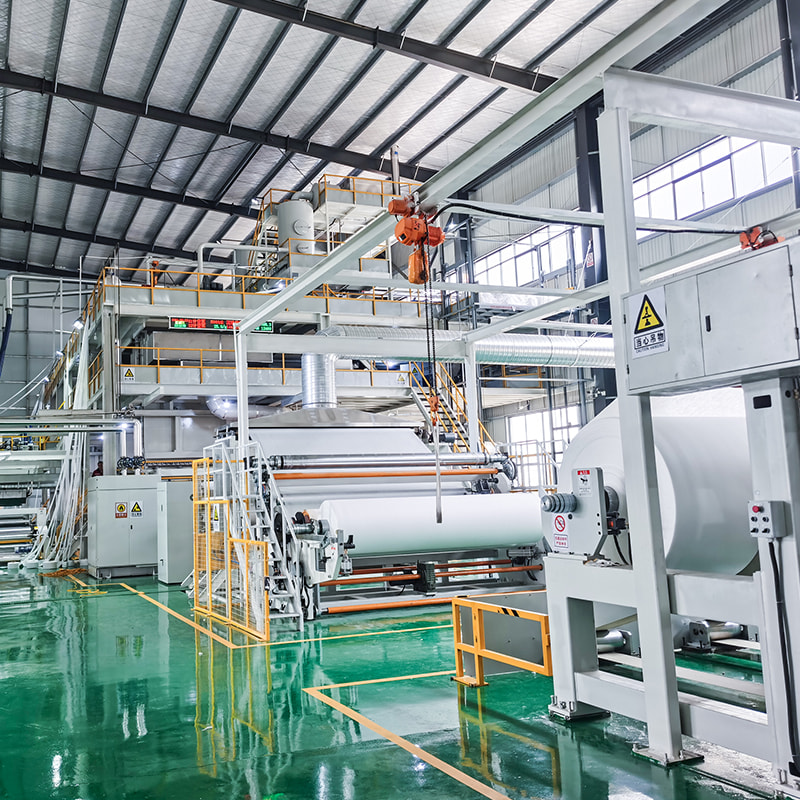
When customers ask us where to begin, our answer is usually the web they will consume in the largest volume. A single-beam line is an economical way to secure a steady supply of consistent base fabric for topsheets and core wraps, and it leaves room to buy the barrier layers elsewhere until volumes justify a second investment.
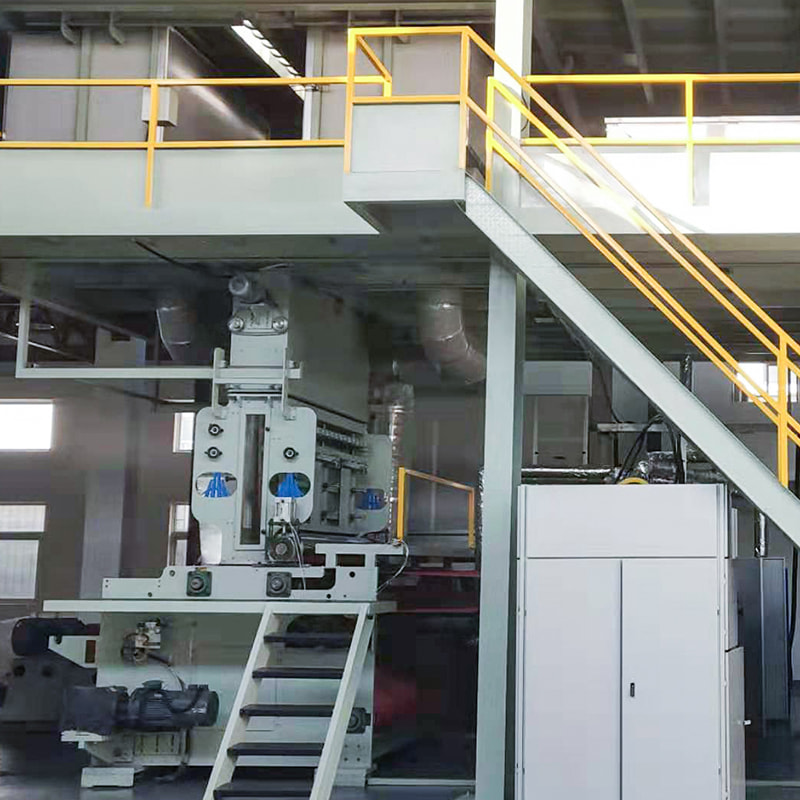 Single-Beam Spunbond Nonwoven Machine for Base FabricsA single-beam spunbond line for consistent base fabric, available in multiple widths and 10–200 GSM, suited to topsheets and core wraps.View Product →
Matching Machine Configuration to Diaper Design
Beam count is the simplest way to describe what a spunmelt line can offer a hygiene product, but it is really a shorthand for how many different web functions you can produce in one pass.
Barrier layers add beams
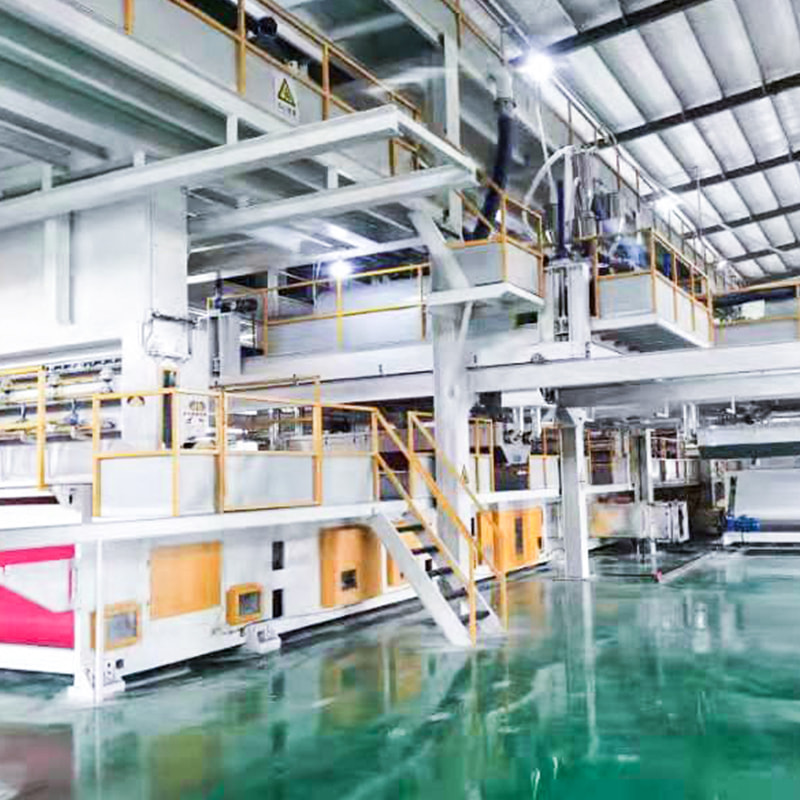
Once a product needs integrated leak protection, an SMS configuration becomes the practical choice: two spunbond beams with a meltblown layer between them delivers the combination of softness, strength and liquid resistance that cuffs and backsheets demand. The meltblown layer is thin, often a fraction of the spunbond weight, but it is the part that decides hydrostatic head and therefore how much pressure a cuff can take before it wets through.
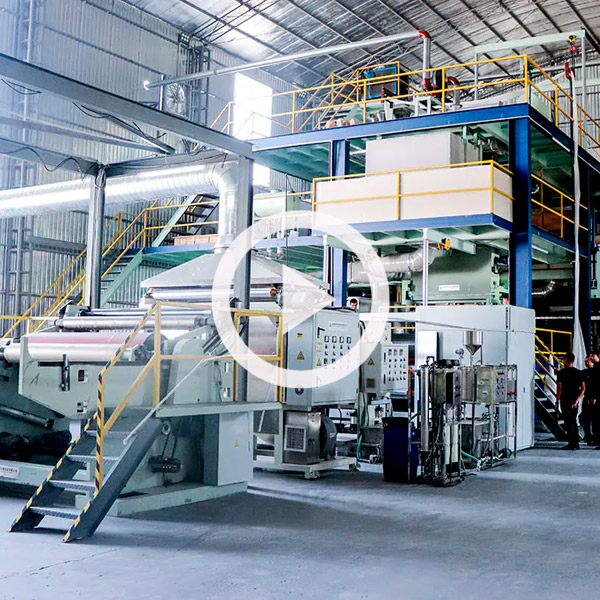 Three-Beam SMS Spun-Melt Nonwoven MachineAn SMS line combining spunbond and meltblown layers for soft, strong, liquid-resistant fabrics used in cuffs and backsheets.View Product →
Ultra-thin cores and higher product tiers
As cores become slimmer, the surrounding webs carry more of the mechanical load, and premium products often ask for two meltblown layers for extra security without adding weight to the finished diaper. SMMS and SMMSS lines exist for exactly this reason: they allow a producer to raise barrier performance and run at high speed while keeping the hand-feel soft enough for a product worn against skin.
Safety, Skin Comfort and the Sustainability Question
Because these materials sit against skin for hours, the raw material side deserves as much attention as the machine side. Published safety evaluations of superabsorbent diapers have generally found sodium polyacrylate acceptable for the intended use, but the details matter: pH of the finished core, residual monomers, the purity of the pulp, and how the whole assembly behaves when it is wet and warm. Producers who can document fibre specification and batch consistency have a much easier conversation with brand owners and regulators.
Sustainability is reshaping the same discussion. Pulp-free cores, bio-based superabsorbent polymers and thinner overall constructions all reduce material use, but they also raise the demands placed on the nonwovens: a thinner wrapper with less margin for error has to be more uniform, not less. This is why we spend so much time on tension control, web guidance and thermal bonding stability during commissioning, and why we would rather tune a line to a customer's real product range than to a headline speed figure.
What to Check Before You Commit to a Line
If you are planning capacity for diaper-grade nonwovens, a short checklist saves months later. Our own team walks through something close to this with every buyer:
- Target weights across the whole product range, since a topsheet at 12 gsm and a cuff at 35 gsm behave very differently on the same line.
- Which layers you plan to make yourself and which you will buy in, so beam count matches the roadmap rather than only the first product.
- Hydrophilic and hydrophobic finishing requirements, and whether masterbatch changes will be frequent.
- Usable width in the 1600 mm to 4200 mm range, aligned to the converting line rather than chosen in isolation.
- Denier consistency and uniformity targets, which drive strike-through and rewet results more than any single machine specification.
- Commissioning, operator training and spare-parts support for the years after installation.
We have covered related questions on fibre selection for hygiene products in more depth in our hygiene fibre and equipment notes, and we are always happy to talk through a specific diaper design before any specification is fixed. The earlier that conversation starts, the more room there is to match the machine to the product instead of the other way round.
Absorbency in a diaper is a partnership between a polymer that stores liquid and nonwoven layers that decide how quickly it arrives and how reliably it stays inside. Get the stack right and the SAP works with modest loading; get the webs wrong and no amount of polymer will rescue the result. If you would like to discuss your own layer structure with our engineers, get in touch and we will gladly share what we have learned on similar projects.



 +8613621544385
 No.29 Xinhua Road, Jiashan Village,Jiaxing City Zhejiang P.R., China
