



 English
 中文简体
 русский
 عربى
Acetate Fibers Explained: Properties, Production, and Nonwoven Machine Choices
Content
- 1 What Acetate Fibers Actually Are
- 2 The Properties That Decide How Acetate Is Processed
- 3 Where Acetate Fibers Turn Up
- 4 Acetate Fibers and Polypropylene Nonwovens Side by Side
- 5 Why Acetate Does Not Simply Run on a Spunbond Line
- 6 Where Melt-Spun Equipment Fits Into the Material Mix
- 7 A Short Checklist Before You Commit
- 8 Talking It Through
Acetate fibers are easy to overlook. They do not carry the everyday familiarity of cotton or the sheer volume of polyester, and most people meet them without noticing — in the lining of a jacket, the tip of a cigarette, the frame of a pair of sunglasses. For anyone running or planning a nonwoven line, though, acetate is worth understanding properly. It is a semi-synthetic fiber with its own spinning route, its own thermal limits and its own end markets, and knowing where it fits will help you judge whether your next investment should be built around it or around the polypropylene workhorses that most spunbond and meltblown plants rely on.
What Acetate Fibers Actually Are
Acetate begins as cellulose, usually refined wood pulp or cotton linters. The cellulose is reacted with acetic acid and acetic anhydride, which converts many of the hydroxyl groups along the polymer chain into acetate esters. How far that reaction is allowed to go determines the family you end up with:
- Diacetate (secondary acetate): roughly 54% combined acetic acid, soluble in acetone, which is why most textile acetate is dry-spun from an acetone dope.
- Triacetate (primary acetate): around 62% combined acetic acid, needs stronger solvents, and holds heat and shape a little better.
- Acetate tow: continuous filament bundles made in very large volumes for cigarette filters, where consistent denier and crimp matter more than drape.
In dry spinning, the dope is filtered, pressed through a spinneret into a heated shaft, and the acetone evaporates as the filaments solidify. The fibers are then lubricated, crimped and either wound as filament or cut into staple. Nothing melts at any point — an important detail when you compare acetate with polypropylene, because it explains almost every downstream difference.
The Properties That Decide How Acetate Is Processed
Acetate's reputation comes from its hand and its look: a soft, silk-like luster, gentle drape, and a dry, quick-drying feel against the skin. Moisture regain sits around 6.5%, lower than viscose, so the fiber swells less and recovers faster. It is also thermoplastic, softening somewhere in the region of 190–205°C, which makes it bondable in a carded thermal-bonded web but rules out aggressive hot-air or calender settings.
The constraints deserve just as much attention. Acetate is sensitive to strong alkalis, which can strip the acetyl groups and leave the fiber dull or weak, and it softens or dissolves in acetone and several related solvents. Wet strength is noticeably lower than dry strength, abrasion resistance is modest, and pressing temperatures must stay low. Filament denier, crimp level and the finish applied at spinning all influence how smoothly the staple runs through carding and how evenly a bonded web forms.
Where Acetate Fibers Turn Up
Textile acetate is mostly a fashion and furnishing fiber — linings, blouses, formalwear, ribbons and decorative fabrics where luster matters more than abrasion resistance. Beyond apparel, acetate tow dominates cigarette filtration, while solid cellulose acetate becomes spectacle frames, tool handles and clear packaging film.
In nonwovens, acetate staple appears in carded and thermally bonded structures and in wet-laid webs, sometimes blended with other fibers to soften hand feel or add loft. It is a modest presence rather than a dominant one, and the exact format always depends on the finished product rather than on the fiber alone.
Acetate Fibers and Polypropylene Nonwovens Side by Side
A good share of the questions that reach our office start with a simple comparison, so here is a short one. The two materials are less competitors than neighbours living under different rules.
| Property | Cellulose acetate | Polypropylene (spunbond / meltblown) |
|---|---|---|
| Raw material | Wood pulp or linters, acetylated | Propylene polymer, fossil or mass-balance based |
| Fiber formation | Dry spinning from acetone solution | Melt spinning directly from the extruder |
| Moisture regain | About 6.5% | Effectively zero, hydrophobic |
| Heat behaviour | Softens near 190–205°C, degrades rather than melting cleanly | Melts near 160–165°C, bonds readily |
| Bonding routes | Low-temperature thermal, chemical, wet-laid, blends | Calender, hot air, ultrasonic, hydroentanglement |
| Strength and abrasion | Moderate dry strength, lower wet, modest abrasion | Good tenacity, excellent strength at fine denier |
| Typical products | Linings, tow, frames, decorative fabrics | Hygiene, medical, wipes, filtration, packaging, agriculture |
Read the table as a map of processing decisions rather than a scorecard. Neither fiber is better in the abstract; each one rewards a particular kind of plant.
Why Acetate Does Not Simply Run on a Spunbond Line
Because both materials are "fibers made in a factory," it is tempting to assume one machine could produce either. In practice the chemistry sets the hardware. A spunbond line extrudes molten polymer and draws the filaments with high-velocity air. Acetate is spun from a solution, and that solvent has to be recovered, purified and returned to the process — which means explosion-proof electrical design, solvent-resistant components, a recovery column and a completely different safety case. That is a separate plant, not a retrofit.
This is exactly why acetate nonwovens are usually built from staple: the fiber is bought in, opened, blended, carded and bonded, or dispersed in a wet-laid process. If acetate sits at the centre of your plan, the machinery conversation is about opening, carding, bonding and winding rather than about spinnerets. Our own work sits on the melt-spun side, so we say plainly when a material belongs somewhere else.
Where Melt-Spun Equipment Fits Into the Material Mix
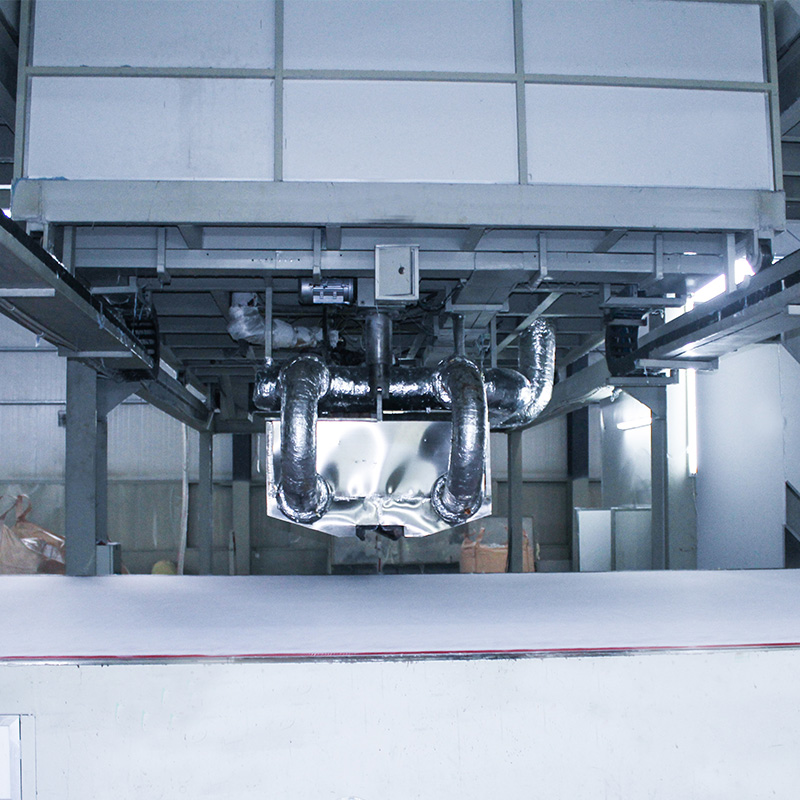
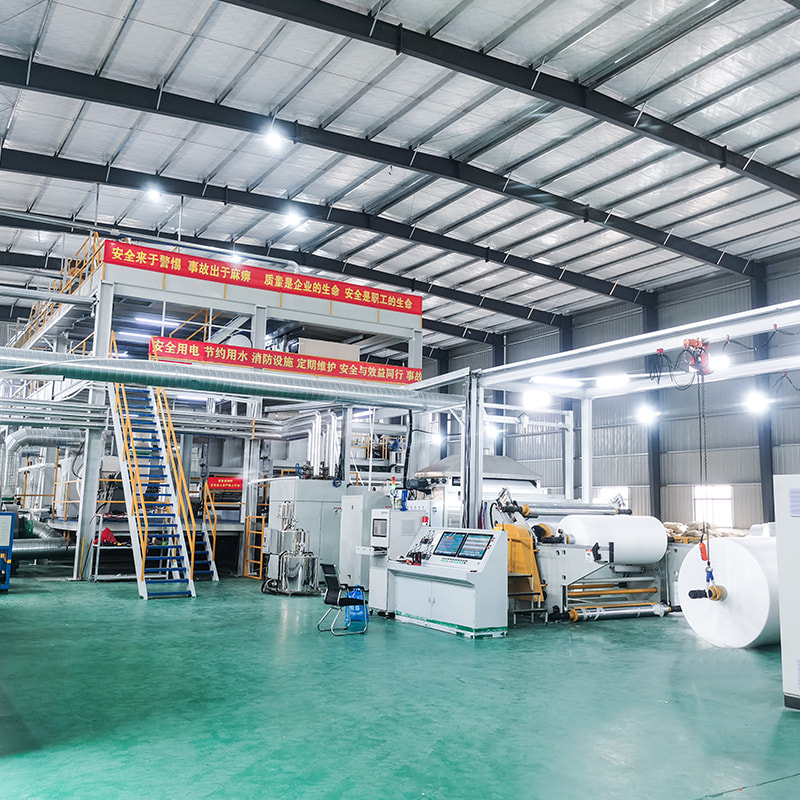
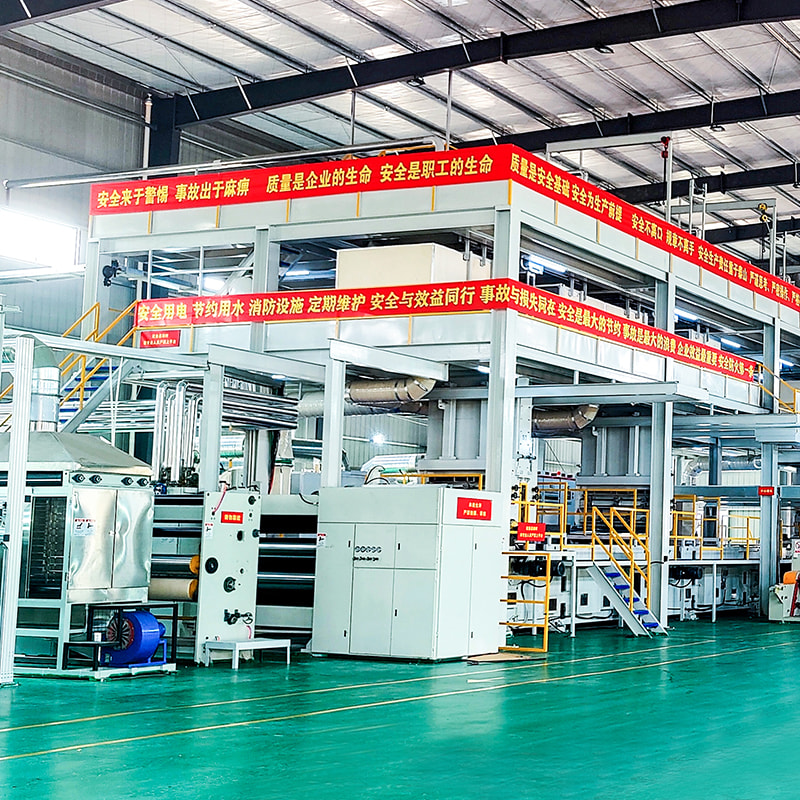
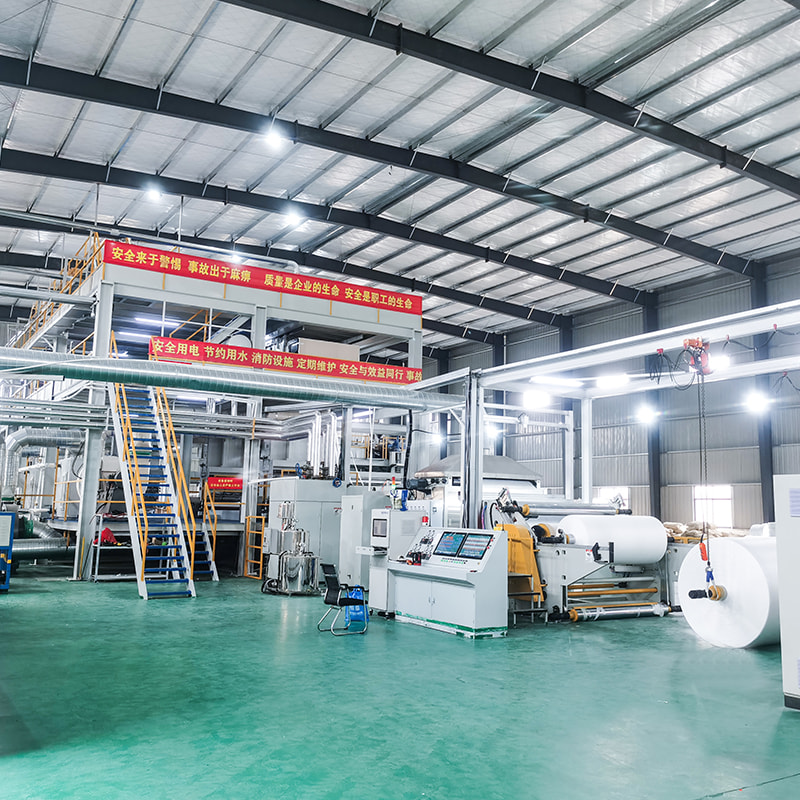
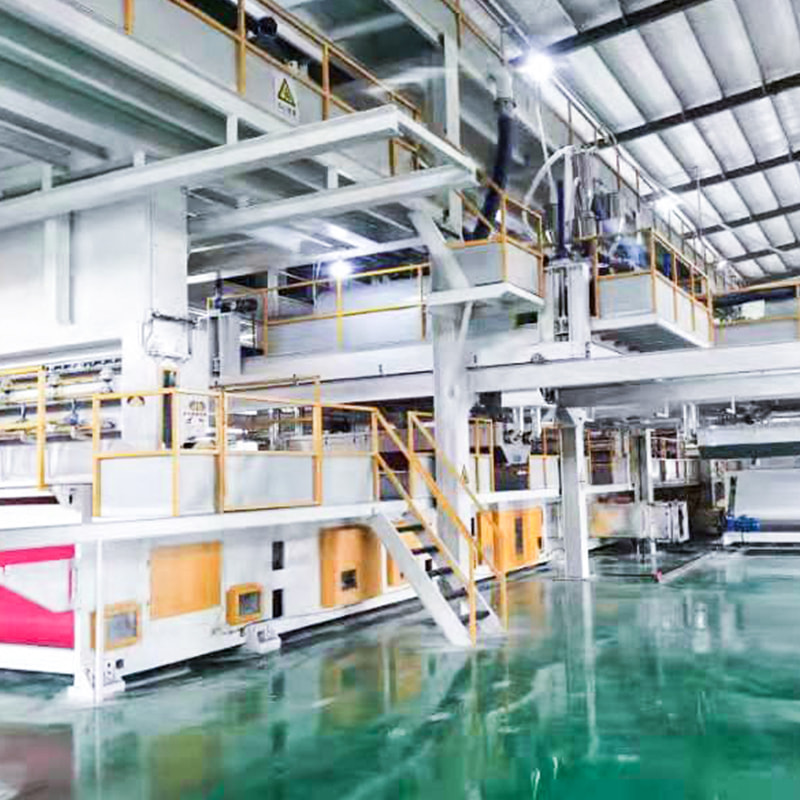
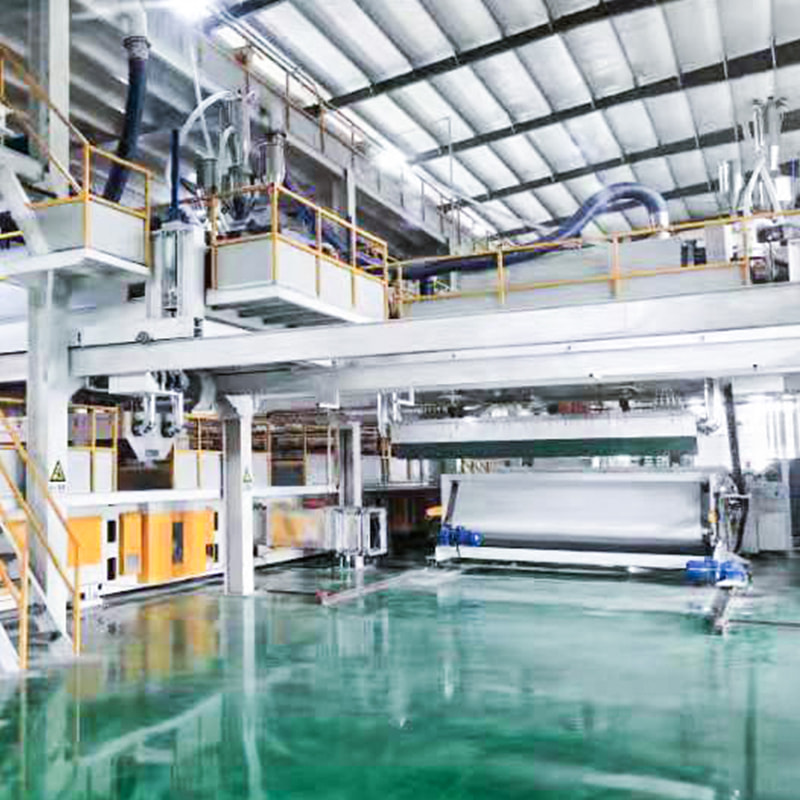
Most producers who ask us about acetate are really asking about a portfolio. Their customers keep ordering hygiene fabrics, wipes, filtration media and medical drapes, and the question is which line covers that demand most sensibly. Polypropylene spunbond remains the backbone, and a single-beam S line is often the entry point — one beam, high speed, low denier, and a running cost that is easy to model before you commit.
 PP Spunbond Nonwoven Machine RangeExplore PP spunbond lines from single-beam S to double- and triple-beam configurations, with adjustable widths and slitting for hygiene, wipe and filtration fabric production.View Product →
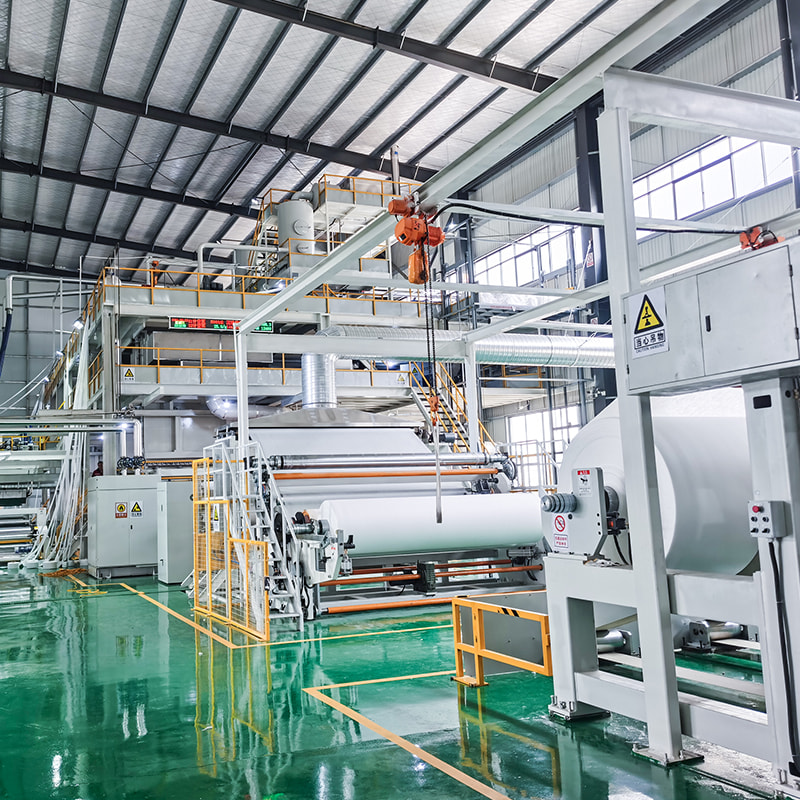
Meltblown is the other half of the story. Fine fibers give the barrier performance that SMS-type structures depend on, and a standalone meltblown unit lets a plant add that capability without rebuilding everything around it.
 Melt-Blown Nonwoven MachineStandalone melt-blown line for fine PP fibers, available in 1600–3200 mm widths, suited to filtration and barrier layers in hygiene and medical products.View Product →
When a product needs both processes in one pass, the line becomes a composite: S, SS, SSS, SMS, SMMS or SMMSS, with beam count and layering matched to the target fabric. Widths commonly span 1600 mm to 4200 mm, and the configuration of the main and auxiliary equipment can be adjusted around your specific product mix.
Spun-Melt Composite Nonwoven MachinesSMS, SMMS and SMMSS lines combine spunbond and meltblown layers in one pass, with adjustable configurations for medical, hygiene and filtration fabrics.View Product →
If you are still weighing how far a single line can stretch across different polymers, our note on handling polyester, polypropylene and other fiber types is a useful starting point before any technical discussion begins.
A Short Checklist Before You Commit
- Confirm the fiber route first. Solution-spun acetate and melt-spun polypropylene need different plants, different permits and different operators.
- Match bonding to the fiber's softening range, not to the machine's default recipe.
- Ask what the fabric must do — barrier, softness, luster, drape — and let that choose the structure rather than the other way round.
- Check solvent or additive handling requirements early; they shape building design more than any single component does.
- Plan the auxiliary equipment and the service access while layouts are still flexible.
None of this is complicated, but each item is far cheaper to settle on paper than on a commissioning floor.
Talking It Through
Acetate fibers will keep their place in apparel, tow and specialty products, and they will keep being compared with polypropylene in conversations about cost, feel and end-of-life. What matters is choosing the route that suits the product you can actually sell. We have spent years building spunbond, meltblown and spunmelt lines for hygiene, medical, wipes, packaging and agricultural customers, and we are just as happy to explain where those lines stop being the right answer. If you would like a straightforward conversation about your material mix, get in touch with our team and tell us what you are planning to make.


 +8613621544385
 No.29 Xinhua Road, Jiashan Village,Jiaxing City Zhejiang P.R., China
