



 English
 中文简体
中文简体 русский
 عربى
عربىAir Permeability Explained: Testing Standards and Control in Nonwoven Fabric Production
Content
Two rolls of 25 gsm polypropylene spunbond fabric can pass every visual check and still behave like different materials on the converting line. One feeds smoothly into a hygiene products operation; the other trips the customer's air permeability limit, and the shipment gets held at the gate. The difference is invisible to the eye, but it shows up immediately on an airflow meter.
Air permeability, the rate at which air passes through a fabric under a fixed pressure difference, is one of the most frequently specified properties in nonwoven purchasing, and it is decided on the production line, not in the warehouse. Fiber fineness, web structure and bonding conditions set the value long before a roll is packed. This guide explains what the measurement means, which test standards apply, what moves the number, and how line configuration determines the permeability window a plant can hold consistently.
What Air Permeability Actually Measures
Air permeability is the rate at which air flows through a known area of fabric when a defined pressure difference is applied across its two faces. In practice: clamp a sample, draw air through it at a set pressure, and record how much air passes through each second. Because the test is fast and non-destructive, it serves as a routine quality gate as well as a specification property.
Results are reported as cm3/cm2/s (numerically the same as cm/s), mm/s, or ft3/min/ft2, often shortened to CFM. The conversions matter whenever two datasheets meet: 1 cm3/cm2/s equals 10 mm/s, and 1 CFM works out to roughly 5.08 mm/s. A spec that simply reads "500" is meaningless until the unit, the test head and the pressure are attached to it.
Two standards dominate. ISO 9237 is the most widely used internationally and typically runs with a 20 cm2 test head at a 100 Pa pressure drop. ASTM D737, the default in North America, commonly applies 125 Pa (0.5 inch of water column) across a 38 cm2 head. Because head area and pressure differ, results under the two standards are not directly interchangeable; a fabric reading 300 mm/s under ISO 9237 will not read 300 under ASTM D737. Requiring any datasheet to state the standard, the head area and the pressure is the cheapest dispute-avoidance step a buyer can take.
What Moves the Number in a Nonwoven Web
Air travels through the channels between fibers, so anything that changes the size, number or continuity of those channels changes the reading. On a spunmelt line, three factors do most of the work.
Fiber fineness
Finer fibers pack more surface and more tortuous paths into the same weight of fabric, so airflow falls. This is the core reason a meltblown layer, with fibers in the single-digit micron range, resists air far more than a spunbond layer of the same basis weight, and captures particles better at the same time. On the meltblown side, polymer melt flow index and die design determine how fine the fibers come out; on the spunbond side, filament denier, adjusted largely through draw speed, shifts permeability in the same direction.
Basis weight and thickness
Hold everything else constant and permeability drops as basis weight rises, because air has more material to pass through. The relationship is not linear; moving from 15 to 30 gsm does not cut the reading in half. The direction is dependable, though, which is why basis weight is the first variable to check when readings drift between rolls.
Bonding and calendering
Thermal calendering decides how open the web stays. Higher nip temperature and pressure flatten the bond points and consolidate the web, closing channels and pulling the reading down; lighter bonding leaves the web bulkier and more permeable. The engraved bond pattern matters too, since a denser point pattern reads lower than a coarse one at equal weight. For a closer look at the settings involved, this walkthrough of how calendering temperature, speed and pressure shape the final fabric lays out the trade-offs in detail.
Air Permeability Priorities by Application
There is no universal target. A crop cover and a surgical drape sit at opposite ends of the scale, and both are correct. What changes from one application to the next is what the permeability value has to be balanced against.
| Application | Common structure | What the spec has to balance |
|---|---|---|
| Surgical gowns and drapes | SMS | Fluid and particle barrier against wearer comfort |
| Face masks and respirators | Spunbond-meltblown composites | Filtration efficiency against breathing resistance |
| Hygiene topsheets and backsheets | SS or SMMS | Softness and breathability against containment |
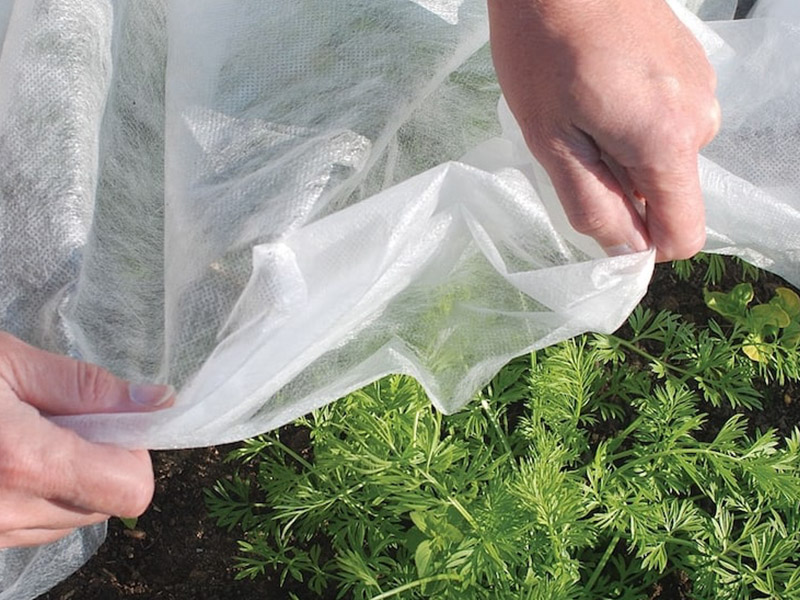
| Agriculture covers and landscape fabric | S or SS | Gas exchange against heat retention |
| Shopping bags and packaging | S | Low priority; the reading mainly tracks web openness consistency |
The mask row deserves a closer look, because it shows how a permeability spec is really a two-sided contract. Media that filters aggressively but barely passes air fails in service, since users pull it away from the face or stop wearing it correctly, which is why breathing resistance limits sit alongside filtration efficiency in mask standards. Holding both numbers in range is largely a matter of fiber fineness control and stable web formation on the meltblown line. Plants that want to produce this layer in-house typically evaluate a dedicated meltblown line, either standalone or as part of a composite configuration:
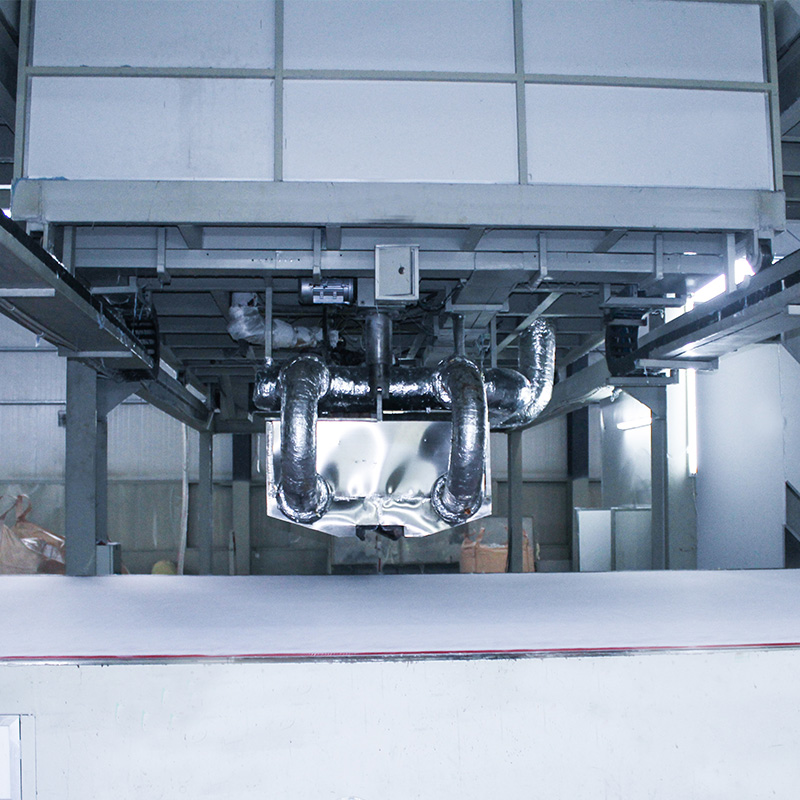 Melt Blown Nonwoven Machine for Filtration MediaThis meltblown line produces fine-diameter polypropylene fabric from 18–300 gsm at 10–70 m/min, giving plants the fiber fineness and web control needed to hold filtration efficiency and breathing resistance in range for mask media.View Product →
Air Permeability Is Not the Same as Breathability
"Breathability" is used loosely for two different measurements, and the confusion causes real purchasing errors. Air permeability tracks airflow through the fabric. Moisture vapor transmission rate, usually written MVTR or WVTR, tracks how fast water vapor moves through it. They correlate in some structures but not in others: a breathable film can pass vapor readily while blocking airflow almost completely, which is exactly how many hygiene backsheets work. When a customer asks for "breathable" fabric, the productive next question is whether they mean airflow, vapor transmission or both, because the test methods, the units and the machinery implications all differ.
How Line Configuration Sets the Permeability Window
Every spunmelt line has a range of permeability it can reach with a given polymer and recipe, and the beam configuration is the largest single decision behind that range.
Open structures: S and SS lines
A single-beam S line produces the most open, highest-permeability fabrics in the spunmelt family. That openness is a feature for shopping bags, packaging, agriculture covers and furniture backing, and modern single-beam lines reach the low deniers and high outputs these markets demand. SS lines add a second spinning beam, trading some openness for uniformity and the ability to run lighter, more even fabrics for hygiene and wipe substrates. The equipment behind this class of fabric is a purpose-built single-beam S line:
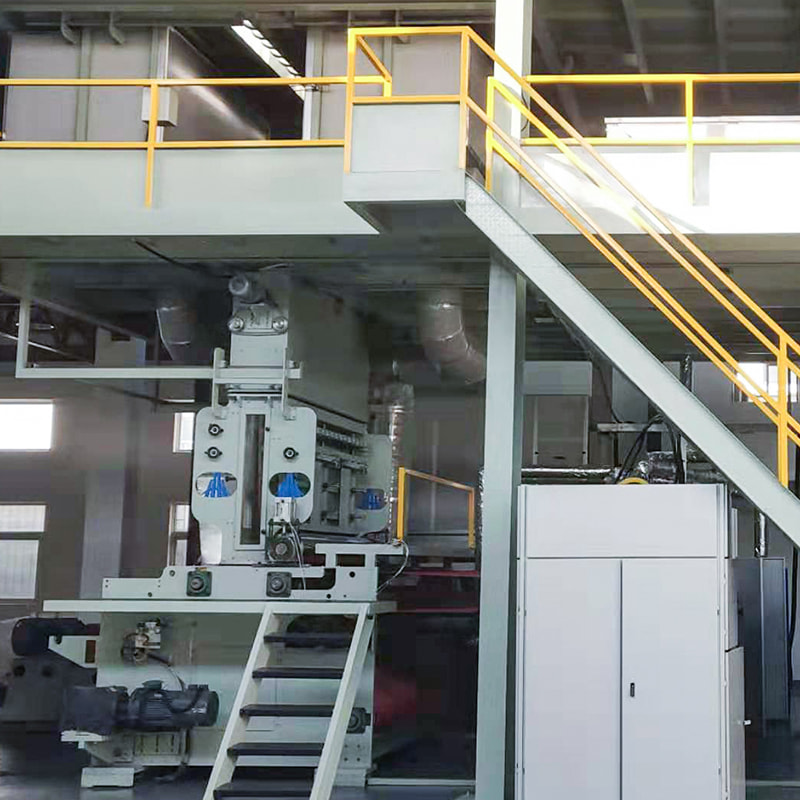 Single-Beam S Spunbond Nonwoven MachineA single-beam spunbond line running 10–200 gsm fabric at 9–150 m/min makes the open, high-permeability fabrics suited to shopping bags, packaging and agriculture covers discussed just before this point.View Product →
Barrier with controlled airflow: SMS, SMMS and SMMSS
Adding meltblown beams creates the SMS family, where one or two meltblown layers sit between spunbond layers. Each meltblown layer pulls permeability down and pushes barrier performance up, which is precisely the trade medical textiles and premium hygiene products are built on. Choosing among S, SS, SMS, SMMS and SMMSS is less about which is better and more about which permeability-to-barrier balance the target application actually pays for. For medical and premium hygiene substrates, the workhorse platform looks like this:
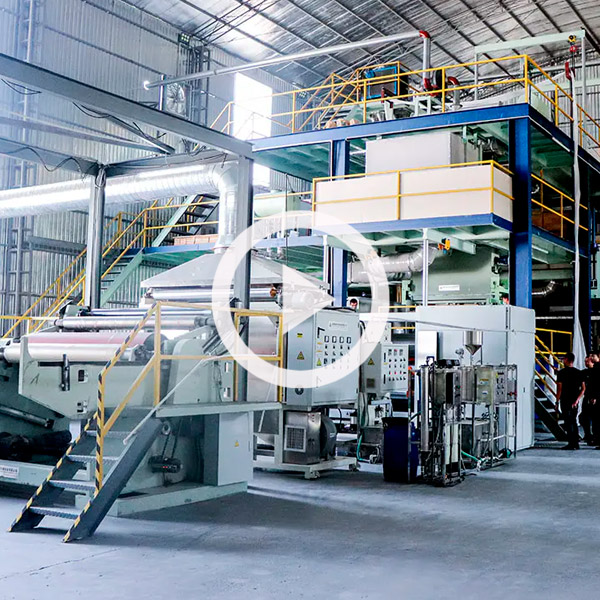 PP SMS Composite Nonwoven MachineCombining spunbond and meltblown beams, this SMS platform produces 9–70 gsm fabric at up to 350 m/min, delivering the permeability-to-barrier balance medical textiles and premium hygiene substrates require.View Product →
Within a given configuration, calendering setup, meltblown loading and polymer selection fine-tune where inside the window a recipe lands. This is why serious machinery suppliers ask about target fabric properties, including the permeability range, before quoting a line: the equipment has to be designed around the spec, not the other way around.
Five Checks Before You Approve a Fabric or a Line
- Name the standard and the conditions. Accept specs written as ISO 9237 with the head area and pressure stated, or ASTM D737 on the same terms, and reject bare numbers.
- Fix the unit. State mm/s or CFM in the contract, and convert before comparing figures, at roughly 5.08 mm/s per CFM.
- Condition samples the same way. Airflow readings shift with temperature and humidity, so test after conditioning in a standard textile atmosphere of about 20-21°C and 65% relative humidity.
- Ask for the process context. Basis weight, filament denier and calender settings let a deviation be traced to a cause instead of argued about.
- Verify on your own converting line. Lamination, embossing and converting heat all interact with web openness, and a pilot roll run costs far less than a rejected shipment.
None of these checks cost much, and together they prevent the most common argument in nonwoven supply: two parties quoting the same fabric with different numbers. When the target range itself is the problem, when a buyer needs a permeability window the current recipe cannot reach, the fix is usually upstream, in beam configuration, meltblown loading or bonding design. That is the level we work at: as a manufacturer of PP spunbond and meltblown complete lines from single-beam S through five-beam SMMSS, in widths from 1600 to 4200 mm, we build the production line around the fabric properties a customer has to hold, air permeability included. If you are weighing a new line against a permeability-driven specification, you are welcome to talk through the configuration options with our engineers before you commit.






 +8613621544385
 No.29 Xinhua Road, Jiashan Village,Jiaxing City Zhejiang P.R., China