





 English
 中文简体
中文简体 русский
 عربى
عربىHigh Performance Nonwovens: Properties, Applications & Machine
Content
What Are High Performance Nonwovens? – Definition and Core Concept
A filtration media that tears during pleating or a geotextile that degrades after six months of UV exposure fails because the nonwoven lacked the targeted performance properties. High performance nonwovens are engineered fabrics produced by orienting and bonding fibers through mechanical, thermal, or chemical processes, not by weaving or knitting. The distinction lies in the controlled fiber architecture and bonding integrity that deliver mechanical and thermal characteristics far beyond those of commodity carded or air-laid nonwovens.
Unlike conventional nonwovens that rely on random fiber entanglement for acceptable hand feel, high performance variants use specific polymer formulations, precise die designs, and multi-beam layering to create anisotropic strength profiles. For example, a spunbond nonwoven can be engineered for high tensile strength in the machine direction while maintaining cross-direction tear resistance – a balance unattainable in traditional woven fabrics without significant weight penalties. The core concept is that performance is designed into the fabric at the point of filament formation and web laydown, not added later through chemical finishes.
Key Properties That Define “High Performance”
Multiple performance criteria separate a technical nonwoven from a standard one. The following properties are evaluated in context, and what qualifies as “high” depends on the end use, but the underlying engineering principles remain consistent.
- Tensile strength and tear resistance. Measured in machine and cross directions (MD/CD), these values determine whether the fabric can survive high-speed converting processes such as pleating, laminating, or stretching. A geotextile that fails before installation achieves nothing, regardless of its filtration potential.
- Thermal stability. In automotive under-hood components or high-temperature filtration, the fabric must retain dimensional stability and structural integrity across a defined temperature range, often above 150°C, without excessive shrinkage or loss of strength.
- Chemical resistance. Industrial wipes, battery separators, and protective apparel require resistance to acids, bases, or organic solvents. The polymer choice and bonding method directly influence how the web withstands aggressive environments.
- Filtration efficiency and pressure drop. For air and liquid filtration, the combination of fine fiber diameter, web uniformity, and pore-size distribution determines the Beta ratio and dust-holding capacity. A melt‑blown layer engineered for high efficiency with low air resistance is the critical differentiator. For applications where sub‑micron particle capture is essential, a melt-blown machine for high-efficiency filtration must be capable of producing ultra‑fine fibers with tight diameter control.
- Durability and aging resistance. Exposure to UV light, humidity, or cyclic loading should not cause rapid embrittlement. The selection of appropriate stabilizers and the consolidation of multiple spunbond layers can extend service life dramatically.
From Property to Production – How Machine Configuration Delivers Performance
Every critical property listed above can be traced back to a specific machine configuration decision. No aftermarket treatment can compensate for a production line that lacks the beam layout or process control to build the required web structure from the start. When a technical buyer specifies a nonwoven, they are implicitly specifying the kind of spunmelt line capable of making it.
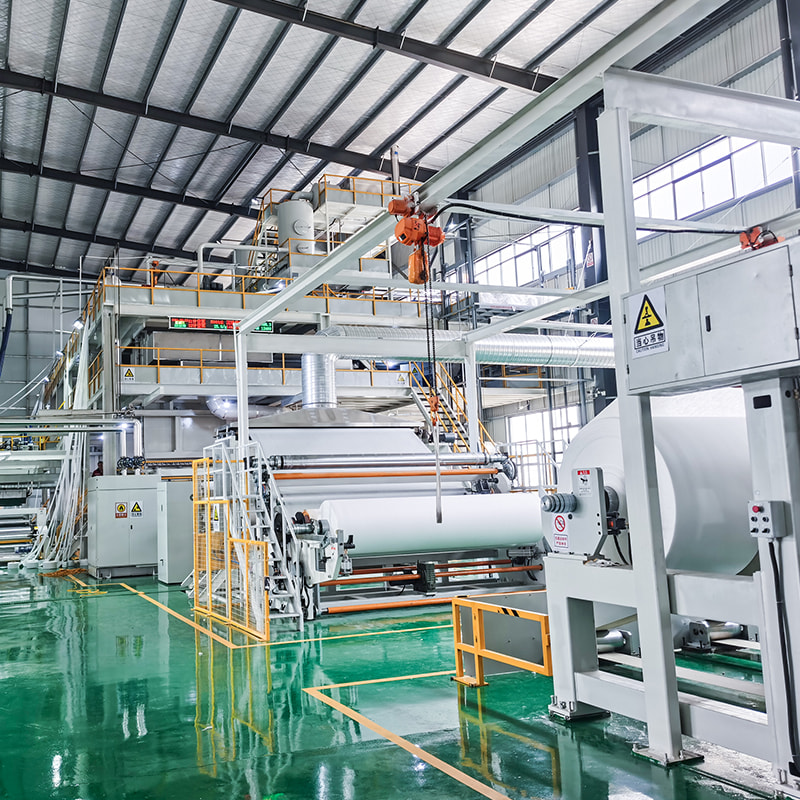
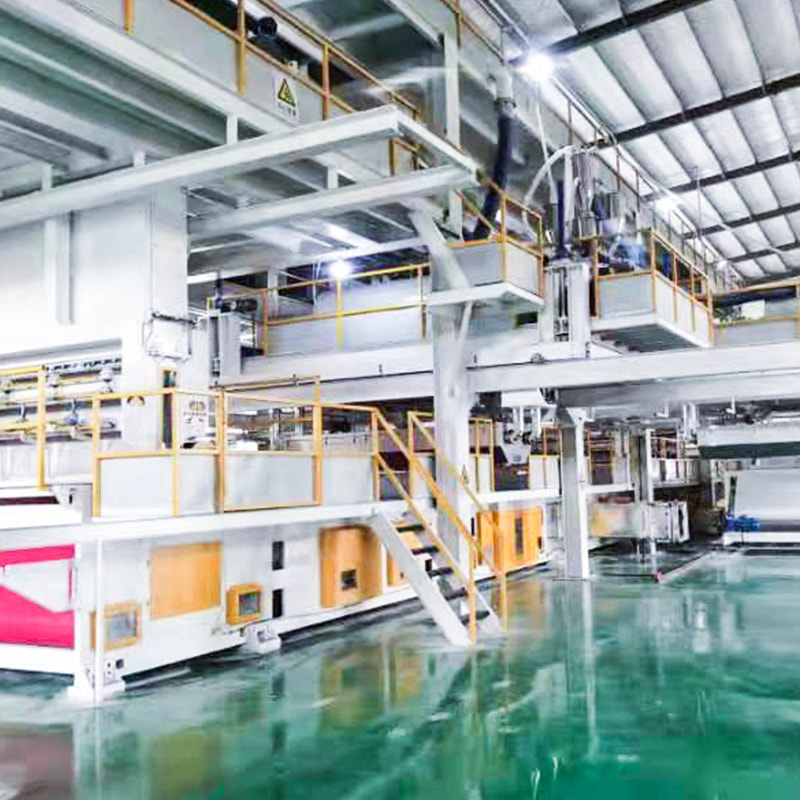
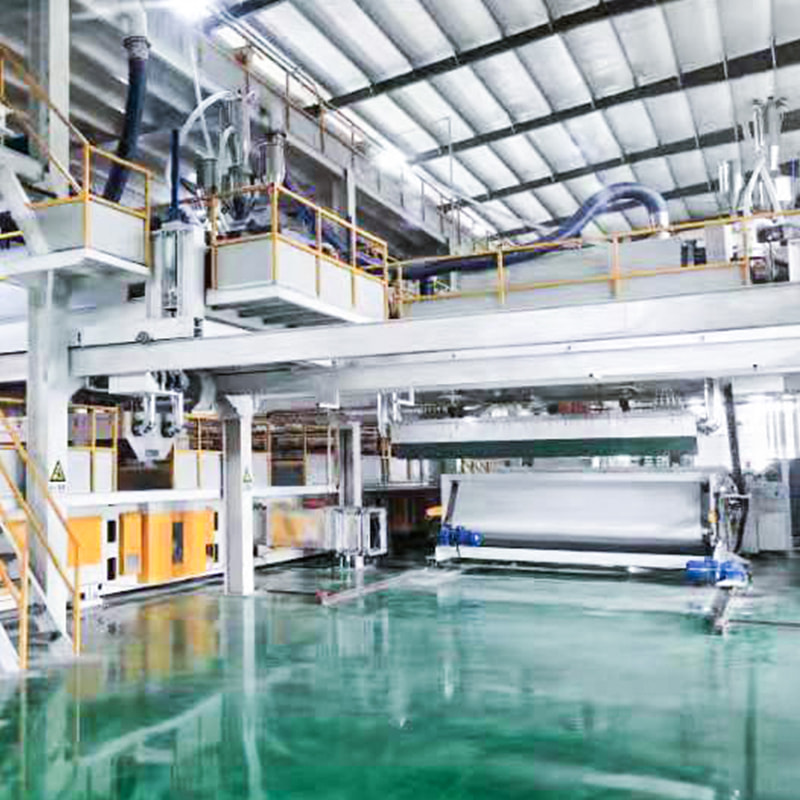
The direct mapping is straightforward: tensile strength relies on the number and alignment of spunbond beams; barrier and filtration properties depend on the presence and quality of melt‑blown beams; uniformity across the web width is a function of melt delivery consistency, die design, and automated process control. A producer aiming for a medical SMS fabric needs a three‑beam configuration; a manufacturer targeting high‑strength double‑layer spunbond can operate with a double‑beam SS line. The machine is the process. Learn more about our spunmelt nonwoven machine configurations and how they can be tailored to your product performance goals.
Why Beam Count Matters: S – SS – SMS – SMMS Explained for Performance
The number and type of beams in a spunmelt line determine the internal structure of the nonwoven. A single‑beam (S) line produces a monolayer web with moderate strength. Adding a second spunbond beam creates an SS structure, which bonds two identical layers together, significantly improving MD/CD tensile balance and reducing the risk of delamination under stress. This configuration is the economic baseline for many durable applications that do not require a melt‑blown barrier layer.
When barrier performance becomes necessary – even at low hydrostatic head – a melt‑blown beam is inserted between two spunbond beams to form the SMS (Spunbond‑Meltblown‑Spunbond) composite. The middle melt‑blown layer, made of micro‑ and nano‑fibers, provides the pore structure for fluid repellency and particle filtration while the outer spunbond layers carry the mechanical load. For more demanding filtration and medical applications, incorporating a second melt‑blown beam creates an SMMS structure, which enhances barrier uniformity and reduces pore‑size variation without sacrificing strength. For pure strength‑driven applications such as shopping bags or geotextiles, a high-output double-beam spunbond machine delivers the consistent cross‑directional strength and basis weight uniformity that converters demand.
| Configuration | Structure | Key Performance Attribute | Typical Applications |
|---|---|---|---|
| S | Single spunbond beam | Basic tensile strength, lightweight | Packaging, coverstock |
| SS | Two spunbond beams | High MD/CD strength, uniformity | Shopping bags, geotextiles, furniture |
| SMS | Spunbond + Meltblown + Spunbond | Barrier, moderate strength | Medical gowns, protective apparel |
| SMMS | Two meltblown layers between spunbonds | Enhanced barrier and filtration, high strength | Surgical drapes, advanced filtration |
The Role of Automation and Precision Control
Even the most advanced beam configuration underperforms if the process variables drift. High performance nonwovens require consistency across thousands of meters of fabric, and that consistency comes from automated control systems. A production line equipped with a PLC and touch‑screen HMI allows operators to set and monitor melt temperature, air quench flow, suction pressure, and line speed within tolerances that manual adjustments cannot replicate.
Precision control directly affects web uniformity and fiber diameter distribution. Temperature variations as small as 3–5°C in the die head can shift filament denier, altering pore size and strength. Automatically regulated melt pumps and draw pressures compensate for raw material batch changes, maintaining target properties without operator intervention. Technologies such as dynamic balancing of rotating components and CNC‑machined spinnerets further reduce vibration and die-edge build‑up, which translates into fewer defects and lower basis‑weight variation. When a customer requires a 0.45 μm BFE filtration grade, automation makes the difference between a compliant roll and one that is rejected after conversion.
Industrial Applications That Demand High Performance Nonwovens
The markets that rely on high performance nonwovens are diverse, but in every case the fabric specification flows directly from the operational environment. The following examples show how performance criteria dictate the machine configuration a producer must invest in.
- Filtration media (air, liquid, cabin air). Requires high filtration efficiency, low pressure drop, and high dust‑holding capacity. An SMMS or SSMMS structure with optimized melt‑blown fiber diameter is essential. For advanced filtration applications, our SMMS fabric making machine for advanced filtration delivers the layer uniformity and fine‑fiber quality that pleating and element manufacturers depend on.
- Automotive interiors and geotextiles. Demand high tensile strength, tear resistance, and long‑term UV/thermal stability. Double‑beam SS or triple‑beam SS configurations with heavy‑denier filaments provide the structural base. A machine capable of running at 3.2 m or wider reduces seam waste in road‑building applications.
- Medical protective fabrics. Must balance barrier performance (synthetic blood penetration, viral penetration) with strength and comfort. An SMS machine with precise melt‑blown integration remains the standard. The fabric cannot stretch or tear when a mask ear‑loop is attached, nor can it lose barrier integrity after sterilization.
- Construction and roofing materials. Require high tear strength and dimensional stability under heat and building movement. Multi‑beam spunbond lines that produce heavier‑weight substrates with consistent bonding across the width minimize post‑installation failures.
How to Choose the Right Machine for High Performance Nonwovens
Selecting a production line should start with the end product, not the machine brochure. The decision process can be structured in four steps.
First, define the single most critical performance indicator for your target application: is it tensile strength, barrier penetration, or filter efficiency? That answer immediately narrows the beam configuration. A barrier‑critical product requires at least one melt‑blown beam; a strength‑critical product may be served by a double‑beam SS line, while a product demanding both properties points to SMMS or even SSMMS.
Second, match that beam configuration to the required web width and throughput. Customization such as variable beam spacing, 1600‑mm to 4200‑mm net width, and the ability to change melt‑blown die length affects both capital cost and flexibility. A line that can switch between products by retracting a melt‑blown beam without dismantling the machine reduces downtime and increases ROI.
Third, evaluate the automation package. The difference between a machine that can hold basis‑weight variation under ±1.5% versus ±4% is the difference between a high‑performance fabric and a commodity product. Look for integrated PLC control, multi‑zone temperature regulation, and automatic tension control – capabilities that ensure batch‑to‑batch repeatability even when running at 300 m/min.
Finally, consider the manufacturer’s experience in delivering complete lines to markets with demanding standards. Lines built with CNC components, dynamic balancing, and proven export references in regions such as India, Turkey, and Southeast Asia provide a reliability baseline that reduces startup risks. For a detailed consultation, contact our team or visit the about page to initiate a technical discussion about your target product and the machine configuration that can achieve it.


 +8613621544385
 No.29 Xinhua Road, Jiashan Village,Jiaxing City Zhejiang P.R., China