


 English
 中文简体
中文简体 русский
 عربى
عربىHow to Make Spunbonded Non-Woven Fabric: Process & Settings
Content
- 1 Define the product you want to make (specs that drive the entire line)
- 2 Select polymer and additives for stable spinning
- 3 Run the spunbond line: from melt to continuous filaments
- 4 Bond the web: converting loose filaments into usable fabric
- 5 Set and monitor key parameters (targets that keep quality predictable)
- 6 Quality control tests for spunbonded non-woven fabric (and what “good” looks like)
- 7 Troubleshooting guide (symptom → likely cause → corrective action)
- 8 Winding, finishing, and application-specific treatments
Define the product you want to make (specs that drive the entire line)
Before you start a spunbonded non-woven fabric run, lock the end-use requirements. In spunbond, basis weight, bond pattern, and filament fineness determine most downstream settings.
Typical spunbond ranges used as practical starting points
- Basis weight: commonly 10–200 g/m² (often 15–150 g/m² for many PP spunbond grades).
- Filament diameter: commonly about 15–40 μm (application and line design dependent).
- Configuration: S (single beam), SS, SSS, or SMS laminates; more beams generally improve cover and uniformity at low GSM.
A useful approach is to choose (1) target GSM, (2) softness vs. strength priority, (3) intended bonding method (thermal calendaring is most common for PP), and (4) functional finishes (hydrophilic, antistatic, UV, etc.).
Select polymer and additives for stable spinning
Most spunbonded non-woven fabric is made from polypropylene (PP) because it spins cleanly, draws well, and bonds efficiently. Polymer choice is not cosmetic—resin rheology directly controls filament stability and break rate.
PP resin guidelines that usually work in production
- MFR/MFI for PP spunbond: commonly in the 25–40 g/10 min range (measured at 230°C/2.16 kg), enabling high-speed attenuation and fine filaments.
- Thermal stability: prioritize grades designed for fiber/nonwovens to reduce gel formation and spinneret plugging.
- Moisture/contamination control: keep pellets clean and dry; contamination is a common root cause of broken filaments and pinholes.
Common additive packages (keep dosage disciplined)
- Antioxidants (primary/secondary) to limit thermal degradation in extruder and spin pack.
- TiO₂ masterbatch for opacity/whiteness (watch for filtration load and spinneret wear).
- Hydrophilic finish (often topical) for hygiene topsheets; antistatic for packaging and medical uses.
- UV stabilizers for agricultural covers and outdoor applications.
Practical rule: if you change resin MFR or masterbatch loading, treat it like a new product and re-optimize quench, draw, and bonding—those three zones are tightly coupled to melt rheology.
Run the spunbond line: from melt to continuous filaments
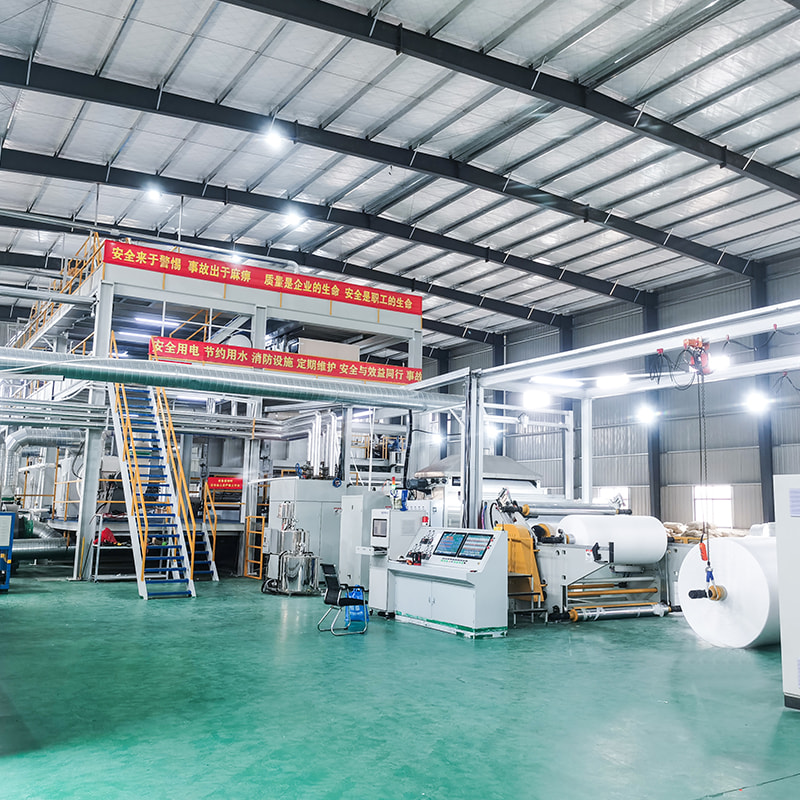
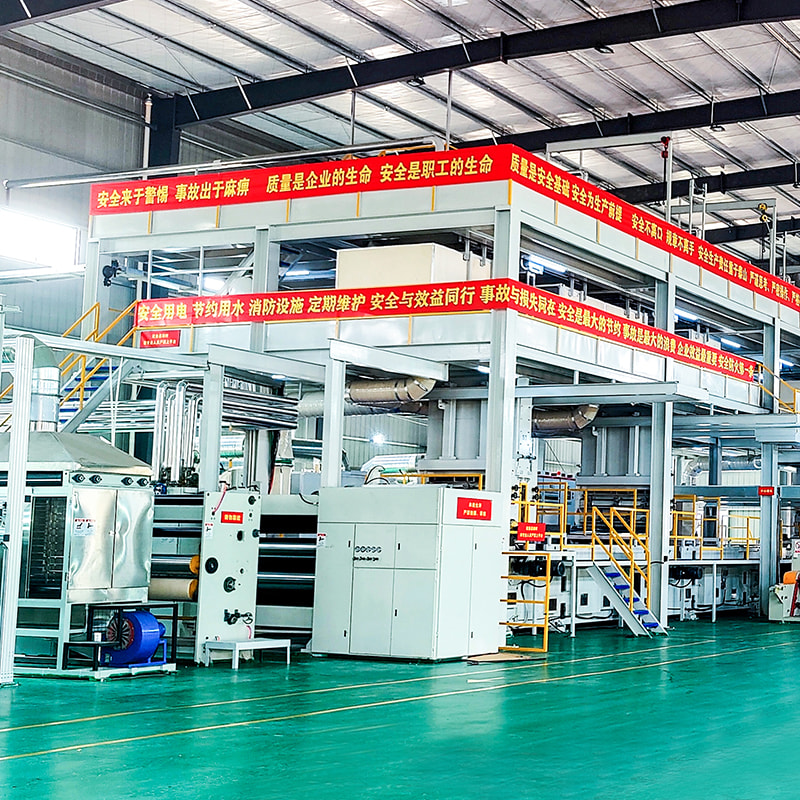
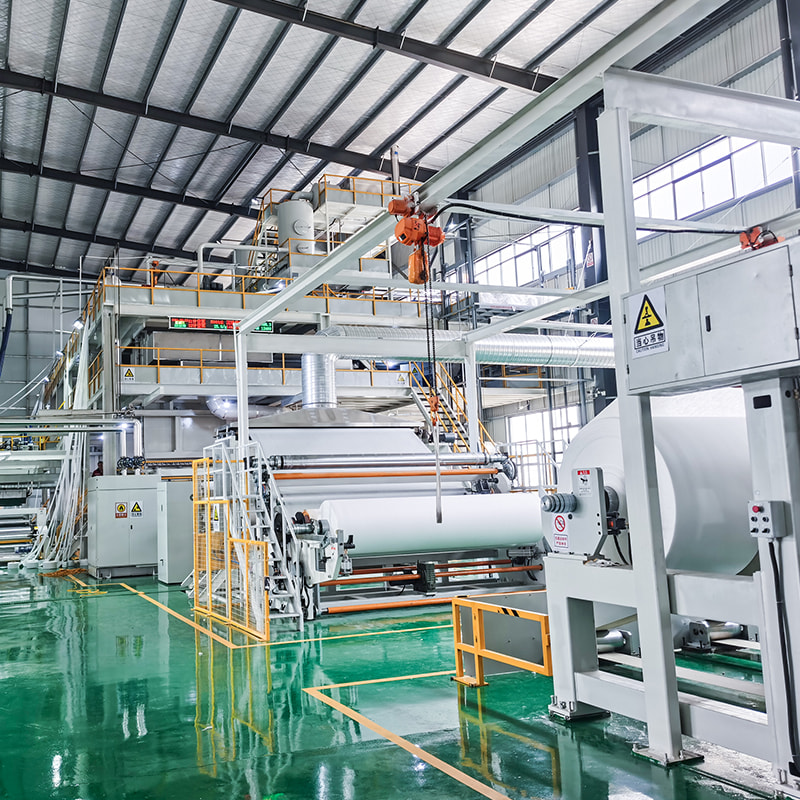
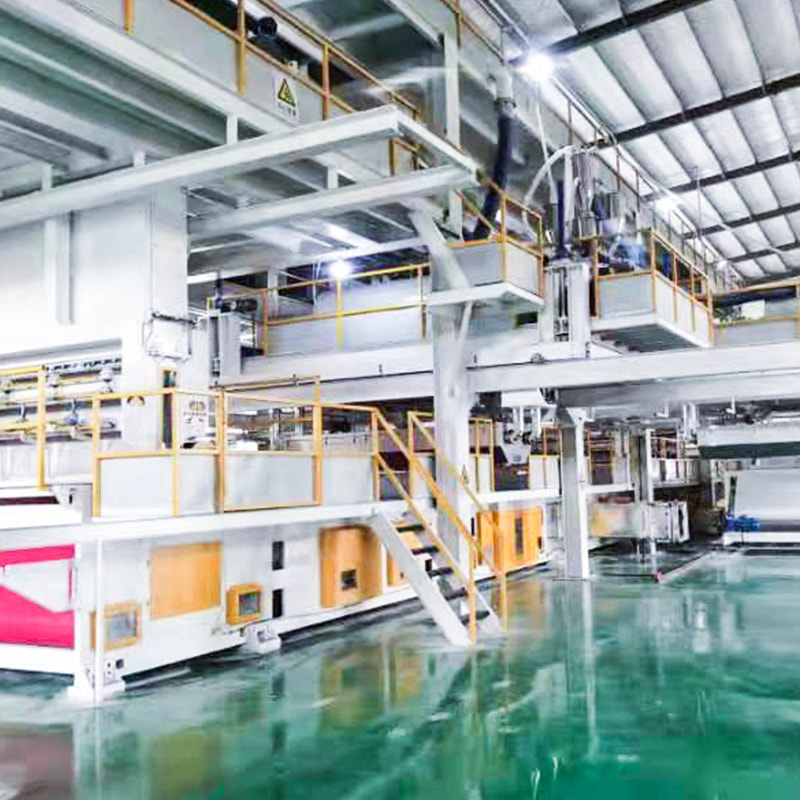
Spunbonded non-woven fabric is produced in a continuous line where spinning and web formation happen inline. The objective is stable filament formation with uniform laydown and controlled bonding.
Core steps (process flow)
- Feed PP pellets to the extruder; melt and homogenize the polymer.
- Filter the melt (screen changer) to remove gels/contaminants; stabilize pressure.
- Meter the melt with a gear pump to keep throughput constant (basis weight stability depends on this).
- Extrude through a spinneret to form continuous filaments.
- Quench filaments with controlled air to solidify without filament sticking.
- Draw/attenuate filaments (often with high-velocity air) to achieve target fineness and strength.
- Lay down filaments onto a moving belt with suction to form a uniform web.
Where most defects originate
- Melt instability (pressure fluctuations) → GSM streaks and weak areas.
- Quench imbalance → filament fusing, thick spots, or “rope” filaments.
- Draw air mismatch → too coarse (low softness/coverage) or too fine (breaks/fly).
- Laydown turbulence → poor uniformity, holes, edge lightness.
Bond the web: converting loose filaments into usable fabric
After web formation, bonding locks fiber intersections so the structure survives handling and converting. For PP spunbonded non-woven fabric, thermal bonding with heated calender rolls is the dominant method.
Thermal calendaring: the practical control levers
- Roll temperature: influences bond strength and hand feel; too low causes linting/weak MD/CD, too high causes harshness and pinholes.
- Nip pressure: increases bond area/strength but can crush bulk; excessive pressure reduces softness and air permeability.
- Line speed & dwell time: higher speed reduces bonding time and may require higher temperature or pressure.
- Emboss pattern: controls bond area percentage; higher bond area tends to increase tensile but reduce softness and drape.
Alternative bonding options (use-case driven)
- Through-air bonding (TAB): improves softness/bulk (more common with bicomponent fibers).
- Ultrasonic bonding: common for seams and converting, not always for full-web bonding.
- Chemical bonding: less common for PP spunbond; adds complexity and can affect odor/VOCs.
Production focus: optimize bonding to meet tensile targets with the minimum bond area/thermal load that preserves the hand feel your market expects.
Set and monitor key parameters (targets that keep quality predictable)
The fastest way to stabilize spunbonded non-woven fabric quality is to treat the line as a set of linked control loops: throughput → filament formation → web uniformity → bonding → winding. The table below lists practical levers and what they typically change.
| Process zone | Parameter to control | Primary impact on fabric | Typical symptom when off-target |
|---|---|---|---|
| Extrusion & metering | Melt temperature, pressure stability, pump rate | GSM stability, streak control, fewer gels | Weight streaks, weak bands, spinneret plugging |
| Quench | Air temperature, airflow balance, quench uniformity | Filament solidification, web appearance, fuzz control | Filament sticking, “roping,” thick spots, holes |
| Drawing/attenuation | Draw air velocity/pressure and temperature | Filament fineness, strength, cover/opacity | Coarse filaments (harsh), breaks/fly (too aggressive) |
| Laydown & suction | Air turbulence control, belt vacuum, edge control | Uniformity, pinhole reduction, edge GSM | Holes, cloudy appearance, edge lightness/heaviness |
| Bonding (calender) | Roll temperature, nip pressure, bond pattern | Tensile/tear, linting, softness, permeability | Linting/weak web (underbond) or harsh/pinholes (overbond) |
If you need a concrete operating reference point, many commercial lines run at widely varying speeds depending on design; 200–1200 m/min can be seen across the market, so the correct target is the one that meets your quality at your installed equipment limits.
Quality control tests for spunbonded non-woven fabric (and what “good” looks like)
QC should connect directly to customer performance needs. A practical QC set includes both online checks (basis weight scanning, edge control) and lab tests (mechanical and barrier properties).
Common QC checklist
- Basis weight (GSM) & uniformity: track average and CV%; rising CV% typically indicates laydown or throughput instability.
- Tensile (MD/CD): verify the strength ratio meets application needs; bonding and laydown strongly affect CD.
- Thickness/bulk: key for hygiene and cushioning; excessive nip pressure reduces bulk.
- Air permeability: proxy for pore structure; overbonding often drops permeability.
- Visual defects: gels, holes, streaks, oil spots, edge curl—log with time stamps to correlate with process events.
Fast interpretation tips
- Low tensile with normal GSM often indicates underbonding or poor filament drawing (low orientation).
- Harsh hand feel with high tensile often indicates overbonding (too much thermal/pressure load or too high bond area).
- Random pinholes frequently map to laydown turbulence, suction imbalance, or intermittent filament breaks.
Troubleshooting guide (symptom → likely cause → corrective action)
When learning how to make spunbonded non-woven fabric efficiently, troubleshooting discipline matters more than “turning knobs.” Change one variable at a time, record the outcome, and return to baseline if the change worsens stability.
| Defect symptom | Likely root causes | Corrective actions |
|---|---|---|
| GSM streaks (machine direction) | Pump/pressure fluctuation, partial spinneret blockage | Stabilize melt pressure, check filtration, inspect/clean spin pack |
| Holes/pinholes | Filament breaks, laydown turbulence, suction imbalance | Reduce draw aggressiveness, rebalance airflow/vacuum, improve edge control |
| Harsh hand feel | Overbonding, high bond area pattern, excessive nip pressure | Lower roll temperature/pressure, consider lower bond area emboss, verify GSM target |
| Linting / poor web integrity | Underbonding, insufficient draw, contamination | Increase bonding energy gradually, tune draw, improve melt filtration and housekeeping |
| Edge curl / uneven edges | Edge GSM imbalance, uneven cooling/bonding across width | Tune edge suction and laydown, check calender temperature uniformity, correct web guiding |
Best-practice conclusion: if you must pick one discipline to improve both quality and uptime, prioritize contamination control and melt filtration—many “mystery” defects ultimately trace back to gels, fines, or degraded polymer.
Winding, finishing, and application-specific treatments
Once the web is bonded, winding and finishing determine whether you deliver consistent roll goods that convert cleanly. Poor winding tension or bad slitting can destroy a good web.
Operational finishing checklist
- Set winding tension to avoid telescoping, wrinkles, and edge crush.
- Control roll hardness consistently across lots for predictable converting.
- Use clean slitting knives and stable web guiding to prevent edge dust and breaks.
Common finishing treatments (choose based on customer specs)
- Hydrophilic treatment: improves liquid wettability for hygiene topsheets.
- Repellent finish: supports barrier needs for medical and protective uses (verify regulatory constraints for the target market).
- Antistatic: reduces dust attraction and handling issues.
- Printing/lamination readiness: ensure surface energy and bond integrity match downstream processes.
If you are producing for hygiene or medical markets, treat process documentation and traceability as part of “how to make spunbonded non-woven fabric” professionally—customers frequently audit consistency as much as performance.



 +8613621544385
 No.29 Xinhua Road, Jiashan Village,Jiaxing City Zhejiang P.R., China