





 English
 中文简体
中文简体 русский
 عربى
عربىIntroduction of Double Beam Spunbond Nonwoven Machine Guide
Content
- 1 What a Double Beam Spunbond Nonwoven Machine Is
- 2 Process Flow and Where “Double Beam” Changes the Game
- 3 Main Equipment Modules and Practical Notes
- 4 Typical Technical Ranges and What to Verify with a Supplier
- 5 Why Double Beam Is Chosen: Benefits With Concrete Examples
- 6 Selection Checklist: How to Evaluate a Double Beam Line Before Purchase
- 7 Startup and Recipe Tuning: Practical Parameters That Move the Needle
- 8 Quality Control: What to Measure and How to Troubleshoot Faster
- 9 Maintenance and Consumables: What Prevents Downtime
- 10 Simple ROI Thinking: A Practical Example You Can Adapt
- 11 Implementation Tips: Commissioning, Training, and Ramp-Up
- 12 What a Double Beam Spunbond Nonwoven Machine Is
- 13 Process Flow and Where “Double Beam” Changes the Game
- 14 Main Equipment Modules and Practical Notes
- 15 Typical Technical Ranges and What to Verify with a Supplier
- 16 Why Double Beam Is Chosen: Benefits With Concrete Examples
- 17 Selection Checklist: How to Evaluate a Double Beam Line Before Purchase
- 18 Startup and Recipe Tuning: Practical Parameters That Move the Needle
- 19 Quality Control: What to Measure and How to Troubleshoot Faster
- 20 Maintenance and Consumables: What Prevents Downtime
- 21 Simple ROI Thinking: A Practical Example You Can Adapt
- 22 Implementation Tips: Commissioning, Training, and Ramp-Up
What a Double Beam Spunbond Nonwoven Machine Is
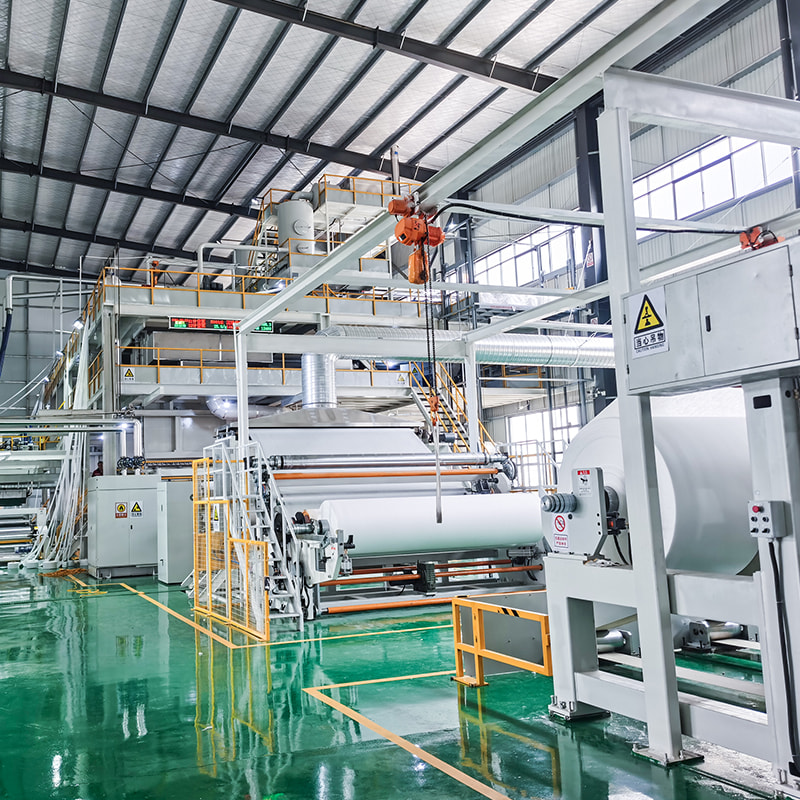
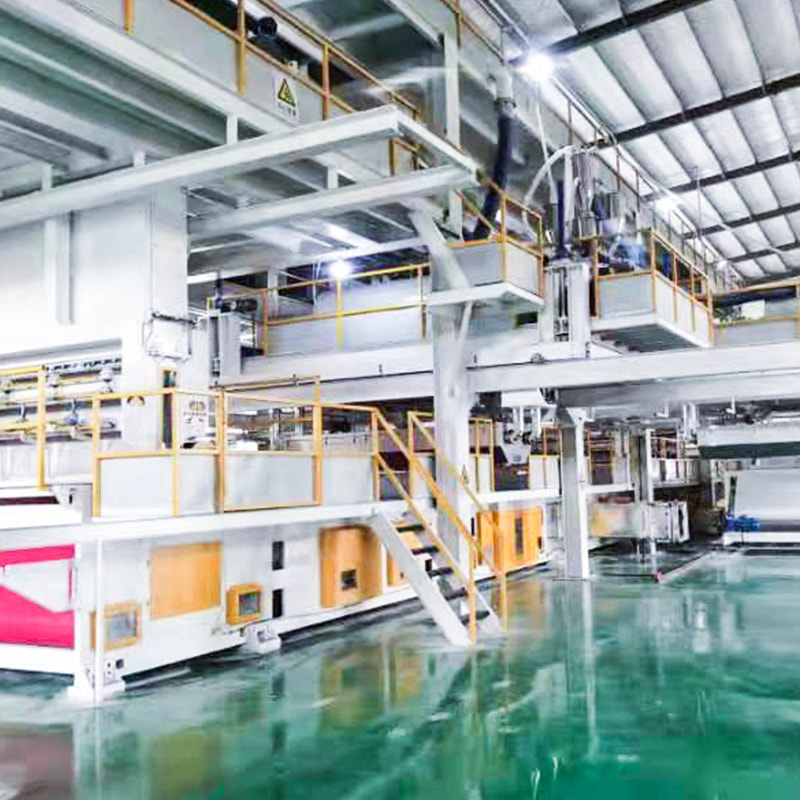
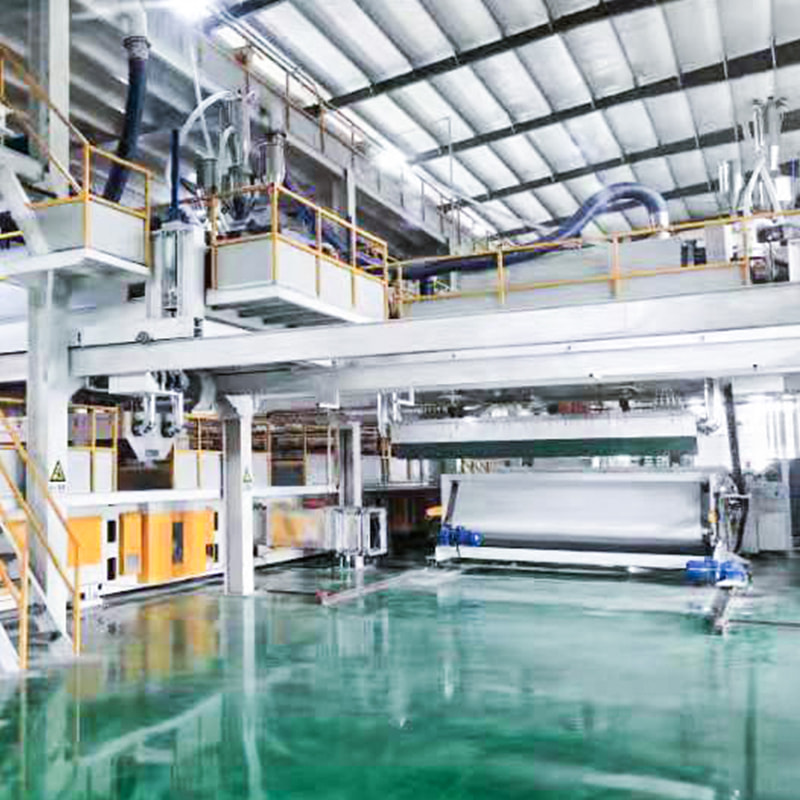
A double beam spunbond nonwoven machine is a spunbond production line equipped with two independent spinning beams (two sets of melt distribution, spinnerets, quench/drawing zones) that lay filaments onto the same forming section. The “double beam” structure is commonly used to increase output, widen the workable basis-weight window, and improve web uniformity by layering filaments from two beams.
In practical terms, you can run both beams with the same polymer and similar filament settings for high throughput, or you can intentionally differentiate settings (e.g., slightly different denier or throughput split) to improve cover, hand-feel, and strength balance. The result is a more controllable web formation compared with a single-beam line, especially when targeting stable mass distribution at medium-to-high speeds.
- Two-beam layering helps reduce thin spots and streaks on wide-width lines where airflow and laydown become more sensitive.
- Throughput can be scaled without pushing a single beam to its process limits (melt pressure, quench stability, draw uniformity).
- Operational flexibility improves: one beam can be tuned for cover while the other supports strength and productivity targets.
Process Flow and Where “Double Beam” Changes the Game
The core spunbond flow is: polymer feeding → melting and metering → filtration → spinning (spinneret) → quench cooling → drawing/attenuation → laydown on forming wire → bonding (typically thermal calender) → winding and slitting. A double beam line duplicates the spinning-to-laydown path so that two filament curtains are formed and deposited in a controlled layer sequence.
Typical deposition strategies
- 50/50 split: both beams share the basis weight equally to maximize throughput and stability.
- 60/40 or 70/30 split: the “primary” beam runs steadier and the secondary beam is adjusted to fine-tune GSM and formation.
- Functional layering: one beam targets finer filaments for cover/softness, the other slightly coarser for tensile and tear resistance (within polymer and equipment constraints).
Because both beams share downstream bonding and winding, formation quality becomes the key differentiator. The double-beam approach often yields a more forgiving operating window in quench air balance and draw pressure, particularly when producing lower basis weights at commercial line speeds.
Main Equipment Modules and Practical Notes
Extrusion, filtration, and metering
Each beam is typically fed by its own extruder (or a shared extrusion system split into two melt streams, depending on line design). Stable melt temperature and pressure are critical because filament denier and web uniformity respond quickly to viscosity shifts. Filtration (screen changer / melt filter) protects spinneret capillaries from gels and contamination—small defects can translate into broken filaments and web weak points.
Spinning beam, quench, and drawing
The spinning beam includes a melt distribution system and spinneret. Quench airflow cools filaments uniformly; drawing (e.g., air draw/venturi) attenuates filaments to the target fineness. In double beam lines, matching the two beams’ quench and draw profiles prevents layer imbalance (e.g., one layer overly “open,” the other overly “tight”), which can affect bonding and roll density.
Laydown (forming) and suction
Laydown quality depends on filament distribution, diffuser geometry, electrostatic control (if used), forming wire condition, and vacuum/suction stability. Double beam layering can smooth random variations, but it can also amplify systematic issues (like a persistent cross-direction weight profile error) if both beams share the same airflow bias.
Thermal bonding and winding
Thermal calender bonding is common for PP spunbond. Bond pattern selection (point-bond, diamond, etc.) affects softness, tensile, and linting. Winding tension, nip pressure, and edge alignment matter because higher-output double beam lines can create denser rolls where trapped heat and compression may lead to telescoping or blocking if settings are not balanced.
Typical Technical Ranges and What to Verify with a Supplier
Specifications vary by polymer, width, spinneret technology, and downstream configuration. The ranges below are practical reference bands often discussed during line evaluation; treat them as a starting point for supplier confirmation, trials, and acceptance criteria.
| Item | Common Target Range | Why It Matters |
|---|---|---|
| Basis weight (GSM) | ~10–200 gsm | Lower GSM requires excellent formation; higher GSM stresses bonding and winding. |
| Filament fineness | ~1.5–3.0 denier (application dependent) | Finer filaments improve cover/softness but increase sensitivity to quench/draw stability. |
| Line speed | ~200–600 m/min (product dependent) | High speed demands stable CD profile control, suction balance, and winding control. |
| Bonding temperature window | Material/pattern specific | A narrow window increases scrap risk; confirm repeatability and control resolution. |
| CD basis-weight uniformity | Supplier-defined (targets often %CV based) | Uniformity impacts converting yields and end-product appearance. |
When comparing suppliers, request performance evidence tied to your products: trial data on your target GSM, tensile/elongation, bonding pattern, roll hardness profile, and defect rates (holes, thick spots, filament wraps). Ask for how they measure CD profile and the control loop details (scanner type, actuator spacing, response time).
Why Double Beam Is Chosen: Benefits With Concrete Examples
Higher output without over-stressing one beam
If a single beam is pushed to very high throughput, it may require aggressive draw air and tight quench control, increasing the probability of filament breaks, fly, and inconsistent laydown. Splitting the load across two beams can reduce peak stress per beam while meeting the same line output. In many plants, this translates into fewer web breaks and more stable long runs at commercial speed.
Better formation through layering
Layering improves coverage because two independent filament curtains “average out” random distribution. For low-to-mid GSM products where pinholes and streaks are common customer complaints, using two beams at moderate individual throughput often delivers a visibly smoother sheet. A practical internal KPI is reduced defect counts per roll (e.g., fewer flagged meters during inspection) after tuning beam balance and suction.
Wider product portfolio on one line
Double beam configuration supports a broader range of end uses by enabling different run recipes (basis weight splits, filament attenuation targets, bonding patterns). This is especially useful when one facility must produce both commodity and higher-spec grades without frequent hardware changes.
- Commodity packaging and agriculture covers: prioritize productivity and tensile.
- Hygiene backsheet/inner layers (where applicable): prioritize formation and consistent bonding.
- Medical or clean applications (where qualified): prioritize cleanliness, defect control, and traceability.
Selection Checklist: How to Evaluate a Double Beam Line Before Purchase
An effective evaluation focuses on the performance you can verify during trials and acceptance, not only nameplate output. Below is a practical checklist used in many technical procurement processes.
- Target product matrix: list GSM, width, polymer grade(s), bonding pattern, and required tensile/elongation for each SKU.
- Beam independence: confirm whether each beam has independent temperature zones, pressure measurement, metering, and draw air control.
- Profile control: confirm CD basis-weight control method, scanner frequency, and actuator resolution (especially for wide widths).
- Changeover time: estimate recipe switches (GSM changes, bonding pattern changes, polymer changes). Request documented best-case and typical changeover durations.
- Energy and utilities: quantify compressed air/draw air demand, cooling water, and exhaust requirements; ensure plant utilities can support peak loads.
- Serviceability: access to spinneret cleaning, filter changes, calender roll maintenance, and safe lockout procedures.
- Spare parts and consumables: critical spares list (heater bands, sensors, screens, seals, bearings) and recommended on-site stock.
To reduce commissioning risk, define acceptance tests that include a sustained production run (for example, 8–24 hours continuous at target GSM and speed), with documented scrap rate, defect counts, tensile results, and roll build quality.
Startup and Recipe Tuning: Practical Parameters That Move the Needle
Beam balance (throughput split)
Start with a symmetrical split, then adjust based on formation and bonding response. If you see periodic thin areas or transparency variations, trial a modest shift (e.g., 55/45) to see whether one beam is more stable at your current settings. The key is to change one variable at a time and log the resulting CD profile and mechanical properties.
Quench and draw air stability
Formation issues often trace back to airflow imbalance rather than polymer problems. In double beam operation, ensure both quench systems deliver uniform velocity and temperature across width. For draw air, verify pressure stability and filter cleanliness—small pressure swings can change filament attenuation and translate into GSM drift or bonding inconsistency.
Bonding setpoints and roll build
Bonding settings (temperature, nip pressure, line speed, pattern) should be tuned to achieve the minimum bond needed for mechanical targets while protecting softness/hand-feel where required. On high-output lines, winding tension and roll hardness profile must be controlled to avoid edge damage and telescoping.
- Lock a stable web formation first (vacuum, laydown, beam balance).
- Then tune bonding to meet tensile and elongation targets.
- Finally, optimize winding for roll density, edges, and unwind quality at the customer’s converting speed.
Quality Control: What to Measure and How to Troubleshoot Faster
For a double beam spunbond nonwoven machine, the most actionable QC approach combines on-line monitoring (profile, defects) with rapid lab checks (basis weight, tensile, elongation, thickness). Establish limits by product grade and link each out-of-spec signal to a short troubleshooting playbook.
High-impact measurements
- CD basis-weight profile (scanner): detect drift and edge loss early.
- Defect mapping (camera/inspection): pinholes, thick spots, filament wraps, contamination.
- Tensile/elongation in MD and CD: confirm bonding adequacy and formation integrity.
- Bond pattern fidelity and calender marks: diagnose over-bonding or roll contamination.
Troubleshooting examples
| Symptom | Likely Cause | First Checks |
|---|---|---|
| Pinholes / transparent streaks | Laydown airflow imbalance, suction instability, filament breaks | Vacuum stability, quench uniformity, beam balance, spinneret cleanliness |
| Weak CD tensile | Non-uniform formation, insufficient bonding, pattern mismatch | CD profile, calender temperature/pressure, bond pattern condition |
| Hard rolls / telescoping | Winding tension too high, web too hot, roll hardness imbalance | Tension ramp, cooling/ventilation, nip settings, core quality |
A practical rule is to treat formation and airflow as the “upstream root” for many defects: if formation is unstable, bonding and winding corrections often become reactive and increase variability rather than fixing it.
Maintenance and Consumables: What Prevents Downtime
Double beam lines increase the number of critical points (two beams, two draw systems), so preventive maintenance discipline has a direct impact on OEE. The most effective programs combine routine checks with planned shutdown tasks and a consumables strategy aligned to defect prevention.
Routine checks (operator/shift)
- Filter differential pressure trends; replace screens before pressure instability causes denier drift.
- Quench and draw air filter cleanliness; verify stable pressures every 8–12 hours in high-speed operation.
- Calender roll surface inspection for buildup; small deposits can create repeating defects across kilometers of fabric.
Planned maintenance (weekly/monthly)
- Spinneret/beam cleaning schedule based on polymer cleanliness and defect history.
- Vacuum duct inspection and leak checks to maintain stable laydown suction.
- Winder alignment, bearing health, and tension calibration to prevent roll build failures.
Define “bad actor” parts using downtime and defect Pareto charts, then stock spares accordingly. This typically reduces both unplanned stops and quality scrap, which is often more costly than the downtime itself.
Simple ROI Thinking: A Practical Example You Can Adapt
A purchase decision usually comes down to whether the line’s incremental margin covers capital, utilities, labor, and quality losses. The example below shows a simple framework (replace the numbers with your actual selling price, contribution margin, and OEE assumptions).
- Assume a double beam line targets 5,000 tons/year of saleable output after ramp-up.
- If contribution margin is $150/ton, annual contribution is $750,000 before fixed costs and financing.
- If improved formation reduces scrap by 1.5% versus a stressed single-beam baseline, the recovered saleable tonnage can be material over a full year.
The key operational lever is not nameplate capacity—it is stable, repeatable quality at the customer’s specification. In many cases, the most persuasive ROI driver is scrap reduction and converting acceptance rather than maximum speed.
Implementation Tips: Commissioning, Training, and Ramp-Up
A double beam spunbond nonwoven machine ramps faster when commissioning is treated as a structured process: baseline mechanical verification, utilities stability, recipe validation, and defect-control discipline.
- Commissioning gates: do not move to higher speeds until formation stability and CD profile control are demonstrated at the current step.
- Recipe book: create standardized recipes for each SKU including beam split, airflow setpoints, bonding window, and winding profile.
- Defect language: align operators, QC, and maintenance on consistent defect definitions and first-response actions.
- Data discipline: trend melt pressure, air pressures, vacuum, calender temperature, and winder tension against defects to build a reliable troubleshooting model.
A well-run ramp-up typically ends with a capability statement: the line can hold specified GSM and tensile targets for a sustained run, at a defined speed range, with a documented scrap rate and defect level. That statement is what supports commercial scaling.
What a Double Beam Spunbond Nonwoven Machine Is
A double beam spunbond nonwoven machine is a spunbond production line equipped with two independent spinning beams (two sets of melt distribution, spinnerets, quench/drawing zones) that lay filaments onto the same forming section. The “double beam” structure is commonly used to increase output, widen the workable basis-weight window, and improve web uniformity by layering filaments from two beams.
In practical terms, you can run both beams with the same polymer and similar filament settings for high throughput, or you can intentionally differentiate settings (e.g., slightly different denier or throughput split) to improve cover, hand-feel, and strength balance. The result is a more controllable web formation compared with a single-beam line, especially when targeting stable mass distribution at medium-to-high speeds.
- Two-beam layering helps reduce thin spots and streaks on wide-width lines where airflow and laydown become more sensitive.
- Throughput can be scaled without pushing a single beam to its process limits (melt pressure, quench stability, draw uniformity).
- Operational flexibility improves: one beam can be tuned for cover while the other supports strength and productivity targets.
Process Flow and Where “Double Beam” Changes the Game
The core spunbond flow is: polymer feeding → melting and metering → filtration → spinning (spinneret) → quench cooling → drawing/attenuation → laydown on forming wire → bonding (typically thermal calender) → winding and slitting. A double beam line duplicates the spinning-to-laydown path so that two filament curtains are formed and deposited in a controlled layer sequence.
Typical deposition strategies
- 50/50 split: both beams share the basis weight equally to maximize throughput and stability.
- 60/40 or 70/30 split: the “primary” beam runs steadier and the secondary beam is adjusted to fine-tune GSM and formation.
- Functional layering: one beam targets finer filaments for cover/softness, the other slightly coarser for tensile and tear resistance (within polymer and equipment constraints).
Because both beams share downstream bonding and winding, formation quality becomes the key differentiator. The double-beam approach often yields a more forgiving operating window in quench air balance and draw pressure, particularly when producing lower basis weights at commercial line speeds.
Main Equipment Modules and Practical Notes
Extrusion, filtration, and metering
Each beam is typically fed by its own extruder (or a shared extrusion system split into two melt streams, depending on line design). Stable melt temperature and pressure are critical because filament denier and web uniformity respond quickly to viscosity shifts. Filtration (screen changer / melt filter) protects spinneret capillaries from gels and contamination—small defects can translate into broken filaments and web weak points.
Spinning beam, quench, and drawing
The spinning beam includes a melt distribution system and spinneret. Quench airflow cools filaments uniformly; drawing (e.g., air draw/venturi) attenuates filaments to the target fineness. In double beam lines, matching the two beams’ quench and draw profiles prevents layer imbalance (e.g., one layer overly “open,” the other overly “tight”), which can affect bonding and roll density.
Laydown (forming) and suction
Laydown quality depends on filament distribution, diffuser geometry, electrostatic control (if used), forming wire condition, and vacuum/suction stability. Double beam layering can smooth random variations, but it can also amplify systematic issues (like a persistent cross-direction weight profile error) if both beams share the same airflow bias.
Thermal bonding and winding
Thermal calender bonding is common for PP spunbond. Bond pattern selection (point-bond, diamond, etc.) affects softness, tensile, and linting. Winding tension, nip pressure, and edge alignment matter because higher-output double beam lines can create denser rolls where trapped heat and compression may lead to telescoping or blocking if settings are not balanced.
Typical Technical Ranges and What to Verify with a Supplier
Specifications vary by polymer, width, spinneret technology, and downstream configuration. The ranges below are practical reference bands often discussed during line evaluation; treat them as a starting point for supplier confirmation, trials, and acceptance criteria.
| Item | Common Target Range | Why It Matters |
|---|---|---|
| Basis weight (GSM) | ~10–200 gsm | Lower GSM requires excellent formation; higher GSM stresses bonding and winding. |
| Filament fineness | ~1.5–3.0 denier (application dependent) | Finer filaments improve cover/softness but increase sensitivity to quench/draw stability. |
| Line speed | ~200–600 m/min (product dependent) | High speed demands stable CD profile control, suction balance, and winding control. |
| Bonding temperature window | Material/pattern specific | A narrow window increases scrap risk; confirm repeatability and control resolution. |
| CD basis-weight uniformity | Supplier-defined (targets often %CV based) | Uniformity impacts converting yields and end-product appearance. |
When comparing suppliers, request performance evidence tied to your products: trial data on your target GSM, tensile/elongation, bonding pattern, roll hardness profile, and defect rates (holes, thick spots, filament wraps). Ask for how they measure CD profile and the control loop details (scanner type, actuator spacing, response time).
Why Double Beam Is Chosen: Benefits With Concrete Examples
Higher output without over-stressing one beam
If a single beam is pushed to very high throughput, it may require aggressive draw air and tight quench control, increasing the probability of filament breaks, fly, and inconsistent laydown. Splitting the load across two beams can reduce peak stress per beam while meeting the same line output. In many plants, this translates into fewer web breaks and more stable long runs at commercial speed.
Better formation through layering
Layering improves coverage because two independent filament curtains “average out” random distribution. For low-to-mid GSM products where pinholes and streaks are common customer complaints, using two beams at moderate individual throughput often delivers a visibly smoother sheet. A practical internal KPI is reduced defect counts per roll (e.g., fewer flagged meters during inspection) after tuning beam balance and suction.
Wider product portfolio on one line
Double beam configuration supports a broader range of end uses by enabling different run recipes (basis weight splits, filament attenuation targets, bonding patterns). This is especially useful when one facility must produce both commodity and higher-spec grades without frequent hardware changes.
- Commodity packaging and agriculture covers: prioritize productivity and tensile.
- Hygiene backsheet/inner layers (where applicable): prioritize formation and consistent bonding.
- Medical or clean applications (where qualified): prioritize cleanliness, defect control, and traceability.
Selection Checklist: How to Evaluate a Double Beam Line Before Purchase
An effective evaluation focuses on the performance you can verify during trials and acceptance, not only nameplate output. Below is a practical checklist used in many technical procurement processes.
- Target product matrix: list GSM, width, polymer grade(s), bonding pattern, and required tensile/elongation for each SKU.
- Beam independence: confirm whether each beam has independent temperature zones, pressure measurement, metering, and draw air control.
- Profile control: confirm CD basis-weight control method, scanner frequency, and actuator resolution (especially for wide widths).
- Changeover time: estimate recipe switches (GSM changes, bonding pattern changes, polymer changes). Request documented best-case and typical changeover durations.
- Energy and utilities: quantify compressed air/draw air demand, cooling water, and exhaust requirements; ensure plant utilities can support peak loads.
- Serviceability: access to spinneret cleaning, filter changes, calender roll maintenance, and safe lockout procedures.
- Spare parts and consumables: critical spares list (heater bands, sensors, screens, seals, bearings) and recommended on-site stock.
To reduce commissioning risk, define acceptance tests that include a sustained production run (for example, 8–24 hours continuous at target GSM and speed), with documented scrap rate, defect counts, tensile results, and roll build quality.
Startup and Recipe Tuning: Practical Parameters That Move the Needle
Beam balance (throughput split)
Start with a symmetrical split, then adjust based on formation and bonding response. If you see periodic thin areas or transparency variations, trial a modest shift (e.g., 55/45) to see whether one beam is more stable at your current settings. The key is to change one variable at a time and log the resulting CD profile and mechanical properties.
Quench and draw air stability
Formation issues often trace back to airflow imbalance rather than polymer problems. In double beam operation, ensure both quench systems deliver uniform velocity and temperature across width. For draw air, verify pressure stability and filter cleanliness—small pressure swings can change filament attenuation and translate into GSM drift or bonding inconsistency.
Bonding setpoints and roll build
Bonding settings (temperature, nip pressure, line speed, pattern) should be tuned to achieve the minimum bond needed for mechanical targets while protecting softness/hand-feel where required. On high-output lines, winding tension and roll hardness profile must be controlled to avoid edge damage and telescoping.
- Lock a stable web formation first (vacuum, laydown, beam balance).
- Then tune bonding to meet tensile and elongation targets.
- Finally, optimize winding for roll density, edges, and unwind quality at the customer’s converting speed.
Quality Control: What to Measure and How to Troubleshoot Faster
For a double beam spunbond nonwoven machine, the most actionable QC approach combines on-line monitoring (profile, defects) with rapid lab checks (basis weight, tensile, elongation, thickness). Establish limits by product grade and link each out-of-spec signal to a short troubleshooting playbook.
High-impact measurements
- CD basis-weight profile (scanner): detect drift and edge loss early.
- Defect mapping (camera/inspection): pinholes, thick spots, filament wraps, contamination.
- Tensile/elongation in MD and CD: confirm bonding adequacy and formation integrity.
- Bond pattern fidelity and calender marks: diagnose over-bonding or roll contamination.
Troubleshooting examples
| Symptom | Likely Cause | First Checks |
|---|---|---|
| Pinholes / transparent streaks | Laydown airflow imbalance, suction instability, filament breaks | Vacuum stability, quench uniformity, beam balance, spinneret cleanliness |
| Weak CD tensile | Non-uniform formation, insufficient bonding, pattern mismatch | CD profile, calender temperature/pressure, bond pattern condition |
| Hard rolls / telescoping | Winding tension too high, web too hot, roll hardness imbalance | Tension ramp, cooling/ventilation, nip settings, core quality |
A practical rule is to treat formation and airflow as the “upstream root” for many defects: if formation is unstable, bonding and winding corrections often become reactive and increase variability rather than fixing it.
Maintenance and Consumables: What Prevents Downtime
Double beam lines increase the number of critical points (two beams, two draw systems), so preventive maintenance discipline has a direct impact on OEE. The most effective programs combine routine checks with planned shutdown tasks and a consumables strategy aligned to defect prevention.
Routine checks (operator/shift)
- Filter differential pressure trends; replace screens before pressure instability causes denier drift.
- Quench and draw air filter cleanliness; verify stable pressures every 8–12 hours in high-speed operation.
- Calender roll surface inspection for buildup; small deposits can create repeating defects across kilometers of fabric.
Planned maintenance (weekly/monthly)
- Spinneret/beam cleaning schedule based on polymer cleanliness and defect history.
- Vacuum duct inspection and leak checks to maintain stable laydown suction.
- Winder alignment, bearing health, and tension calibration to prevent roll build failures.
Define “bad actor” parts using downtime and defect Pareto charts, then stock spares accordingly. This typically reduces both unplanned stops and quality scrap, which is often more costly than the downtime itself.
Simple ROI Thinking: A Practical Example You Can Adapt
A purchase decision usually comes down to whether the line’s incremental margin covers capital, utilities, labor, and quality losses. The example below shows a simple framework (replace the numbers with your actual selling price, contribution margin, and OEE assumptions).
- Assume a double beam line targets 5,000 tons/year of saleable output after ramp-up.
- If contribution margin is $150/ton, annual contribution is $750,000 before fixed costs and financing.
- If improved formation reduces scrap by 1.5% versus a stressed single-beam baseline, the recovered saleable tonnage can be material over a full year.
The key operational lever is not nameplate capacity—it is stable, repeatable quality at the customer’s specification. In many cases, the most persuasive ROI driver is scrap reduction and converting acceptance rather than maximum speed.
Implementation Tips: Commissioning, Training, and Ramp-Up
A double beam spunbond nonwoven machine ramps faster when commissioning is treated as a structured process: baseline mechanical verification, utilities stability, recipe validation, and defect-control discipline.
- Commissioning gates: do not move to higher speeds until formation stability and CD profile control are demonstrated at the current step.
- Recipe book: create standardized recipes for each SKU including beam split, airflow setpoints, bonding window, and winding profile.
- Defect language: align operators, QC, and maintenance on consistent defect definitions and first-response actions.
- Data discipline: trend melt pressure, air pressures, vacuum, calender temperature, and winder tension against defects to build a reliable troubleshooting model.
A well-run ramp-up typically ends with a capability statement: the line can hold specified GSM and tensile targets for a sustained run, at a defined speed range, with a documented scrap rate and defect level. That statement is what supports commercial scaling.


 +8613621544385
 No.29 Xinhua Road, Jiashan Village,Jiaxing City Zhejiang P.R., China