




 English
 中文简体
中文简体 русский
 عربى
عربىDescription of SMMSS Spunmelt Nonwoven Machine
Content
Overview of SMMSS Spunmelt Nonwoven Machine
The SMMSS spunmelt nonwoven machine is a high-performance production line designed to manufacture multilayer nonwoven fabrics with superior barrier, strength, and filtration properties. The acronym SMMSS represents one Spunbond layer, two Meltblown layers, and two additional Spunbond layers, forming a five-layer composite structure.
This machine configuration is widely adopted in medical, hygiene, and industrial filtration sectors due to its ability to balance mechanical strength and fine filtration efficiency within a single continuous process.
Structural Composition and Key Modules
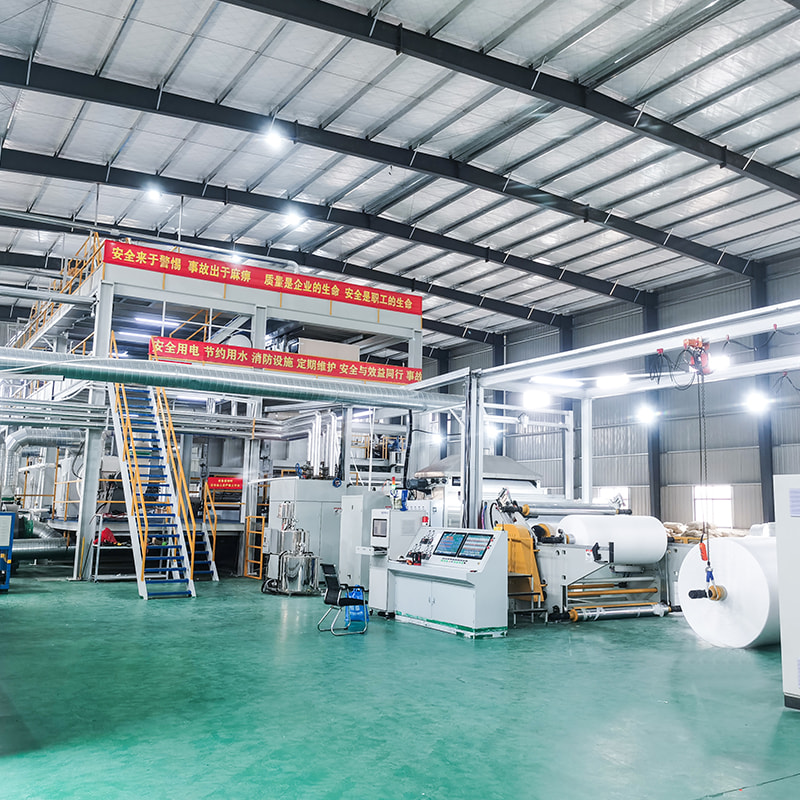
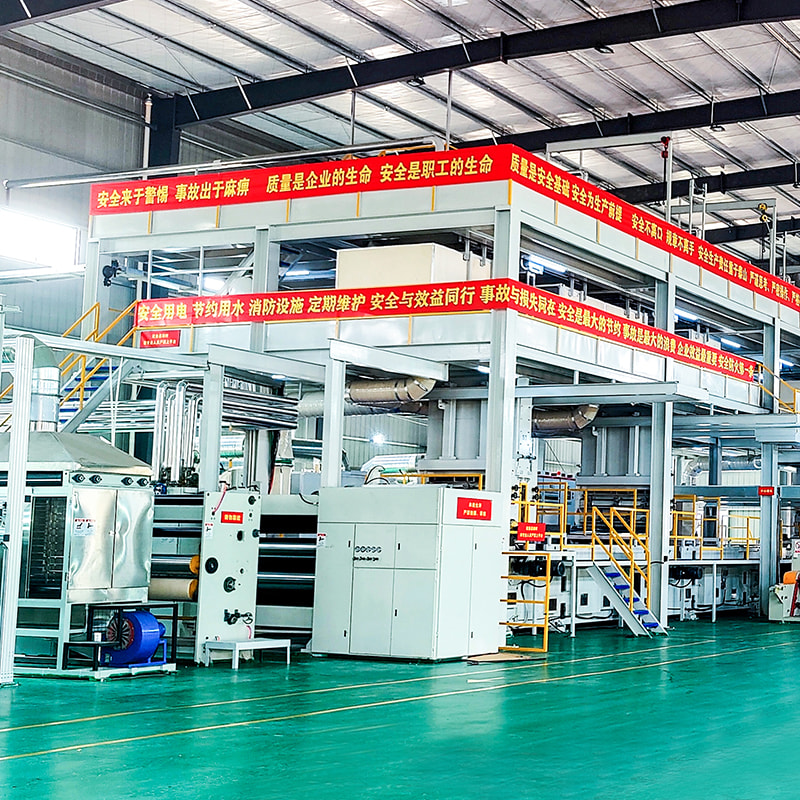
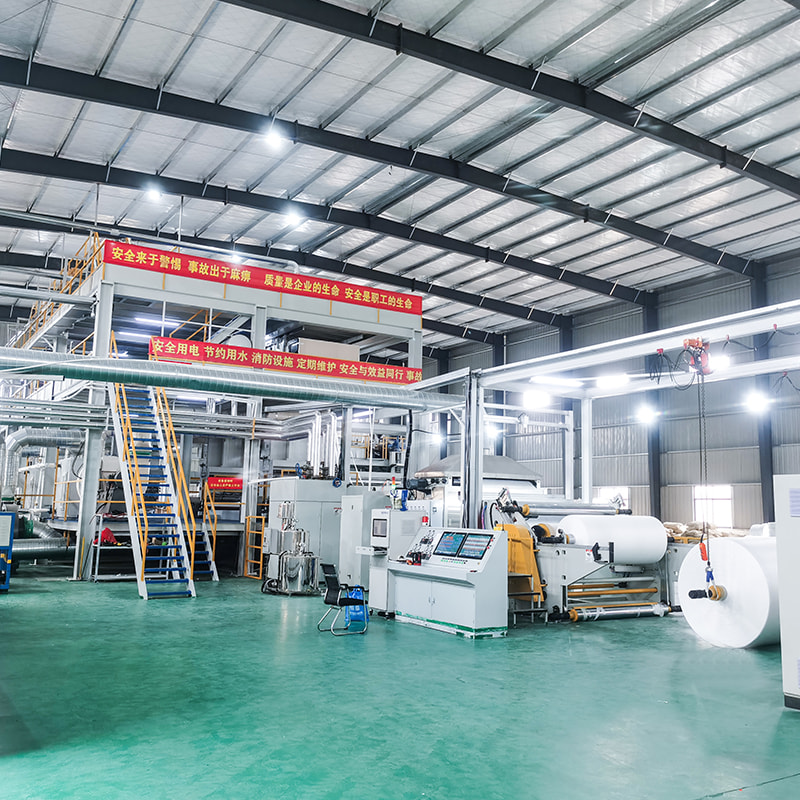
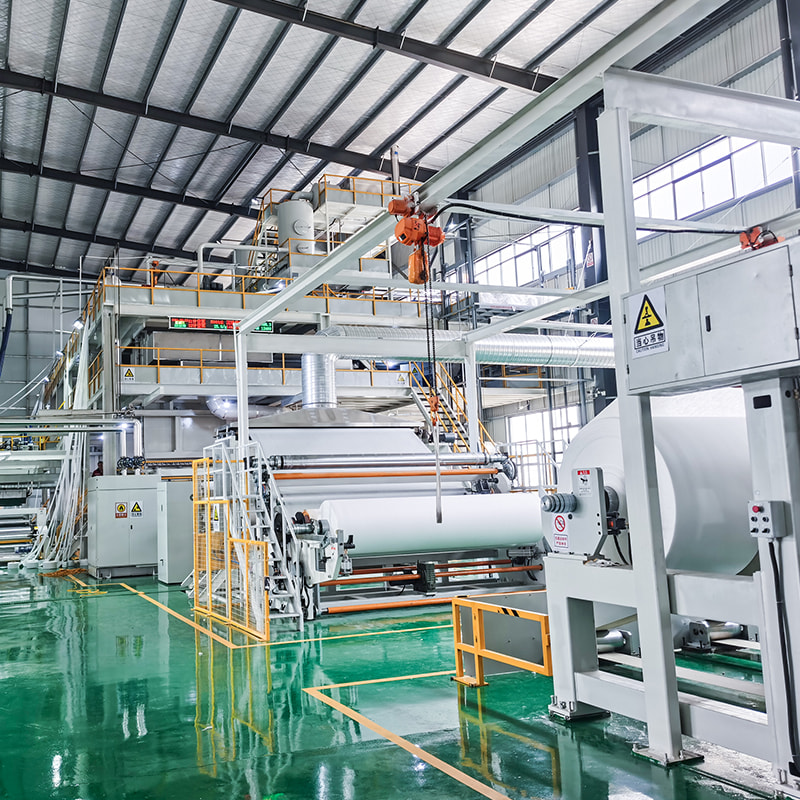
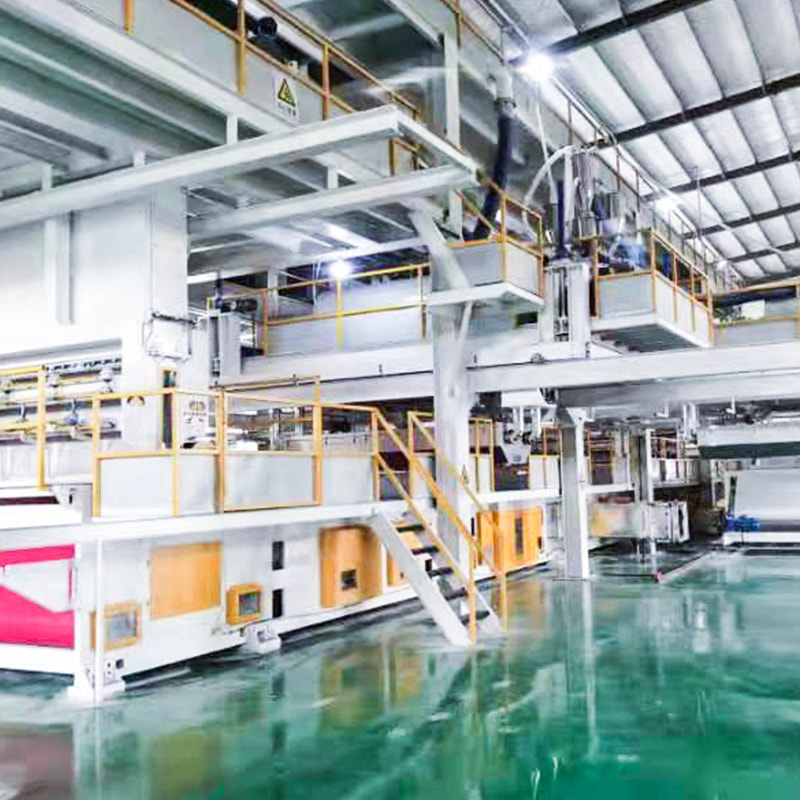
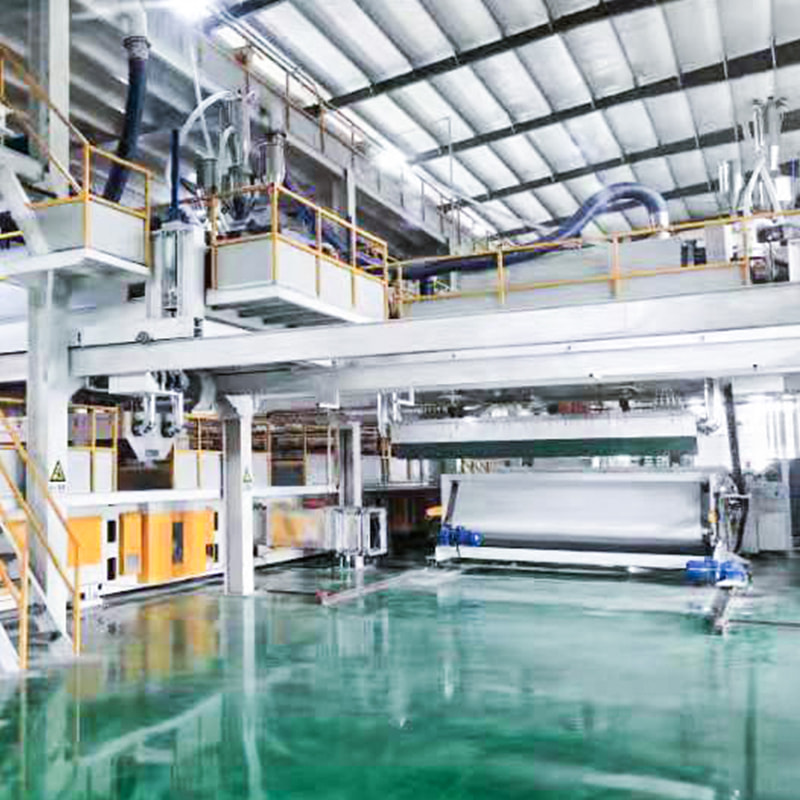
An SMMSS spunmelt nonwoven machine integrates multiple precision-engineered modules. Each module is optimized to ensure stable polymer processing and consistent web formation.
- Polymer feeding and extrusion system with gravimetric dosing control
- Spunbond spinning beams for high-tenacity continuous filaments
- Dual meltblown die assemblies for micro- and nano-fiber production
- Web laying and electrostatic charging units
- Thermal bonding calender with precision temperature regulation
- Automatic winding and cutting system
The modular design allows manufacturers to maintain production stability even at line speeds exceeding 500 m/min.
Production Process Flow of SMMSS Technology
Spunbond Layer Formation
Polypropylene pellets are melted and extruded through spinnerets to form continuous filaments. These filaments are stretched by high-velocity air and laid uniformly to create the outer S layers, providing tensile strength and abrasion resistance.
Meltblown Layer Integration
The meltblown process produces fibers with diameters typically ranging from 1–3 microns. These middle layers significantly enhance bacterial filtration efficiency (BFE) and particle capture performance.
All five layers are thermally bonded inline, eliminating secondary lamination steps and reducing energy consumption.
Technical Performance Parameters
| Parameter | Typical Range |
|---|---|
| Fabric Width | 1.6 – 3.2 m |
| Basis Weight | 15 – 80 gsm |
| BFE | ≥ 98% |
| Air Permeability | 150 – 300 L/m²·s |
These parameters demonstrate the machine’s capability to produce fabrics that comply with EN 14683 and ASTM F2100 standards.
Industrial Applications and Use Cases
Fabrics produced by an SMMSS spunmelt nonwoven machine are engineered for applications where both strength and filtration are critical.
- Medical protective gowns and surgical drapes
- High-performance face masks and respirators
- Industrial liquid and air filtration media
- Hygiene products requiring enhanced barrier properties
For example, SMMSS medical gowns typically achieve hydrostatic pressure resistance above 100 cm H₂O, making them suitable for high-risk clinical environments.
Operational Advantages and Economic Value
Compared with simpler SMS or SMMS configurations, the SMMSS spunmelt nonwoven machine delivers improved performance without proportionally increasing production costs.
- Higher fabric uniformity due to symmetrical layer design
- Reduced raw material waste through inline process control
- Lower defect rate, typically below 1.5%
- Flexible product switching for different market demands
These advantages translate into faster return on investment for manufacturers operating in competitive nonwoven markets.


 +8613621544385
 No.29 Xinhua Road, Jiashan Village,Jiaxing City Zhejiang P.R., China