






 English
 中文简体
中文简体 русский
 عربى
عربىMelt Blown Nonwoven: Specs, Process Control & Machine Selection
Content
- 1 What “melt blown” means in practice (and why buyers specify it)
- 2 Melt blown specifications that determine commercial success
- 3 Process control levers: how to hold microfiber quality run after run
- 4 Capacity planning: turning GSM and line speed into tons per day
- 5 Quality assurance for melt blown: what reduces claims and scrap
- 6 How to choose a melt blown machine configuration (buyer checklist)
- 7 How we engineer melt blown lines for stable production (practical features)
What “melt blown” means in practice (and why buyers specify it)
“Melt blown” refers to a nonwoven process that uses high-velocity hot air to attenuate molten polymer into microfibers, forming a web with high surface area and fine pore structure. For filtration and absorption products, that microfiber structure is the value: you can achieve barrier performance with relatively low basis weight while keeping acceptable breathability.
In production terms, melt blown performance is anchored by a small set of controllable variables: polymer rheology (often expressed via melt flow index), stable metering of melt throughput, hot-air temperature/pressure balance, and consistent web forming and winding. On a typical melt blown line, the target microfiber range is measured in microns—for example, 1.6–4 μm fiber diameter is commonly used for filtration-focused grades.
Where melt blown is typically specified
- Mask and respirator filter media (middle layer), where fine fiber diameter and electrostatic charge support particle capture.
- Air and liquid filtration media, where pressure drop, dust-holding capacity, and basis-weight uniformity must be repeatable.
- Oil absorption and specialty wipes, where capillarity and surface area drive uptake speed and capacity.
- Automotive acoustic/insulation applications, where web structure and GSM stability matter more than electret performance.
Melt blown specifications that determine commercial success
Buyers rarely purchase “melt blown” as a generic material. They purchase a performance window defined by a handful of measurable specifications. If your line can hold those specifications over long runs and grade changes, you reduce claims, reduce scrap, and sell higher-value grades.
Core material targets most customers will ask for
- Basis weight (GSM) and cross-direction uniformity (striping control). Practical melt blown ranges often span from light filtration webs to heavier absorption grades (for example, 18–300 GSM is a broad capability window on industrial lines).
- Fiber diameter distribution (not only the average). Tight distribution typically improves consistency in pressure drop and filtration efficiency.
- Pressure drop (ΔP) at a defined flow rate and test area. Filtration grades must balance efficiency and breathability; ΔP instability is a common reason for rejected lots.
- Filtration performance (BFE/PFE or application-specific particle tests) and aging stability if electret charging is used.
- Roll build quality (telescoping, edge straightness, hardness profile) because downstream converting is sensitive to winding defects.
When you evaluate equipment, prioritize whether the line architecture makes these specs easy to control. A well-designed melt blown machine should be built around stable melt delivery, stable air delivery, and repeatable web forming—not only maximum nameplate speed.
Process control levers: how to hold microfiber quality run after run
Melt blown is sensitive because microfibers are formed in milliseconds. Small deviations in melt pressure, air temperature, or die conditions can show up immediately as GSM stripes, shot (beads), holes, or unstable filtration results. The most robust approach is to control each stage in the process flow with the correct hardware and feedback points.
A practical melt blown flow map (what you must control)
- Feeding and dosing: keep polymer and additives consistent to avoid MFI drift and filtration variability.
- Melting and extrusion: stabilize melt temperature and pressure to prevent gels, smoke-off, and viscosity swings.
- Filtration: remove impurities; a screen-change design that does not require a full stop can reduce downtime and scrap during long runs.
- Metering: a dedicated metering pump helps keep melt throughput constant, which is foundational for stable GSM and fiber diameter.
- Air heating and delivery: hot air provides the drawing energy; imbalance can create cross-direction striping and inconsistent web laydown.
- Spinning/die system: die condition and temperature uniformity strongly influence fiber distribution and shot formation.
- Web forming and winding: stable air passage design, web guidance, and controlled winding tension protect roll quality.
Raw material selection: why MFI matters so much
For polypropylene melt blown, higher melt flow index improves spinnability into fine fibers. A commonly used window for filtration-focused melt blown is MFI 800–1600. If you plan to run multiple grades, align your resin strategy with your equipment’s melt and air control capabilities; “one resin fits all” is usually a false economy when filtration stability matters.
Capacity planning: turning GSM and line speed into tons per day
Capacity discussions often become confusing because melt blown output depends on both product GSM and stable operating speed. A practical planning formula is:
kg/hour ≈ width(m) × speed(m/min) × GSM(g/m²) ÷ 60 (then adjust for trim loss, startup scrap, and yield).
Example: if you produce a 25 GSM web on a 2.4 m line at 30 m/min, the theoretical output is ~72 kg/hour. In real production, your sustained output is typically lower due to grade requirements, stabilization time, and quality control limits—especially for high-filtration microfibers.
| Model | Effective width | Weight range | Machine speed | Output per day | Machine size (L×W×H) | Energy reference |
|---|---|---|---|---|---|---|
| HHM-1.6M | 1.6 m | 18–300 GSM | 10–70 m/min | 2–3 ton/day | 6 m × 8 m × 7 m | 3500–4200 / ton |
| HHM-2.4M | 2.4 m | 18–300 GSM | 10–70 m/min | 3–4 ton/day | 8 m × 8 m × 7 m | 3500–4200 / ton |
| HHM-3.2M | 3.2 m | 18–300 GSM | 10–70 m/min | 4.5–5 ton/day | 10 m × 8 m × 7 m | 3500–4200 / ton |
For project budgeting, treat “tons per day” as a grade-dependent range, not a fixed number. Filtration-grade microfibers may run at lower sustained throughput than higher-GSM absorption grades because process stability and product testing limits become the bottleneck.
Quality assurance for melt blown: what reduces claims and scrap
Melt blown profitability is heavily influenced by yield. The fastest path to higher yield is to prevent defects rather than sort them out after winding. That requires a disciplined QA plan that links line settings, inline checks, and end-product tests.
Typical QA checkpoints worth standardizing
- Incoming PP verification (MFI confirmation and contamination screening) to prevent sudden fiber instability.
- Melt pressure trend monitoring (pre/post filter) to anticipate screen change timing before quality drifts.
- GSM mapping across the roll width to detect air-flow imbalance and web former issues early.
- Filtration performance checks at defined intervals for filter media grades (efficiency and ΔP), plus aging checks when electret charging is used.
- Winding and roll build controls (tension, hardness, edge alignment) to protect downstream converting efficiency.
Common defects and the first place to look
- Cross-direction stripes: check air temperature/pressure balance, die temperature uniformity, and web former air passage stability.
- Shot/beads: check polymer filtration, melt temperature window, and die condition (blockage or contamination).
- Holes or weak spots: check web forming vacuum, airflow disturbances, and unstable melt throughput.
- Unstable filtration results: verify MFI consistency, electret process repeatability (if used), and GSM drift over time.
How to choose a melt blown machine configuration (buyer checklist)
A melt blown line should be selected based on your product roadmap: filtration-grade microfibers, absorption grades, or multi-grade production. Once you know the target window, evaluate equipment by its ability to control melt throughput, air delivery, and winding stability—not only by headline speed.
Questions that reveal whether a line will run stably
- What is the recommended resin window for the target microfiber range (for example, MFI 800–1600 for PP melt blown filtration grades)?
- Does the line include a metering pump to stabilize melt pressure and GSM under normal disturbances (material batch variation, temperature drift)?
- Can the filter system support screen change with minimized downtime to protect yield during long runs?
- How is the air heating system sized and controlled (temperature stability, airflow balancing, pressure headroom)?
- What web former design features protect uniform laydown and reduce striping at your intended GSM?
- What winding automation is included (auto roll change, tension control, recipe management), and how does it reduce operator-dependent variability?
If your product plan includes composite structures (such as SMS/SMMS for medical or hygiene), it can be more efficient to evaluate an integrated spun-melt platform alongside melt blown-only lines. In that case, you may also consider a spun-melt nonwoven machine configuration to match downstream demand and inventory strategy.
How we engineer melt blown lines for stable production (practical features)
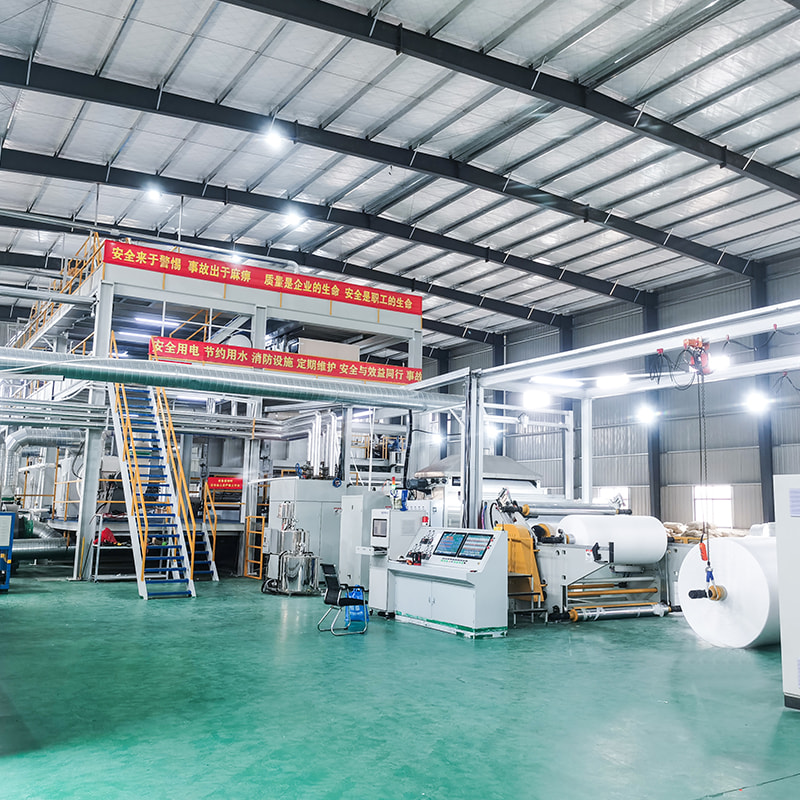
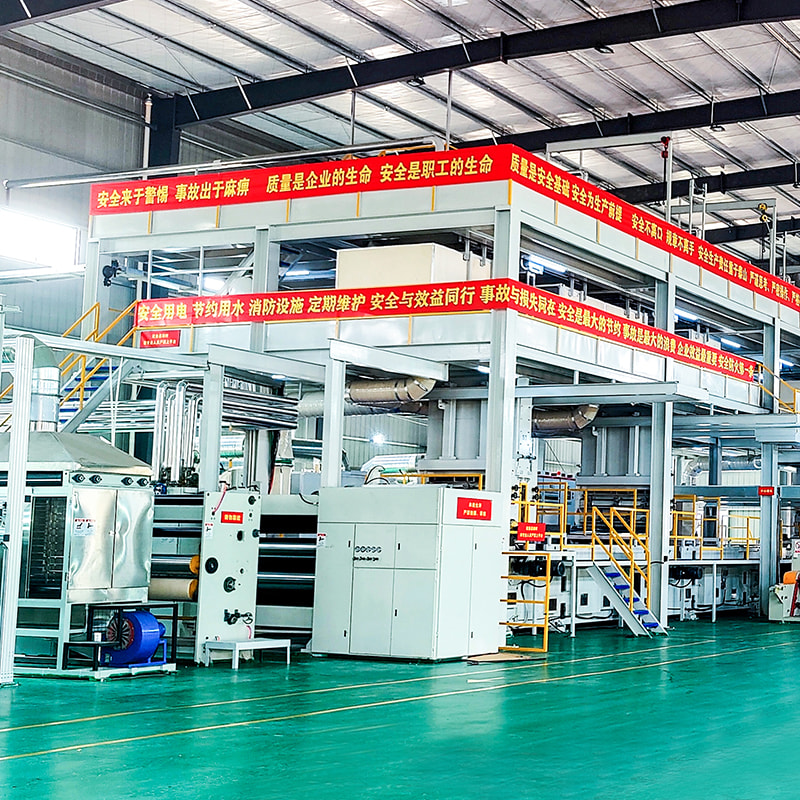
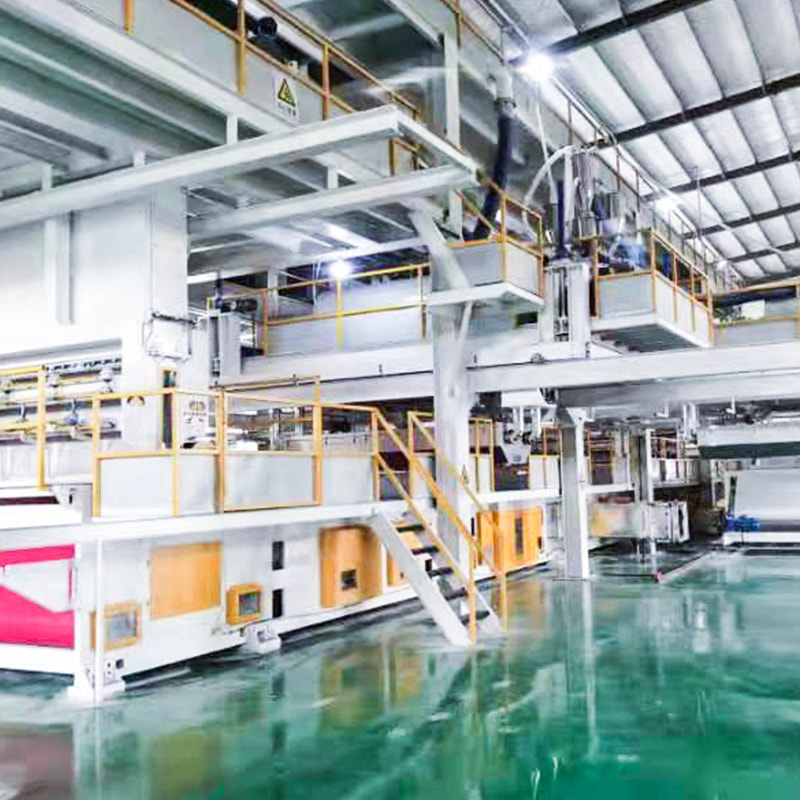
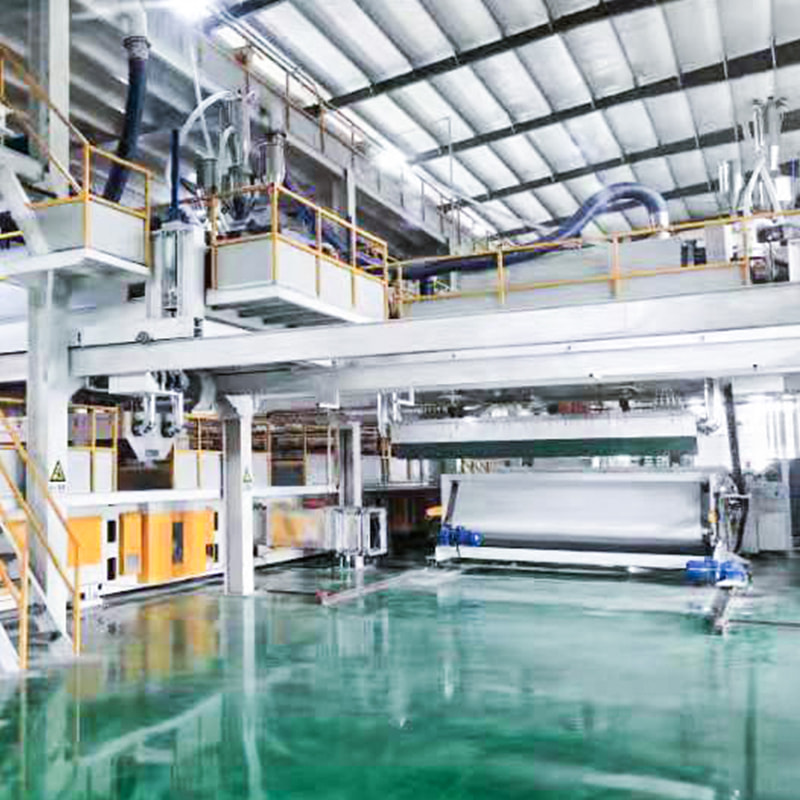
From a manufacturer’s perspective, stable melt blown production is achieved by combining proven core components with automation that helps operators hold the process window. On our melt blown machine platforms, we focus on repeatability and maintainability because those two factors directly drive yield and unit cost.
Typical line architecture (components that affect quality most)
- Vacuum feeding and dosing to keep polymer and additives stable at the hopper, supporting consistent processing behavior.
- Extrusion and filtration designed to remove impurities and reduce gel-related defects; designs that enable filter screen change without full stoppage help protect long-run stability.
- Metering pump for stable melt delivery to the spinning box, supporting consistent GSM and fiber formation.
- Air heating system sized for high-pressure/high-temperature air delivery to the spinning system, supporting microfiber attenuation and web uniformity.
- Spinning box options including ENKA/KASEN (Germany/Japan origin) for customers prioritizing stable microfiber formation and proven die performance.
- Web former and winding with control features that protect roll build quality; for example, motorized web adjustment and automated winder functions to reduce operator variability.
Project realities: lead time, commissioning, and support
In melt blown projects, time-to-stable production is often more important than mechanical installation completion. A realistic plan includes utilities readiness, operator training, and product validation trials. Typical commercial considerations include 3–6 months delivery time (depending on configuration) and a structured commissioning program that includes installation guidance, training, and ongoing technical support.
Practical recommendation: define your target grades (GSM + filtration/absorption performance), then request a performance-oriented configuration proposal that addresses process stability (metering, air control, web forming) and QA readiness (repeatable recipes, troubleshooting guidance), not only a base equipment list.



 +8613621544385
 No.29 Xinhua Road, Jiashan Village,Jiaxing City Zhejiang P.R., China