





 English
 中文简体
中文简体 русский
 عربى
عربىMeltblown Nonwoven: Properties, Applications & Equipment Selection Guide
Content
- 1 What Is Meltblown Nonwoven? Definition and Manufacturing Process
- 2 Key Properties of Meltblown Nonwovens: Filtration, Absorbency & Barrier
- 3 Top Applications: From Medical Masks to Industrial Filtration
- 4 Meltblown vs Spunbond vs SMS: What’s the Difference?
- 5 How to Choose the Right Meltblown Production Line: Key Parameters
- 6 Cost Analysis: CapEx, OpEx, and ROI of Meltblown Equipment
- 7 Sustainability Trends: Recycled Materials and Biodegradable Options
- 8 Common Meltblown Production Issues and Troubleshooting
What Is Meltblown Nonwoven? Definition and Manufacturing Process
In 2020, meltblown nonwoven became a household term overnight. As the world scrambled for face masks, this ultra-fine fiber web proved indispensable. Yet long before the pandemic, meltblown technology was the quiet backbone of high-efficiency filtration, medical barriers, and industrial absorbents. Its defining feature is a fiber diameter far smaller than conventional nonwovens — often just 1-5 microns, a fraction of a human hair.
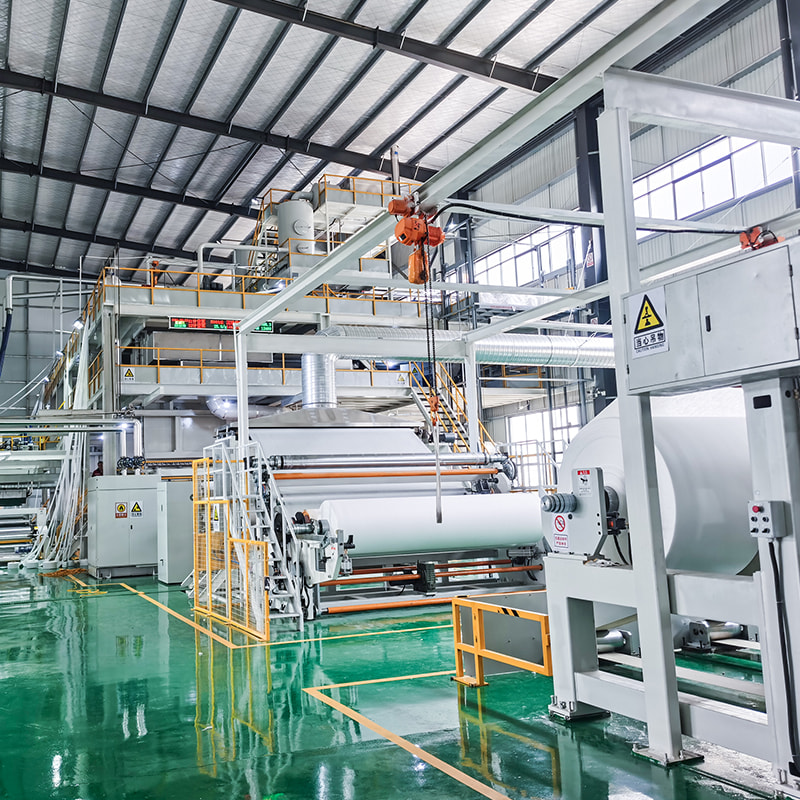
The meltblown process begins with a thermoplastic polymer, most commonly polypropylene (PP). The resin is melted and extruded through a die containing hundreds of tiny orifices per meter. High-velocity hot air jets immediately attenuate the molten streams into microfibers. These discontinuous fibers are collected on a moving conveyor to form a self-bonded web. The random entanglement creates an extremely tortuous pore structure, delivering high filtration efficiency and absorbency without post-treatment.
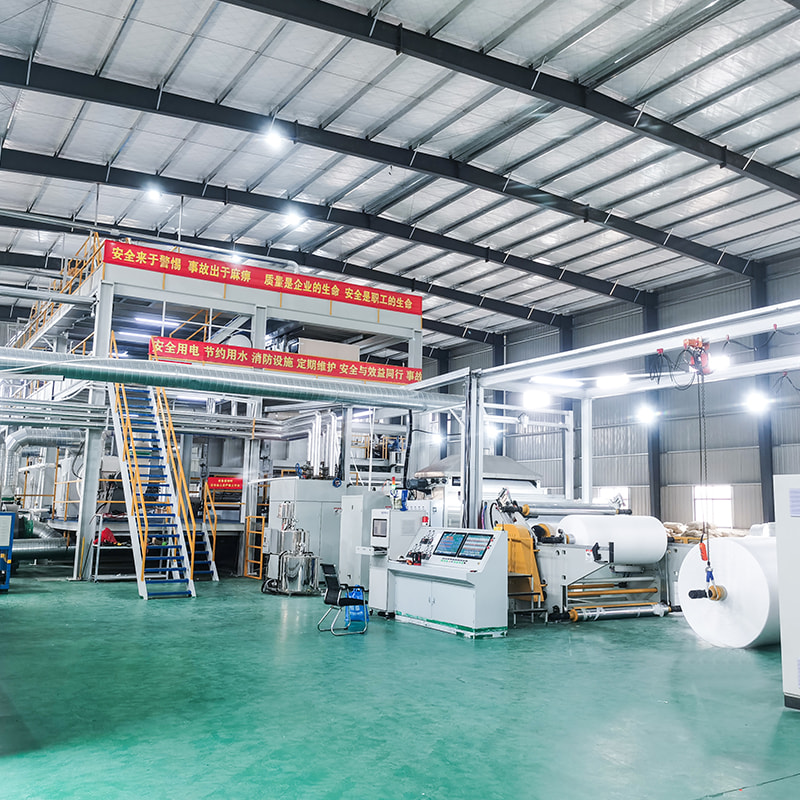
A simplified meltblown production line includes:
- Resin feeding and drying (if needed)
- Extruder and melt pump for precise flow control
- Meltblown die with air manifold
- High-velocity hot air supply and heater
- Collector conveyor with vacuum suction
- Winder and slitter
Unlike spunbond, where continuous filaments are drawn and laid in a controlled pattern, meltblown fibers are attenuated by turbulent hot air and deposited randomly. This gives the fabric its exceptional filtration performance, but also limits its mechanical strength. That trade-off is why meltblown is often layered with spunbond in SMS (spunbond-meltblown-spunbond) composites — gaining strength from spunbond and filter efficiency from meltblown.
Key Properties of Meltblown Nonwovens: Filtration, Absorbency & Barrier
The commercial value of meltblown nonwoven rests on a narrow set of properties that no other cost-effective web can match: extremely fine fiber diameter, high surface area, and controllable pore size. These translate into measurable performance parameters that buyers use to specify the right material for their application.
Filtration efficiency is the headline spec. A well-designed meltblown layer can achieve over 95% filtration efficiency against 0.3-micron particles even at a basis weight as low as 25 gsm. Pressure drop (resistance to airflow) is the necessary trade-off; the goal is to maximize efficiency while keeping pressure drop low. Air permeability and oil absorbency complete the picture. The table below shows how these properties shift with basis weight for typical PP meltblown.
| Basis Weight (gsm) | Filtration Efficiency (%) | Pressure Drop (Pa) | Air Permeability (L/m²/s) | Oil Absorbency (g/g) |
|---|---|---|---|---|
| 20 | 80–90 | 20–30 | 500–700 | 8–10 |
| 50 | 95–99 | 50–70 | 200–350 | 10–14 |
| 100 | >99.5 | 100–150 | 80–150 | 14–18 |
For liquid filtration, the mean pore size typically ranges from 5 to 20 microns, while the bubble point pressure indicates the largest pore. Tensile strength is relatively low — 5-10 N/5cm in machine direction for 50 gsm — so the material is rarely used alone in load-bearing applications. Instead, it is laminated or combined with spunbond or scrim.
Top Applications: From Medical Masks to Industrial Filtration
Meltblown nonwoven is not a single product but a platform material engineered to meet diverse end-use demands. Its deployment spans medical protection, air and liquid filtration, hygiene articles, and industrial sorbents. Understanding the exact performance threshold for each application is critical when procuring or specifying material.
| Application | Key Performance Requirement | Typical Basis Weight (gsm) |
|---|---|---|
| N95 / FFP2 mask filter layer | Filtration efficiency ≥95% @ 0.3 μm | 25-50 |
| Surgical mask middle layer | BFE ≥98%, low pressure drop | 25-35 |
| HEPA air filter media | Efficiency ≥99.97% @ 0.3 μm | 60-80 |
| Liquid filter cartridges | Absolute micron rating 1-5 μm | 50-80 |
| Oil absorbent pads & booms | Oil capacity ≥10 g/g, fast wicking | 100-150 |
| Hygiene core wrap & leg cuffs | Hydrophilic or barrier, softness | 15-30 |
Medical masks demand a delicate balance between breathability and particle capture. Even a 5 Pa increase in pressure drop can make a mask uncomfortable for long wear. Industrial liquid filters, on the other hand, prioritize absolute micron rating and dirt-holding capacity. Oil sorbents use high-loft meltblown with minimal bonding to maximize void volume for hydrocarbon uptake. Each product variant requires the meltblown line to be tuned differently — die temperature, air volume, and collector speed all shift to hit the target profile.
Meltblown vs Spunbond vs SMS: What’s the Difference?
Buyers often confuse meltblown, spunbond, and SMS nonwovens. While all three belong to the spunmelt family, their process mechanics and end properties diverge sharply. Understanding these distinctions prevents mis-specification and wasted cost.
| Characteristic | Meltblown | Spunbond | SMS (Composite) |
|---|---|---|---|
| Fiber diameter | 1–5 μm | 15–35 μm | Combined: 1–5 μm (M) + 15–35 μm (S) |
| Fiber arrangement | Random, short fibers | Continuous filaments, oriented | Sandwich structure |
| Tensile strength | Low (5–10 N/5cm) | High (40–80 N/5cm) | Medium to high (depends on S layers) |
| Filtration efficiency | Very high (up to 99.9%) | Low (negligible) | High (from M layer) |
| Air permeability | Low to moderate | High | Moderate |
| Cost factor | Higher (per gsm) | Lower | Medium |
Spunbond provides the structural backbone in most hygiene products. Meltblown delivers the filtration. SMS marries the two: a spunbond-meltblown-spunbond sandwich where the outer S layers supply strength and abrasion resistance, while the middle M layer gives barrier properties. Adding more layers — as in SMMS or SMMSS — improves barrier consistency without increasing total basis weight dramatically. These multi-layer constructions are the workhorse of medical gowns, surgical drapes, and premium diaper backsheets.
How to Choose the Right Meltblown Production Line: Key Parameters
Selecting a meltblown line is a multi-variable decision. Web width, beam configuration, throughput, and raw material flexibility together determine the production scope and return on investment. Getting this right at the procurement stage avoids costly retrofits later.
Web width dictates the final roll size and machine footprint. Standard commercial meltblown lines operate at 1600 mm, 2400 mm, or 3200 mm effective width. A wider line increases output per shift but demands more floor space and a larger initial capital outlay. The table below gives typical benchmarks for polypropylene processing at 25 gsm.
| Effective Width | Typical Daily Output (kg/day) | Approx. Line Length (m) | Estimated Investment (USD) |
|---|---|---|---|
| 1600 mm | 1,500 – 2,500 | 18 – 22 | 400,000 – 600,000 |
| 2400 mm | 2,500 – 4,000 | 22 – 28 | 600,000 – 900,000 |
| 3200 mm | 4,000 – 6,000 | 26 – 34 | 900,000 – 1,300,000 |
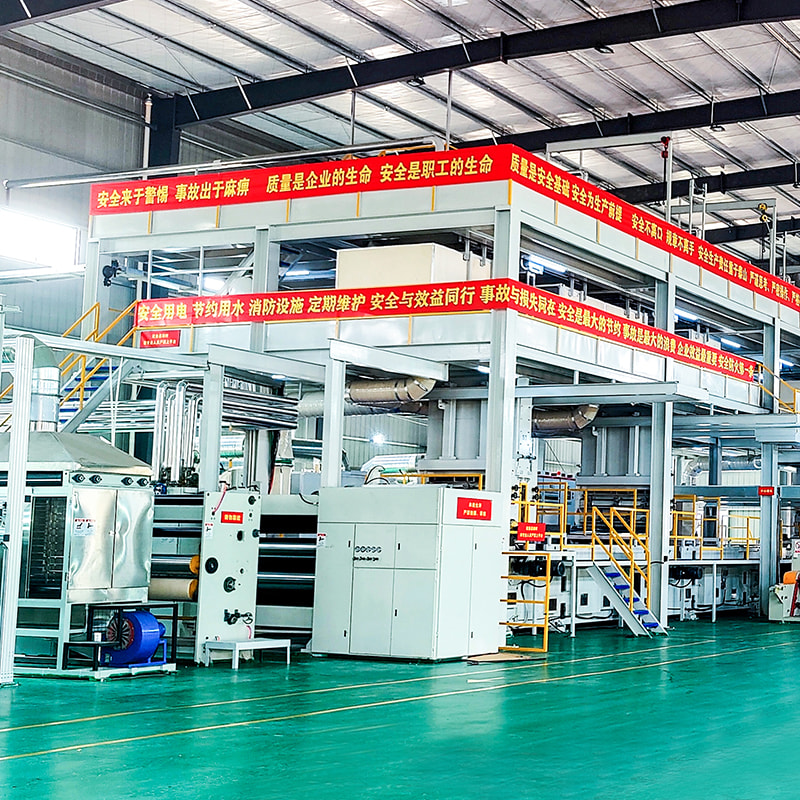
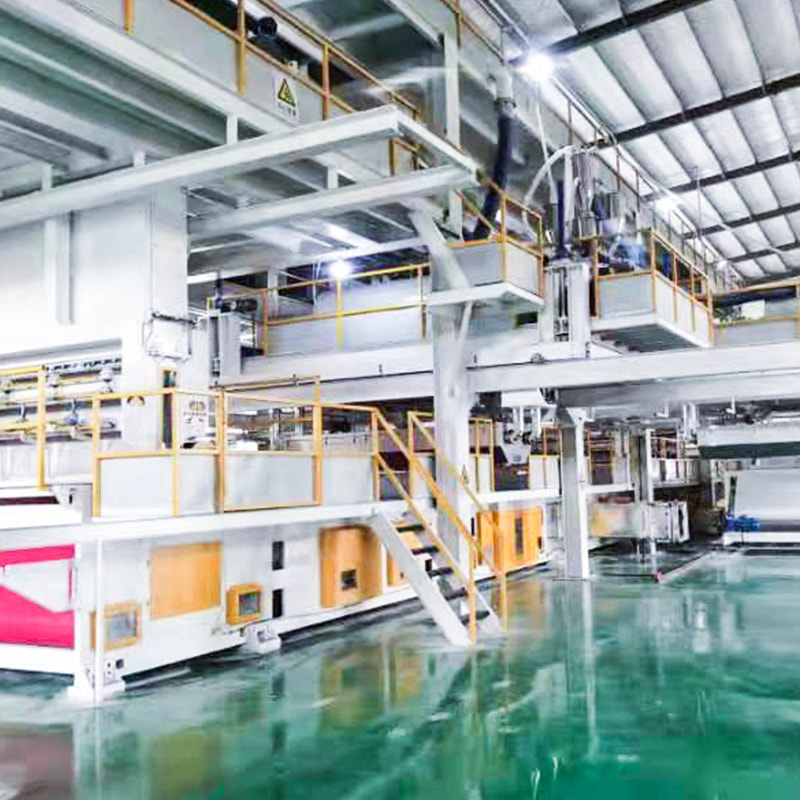
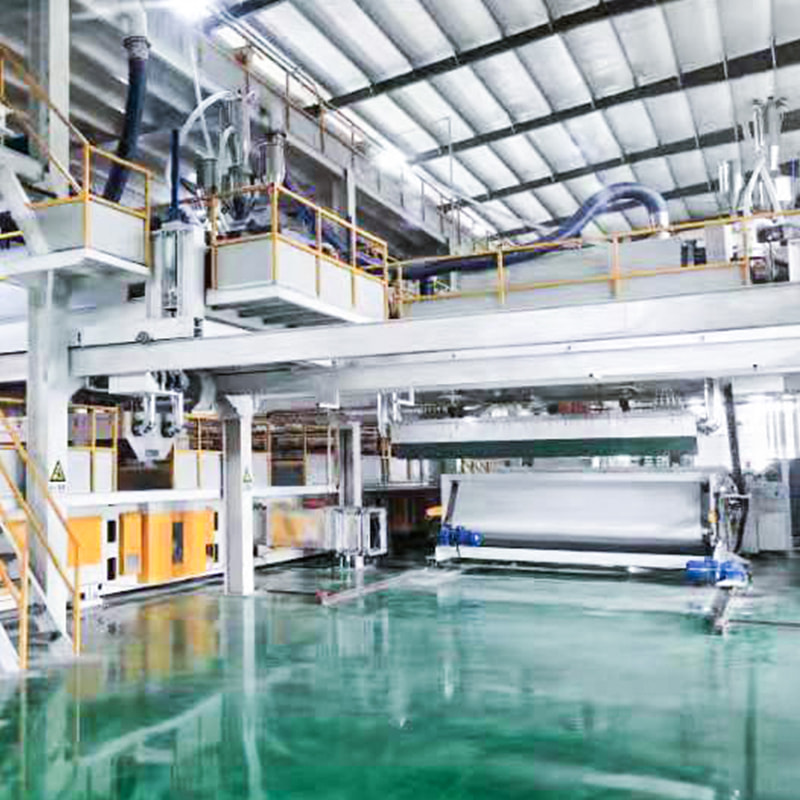
Beam configuration is the next lever. A dedicated single-beam meltblown line spins only the M layer. For integrated SMS production, a three-beam line — two spunbond beams sandwiching one meltblown beam — is standard. For medical-grade fabrics where pinhole-free barrier is non-negotiable, a four-beam SMMS configuration or even five-beam SMMSS provides additional meltblown redundancies. For integrated SMS lines, a SMS nonwoven plant can combine meltblown with spunbond layers for superior barrier and strength. For high-throughput SMMS production, many manufacturers choose a SMMS nonwoven plant to achieve medical-grade fabrics. Material flexibility also matters: a line designed for PP with a standard screw may need upgrades for processing PLA or PET, particularly in the die and hot air temperature zones.
Cost Analysis: CapEx, OpEx, and ROI of Meltblown Equipment
Purchasing a meltblown line is a capital-intensive commitment. A thorough financial model must include equipment cost, installation, and ongoing operational expenses. Many first-time investors underestimate the role of raw material cost, which can consume 60-70% of total operating costs.
| Cost Item | Typical Annual Value (USD) | Share of Total OpEx |
|---|---|---|
| PP resin (at $1.2/kg) | 1,080,000 | 65% |
| Electricity ($0.08/kWh) | 150,000 | 9% |
| Labor (3 operators/shift) | 90,000 | 5% |
| Maintenance & spares | 80,000 | 5% |
| Depreciation (7-year straight-line) | 100,000 | 6% |
| Packaging, freight, overhead | 160,000 | 10% |
Revenue potential depends on the product mix. A line producing 25 gsm meltblown for masks at an average selling price of $2.50/kg and 90% utilization can generate $2.0–2.5 million annually. After deducting operational costs, a well-optimized meltblown line can achieve a return on investment in under 18 months. The greatest risks to profitability are resin price volatility and insufficient order volume. Running the line at less than 70% capacity quickly erodes margin, making a reliable downstream supply contract essential before commissioning.
Sustainability Trends: Recycled Materials and Biodegradable Options
The nonwovens industry faces mounting pressure to move beyond virgin polypropylene. Extended producer responsibility rules in Europe and corporate net-zero pledges are accelerating the shift to recycled and bio-based feedstocks. Meltblown technology, however, is more sensitive to raw material purity and melt rheology than spunbond, making the transition technically demanding.
- PLA (Polylactic Acid): Fully biodegradable under industrial composting conditions. Meltblown processing temperature is lower (180–220°C) but the melt viscosity is more temperature-sensitive, requiring tight hot air and die control. Fiber strength tends to be lower, so PLA meltblown is used mainly in non-load-bearing filters.
- rPET (Recycled Polyester): Available from bottle flake, but intrinsic viscosity (IV) must be raised to meltblowing-grade levels. Processing temperatures are higher (280–300°C) and require corrosion-resistant die materials. Not biodegradable but improves circularity.
- PHA (Polyhydroxyalkanoate): Marine biodegradable. Still in pilot-scale for meltblown; narrow processing window and high cost limit commercial adoption.
Modern meltblown lines can be engineered to switch between PP and PLA with minimal downtime by upgrading the screw design and adding temperature profiling along the die. Buyers should specify multi-polymer capability if a shift to sustainable materials is part of their 5-year roadmap.
Common Meltblown Production Issues and Troubleshooting
Even a well-maintained meltblown line will periodically produce out-of-spec material. Quick diagnosis prevents hours of waste. The most frequent problems stem from the die, air system, or collector conditions.
- Fiber roping or merging: Often caused by uneven hot air distribution or excessive melt temperature. Solution: Clean the die air slots, verify internal air plenum pressure uniformity, and reduce melt temperature by 5–10°C.
- Basis weight variation across width: Usually a die lip gap misalignment or inconsistent melt pump output. Check die bolt tightness and perform a polymer flow profiling test. The distance from die to collector (DCD) is the single most influential parameter on fiber diameter and web uniformity.
- Filtration efficiency drop: May indicate oversized fibers. Increase hot air temperature or reduce polymer throughput without changing line speed. Confirm that the die tip is not partially clogged.
- Periodic pinholes or thin spots: Vacuum suction under the collector belt may be uneven or the belt itself is worn. Inspect belt porosity and clean the vacuum plenum.
- Excessive web shrinkage: Excessive hot air impingement or insufficient cooling before winding. Optimize DCD and add a cooling roll after the conveyor if persistent.
Routine preventive maintenance on the die assembly, air heater, and melt filter can cut unscheduled downtime by 30-40%. Keeping a log of process parameters and fiber diameter measurements enables trend-based intervention before defects appear.


 +8613621544385
 No.29 Xinhua Road, Jiashan Village,Jiaxing City Zhejiang P.R., China