




 English
 中文简体
中文简体 русский
 عربى
عربىNonwoven Converting: A Practical Guide from Roll Goods to Finished Products
Content
- 1 What Nonwoven Converting Really Means
- 2 The Steps Inside a Converting Line
- 3 Why the Incoming Roll Decides Your Converting Yield
- 4 Matching Fabric Structure to the Converting Job
- 5 Composite Structures for Medical and Hygiene Converting
- 6 Barrier Layers and the Limits of Converting
- 7 Questions Worth Asking Before You Commit
Nonwoven converting is the quiet half of the nonwovens industry. Most conversations start at the spinneret, the beam or the forming belt, the equipment that turns polypropylene granules into fabric. But a roll of fabric only becomes useful once somebody unwinds it, guides it, laminates it, cuts it, folds it and packs it into something a customer can actually hold. That second half is converting, and it has its own vocabulary, its own bottlenecks and its own economics.
We design and build spunbond and meltblown production lines, so we spend a great deal of time with the people on the receiving end of those rolls: converters who buy fabric and then have to make it behave at speed, shift after shift. What follows is a practical look at what nonwoven converting involves, where it tends to go wrong, and how much of the answer actually sits upstream.
What Nonwoven Converting Really Means
In plain terms, converting is any operation that takes nonwoven roll goods and turns them into a semi-finished or finished product. Some producers convert in line, running a converting train directly behind the forming section so the fabric is never wound. Most convert off line, buying rolls from a fabric producer and processing them in a separate plant. Both models work, and both depend on the same thing: a predictable roll.
The range of converted products is broader than most people expect.
- Hygiene: diaper topsheets, acquisition layers, leg cuffs, sanitary pads
- Medical: surgical gowns, drapes, face masks, wound care dressings
- Wipes: wet wipes, dry wipes, food service and industrial wipes
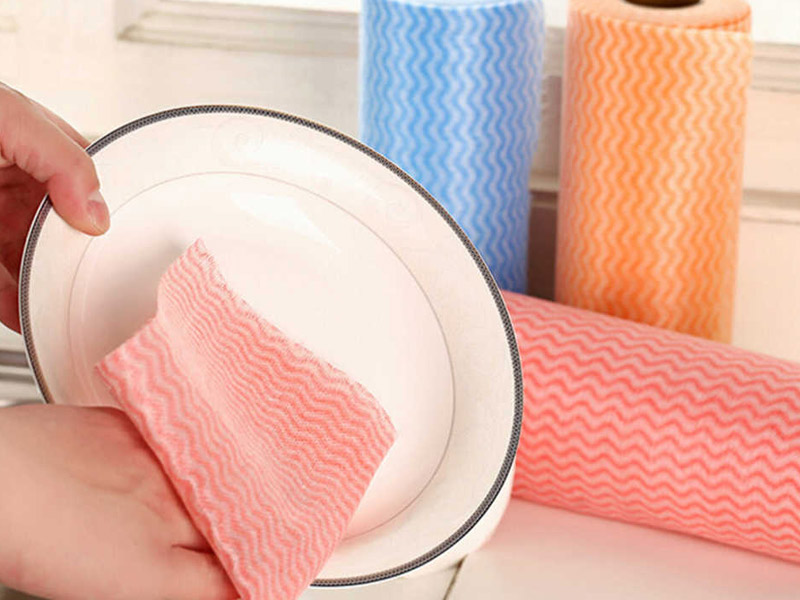
- Household: kitchen towel, shopping bags, cleaning cloths, furniture backing
- Filtration: HVAC filters, liquid filtration, respirator media
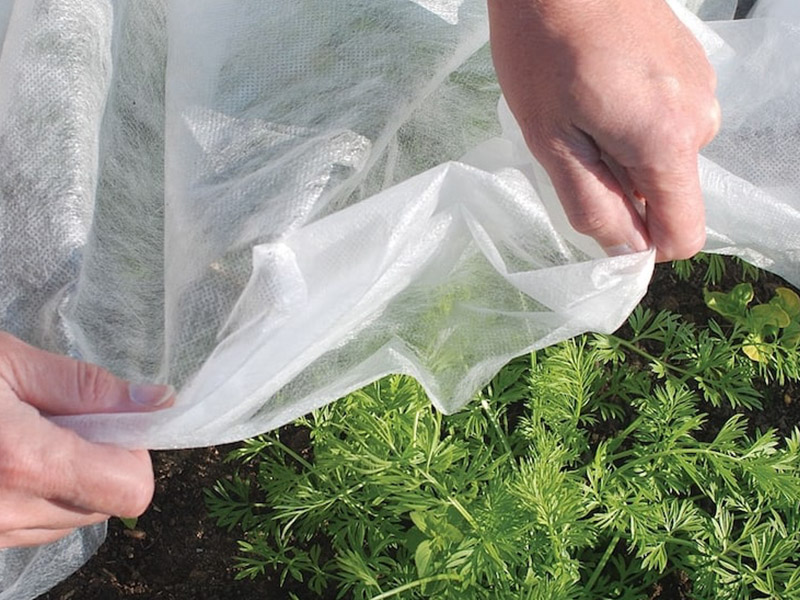
- Industrial and agricultural: geotextiles, crop covers, packaging, automotive trim
What links them is that every application cares about a different combination of properties. A wipes converter worries about softness, dusting and how the fabric behaves in a wet stack. A gown or mask converter worries about barrier and about how the material takes an ultrasonic weld. A filter converter worries about pleatability and pressure drop. The rolls may come off similar lines, but nothing else about the job is the same.
The Steps Inside a Converting Line
A converting line sounds complicated, but it is really a chain of fairly ordinary operations, each of which depends on the one before it.
- Unwinding and tension control, where consistent tension is the biggest single factor in a stable line
- Splicing and web guiding, so roll changes happen without stopping production
- Slitting and rewinding, trimming edges to width and building rolls that process cleanly later
- Bonding and laminating, using ultrasonic, thermal calendering or hot melt adhesive, alone or combined
- Cutting, perforating and die-cutting, by rotary or laser method depending on edge and speed
- Folding, stacking and forming, the step that turns a flat web into a three-dimensional product
- Printing, coating and treatment, adding colour, hydrophilicity, softness or a functional layer
- Inspection and packaging, checking weight, seal strength, print registration and contamination
Not every line contains all eight. A wet wipes line might consist of unwinding, folding, wetting, cutting and sealing, with printing added only if the customer wants a pattern. Whatever the configuration, two things dominate the daily battle: tension, and the consistency of the incoming roll.
Why the Incoming Roll Decides Your Converting Yield
When a line misbehaves, the temptation is to blame the machine. Quite often the fabric is the real cause, and the fabric was decided long before the roll arrived at your dock. Here is how a few of the usual suspects show up on the factory floor.
| Fabric characteristic | What it looks like on the line | What to verify |
|---|---|---|
| Basis weight variation | Tension drifts, cut length wanders, sealing windows narrow | Profile across the full width, not only the average |
| MD and CD tensile ratio | Web pulls apart across the machine, weak finished handles | Ratio measured at several points across the roll |
| Elongation | Creases, wrinkles and print registration drift | Elongation at the low loads your line actually runs at |
| Air permeability | Barrier claims fail after lamination or coating | Value together with variation from roll to roll |
| Curl, edge quality, roll hardness | Telescoping rolls, guiding alarms, trim waste | Edge condition, core size and hardness at the centre and the edge |
| Splices and static | Stops, jammed sheet feed, contamination in clean products | Splice type and count per roll, surface finish |
Notice how many of these are set at the forming stage. Weight profile, tensile ratio, elongation and permeability come from the extrusion, cooling, drawing and bonding sections of a spunbond or meltblown line. A converter can compensate for a while, but compensation costs speed, waste and attention, and it never entirely disappears.
Matching Fabric Structure to the Converting Job
Spunbond and spunmelt lines are usually described by beam count: S, SS, SSS, SMS, SMMS and SMMSS. Every additional beam adds a layer, and with it cost and capability. The mistake we see most often is buying more structure than the application can genuinely use.
Single-Layer Spunbond (S)
A single-beam line produces a uniform, soft and evenly bonded fabric with useful strength in both directions. It slits and rewinds cleanly, which is why it feeds so many shopping bag, kitchen towel, agricultural cover and packaging applications. Single-layer webs also bond easily, whether the converter uses a calendar point pattern or ultrasonic welding, so the process window is wider than it is for a composite.
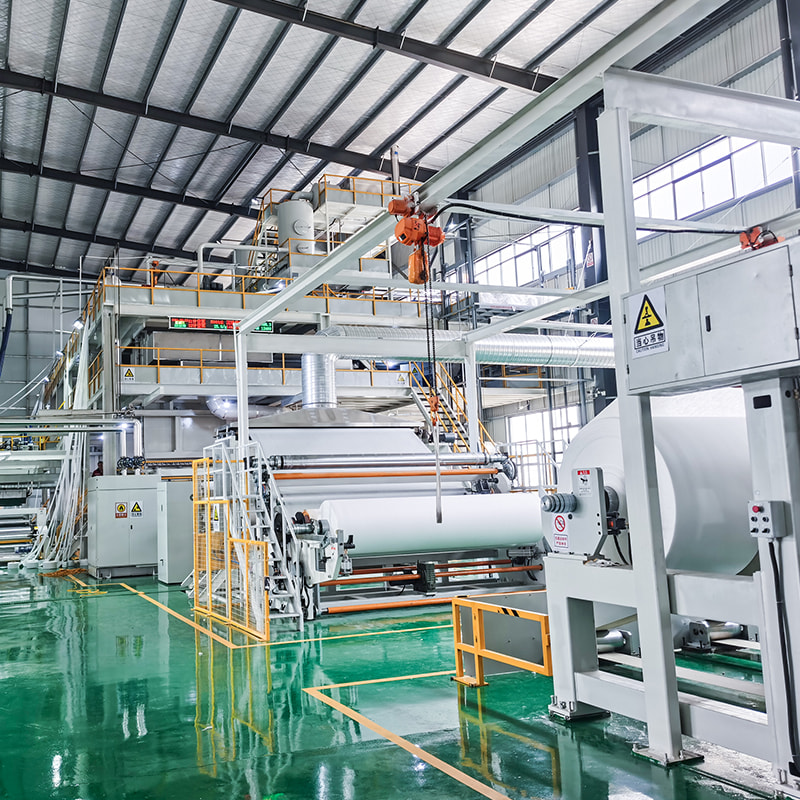
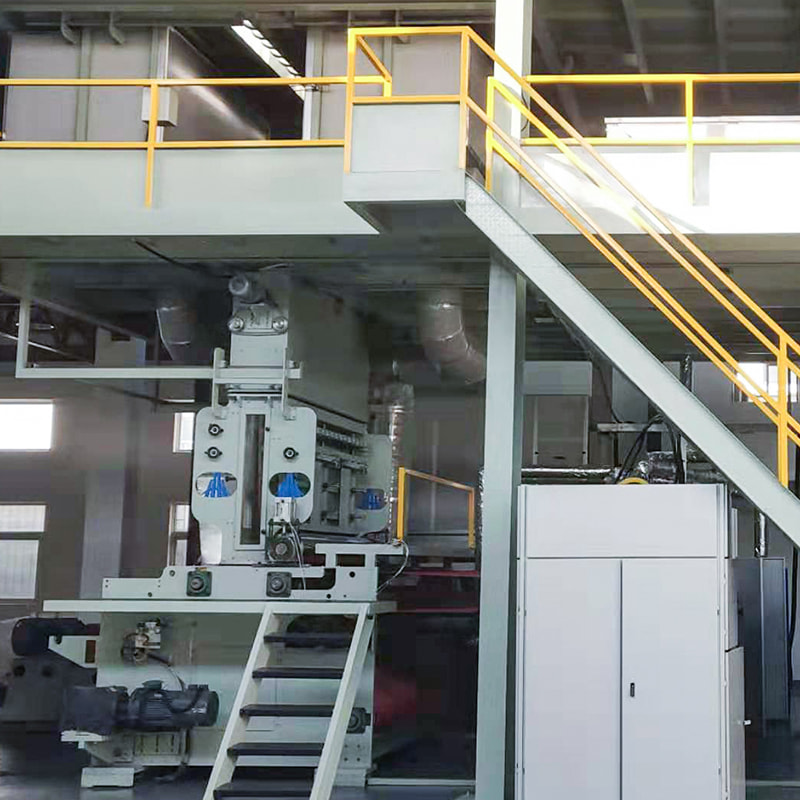 Single Beam Spunbond Nonwoven Production Machine for PP FabricProduces uniform spunbond fabric from polypropylene, suited for bags, hygiene, medical and packaging applications; review specifications and downstream uses.View Product →
Composite Structures for Medical and Hygiene Converting
Once a meltblown layer sits between two spunbond layers, the fabric gains the barrier properties that gowns, drapes, masks and hygiene products need. SMS, SMMS and SMMSS structures all follow that logic, and the extra meltblown layer in SMMS and SMMSS gives the converter finer control over filtration efficiency and hydrostatic head.
Those benefits come with converting consequences worth knowing in advance. Meltblown fibre is finer and weaker than spunbond, so a composite can dust, and it prefers gentler tension than a pure spunbond web. On the other hand, it welds beautifully: ultrasonic and thermal bonding on SMS and SMMS usually produce a stronger, more reliable seal than adhesive, which is part of what makes modern high-speed mask and gown lines possible. Working widths from 1600 mm up to 4200 mm are common, and matching the width you buy to the width your converting line truly uses is one of the simplest ways to cut trim waste.
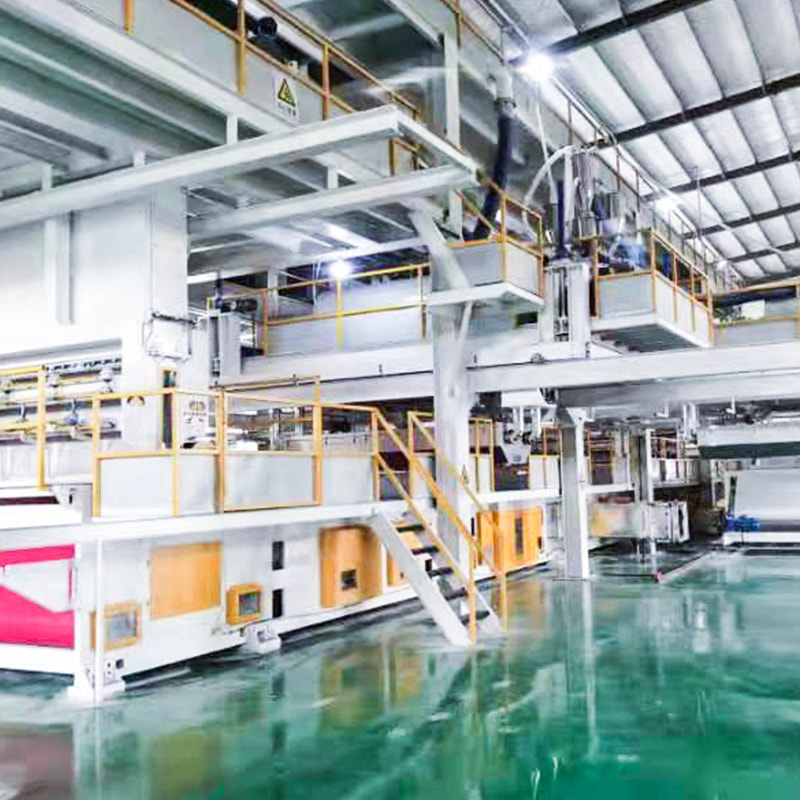
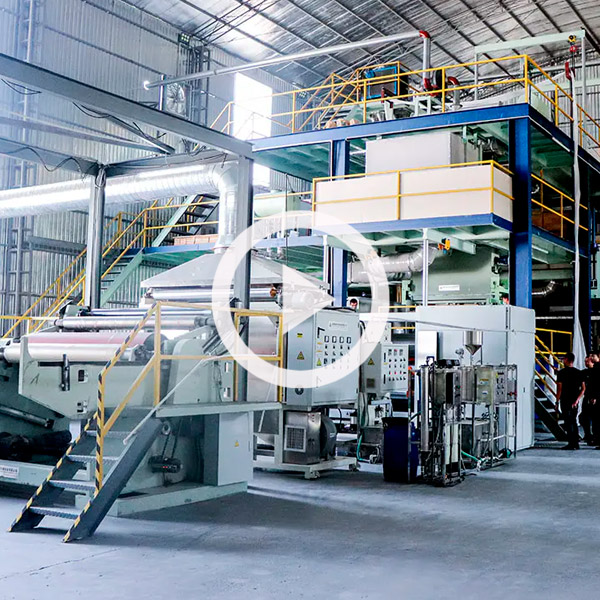 SMS Spun-Melt Nonwoven Machine for Composite Fabric ProductionCombines spunbond and meltblown layers for SMS, SS, S, and M fabric, supporting hygiene, medical, filtration, and packaging uses; inspect models and specs.View Product →
Barrier Layers and the Limits of Converting
Meltblown fabric on its own is a different animal. It is made of very fine fibres, which is exactly what makes it effective in filtration and barrier work, and also what makes it fragile: lower tensile strength, higher elongation and a tendency to shed fibres when handled roughly. Converters who work with meltblown learn to keep tension gentle, keep web paths short and clean, and pay close attention to static control, especially when the material has been electrostatically charged for filtration use.
For pleated filters and respirators, consistency matters more than peak numbers. Uniform fibre diameter and even distribution across the width keep pleat height, pressure drop and efficiency inside specification, while variation shows up as rejects at the end of the line.
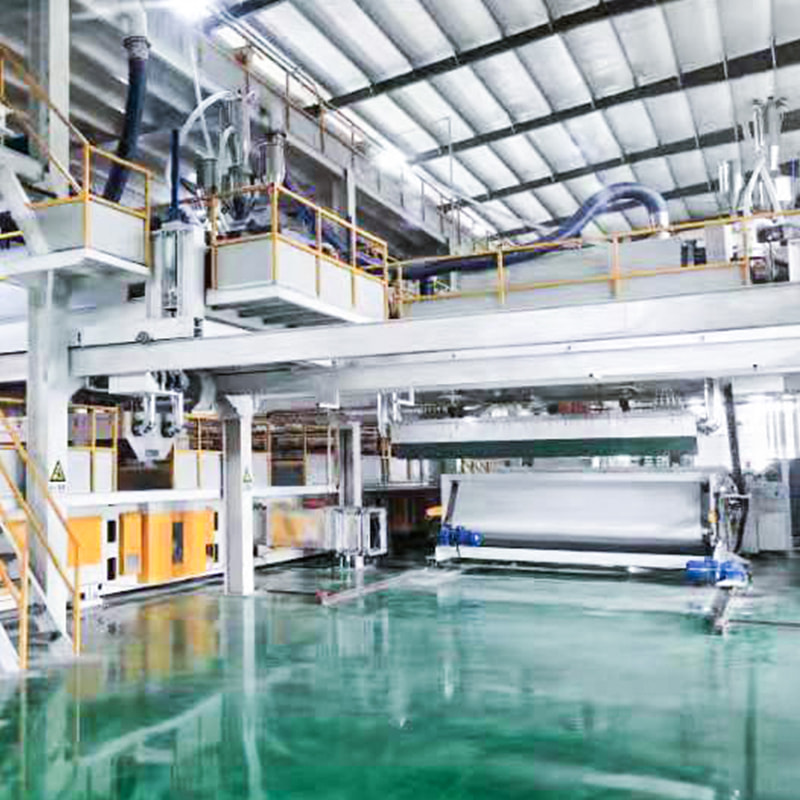
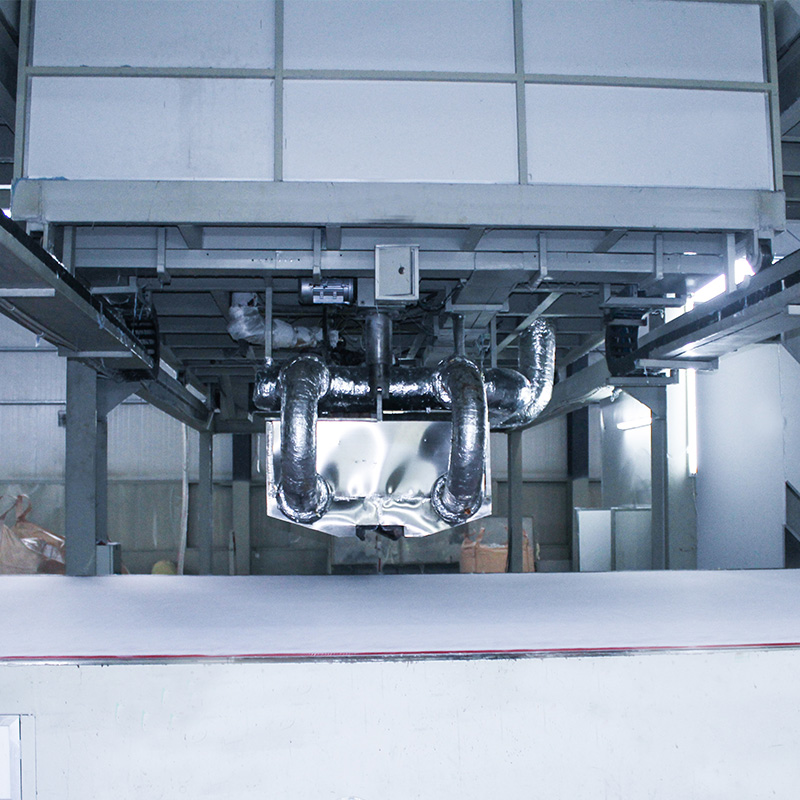 Melt Blown Nonwoven Machine for Fine Fiber Filtration MediaProduces fine polypropylene meltblown fabric for mask layers, filtration, absorption, and hygiene products; compare widths, output, and control features.View Product →
Questions Worth Asking Before You Commit
Whether you are buying fabric or buying equipment, a short list of questions saves a long and expensive round of trial and error.
- How stable is the basis weight across the full working width, not just in the middle?
- In which direction does the fabric tear, and at what elongation?
- Which bonding method will your line use, and has it been tested on this exact fabric?
- How many splices per roll, and what is the largest roll diameter your unwinder accepts?
- Who do you call when a new specification does not behave as the data sheet promised?
That last question is not a joke. Most converting problems are solved in the first week of a new material. After that, teams tend to learn to live with a compromised process instead of fixing it.
Converting and fabric making are two halves of the same job, and both are easier when the two sides talk early. If you are planning a spunbond or meltblown line and want to know how the fabric it makes will behave in a converting plant, or you already convert and want to understand why one roll runs smoothly while the next one fights you, our team is glad to work through the specification with you. You can read more about how we approach projects on our about page, or simply get in touch and tell us what you are trying to run.


 +8613621544385
 No.29 Xinhua Road, Jiashan Village,Jiaxing City Zhejiang P.R., China