


 English
 中文简体
中文简体 русский
 عربى
عربىNonwoven Fabric in Medical Textiles: Applications, Standards & Production
Content
- 1 Why Nonwoven Fabrics Are Essential in Medical Textiles
- 2 Key Medical Applications of Nonwoven Fabrics
- 3 Production Technologies: Spunbond, Meltblown, and SMS Explained
- 4 How to Choose the Right Production Line for Medical Nonwovens
- 5 Performance Standards and Regulations for Medical Nonwovens
- 6 Raw Material Selection: PP vs PET vs PLA for Medical Use
- 7 Market Trends and Future Outlook for Medical Nonwovens
A single surgical gown can be the last line of defense between a surgeon and an aggressive pathogen. In 2020 alone, global demand for medical nonwoven fabrics surged by over 300% in just a few months—not because woven textiles failed, but because nonwovens offered something they never could: an affordable, single-use barrier that breathes. That combination of protection and disposability has made nonwoven fabric the backbone of modern medical textiles.
What separates a basic spunbond sheet from a high-performance SMS composite is not just the material, but the production technology behind it. Meltblown fibers thinner than a human hair trap bacteria and viruses at efficiency levels exceeding 99%, while spunbond layers deliver the tensile strength gowns and masks need to survive a 12-hour shift. Understanding how these layers work together—and how the machinery that creates them shapes the final product—is the starting point for making informed sourcing or investment decisions.
In the sections that follow, we break down the essential role of nonwovens in healthcare, map key applications to specific performance requirements, compare production technologies, and examine the equipment choices that determine both quality and cost. Data points, standards references, and production-line comparisons serve as practical tools for buyers, converters, and manufacturers.
Why Nonwoven Fabrics Are Essential in Medical Textiles
A woven cotton gown can be washed, sterilized, and reused dozens of times. But every reuse cycle introduces a risk: incomplete sterilization, fiber degradation, and cross-contamination. Nonwoven fabrics eliminate that cycle entirely. By engineering the fabric as a disposable barrier, manufacturers shift the focus from reusability to absolute protection and consistent performance.
The protective mechanism is not just about thickness. A nonwoven’s random fiber web creates a tortuous path that traps particles while allowing air and moisture vapor to pass through. This is why a 25 gsm meltblown layer can achieve bacterial filtration efficiency (BFE) above 99% even though it weighs less than a standard sheet of paper. Combined with a hydrophobic spunbond outer layer, the composite resists liquid penetration under pressure—critical when blood spurts hit a surgical gown at 16 kPa or more.
Six performance advantages explain why nonwovens now account for over 70% of medical textile volume:
- High barrier protection against bacteria, viruses, and body fluids
- Single-use design that eliminates cross-infection risks
- Engineered breathability to reduce heat stress during long procedures
- Lightweight construction with typical gown weights of 30–50 gsm
- Lower total cost per use compared to reusable textile systems when sterilization and logistics are factored in
- Customizable layer structures to meet specific Level 1–4 protection requirements
These advantages are not theoretical. In a 2022 study of surgical site infection rates, hospitals that switched from reusable cotton drapes to spunbond-meltblown-spunbond (SMS) nonwoven drapes recorded a measurable reduction in post-operative infections. The difference lay in the fabric’s uniformity and the absence of pinholes that develop in woven materials after repeated laundering.
Key Medical Applications of Nonwoven Fabrics
Every medical application imposes a unique balance of requirements: a face mask needs high filtration but low breathing resistance, while a surgical drape must withstand liquid pooling for hours without strikethrough. No single nonwoven construction fits all use cases. The table below matches common clinical products to their performance mandates and typical fabric weights.
| Application | Critical Performance Metrics | Typical GSM Range | Common Structure |
|---|---|---|---|
| Surgical gowns | Hydrostatic head >30 cm H₂O; tensile strength MD >50 N/5cm | 35–60 | SMS, SMMS |
| Face masks | BFE ≥98%; PFE ≥95% at 0.1 μm; Delta P <5 mm H₂O/cm² | 20–40 (total) | Spunbond + meltblown + spunbond |
| Wound dressings | Absorbency; fiber softness; lint-free surface | 30–80 | Spunlace, thermal bond |
| Surgical drapes | Liquid strikethrough resistance; flame retardancy | 40–70 | SMS, laminate |
| Sterilization wrap | Microbial barrier; air permeability for steam penetration | 40–60 | SMS, wetlaid |
Face masks illustrate the level of precision required. A typical three-ply medical mask places an electret-treated meltblown layer—fiber diameter 0.5–2 μm—between two spunbond cover layers. The meltblown’s electrostatic charge captures submicron particles mechanically and electrostatically, achieving PFE values above 98% without the high pressure drop that would make breathing difficult. Alter the meltblown’s fiber diameter by just 1 μm, and filtration efficiency can swing by 10 percentage points.
For gowns, the challenge shifts toward liquid barrier performance. AAMI Level 4 gowns must resist high-velocity liquid penetration while remaining breathable enough to prevent heat buildup. This dual requirement is why advanced producers prefer SMMS structures—the added meltblown layer increases hydrostatic head without a proportional increase in air resistance, a trade-off that single-layer or even SMS fabrics struggle to match.
Production Technologies: Spunbond, Meltblown, and SMS Explained
Nonwoven medical fabrics are not simply sheets of plastic. They are engineered structures whose performance is defined at the fiber level—literally. Fiber diameter, laydown uniformity, and bonding method dictate whether a fabric will block a virus or let it pass. Three core technologies drive the medical nonwovens sector, and understanding their differences is critical for anyone specifying raw materials or selecting production equipment.
Spunbond
Spunbond lines extrude continuous filaments from polypropylene resin, stretch them aerodynamically, and deposit them onto a moving belt as a randomized web. Thermal calendering bonds the fibers at contact points. Typical fiber diameters range from 15 to 35 μm, producing fabrics with high tensile strength and good drapeability. For medical applications, spunbond alone often serves as the outer carrier layer in composite masks and as lightweight cover gowns (15–30 gsm) where barrier requirements are moderate.
Meltblown
Meltblown technology takes the same PP resin but extrudes it through a die with high-velocity hot air that attenuates the streams into microfibers as fine as 0.5–5 μm. The result is a self-bonded web with extremely small pore size and enormous surface area—the core filtration engine inside high-performance masks and respirators. A meltblown layer of just 15–25 gsm can deliver BFE >99% when properly electret-charged. The trade-off is low tensile strength; meltblown fabric cannot hold its shape under stress without the support of spunbond layers.
SMS (Spunbond-Meltblown-Spunbond)
SMS composites combine the strength of spunbond with the barrier performance of meltblown in a single inline process. The three layers are thermally bonded, creating a fabric that resists liquid penetration from the outside while allowing moisture vapor to escape from the inside. Typical SMS medical fabrics run 20–60 gsm, with hydrostatic head values exceeding 40 cm H₂O depending on meltblown layer thickness. This structure has become the gold standard for surgical gowns, drapes, and sterilization wraps because it delivers the best ratio of protection to weight.
Adding a second meltblown layer produces SMMS, which pushes hydrostatic resistance even higher—above 60 cm H₂O in some constructions—making it suitable for Level 4 protective apparel. The extra meltblown layer also provides redundancy: if one layer is breached by a fluid jet, the second continues to protect.
How to Choose the Right Production Line for Medical Nonwovens
The decision between an S, SS, SMS, or SMMS nonwoven production line is not a simple feature comparison. It is a calculation of target product mix, production volume, and acceptable capital investment. A producer aiming to manufacture Level 1 isolation gowns can operate profitably with a single-beam spunbond line running 100–150 kg/h. But a manufacturer that wants to supply surgical gowns and drapes to the EU market needs the multi-layer capability and consistent barrier performance only an SMS or SMMS line can deliver.
The table below provides a direct comparison across four common configurations. The investment levels are relative ranges for new, standard-width equipment without specialty add-ons such as corona treatment or inline coating.
| Line Type | Layer Count | Typical Capacity (kg/h) | GSM Range | Relative Investment | Best Suited Medical Products |
|---|---|---|---|---|---|
| S (single beam) | 1 | 100–150 | 10–120 | Low | Cover gowns, shoe covers, basic bedsheets |
| SS (double beam) | 1–2 | 150–250 | 15–150 | Medium-Low | Isolation gowns, light drapes |
| SMS (three beam) | 3 | 200–350 | 20–100 | Medium | Surgical gowns (Level 2–3), masks, drapes |
| SMMS (four beam) | 4 | 250–450 | 25–120 | High | Level 4 gowns, high-fluid-risk drapes, sterile packaging |
Beyond simple throughput, the choice of line configuration directly impacts the hydrostatic head and breathability balance—two parameters that regulators measure and clinicians feel. An SMS line with appropriately sized meltblown die and precision airflow control can achieve hydrostatic head values of 35–55 cm H₂O, while a standard S line will max out below 20 cm H₂O. That gap determines whether the fabric passes ASTM F1670 blood penetration testing.
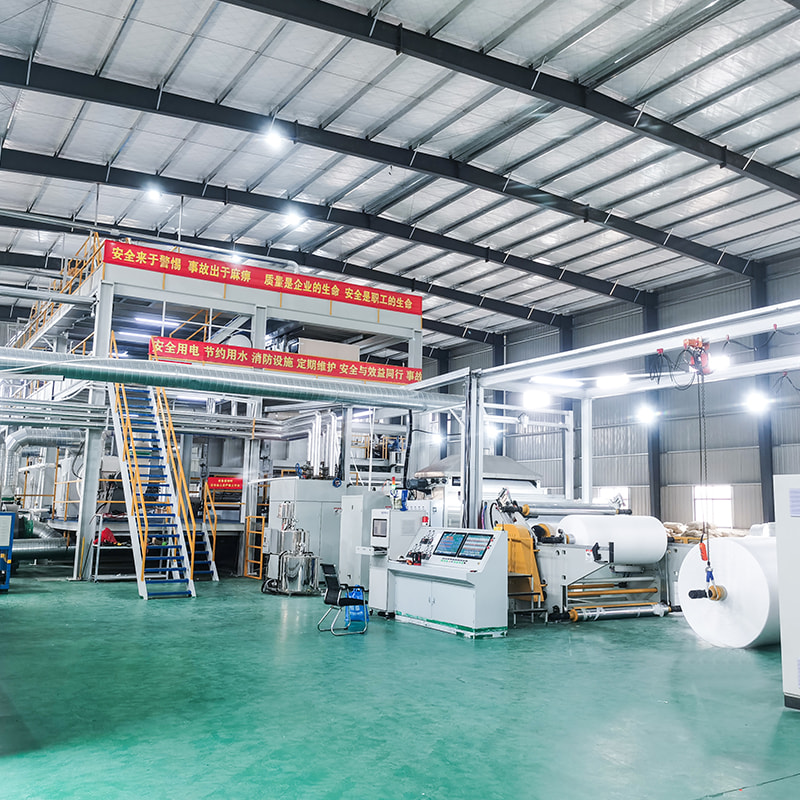
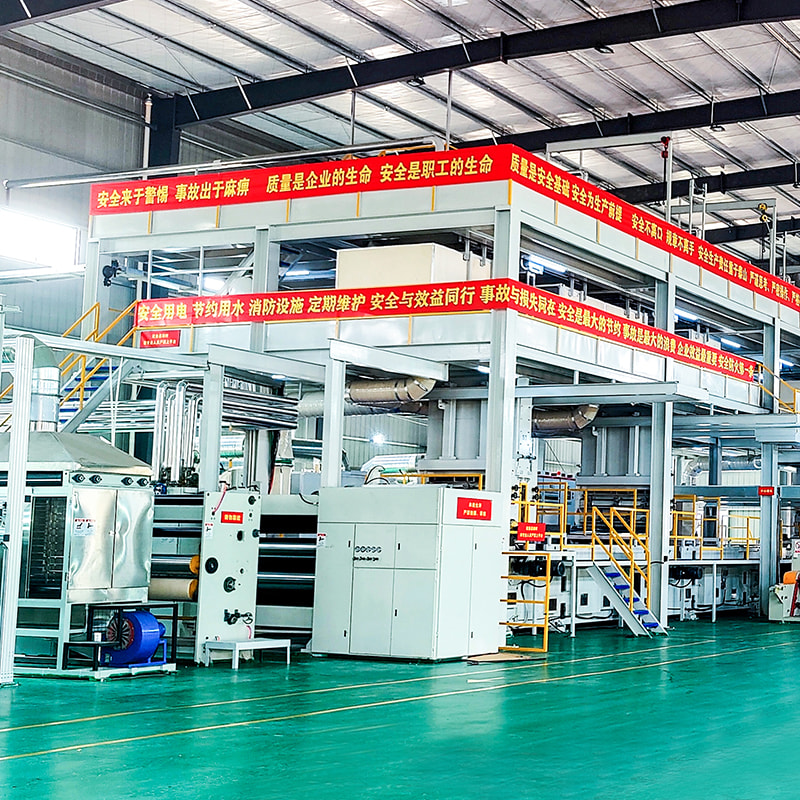
For buyers evaluating a new facility or upgrade, understanding the relationship between beam count and product capability is the first step. Detailed equipment specifications, including die width, meltblown air manifold design, and calendar roll geometry, drive both quality and operating cost. A well-configured SMS nonwoven machine can produce medical-grade fabrics with GSM uniformity within 3% across the web—a tolerance that directly translates to consistent barrier performance in every gown or mask produced.
Performance Standards and Regulations for Medical Nonwovens
Nonwoven medical products sold in regulated markets must demonstrate quantified performance against recognized standards. A specification sheet that says “high filtration” without a BFE test result is meaningless. The key standards divide by product category: masks follow ASTM F2100 and EN 14683, surgical gowns and drapes follow AAMI PB70, and sterilization wraps follow ISO 11607.
ASTM F2100 defines three mask performance levels based on five criteria:
- Bacterial Filtration Efficiency (BFE) — Level 1: ≥95%, Level 2/3: ≥98%
- Particulate Filtration Efficiency (PFE) at 0.1 μm — Level 1/2/3: ≥95% (Level 3 often reaches ≥98% in practice)
- Fluid Resistance (synthetic blood penetration) — Level 1: 80 mmHg, Level 2: 120 mmHg, Level 3: 160 mmHg
- Delta P (breathability) — all levels: <5.0 mm H₂O/cm²
- Flame Spread — Class 1 requirement for all levels
Meeting Level 3 requirements forces a specific nonwoven construction. The outer spunbond layer must be treated for fluid repellency, the meltblown layer must be electret-charged with uniform fiber distribution, and the inner spunbond must feel soft against the face. Any deviation in the meltblown production—slightly uneven fiber diameters, insufficient charging voltage—and the PFE will drop below the 95% threshold.
AAMI PB70 uses a different framework, classifying gowns from Level 1 (minimal risk) to Level 4 (high risk) based on liquid barrier performance measured by AATCC 42 (impact penetration) and AATCC 127 (hydrostatic pressure). Level 4 gowns must withstand hydrostatic pressure of 50 cm H₂O or more—a level that typically requires an SMMS structure with optimized meltblown calendering. Manufacturers running a SMMS spunmelt line can reach these values consistently by tuning the meltblown die temperature and collector distance within narrow windows.
Raw Material Selection: PP vs PET vs PLA for Medical Use
Polypropylene dominates medical nonwovens for good reason: it is lightweight, chemically inert, and processes at relatively low temperatures, making it ideal for spunbond and meltblown technologies. But domination does not mean exclusivity. For certain niche applications, polyester or polylactic acid offer properties that PP cannot match—at a price.
| Material | Typical MFI (spunbond/meltblown) | Tensile Strength | Heat Resistance | Relative Cost | Biodegradable | Common Medical Use |
|---|---|---|---|---|---|---|
| PP (polypropylene) | 30–40 / 800–1500 | Medium | Up to 100 °C | Low | No | Masks, gowns, drapes, wipes |
| PET (polyester) | N/A (staple or spunbond) | High | Up to 150 °C | Medium | No | Sterilization wrap, reinforced drapes |
| PLA (polylactic acid) | 20–30 / limited meltblown | Low-Medium | Up to 60 °C | High | Yes (industrial compost) | Absorbable sutures, niche sustainable PPE |
PP’s dominance stems from its meltblown processability. To achieve the 0.5–2 μm fiber diameters that deliver high filtration, the resin needs a melt flow index (MFI) between 800 and 1500 g/10 min. Standard spunbond PP grades with MFI 30–40 cannot flow through meltblown dies at the required throughput. Separate resin grades—and sometimes separate extruders—are mandatory, which adds complexity to the production line design. PET, while stronger and more heat-resistant, does not lend itself to meltblown microfibers at comparable cost, limiting its role to high-durability applications where repeated sterilization is needed. PLA struggles with both meltblown processability and the low hydrostatic head values required for high-barrier medical textiles, though its biodegradability makes it attractive for sustainability roadmaps.
For a producer running a PP spunbonded nonwoven line, the material choice is largely settled: PP delivers the best cost-performance balance for the vast majority of medical disposables. The real quality control variable is not polymer type but additive selection—masterbatch with UV stabilizers, hydrophilic or hydrophobic finishes, and antistatic agents that must not compromise biocompatibility.
Market Trends and Future Outlook for Medical Nonwovens
The COVID-19 pandemic compressed a decade of demand growth into two years. Between 2020 and 2022, global medical nonwoven consumption jumped from an estimated 1.8 million tonnes to over 2.7 million tonnes. Post-pandemic, the market is not collapsing back to pre-2020 levels. Instead, it is stabilizing at a higher baseline, driven by expanded PPE stockpiling mandates, aging populations in advanced economies, and the expansion of healthcare infrastructure across Asia-Pacific and Africa.
Analysts project a compound annual growth rate (CAGR) of 8–10% for medical nonwovens through 2030, with the surgical gown and mask segments remaining the largest by volume. However, three structural shifts are reshaping demand more than headline growth rates:
- A move toward higher barrier levels: the share of Level 3 and 4 products is growing faster than the overall market as regulatory requirements tighten in the EU and North America.
- Sustainability pressure: major procurement tenders now include clauses on recyclability or use of bio-based content, pushing producers to explore PLA blends and production waste reduction, even if performance trade-offs remain significant.
- Regionalization of supply: countries that experienced critical PPE shortages during the pandemic—notably India, Turkey, and Gulf states—are investing in domestic nonwoven production capacity to reduce import dependency, creating demand for complete turnkey lines and technical training.
The product forward curve points toward thinner, stronger composites that do more with less material. Developments in bicomponent spunbond fibers and nanofiber meltblown layers promise to push filtration efficiency above 99.9% while reducing weight. But the economic barrier to entry remains high: a world-class SMS or SMMS line represents a multi-million-dollar investment that requires not just capital but deep process know-how. For buyers and investors, the next five years will be defined less by which technology to choose and more by how quickly they can achieve stable production at certified medical quality levels.





 +8613621544385
 No.29 Xinhua Road, Jiashan Village,Jiaxing City Zhejiang P.R., China