






 English
 中文简体
中文简体 русский
 عربى
عربىNonwoven Filtration Market: Technology Trends, Growth & Production Insights
Content
- 1 Market Overview: Size, Growth & Key Drivers
- 2 Segmentation by Filtration Type: Air vs. Liquid
- 3 Technology Deep Dive: Spunbond, Meltblown & Composite Structures
- 4 End-Use Industry Analysis: Where is the Demand Coming From?
- 5 Regional Market Insights: Asia-Pacific Leads, North America Innovates
- 6 Competitive Landscape & Key Players
- 7 Equipment Selection Guide: Matching Production Lines to Market Needs
- 8 Future Outlook: Trends to Watch (2025–2030)
The global nonwoven filtration market surpassed $8.2 billion in 2025. Yet for every dollar spent on filter media, manufacturers are asking a harder question: which production technology will deliver the right balance of efficiency and cost at scale? The answer sits at the intersection of material science, process engineering, and regional demand shifts that are reshaping the industry faster than many production planners realize.
Demand for cleaner air and water is no longer a policy footnote — it is the primary growth engine. Regulatory mandates, healthcare expansion, and industrial automation are all pulling nonwoven filters into new applications. But growth without the right production backbone quickly becomes a missed opportunity. This analysis connects market data with equipment decisions, showing where value accumulates and how to capture it.
Market Overview: Size, Growth & Key Drivers
Multiple research firms converge on a single theme: the nonwoven filtration market is in a sustained expansion phase. MarksandMarkets tracked a move from $7.1 billion in 2022 to a projected $9.6 billion by 2027. Mordor Intelligence pegged the 2025 base at $8.22 billion and sees a 6.42% CAGR pushing the figure beyond $11.9 billion by 2031. Grand View Research extended the horizon further, estimating $7.0 billion in 2025 and a climb to $13.9 billion by 2033. The message is clear. The market is not merely growing — its momentum is compounding.
| Source | Baseline Year / Size | Forecast Year / Size | CAGR |
|---|---|---|---|
| MarketsandMarkets | 2022 / $7.1 B | 2027 / $9.6 B | 6.2% |
| Mordor Intelligence | 2025 / $8.22 B | 2031 / $11.94 B | 6.42% |
| Grand View Research | 2025 / $7.0 B | 2033 / $13.9 B | ~9.0% |
Three structural drivers underpin these trajectories. First, tightening environmental standards — especially in Asia and Europe — are forcing industries to upgrade filtration systems, directly increasing the volume of nonwoven media consumed per facility. Second, healthcare infrastructure investment post-pandemic has locked in higher baseline demand for high-efficiency air and liquid filters. Third, industrial automation growth in sectors like electronics and food processing demands cleaner process environments, creating a parallel pull for precision filtration.
What makes this wave different is the shift from replacement markets to new installations. Instead of simply swapping out old filters, end users are adopting higher-specification media — often requiring multi-layer nonwoven composites — which in turn requires production lines capable of delivering those exact structures at competitive cycle times.
Segmentation by Filtration Type: Air vs. Liquid
Air filtration currently commands roughly 60% of total nonwoven filter media revenue, driven by HVAC, automotive cabin air, and industrial dedusting applications. Liquid filtration accounts for the remaining 40%, with water treatment and process liquid clarification as the dominant segments. The weight of each segment is shifting, however, as desalination and municipal water projects expand in fast-growing economies.
Air filtration demands media with extremely fine fiber networks to achieve high particle capture efficiency at low pressure drop. This makes spunbond nonwoven fabric combined with meltblown layers the structural default. In contrast, liquid filtration often tolerates slightly larger pore structures but requires higher mechanical strength and chemical resistance, leaning more heavily on needlepunch or wetlaid media embedded in multi-layer laminates.
- Air filtration: HVAC systems, cleanroom panels, automotive cabin filters, industrial dust collection, gas turbine intake.
- Liquid filtration: Municipal water treatment, food & beverage processing, pharmaceutical sterile filtration, metalworking fluid clarification.
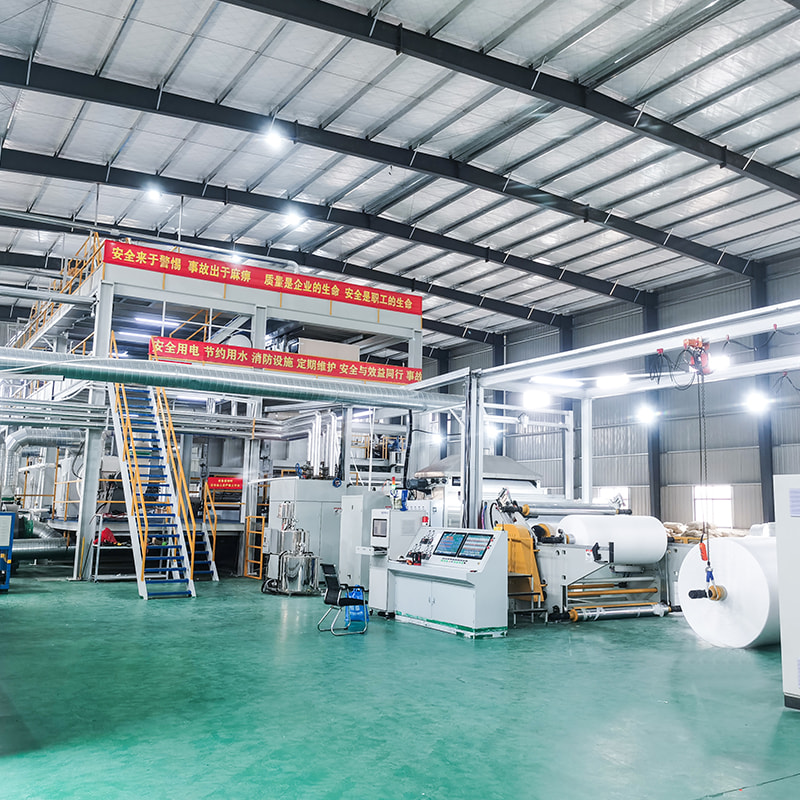
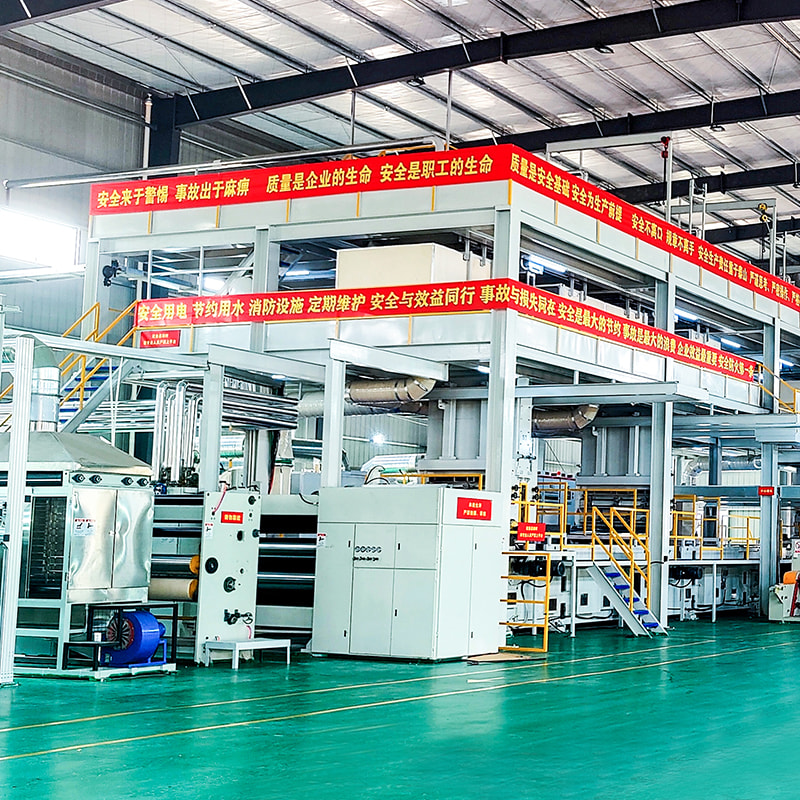
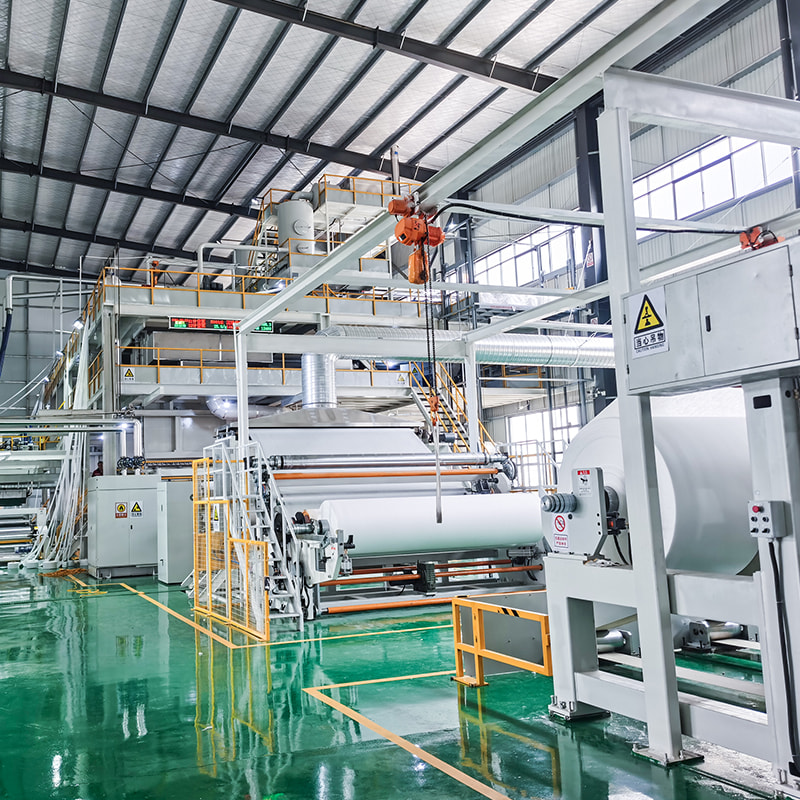
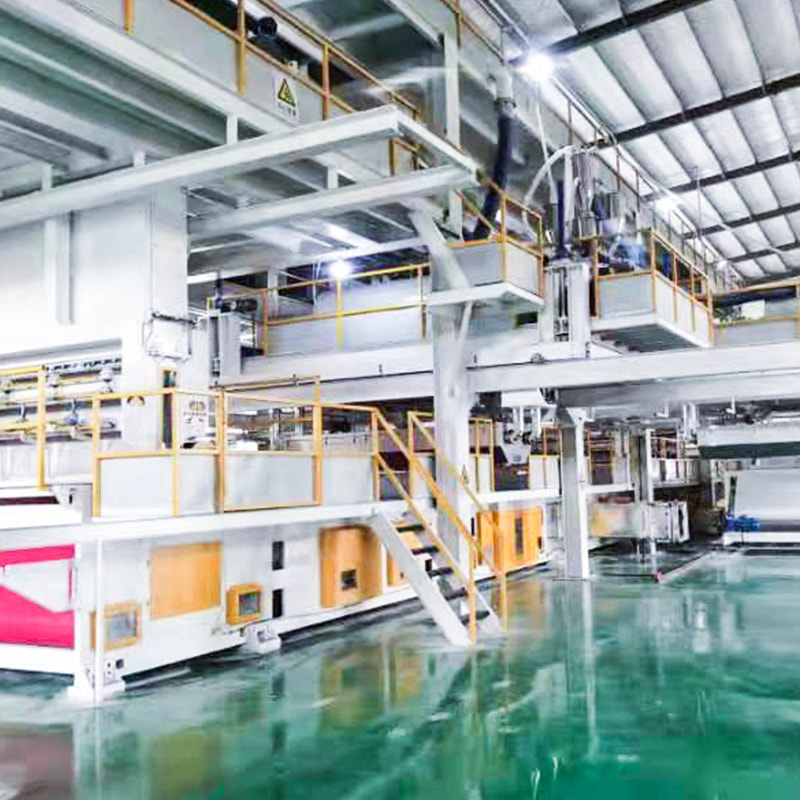
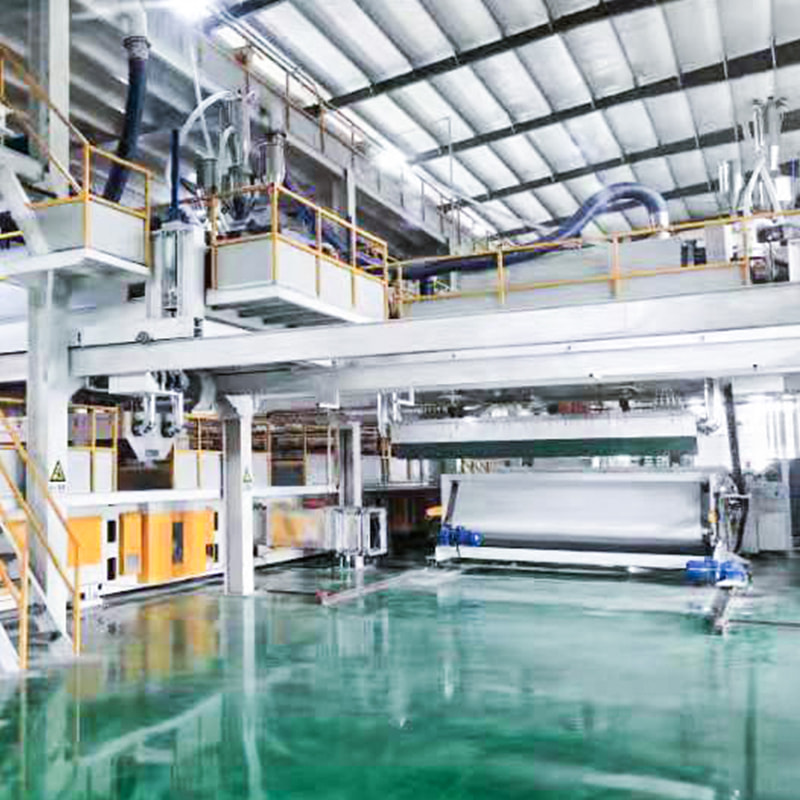
The crossover applications — such as medical device sterilization filters — illustrate why production flexibility matters. A single plant running a three-beam SMS nonwoven machine can rapidly switch between air and liquid filter media grades by adjusting layer composition and basis weight, without capital duplication.
Technology Deep Dive: Spunbond, Meltblown & Composite Structures
The filtration performance of a nonwoven medium is determined almost entirely by fiber diameter, layer architecture, and bonding method. Understanding the output of each process is not academic — it directly determines which markets a producer can serve.
Spunbond (S)
Spunbond technology produces continuous filaments with typical diameters between 15 and 35 μm. It provides exceptional tensile strength and high throughput, making it the cost backbone of any filtration composite. Used alone, it serves as a support layer. Its filtration efficiency for submicron particles is modest, but that is not its primary role.
Meltblown (M)
Meltblown fibers often range from 0.5 to 10 μm, creating a dense, self-bonded web with excellent particle capture characteristics. A single meltblown layer can achieve 95% efficiency against 0.3 μm particles. The trade-off is mechanical weakness and higher raw material cost per functional area.
Composite Structures: SMS and SMMS
Layering spunbond and meltblown webs produces a best-of-both-worlds solution. An SMS (spunbond-meltblown-spunbond) configuration sandwiches the high-efficiency meltblown layer between two strong spunbond outer layers. SMMS adds a second meltblown layer, further increasing dust holding capacity and filtration rating while preserving mechanical integrity. Tests show that moving from a single meltblown layer to an SMMS structure can increase dust holding capacity by 30–50% and extend service life by a factor of two to three, effectively reducing the annual cost per filter by nearly half in heavy-loading environments.
| Technology | Fiber Diameter (μm) | Filtration Efficiency | Dust Holding | Relative Cost |
|---|---|---|---|---|
| Spunbond (S) | 15–35 | Low | Low | Low |
| Meltblown (M) | 0.5–10 | High | Medium | High |
| SMS | Composite | Medium–High | Medium–High | Medium |
| SMMS | Composite | High–Very High | High | Medium–High |
Choosing the right technology is not about picking a winner — it is about matching layer architecture to the grade of filtration the target application demands. A data center air filter may require HEPA-level efficiency, driving the choice toward SMMS or even nano-fiber enhanced structures. A pre-filter for a commercial HVAC system can rely on a simpler spunbond construction with lower cost.
End-Use Industry Analysis: Where is the Demand Coming From?
Not every end-use market grows at the same speed. Water treatment and healthcare currently lead in absolute volume. HVAC and automotive are the fastest accelerators, while industrial dedusting remains the reliable anchor. The table below breaks down the current landscape.
| Industry | Share of Market | CAGR (2025–2030) | Key Demand Point |
|---|---|---|---|
| Water Treatment | 28% | 6.0% | Membrane support layers, cartridge filters |
| HVAC & Air Purification | 22% | 7.5% | Mini-pleat panels, HEPA/ULPA media |
| Automotive | 18% | 6.8% | Cabin air, engine intake, EV battery ventilation |
| Healthcare & Medical | 15% | 5.5% | Surgical masks, respirators, sterile filters |
| Industrial Dedusting | 12% | 5.0% | Baghouse media, cartridge collectors |
| Others | 5% | — | Food & beverage, electronics |
The numbers reveal that the highest-growth segments — HVAC and automotive — are precisely those where composite nonwoven structures like SMS and SMMS are becoming the standard specification. For producers, this signals that investing in lines capable of multi-beam configurations is not optional; it is table stakes for capturing the top end of the demand curve.
Regional Market Insights: Asia-Pacific Leads, North America Innovates
Asia-Pacific holds over 40% of global nonwoven filtration consumption and is growing at a 7.5% CAGR, driven by China’s aggressive industrial emissions controls and India’s expanding municipal water treatment infrastructure. China alone accounts for nearly one-third of all filtration media capacity additions announced between 2023 and 2026. North America, while slower in volume growth (5.2%), remains the innovation hub for high-performance media, particularly in HVAC and healthcare.
| Region | Market Share 2025 | CAGR (2025–2030) |
|---|---|---|
| Asia-Pacific | 42% | 7.5% |
| Europe | 25% | 5.8% |
| North America | 23% | 5.2% |
| Rest of World | 10% | 6.0% |
This geographic split has a direct consequence for equipment selection. Asian mills are often designed for high-volume, mid-spec production — 3200 mm to 4200 mm wide lines running at high speeds — to serve the broader industrial filter market. European and North American converters lean toward narrower, more flexible lines that can produce smaller batches of high-value media for certified filter grades. Manufacturers targeting both poles need a machinery platform that supports rapid beam configuration changes and variable line speeds.
Competitive Landscape & Key Players
The nonwoven filtration supply side is fragmented, but concentration is increasing at the top. Ahlstrom-Munksjö, Freudenberg Performance Materials, and Berry Global lead in nonwoven roll goods for filtration. Sandler and Lydall (now part of a larger group) round out the top tier. Their strategies share a common thread: investment in multi-beam SMS and SMMS assets, combined with in-house lamination and converting capabilities to capture more value per square meter.
Several of these players are commissioning new facilities built around lines that exceed 3200 mm working width and achieve automation rates above 90%. This trend indicates that the future competitive advantage will not come from incremental capacity additions but from production systems that dramatically lower cost per ton while meeting multiple filtration grades from a single footprint.
Equipment Selection Guide: Matching Production Lines to Market Needs
The decision matrix below simplifies the complex trade-off between line configuration, target application, and capital efficiency. It is built on the engineering reality that a well-chosen multi-beam system can serve both high-volume commodity grades and premium composite media with a single investment.
| Target Application | Recommended Line Type | Typical Width (mm) | Key Advantage |
|---|---|---|---|
| Pre-filters, HVAC basic | S (single-beam spunbond) | 1600–2400 | Lowest capital cost per ton |
| Medium-efficiency liquid/air | SS (double-beam spunbond) | 2400–3200 | Higher basis weight versatility |
| Automotive cabin, HVAC high-efficiency | SMS (three-beam) | 3200–4200 | Integrated fine filtration layer |
| HEPA, medical, industrial cleanroom | SMMS (four-beam) | 3200–4200 | Maximum dust loading and efficiency |
The economic gap between beam configurations is stark. Moving from a single-beam S line to a four-beam SMMS platform typically raises capital expenditure but can double the achievable selling price per kilogram of finished media, while opening access to higher-margin healthcare and cleanroom contracts. In markets where filter performance dictates price, the margin uplift from multi-beam capability pays back the incremental investment within 24 to 36 months for lines running above 70% utilization.
Another factor often overlooked is line width scalability. A 4200 mm line operating at full capacity produces roughly 60% more output per hour than a 3200 mm line, substantially reducing fixed cost per ton. For producers serving the Asian market, where large-volume orders are standard, this width advantage translates directly into competitive bidding power.
Future Outlook: Trends to Watch (2025–2030)
Three trends will reshape the nonwoven filtration landscape before the decade closes. None will replace SMS/SMMS as the core production platform, but each will influence which add-on capabilities producers need to stay relevant.
- Nanofiber integration: Electrospinning and meltblown nano-fiber layers are moving from the laboratory to commercial lines. Adding a nanofiber coating module to an existing SMMS line can elevate a medium from HEPA H13 to ULPA U15 performance, expanding addressable markets with minimal footprint expansion.
- Biobased and biodegradable media: PLA-based spunbond and meltblown materials are entering commercial filtration applications in Europe, driven by regulatory pressure. Lines that can process PLA without major screw or die modifications will capture early-adopter premiums.
- Predictive quality control: Inline camera systems and AI-driven defect detection are becoming standard on high-end lines. They reduce off-spec waste by 2–4 percentage points, which for a 10,000-ton annual plant amounts to a six-figure annual savings.
Producers who align their next machine purchase with these vectors — not as separate features but as integrated line architectures — will be the ones writing the next chapter of this market, not just reading about it.


 +8613621544385
 No.29 Xinhua Road, Jiashan Village,Jiaxing City Zhejiang P.R., China