


 English
 中文简体
中文简体 русский
 عربى
عربىNonwoven Filtration: Materials, Processes & Selection Guide
Content
- 1 What Is Nonwoven Filtration Media?
- 2 Key Materials Used in Nonwoven Filtration
- 3 Manufacturing Processes for Filtration Nonwovens
- 4 Performance Metrics: How to Evaluate Filtration Efficiency
- 5 Single-Layer vs. Multi-Layer Structures: SMS, SMMS, and Beyond
- 6 Applications Across Industries
- 7 How to Select the Right Production Line for Filtration Media
- 8 Future Trends in Nonwoven Filtration
What Is Nonwoven Filtration Media?
Every cubic meter of air inside a pharmaceutical cleanroom passes through nonwoven filter layers more than 600 times per hour. That level of contamination control does not happen with woven textiles. Nonwoven filtration media is an engineered sheet structure made from randomly laid fibers or filaments, bonded mechanically, thermally, or chemically. Unlike woven fabrics where yarns interlace in a regular pattern, nonwovens create a three-dimensional labyrinth of pores.
The random fiber arrangement directly impacts filtration performance. Pores are not uniform grids but tortuous pathways that trap particles while allowing fluid to pass. Porosity in nonwoven filter media typically ranges from 80% to 95%, compared to only 30–50% for woven equivalents. This high void volume reduces pressure drop and energy consumption, making nonwovens the default choice for high-efficiency air and liquid filtration.
The structure also allows precise engineering of fiber diameter, pore size distribution, and thickness. Control over these variables means one base technology can serve a baghouse dust collector and a respiratory mask, simply by adjusting the production parameters.
- High porosity for low‑energy operation
- Customizable pore size down to sub‑micron levels
- Ability to combine multiple layers for graded filtration
- Compatibility with electrostatic charging and nanofiber coatings
Key Materials Used in Nonwoven Filtration
Material choice defines the thermal ceiling, chemical resistance, and lifecycle cost of a filter. Polypropylene, polyester, and glass fiber dominate the market, each occupying a distinct performance‑versus‑cost niche.
Polypropylene is the workhorse of HVAC and liquid bag filtration. It resists most acids and alkalis at ambient temperatures, costs roughly 30–40% less than polyester, and can be easily thermo‑bonded. Its upper continuous service temperature is around 90°C, which limits use in hot‑gas applications. Polyester, on the other hand, handles continuous exposure up to 140°C and offers better burst strength in pleated cartridge designs. Glass microfiber extends operating temperature to 260°C and achieves HEPA and ULPA efficiency levels without electrostatic charging, though brittleness makes it unsuitable for dynamic pleat cycles.
| Property | Polypropylene (PP) | Polyester (PET) | Glass Microfiber |
|---|---|---|---|
| Continuous temperature limit | 90°C | 140°C | 260°C |
| Relative material cost | Low | Medium | High |
| Chemical resistance (acids) | Excellent | Good | Excellent |
| Fiber diameter range (typical) | 1–25 µm | 5–30 µm | 0.3–10 µm |
| Recyclability | Yes | Limited | No |
Recent developments in bicomponent fibers allow a PET core with a PP sheath, combining the temperature resistance of polyester with the easy bonding of polypropylene. For liquid filtration in the semiconductor or food industry, nylon and PPS fibers enter the picture, but their higher cost limits them to niche applications where PP or PET fail chemically.
Manufacturing Processes for Filtration Nonwovens
The production method determines fiber thickness, web uniformity, and bonding strength—three factors that directly set a filter’s efficiency and service life. Four processes account for the vast majority of nonwoven filtration media.
Meltblown
Meltblown lines extrude polymer through fine orifices, attenuating the filaments with high‑velocity hot air to produce fibers as fine as 0.5–5 µm. The web is self‑bonded and can be electrostatically charged. This is the layer that makes a surgical mask or HEPA panel work. Typical grammages range from 10 to 300 g/m², and standalone meltblown media can achieve initial filtration efficiency above 95% at 0.3 µm. Meltblown nonwovens are also the foundation for electret‑charged media used in HVAC and respiratory protection.
Spunbond
Spunbond filaments are continuous and coarser, with diameters from 10 to 40 µm. The webs are thermally bonded through a calender roll pattern. Spunbond nonwoven fabrics provide mechanical strength and a skeleton for multilayer filtration composites. Alone, they act as pre‑filters, typically capturing particles above 5 µm. When combined with a meltblown middle layer, they create the classic SMS structure.

Needlepunch
Needlepunch webs use barbed needles to entangle staple fibers. The resulting media are thick, with grammages from 100 to 900 g/m², and exhibit high dust‑holding capacity. They are the standard for industrial baghouse dust collectors, where surface loading rather than depth filtration is the primary mechanism. Fiber diameters range between 15 and 50 µm, pore sizes stay above 10 µm, and air permeability is high.
Spunlace (Hydroentanglement)
Hydroentangled fabrics bond fibers with high‑pressure water jets. This process preserves fiber openness and is common for low‑shedding cleanroom wipes and some specialty liquid‑filter cartridges. The media lacks the tight pore rating of meltblown layers but delivers excellent dirt‑hold capacity when wound into a multi‑layer cartridge.
Performance Metrics: How to Evaluate Filtration Efficiency
Filtration efficiency alone tells only half the story. A filter that captures 99.9% of particles but chokes airflow within hours has little practical value. The three inseparable KPIs are collection efficiency, pressure drop, and dust‑holding capacity. Modern standards like ISO 16890 and EN 1822 tie these together into filter classes that engineers use to specify media.
For air filtration, ISO 16890 groups filters into coarse, ePM10, ePM2.5, and ePM1 ratings based on particle‑size‑specific efficiency. The ePM1 rating is particularly relevant for nonwoven media, as it evaluates performance against sub‑micron particles where meltblown layers dominate. A flat‑sheet medium that achieves ePM1 ≥ 80% under 150 Pa initial pressure drop is considered efficient enough for most commercial buildings. HEPA and ULPA media, governed by EN 1822, demand efficiency at Most Penetrating Particle Size (MPPS) of 99.95% and 99.9995% respectively, requiring extremely uniform fiber distribution.
| Filter Class (ISO 16890 / EN 1822) | Typical Efficiency & Particle Size | Initial Pressure Drop Range | Common Nonwoven Structure |
|---|---|---|---|
| Coarse (ISO Coarse) | <50% at PM10 | 20–50 Pa | Needlepunch, spunbond |
| ePM10 | ≥50% at PM10 | 50–100 Pa | Spunbond + meltblown |
| ePM2.5 | ≥50% at PM2.5 | 70–150 Pa | SMS / SMMS |
| ePM1 | ≥50% at PM1 | 100–250 Pa | SMMS / SMMSS, electret meltblown |
| HEPA H13–H14 | ≥99.95% at MPPS (0.1–0.3 µm) | 200–350 Pa | Glass microfiber, fine meltblown + nanofiber |
Liquid filtration adds viscosity and particle‑loading mechanics. Here the media must balance micron rating (absolute or nominal) with dirt‑hold capacity. Nonwoven depth media, such as meltblown cartridges, typically offer a high dirt‑hold capacity because the tortuous pore structure traps particles throughout the thickness rather than only on the surface.
Single-Layer vs. Multi-Layer Structures: SMS, SMMS, and Beyond
Single processes cannot optimize mechanical strength, filtration efficiency, and pressure drop simultaneously. That is why multilayer composites dominate high‑performance filtration. The classic SMS (Spunbond‑Meltblown‑Spunbond) construction sandwiches a fine‑fiber filtering core between two load‑bearing spunbond layers. Moving to SMMS adds a second meltblown layer, which creates a two‑stage depth‑filtration effect that significantly raises dust‑holding capacity and efficiency without proportionally increasing pressure drop.
Adding still more meltblown layers—SMMSS—pushes efficiency further, particularly useful when targeting ePM1 or HEPA‑like performance at face velocities above 5 cm/s. SMMSS structures routinely achieve 0.3 µm particle capture above 99.5% at a pressure drop under 180 Pa. The extra meltblown layers also help compensate for any manufacturing variation, yielding more consistent roll‑to‑roll quality.
| Structure | 0.3 µm Efficiency (Typical) | Pressure Drop at 5.3 cm/s (Typical) | Best Application Fit |
|---|---|---|---|
| SS (spunbond‑spunbond) | <20% | 10–30 Pa | Pre‑filtration, coarse dust |
| SMS | 90–99% | 80–120 Pa | HVAC pocket filters, medical face masks |
| SMMS | 98–99.5% | 100–160 Pa | High‑efficiency air filters, liquid depth cartridges |
| SMMSS | >99.5% | 120–180 Pa | Cleanroom pre‑filtration, industrial gas turbine intake |
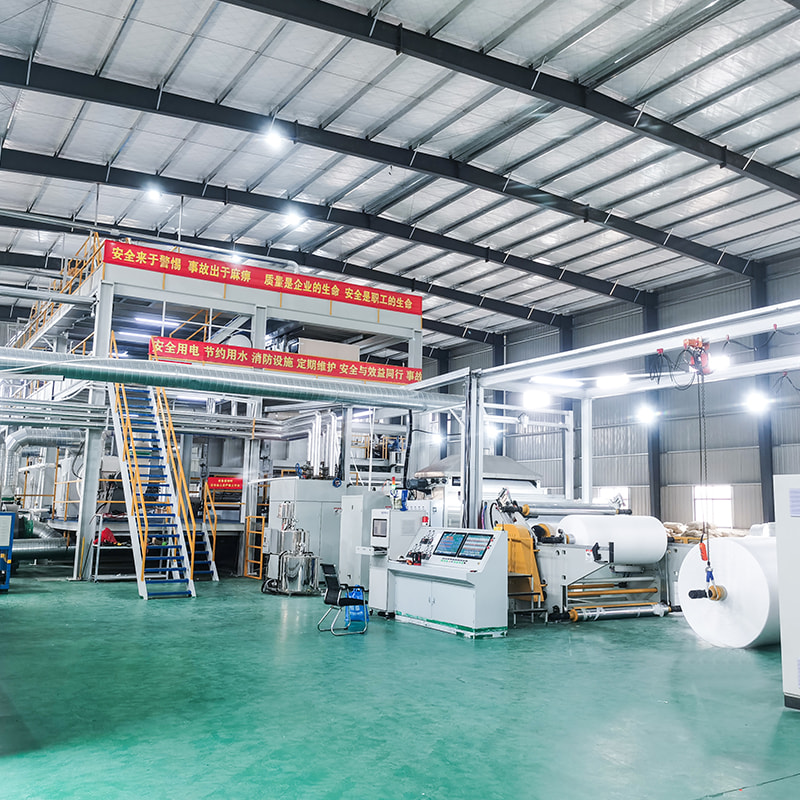
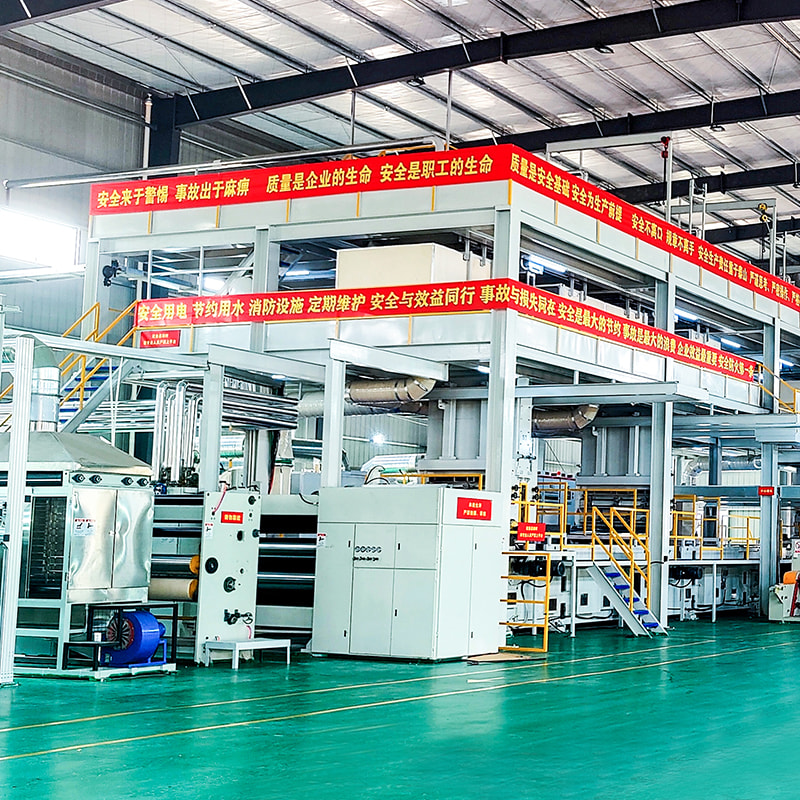
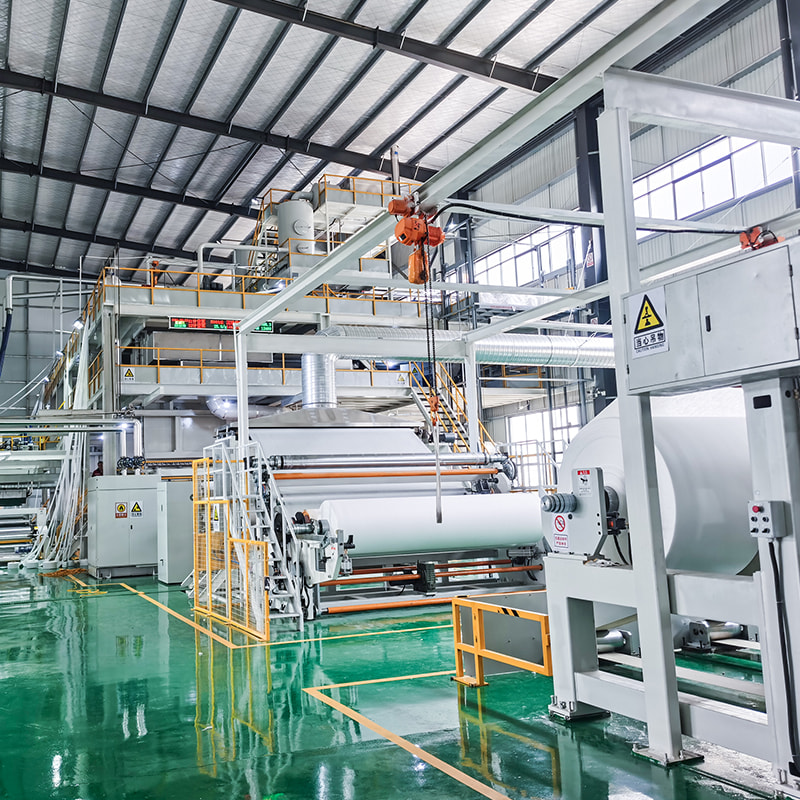
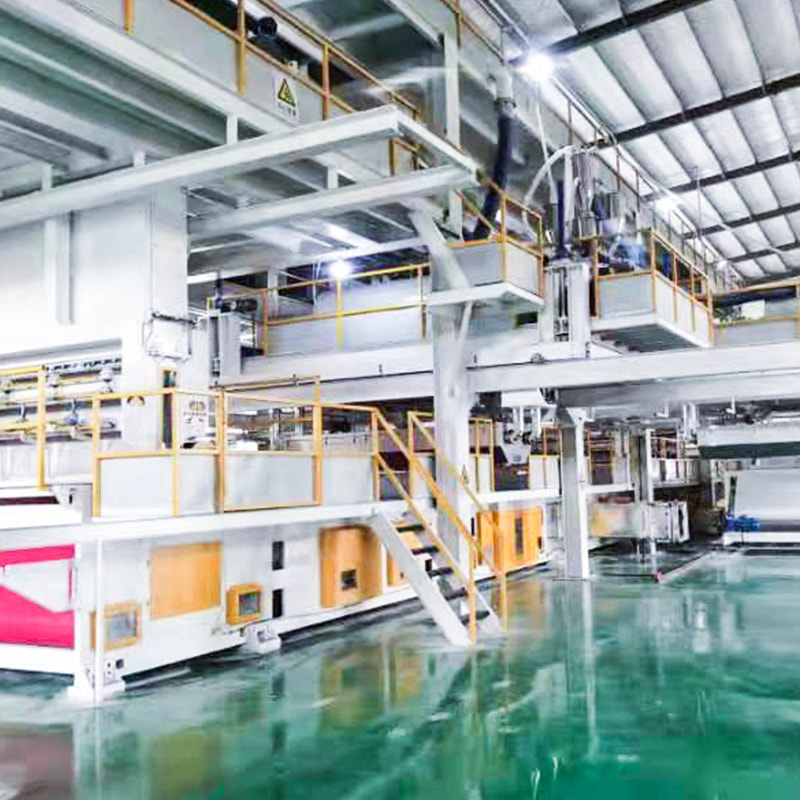
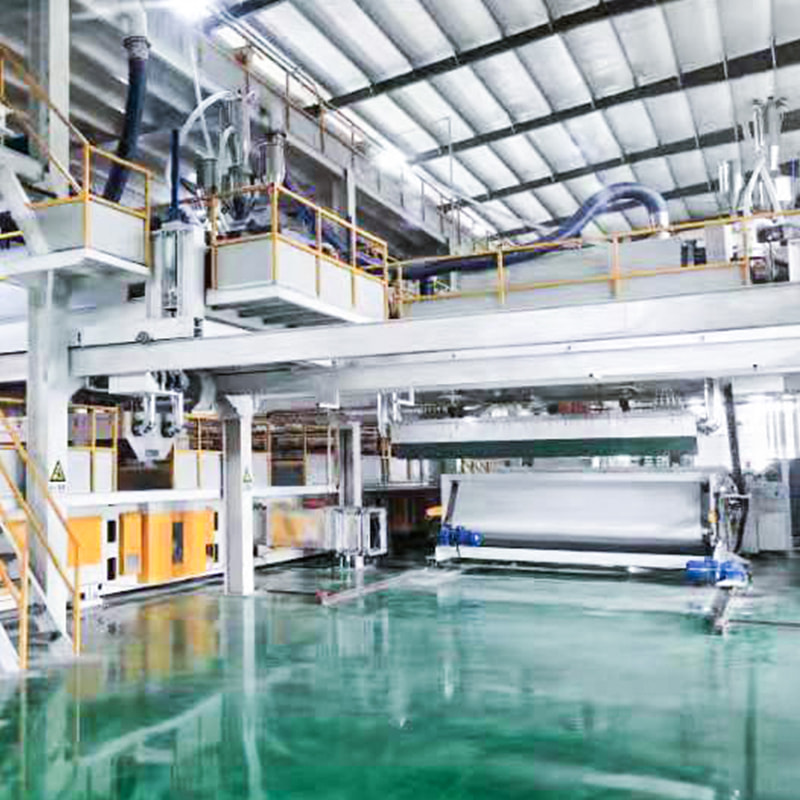
Producing these composites requires precise multi‑beam spunmelt lines. A four‑beam SMMS nonwoven machine allows independent control of each meltblown beam’s die temperature, air flow, and collector speed, giving the manufacturer the ability to tailor the pore‑size gradient across the thickness. This is essential when targeting tight efficiency classes while keeping material usage economical.
Applications Across Industries
Nonwoven filtration media reaches far beyond HVAC and automotive cabin filters, though those two categories remain volume leaders. The same fundamental material can be engineered to handle hot acid mist in a plating shop or to guarantee sterility in a bioreactor vent.
- Air and gas filtration: HVAC bag and panel filters, respirators, cleanroom ceiling filters, gas turbine intake. Requirements: high particulate efficiency at low pressure drop, often combined with activated carbon or electrostatic charging.
- Liquid filtration: Hydraulic oil, coolant, paint booth water curtain, beer clarification, semiconductor CMP slurry. Requirements: chemical compatibility, absolute micron rating (often 1–20 µm), and resistance to pleat collapse under differential pressure.
- Industrial dust collection: Cement, flour milling, welding fume, pharmaceutical solids. Requirements: high burst strength, surface loading characteristics, high dust‑holding capacity, and compatibility with pulse‑jet cleaning.
- Medical and protective: Surgical masks, N95 respirators, wound care. Requirements: bacterial filtration efficiency (BFE) above 98%, breathability (delta P < 5 mm H2O/cm²), and for respirators, NIOSH‑certified particulate efficiency.
Each application translates into a different nonwoven construction, and the line between one market and another is often a gram‑per‑square‑meter shift or the addition of an inline electret charging station. Understanding these translation rules is what separates a commodity supplier from a solution partner.
How to Select the Right Production Line for Filtration Media
Choosing a spunmelt line is a multi‑million‑dollar decision that locks in your ability to compete in specific efficiency tiers. The key decision points are beam count, line width, polymer flexibility, and whether to integrate inline electrostatic charging.
A three‑beam SMS nonwoven machine handles a broad range of medical and industrial filter grades, typically producing at speeds of 150–300 m/min with grammages from 10 to 150 g/m². It is the most common entry point for companies expanding into filtration from hygiene nonwovens. However, when the target is ePM1 or HEPA‑level performance, a four‑beam SMMS or five‑beam SMMSS line becomes necessary. The additional meltblown beam adds roughly 20–30% to the capital expenditure but enables greater efficiency control and redundancy—if one meltblown beam fluctuates, the second can compensate.

Line width directly influences capacity and market reach. A 1.6 m wide beam may suffice for regional mask material production, while a 3.2 m or 4.2 m line supports high‑volume HVAC filter media roll‑goods. The wider line requires more precise air handling and die‑lip temperature uniformity to avoid edge‑to‑edge basis weight variation, which is critical for consistent filtration performance.
| Parameter | SMS Line (3‑beam) | SMMS Line (4‑beam) |
|---|---|---|
| Typical production speed | 150–300 m/min | 120–250 m/min |
| Grammage range | 10–150 g/m² | 12–200 g/m² |
| Filtration efficiency potential | ePM10 to ePM2.5 | ePM1 to near‑HEPA |
| Capital cost index (relative) | 100 | 120–130 |
| Energy consumption (kWh/kg) | 2.8–3.5 | 3.2–4.0 |
| Inline electret integration | Optional | Standard recommendation |
Beyond beam count, the raw material handling system determines uptime and product consistency. Filtration-grade PP resins with a Melt Flow Index of 800–1500 g/10 min are typical for meltblown layers, and the extruder screw design must accommodate this without thermal degradation. Investing in gravimetric dosing and automatic filter screen changers reduces gel and black‑speck contamination, which would otherwise cause pinholing and compromise particle capture.
Future Trends in Nonwoven Filtration
Regulation and sustainability pressure are reshaping the nonwoven filtration landscape faster than at any point in the last two decades. Three technology shifts are already visible on the factory floor.
First, bio‑based and biodegradable filter media are transitioning from lab curiosities to pilot‑scale products. Polylactic acid (PLA) meltblown can match PP’s filtration efficiency, but its heat resistance still lags, and inline processing requires tighter temperature control. Second, nanofiber‑coated nonwovens are extending the life of traditional meltblown by reducing the pressure drop penalty at high efficiency. A thin layer of electrospun polyamide on a spunbond substrate can achieve H13‑class performance at a lower grammage than a pure glass microfiber sheet. Third, smart filtration systems with embedded pressure sensors are beginning to demand media with built‑in conductive tracks, pushing nonwoven producers to experiment with conductive fiber blends.
These trends mean tomorrow’s filtration line must be more versatile than today’s. A modular machine platform that accepts retrofits for electrospinning, inline electret charging, or ultrasonic embossing will define the winners in the filtration nonwovens sector over the next five years.


 +8613621544385
 No.29 Xinhua Road, Jiashan Village,Jiaxing City Zhejiang P.R., China