


 English
 中文简体
中文简体 русский
 عربى
عربىNonwoven Gauze Production Process: From Raw Fiber to Medical-Grade Product
Content
Most wound dressings you encounter in a hospital or clinic today are made from nonwoven gauze — yet few people outside the manufacturing world understand what it actually takes to produce it. The shift from traditional woven gauze to nonwoven variants didn't happen overnight. It was driven by a clear set of performance demands: faster fluid absorption, zero lint contamination, and a production process that scales without the complexity of weaving looms. This guide walks through the complete production chain, from raw fiber selection to final sterilized packaging, with a focus on the spunlace process that dominates medical-grade nonwoven gauze manufacturing today.
Raw Material Selection for Nonwoven Gauze
The fiber you start with determines nearly every downstream performance characteristic of the finished gauze. Medical-grade nonwoven gauze is produced using a narrow range of fibers, each chosen for a specific combination of absorbency, softness, and structural stability.
Viscose rayon is the most widely used base fiber in medical gauze. Derived from cellulose, it offers high hydrophilicity — meaning it draws wound exudate rapidly into the fabric structure — and a naturally soft hand feel that minimizes patient discomfort. Standard viscose fibers used in gauze typically range from 1.5 to 3.0 denier and are cut to lengths of 38–51 mm to suit carding equipment.
Polyester is commonly blended with rayon at ratios such as 70/30 or 50/50. Polyester contributes tensile strength and wet resilience; rayon-only fabrics tend to lose structural integrity when saturated, while a polyester blend retains its integrity under compression during wound management. Cotton is used in premium or all-natural product lines where skin sensitivity is paramount. Its slower processing speed and higher cost make it less common in high-volume medical supply chains, though spunlace cotton gauze has found a strong niche in burn care and neonatal applications.
Polypropylene (PP) appears occasionally in nonwoven gauze for its chemical resistance and extremely low moisture absorption — properties that are counterintuitive for wound dressings but useful in specific surgical draping layers or multi-layer composite structures where a moisture-barrier component is needed.
| Fiber | Key Property | Typical Application |
|---|---|---|
| Viscose Rayon | High absorbency, soft hand feel | Standard wound dressings, swabs |
| Polyester | Wet strength, durability | Blended gauze, surgical sponges |
| Cotton | Natural, skin-gentle | Burn care, neonatal, premium wound care |
| Polypropylene | Chemical resistance, barrier | Composite layers, surgical drapes |
Core Manufacturing Technologies
Three main bonding technologies are used to produce nonwoven fabrics, and each produces a material with distinct physical characteristics. Understanding where they differ explains why spunlace dominates the medical gauze segment.
Spunlace (hydroentanglement) uses high-pressure water jets to mechanically entangle fibers without any chemical binders or thermal treatment. The result is a fabric that is soft, highly drapable, and free of adhesive residues — critical requirements for direct wound contact. Spunlace is the technology of choice for gauze swabs, wound dressings, and surgical sponges.
Spunbond involves extruding continuous polymer filaments directly onto a moving conveyor, then thermally bonding the web under calendar rolls. Spunbond fabrics are strong and dimensionally stable, making them suitable for surgical gown shells, disposable drapes, and packaging layers — but their relatively stiff hand feel disqualifies them from direct wound contact applications. spunbond nonwoven production line for medical applications can be configured with single, double, or triple beam layouts depending on required fabric weight and production throughput.
Meltblown produces ultra-fine fibers in the sub-micron range by blowing molten polymer through a die with high-velocity heated air. These fibers form a dense, low-porosity web ideal for filtration media in N95 respirators or as a barrier layer in SMS (spunbond-meltblown-spunbond) composite fabrics. melt-blown nonwoven equipment for fine-fiber filtration layers is typically integrated into a wider SMS production line rather than operated standalone for gauze applications.
Needle punching, a fourth technology, mechanically entangles fibers using barbed needles. It produces a thicker, more textile-like structure used in wound packing or absorbent padding but is rarely used for thin, flexible gauze products due to its coarser surface texture.
Step-by-Step: The Spunlace Production Line
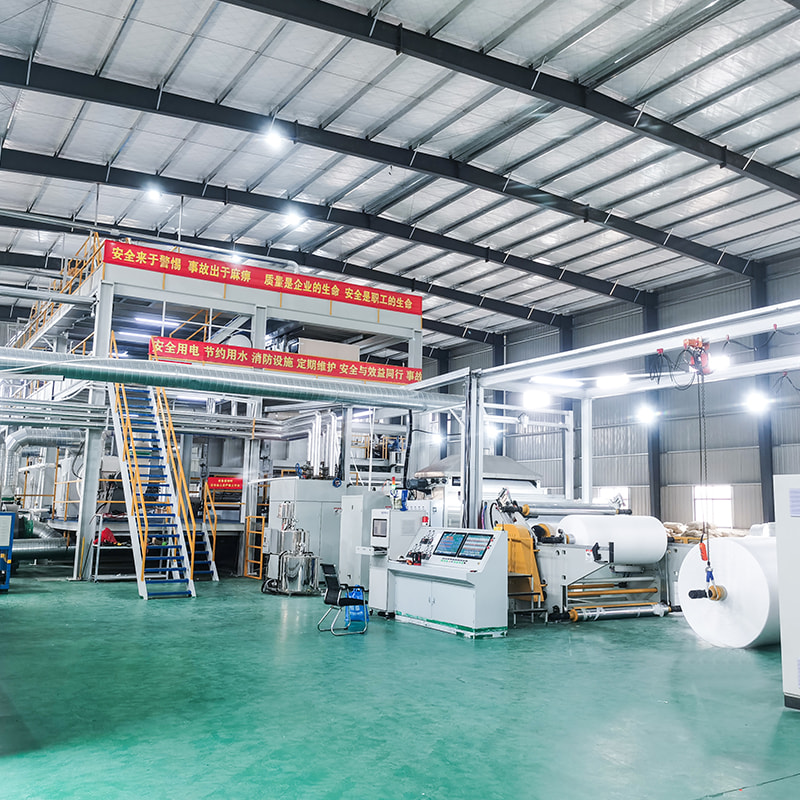
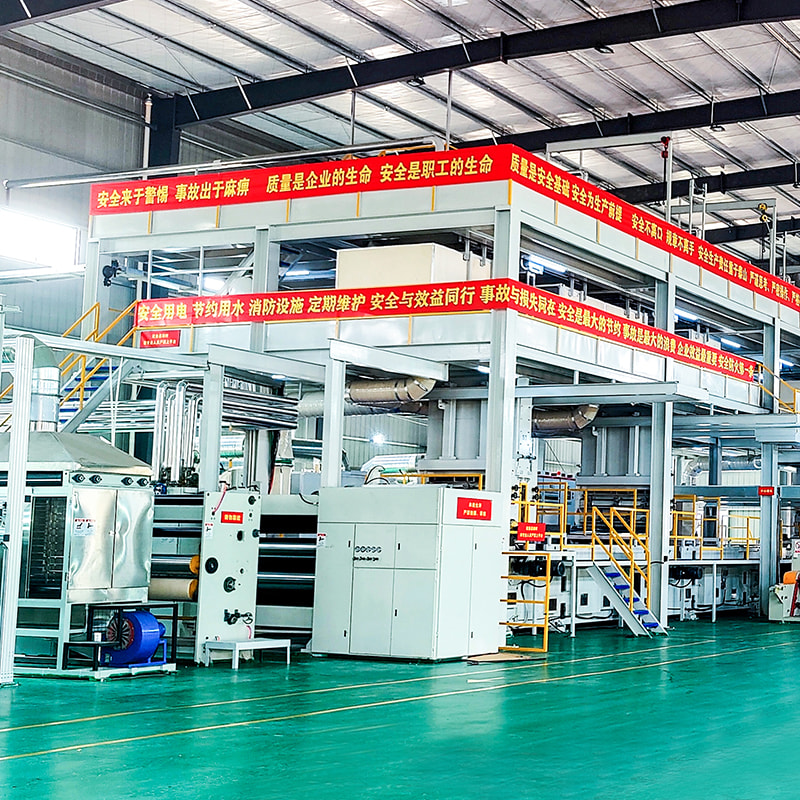
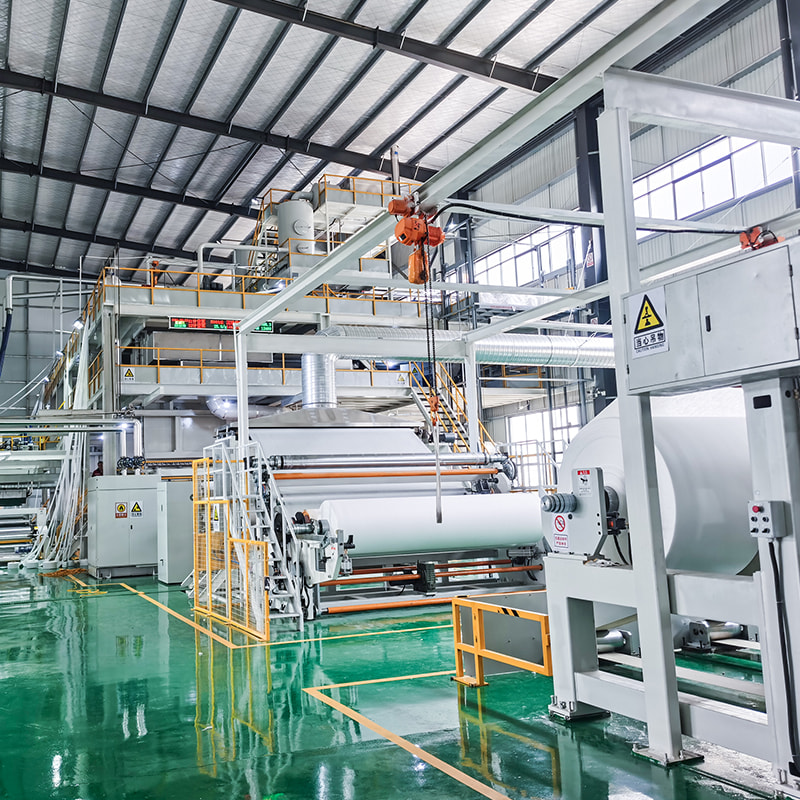
A modern spunlace line for medical gauze runs as a continuous, integrated process. Each stage is tightly controlled because even small deviations in fiber preparation or water pressure translate directly into product non-conformances that may not surface until quality inspection — or worse, clinical use.
- Fiber opening and blending: Baled fibers are mechanically opened and blended to ensure a homogeneous fiber mix. For rayon/polyester blends, opening must be gentle enough to avoid fiber breakage, which increases nep formation and surface hairiness in the finished product.
- Carding: The opened fiber mass is fed into carding machines, which comb and align individual fibers into a thin, uniform web. Carding speed and cylinder settings determine web weight (typically 30–80 gsm for gauze) and fiber orientation. Cross-lapping is sometimes used to improve isotropy — equal strength in both machine and cross directions.
- Web formation and conveyance: The carded web is laid onto a moving conveyor belt, maintaining controlled tension. Web evenness at this stage is critical; any thick-thin variation will persist through the rest of the process and create inconsistent absorbency zones in the final gauze.
- Hydroentanglement (water-jet treatment): The web passes under a series of water-jet manifolds operating at pressures typically between 40 and 200 bar. Multiple passes — often 4 to 8 manifolds on each face — progressively entangle the fibers. Higher pressures increase entanglement density and tensile strength but can reduce softness; the optimal pressure profile is tuned to the specific fiber blend and target product specification.
- Dewatering: The hydroentangled web contains a large volume of process water. It passes through vacuum suction slots to remove most of the water before entering the dryer. Effective dewatering reduces energy consumption in the drying stage significantly.
- Drying: Through-air dryers or drum dryers evaporate remaining moisture while the fabric is transported on a perforated belt. Drying temperature must be controlled carefully — too high a temperature causes fiber shrinkage, while insufficient drying results in mold risk during storage. Typical exit moisture content is below 8%.
- Winding: The finished nonwoven fabric is wound into master rolls, which are weighed, inspected, and labeled with production lot information for full traceability.
Finishing, Slitting, and Folding
Master rolls from the spunlace line are not yet finished products. Several downstream converting steps bring the fabric to its final gauze form.
Some nonwoven gauze products receive surface finishing treatments before slitting. Antimicrobial agents — silver ion compounds or natural bamboo-derived actives — can be applied via padding or spray to inhibit bacterial growth in long-term wound dressings. Hydrophilic finishing may be applied to PP-based fabrics to improve wettability, while embossing rollers imprint mesh or diamond patterns that visually resemble traditional woven gauze and improve fluid distribution across the fabric face.
Slitting converts master rolls into narrower working rolls at the widths required by the folding or cutting machines downstream. Precision slitting is essential for gauze products because width variation directly affects the final folded dimensions, which must meet product specifications for swab size or dressing dimensions.
Folding machines then process slit rolls into the final form: a 4-ply or 8-ply pad, a swab folded with all cut edges tucked inside (to eliminate fraying), or a continuous roll for bandaging applications. For surgical sponges and swabs, X-ray detectable threads or radio-opaque markers are incorporated at the folding stage to prevent retained instrument incidents during surgery.
Quality Control and Medical Certification Standards
Medical-grade nonwoven gauze is classified as a medical device in most regulatory frameworks, which means the manufacturing process — not just the finished product — must meet documented quality management requirements.
In-line quality monitoring on modern spunlace lines includes basis weight sensors (typically beta-gauge or optical systems) that detect gsm variations in real time and trigger automatic adjustments to card feed speed. Tensile strength and elongation are tested at defined intervals on samples cut from production rolls, and absorption time is measured against standard methods such as those specified in EN 13726 for wound dressing materials.
For facilities supplying hospitals, surgical centers, or regulated distribution channels, the ISO 13485 quality management system standard for medical devices defines the framework for process control, document management, supplier qualification, and corrective action. Certification requires third-party audit and covers every step from raw material receipt through final product release.
Sterilization is the final processing step for sterile gauze products. Ethylene oxide (ETO) sterilization is the most widely used method because it is effective at low temperatures and compatible with all fiber types used in gauze. Gamma irradiation is an alternative for facilities with access to a cobalt-60 source and is preferred for products where residual ETO off-gassing is a concern. Both methods require validated cycle parameters and bioburden testing of pre-sterilization product. Post-sterilization, products are sealed in individual medical-grade pouches with tamper-evident seals and labeled with lot number, expiry date, and sterilization batch reference. explore our full range of nonwoven fabric products that meet these demanding clinical-use specifications.
Choosing the Right Production Equipment
For manufacturers setting up or scaling a nonwoven gauze production line, equipment selection has a direct and lasting impact on product quality, operating cost, and regulatory compliance capability.
The spunlace section — particularly the water-jet manifolds and their pressure control systems — is the most performance-critical component. Manifold design affects fiber entanglement uniformity, and pressure stability across the full working width (typically 1.6 m to 3.5 m) determines whether the fabric will have consistent strength and absorption properties edge-to-edge. Look for systems with closed-loop pressure control and the ability to profile pressure across individual injection zones.
For manufacturers producing a broader range of medical nonwoven products beyond gauze — including surgical gowns, face mask body stock, or medical packaging — a more versatile line configuration may be appropriate. SMS spunmelt nonwoven machines for high-barrier fabric combine spunbond and meltblown beams in a single integrated line, enabling production of composite fabrics with both the surface softness of spunbond and the fine-fiber barrier properties of meltblown — used extensively in sterile packaging and surgical draping that accompanies gauze in the operating room.
Automation level is another key variable. High-throughput medical gauze production benefits from automated web weight feedback control, automated roll changing, and integrated vision inspection systems that flag surface defects before they reach converting. These features reduce labor dependency and provide the documented process data that ISO 13485 audits require. Investing in equipment with full data logging capability from day one is significantly less costly than retrofitting traceability systems after certification audits begin.




 +8613621544385
 No.29 Xinhua Road, Jiashan Village,Jiaxing City Zhejiang P.R., China