



 English
 中文简体
中文简体 русский
 عربى
عربىnonwoven machines: Applications, Selection Criteria, and Practical Guidance
Content
- 1 What the Term "Nonwoven Machines" Really Covers
- 2 Choose the Fabric Before the Machine
- 3 The Single-Beam Starting Point
- 4 Two and Three Spunbond Beams: Where Volume Starts to Pay
- 5 Adding a Meltblown Layer: SMS and Beyond
- 6 When a Standalone Meltblown Machine Makes Sense
- 7 Specifications That Shape the Business Case
- 8 The Parts Buyers Forget to Budget For
- 9 Installation, Training and the Long Run
- 10 Choosing the Right Partner
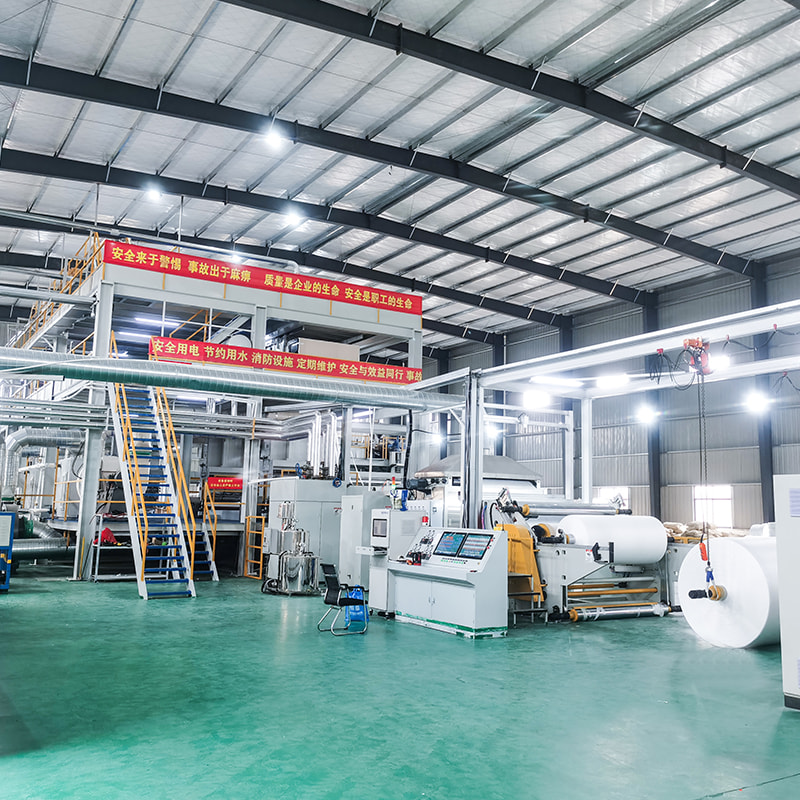
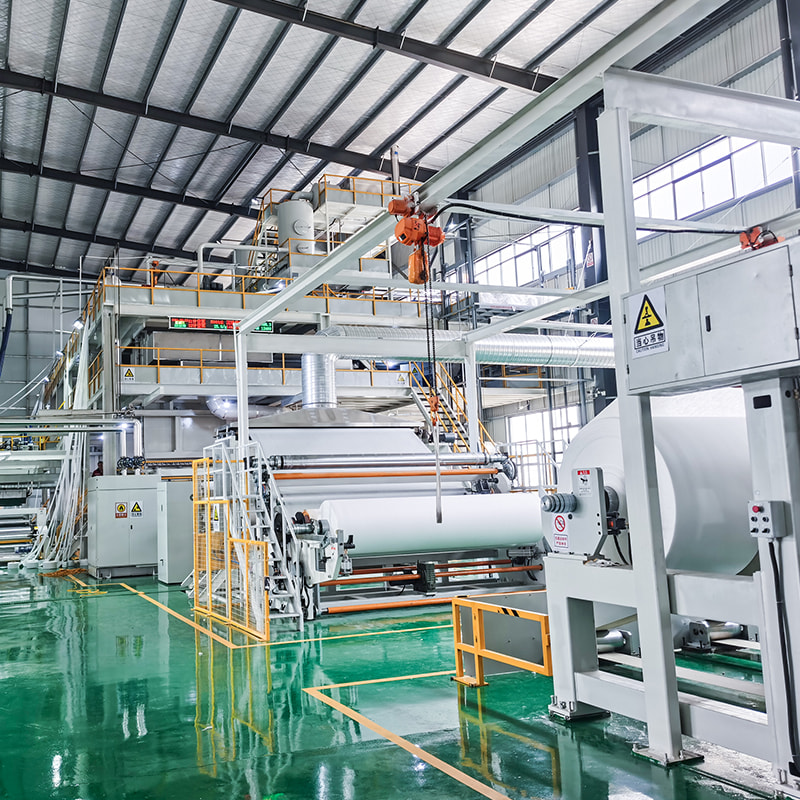
Nonwoven machines sit at the very start of a supply chain most people never think about. The roll that becomes a surgical gown, a wet wipe, a shopping bag, a kitchen towel or a sheet of agricultural fleece all begins the same way: polymer granules go in, filaments come out, a web is formed, the web is bonded, and the finished fabric is wound onto a core.
We build these lines for a living. Over the years our equipment has gone to customers across China, India, Pakistan, Turkey, Russia and Australia, and one pattern has held steady through all of it: the buyers who ask the clearest questions before they order end up with the machines that earn the most. This guide is our attempt to put those questions in one place, in plain language.
What the Term "Nonwoven Machines" Really Covers
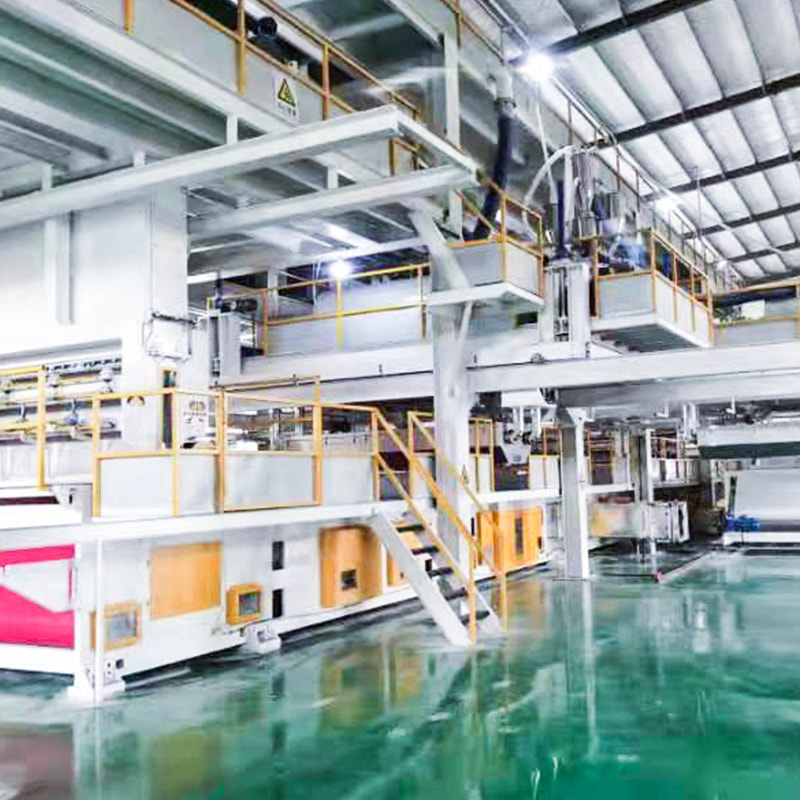
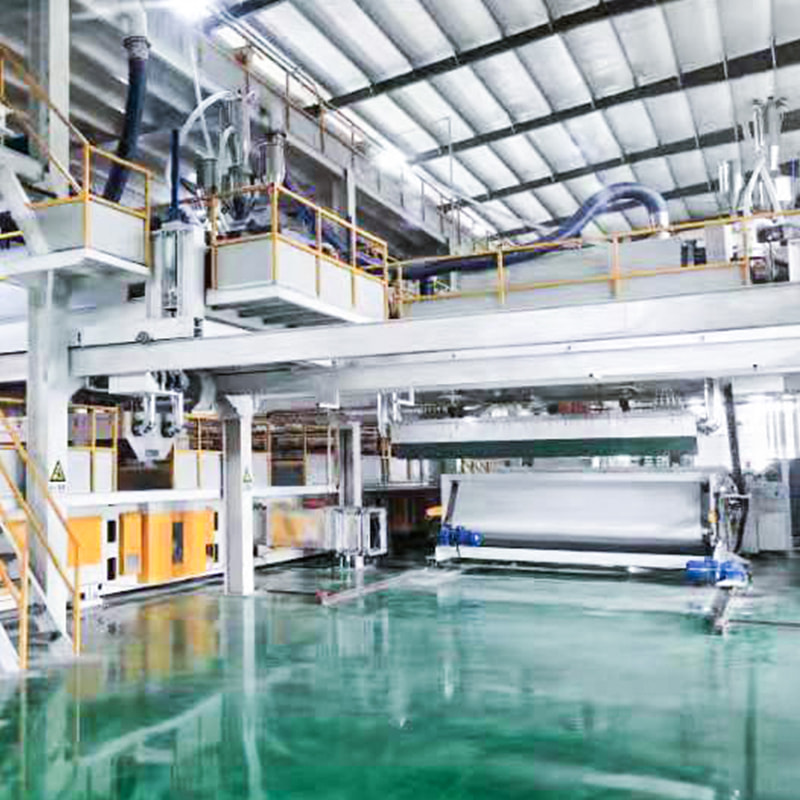
Search for nonwoven machines and you will find everything from a single meltblown die to a full turnkey plant listed under the same three words. The phrase describes a process family, not one product. In practice, nearly every spunbond or spunmelt line is assembled from the same sequence of units, and once you understand that sequence, every later decision becomes easier.
- Extrusion. Polymer granules are melted, filtered and metered at a steady rate and pressure.
- Spinning. A spinneret converts the melt into fine filaments. The number of spinning beams determines how many spunbond layers the line can lay down.
- Quenching and drawing. Controlled air cools the filaments and stretches them down to the target denier.
- Web formation. Filaments are laid onto a moving forming belt, where they build up into an even web.
- Bonding. A calender or another bonding method fuses the filaments into fabric with the strength and hand feel you need.
- Winding and slitting. Edge trim, tension control and roll changes turn the web into saleable rolls.
A meltblown section slots into the same chain, but with a difference: hot, high-velocity air attenuates the filaments to far finer diameters before they land on the collector. That is what gives meltblown fabrics their barrier and filtration performance, and it is why meltblown layers are almost always paired with spunbond ones.
Choose the Fabric Before the Machine
The most expensive mistake we see is a buyer who starts with a budget and a floor plan, then tries to fit a fabric to whatever machine the budget allows. It works far better the other way around. Decide what you want to sell, who you want to sell it to, and what the end product has to do. The machine configuration follows from that.
In practical terms, the decision comes down to beam count and structure. Each spunbond beam adds a layer of continuous filament; each meltblown beam adds a barrier layer. More beams mean more capacity, better coverage and a wider performance window, but also a larger investment and a longer commissioning curve.
| Structure | Beam arrangement | Fabric character | Typical end uses |
|---|---|---|---|
| S | One spunbond beam | Soft, breathable, economical | Bags, packaging, agriculture |
| SS | Two spunbond beams | Stronger, more even coverage | Hygiene, wipes, home textile |
| SSS | Three spunbond beams | High output, fine denier | Hygiene topsheet, medical |
| SMS | Two spunbond, one meltblown | Barrier plus strength | Gowns, drapes, masks |
| SMMS | Two spunbond, two meltblown | Higher barrier, good filtration | Medical, filtration media |
| SMMSS | Three spunbond, two meltblown | Premium barrier with softness | High-end medical, protective wear |
The Single-Beam Starting Point
For many producers, especially those entering the market for the first time, a single-beam S line is the sensible first step. It is simpler to run, quicker to commission and easier on capital, and it still produces a genuinely marketable fabric for shopping bags, agricultural covers, furniture and packaging applications.
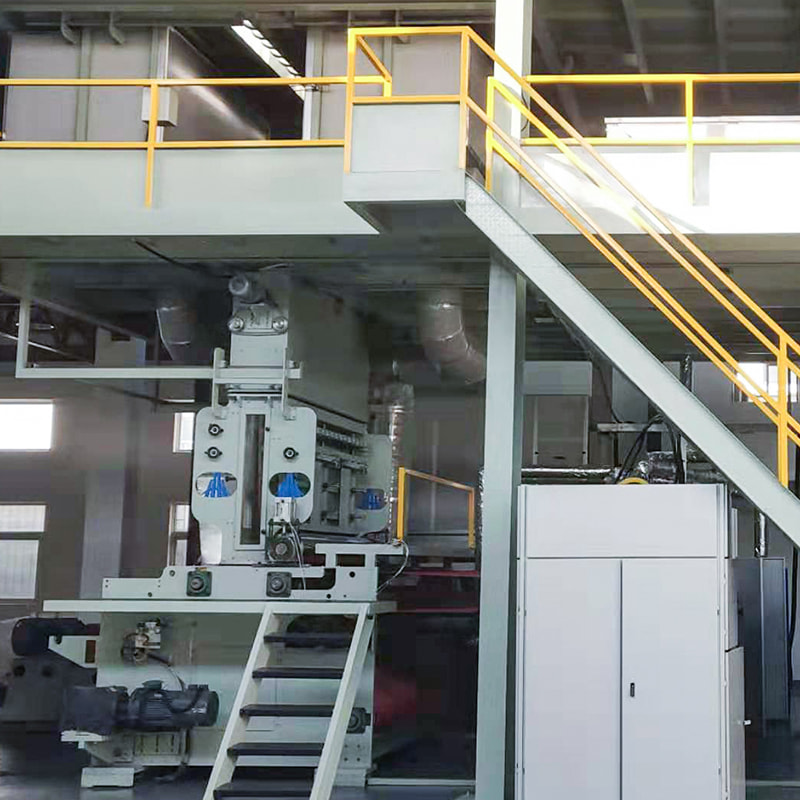 Single Beam S Spunbond Nonwoven MachineA simpler first-step line for marketable spunbond fabric, with 1600–3200 mm widths and 3–10 t output; worth reviewing for lower-capital entry.View Product →
The engineering inside a single-beam line is not simplified in any way that matters. You still get a properly designed spinneret, controlled quenching, a well-balanced forming section and a calender that holds consistent pressure and temperature across the full working width. What you give up is redundancy and top-end throughput, not fabric quality.
Two and Three Spunbond Beams: Where Volume Starts to Pay
A double-beam SS line splits the filament output across two spinning positions. That buys you two things at once: more tonnes per hour for the same floor space, and better coverage, because a second layer fills the thin spots in the first. Fabrics feel more uniform, tensile strength improves in both directions, and lighter grammages become easier to run consistently.
Move to three beams with an SSS configuration and the same logic scales again. Output climbs, filament denier can be pushed finer without sacrificing line stability, and the resulting fabric suits hygiene topsheets and medical applications where softness and evenness matter. The trade-off is straightforward: more beams mean more capital, more utilities and a team that needs to be trained properly on the full line.
Working widths worth knowing
Across our series, common working widths are 1600 mm, 2400 mm, 3200 mm, 4000 mm and 4200 mm. Width is a commercial decision as much as a technical one. A narrow line is easier to fill with orders and cheaper to run; a wide line lowers your cost per kilogram once you have the demand to keep it busy. Be honest about the demand.
Adding a Meltblown Layer: SMS and Beyond
Once a fabric needs to resist liquid penetration while still breathing, spunbond alone stops being enough. A three-beam SMS line sandwiches a meltblown layer between two spunbond layers, producing a composite that combines mechanical strength on the outside with a fine-fibre barrier in the middle.
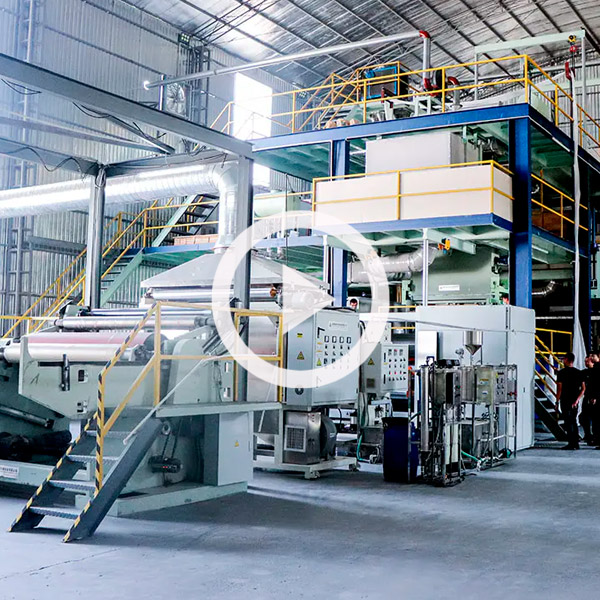 Three Beam SMS Spun-Melt Nonwoven MachineCombines spunbond and meltblown layers for breathable barrier fabrics, with 9–70 GSM and 6–20 t output; suited to medical and hygiene product planning.View Product →
This is the family that serves medical gowns, drapes, mask material and other protective products. Move up to four beams with SMMS and you add a second meltblown layer, which raises barrier performance and filtration efficiency further. The five-beam SMMSS configuration sits at the top of our range, pairing three spunbond beams with two meltblown beams for producers targeting premium medical and protective markets where both barrier and hand feel are selling points.
When a Standalone Meltblown Machine Makes Sense
Not every producer needs a full composite line. If your business is filtration media, or if you already run spunbond capacity and want to add barrier capability without replacing what works, a dedicated meltblown machine can be the cleaner answer.
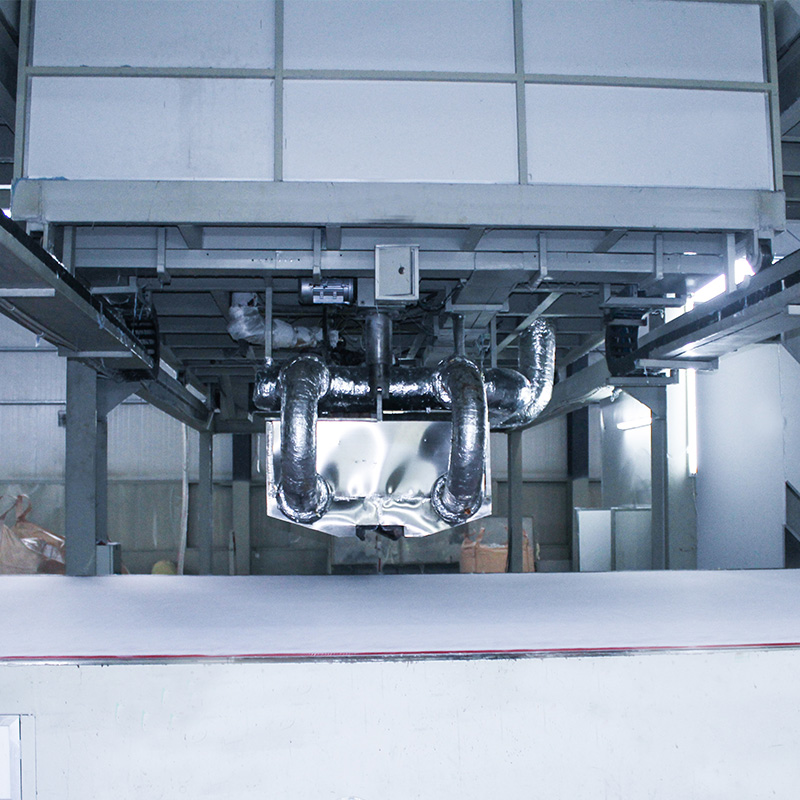 Standalone Meltblown Nonwoven Machine for Fine-Fibre Filtration MediaDedicated meltblown unit for filtration and barrier webs, offering 18–300 GSM, 1.6–4 μm fibres and 1600–3200 mm widths; useful when adding meltblown capacity without a full composite line.View Product →
A standalone meltblown unit also gives you tighter process control over the variables that define fine-fibre quality: die temperature, air pressure and velocity, throughput and collector distance. Those parameters deserve attention regardless of configuration, because they decide whether you produce a consistent web or a roll that fails incoming inspection.
Specifications That Shape the Business Case
Once the structure is settled, the conversation turns to numbers. These are the ones worth pinning down in writing before you sign anything:
- Working width and usable trim width, since the second is always narrower than the first.
- Grammage range, both the lightest and heaviest fabric the line holds comfortably.
- Line speed at each grammage, because a speed quoted at 15 gsm tells you nothing about how the line behaves at 70 gsm.
- Filament denier and how it is controlled across the width.
- Raw material specification, including the melt flow index range the extruder is set up for.
- Connected load and utilities, which affect both your building and your operating cost.
Ask for these as a table rather than a brochure sentence. A supplier who can put real figures against each item is a supplier who has thought about your production day.
The Parts Buyers Forget to Budget For
The main machine is only part of a working plant. Material handling and drying, chillers, compressed air, the forming belt, edge-trim recovery, winding shafts, slitting blades and a sensible first stock of spares all need to be in the plan. So does the building itself: foundation loads, headroom for the spinneret area, cable routing and the space your team needs to work safely around the line.
Control architecture deserves a mention too. Our lines run on PLC control with touchscreen operation, and the control components come from established brands so that fault-finding stays predictable rather than exotic. That matters most at two in the morning, six months after commissioning, when something trips and you need an answer quickly.
Installation, Training and the Long Run
A nonwoven line is a precision instrument that happens to be the size of a building. Alignment between the spinning section and the forming belt, roller balance at high speed, and steady calender temperature across several metres of width are all things that decide whether you produce saleable fabric on day three or day thirty.
Plan the commissioning window properly. Train operators on the touchscreen before running production, not during it. Keep a written log of temperature, pressure and speed settings for each product you make, so a repeat order does not become a repeat experiment. And treat maintenance as production work: planned cleaning of the die and spinneret, filter changes on schedule, and a check on belt tracking are cheaper than a week of downtime.
Choosing the Right Partner
Equipment is a long relationship, and the questions you should ask a supplier are mostly about the years after delivery. Who answers when a heater zone fails? How are spare parts shipped, and how fast? Can the line be reconfigured later if your market shifts from bags to medical fabric? The answers separate a machine seller from a manufacturing partner.
Our own approach has always been fairly simple: understand the fabric first, then configure the equipment around it, and stay reachable once the line is running. If you would like to know more about how we work and where our machines are already running, you can read our company background and the markets we serve. When you have a specification in mind, or just a rough idea of what you want to produce, send us your details and we will help you work out which configuration fits.
Nonwoven machines reward clear thinking. Decide on the fabric, match the structure to the market you are actually selling into, and be conservative about throughput until you have orders to fill. Do that, and the line you buy today will still be earning its keep long after the paperwork is filed away.


 +8613621544385
 No.29 Xinhua Road, Jiashan Village,Jiaxing City Zhejiang P.R., China