



 English
 中文简体
中文简体 русский
 عربى
عربىNonwoven vs Woven Fabric: Key Differences in Structure, Strength, and Use
Content
- 1 What Is Woven Fabric?
- 2 What Is Nonwoven Fabric?
- 3 Key Differences at a Glance
- 4 Strength and Durability: Where Woven Fabric Wins
- 5 Filtration and Drainage: Where Nonwoven Fabric Excels
- 6 Cost, Speed, and Manufacturing Economics
- 7 Common Applications and How to Choose
- 8 Choosing the Right Production Route
The short answer is that woven fabric is made by interlacing yarns on a loom, while nonwoven fabric is made by bonding fibers directly into a sheet. Because woven fabric starts with yarns and nonwoven starts with loose fibers, the two materials differ at almost every stage, from manufacturing speed to tensile strength, filtration behavior, and cost per square meter.
If you are selecting a material for shopping bags, medical barriers, filtration media, agricultural covers, or geotextiles, the goal is not to decide which fabric is universally better. The goal is to match the fabric structure to the job. This guide explains the practical differences, the performance trade-offs, and the manufacturing implications that matter when you specify or produce these fabrics.
What Is Woven Fabric?
Woven fabric begins as yarn. Two sets of yarns, the warp running lengthwise and the weft running crosswise, are interlaced at right angles on a loom. Common weaves such as plain, twill, and satin change the surface texture and flexibility, but all woven fabrics share the same fundamental principle: continuous yarns are locked together in a regular, repeating pattern.
Because the yarns are continuous and mechanically interlocked, woven fabrics offer high tensile strength, low stretch, and excellent dimensional stability. They resist elongation under load, which makes them predictable in structural applications. The spacing between yarns can be adjusted, so a tightly woven fabric can be nearly impermeable, while a loosely woven fabric allows air and water to pass more freely.
Where Woven Fabric Is the Right Choice
- Heavy-duty shopping bags and tote bags that need repeated load-bearing use.
- Tarpaulins, awnings, and protective covers exposed to wind and abrasion.
- Woven geotextiles used for soil stabilization and load distribution in road construction.
- Upholstery, apparel, and home textiles that require a structured drape and long service life.
What Is Nonwoven Fabric?
Nonwoven fabric is an engineered sheet made directly from fibers. The fibers are laid into a web and then bonded by heat, pressure, needle punching, or chemical binders. There is no weaving, knitting, or yarn preparation step, which is why nonwoven production is much faster than weaving and why nonwoven fabrics have a different set of physical properties.
In spunbond nonwovens, polypropylene pellets are melted, extruded through spinnerets, and drawn into continuous filaments. The filaments are laid randomly onto a moving belt and thermally bonded into a cohesive fabric. Meltblown nonwovens use high-velocity air to attenuate the polymer into much finer fibers, typically in the 1 to 5 micron range, which makes the web highly effective for filtration and liquid barrier applications.
Manufacturers also combine layers. An SMS fabric has a spunbond outer layer, a meltblown middle layer, and another spunbond outer layer; SMMS and SSMMSS add more beams for higher barrier performance and strength. This is why composite nonwovens can be engineered to compete with woven fabric in many industrial applications.
For a deeper look at how different web types compare, see our technical comparison of spunbond and meltblown webs.
Where Nonwoven Fabric Is the Right Choice
- Medical masks, surgical gowns, and drapes where barrier performance matters more than fabric structure.
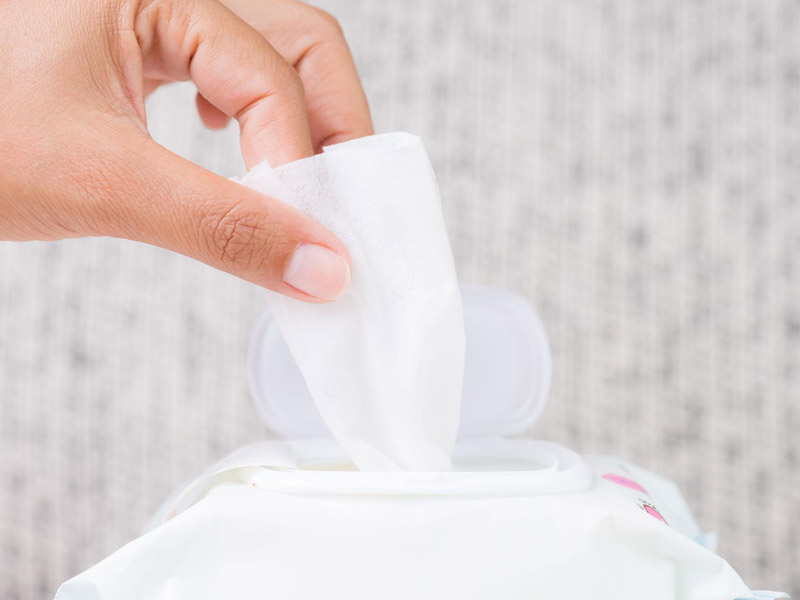
- Diapers, feminine hygiene products, and wet wipes where softness and absorbency are critical.
- Filtration media for air, liquid, and industrial process applications.
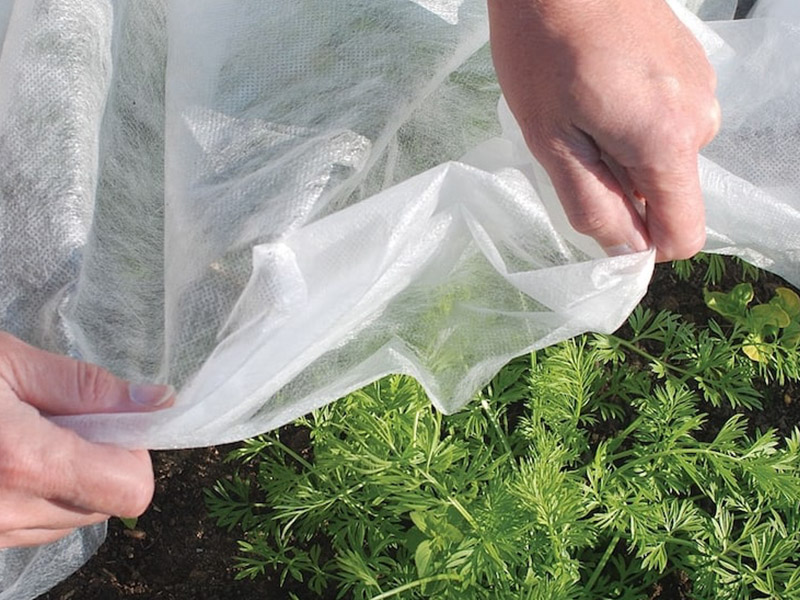
- Agricultural covers, shopping bags, and packaging where low cost per unit area is important.
Key Differences at a Glance
| Comparison point | Woven fabric | Nonwoven fabric |
|---|---|---|
| Construction | Interlaced warp and weft yarns | Fibers bonded directly into a web |
| Raw material stage | Yarns or filaments prepared in advance | Polymer resin or staple fibers converted directly |
| Tensile strength | Higher in the warp and weft directions | Lower, but more uniform in all directions |
| Stretch and elongation | Low, with good dimensional stability | Higher elongation that conforms to uneven surfaces |
| Filtration and permeability | Limited by weave spacing | Excellent flow rates and filtration efficiency |
| Production speed | Slower, limited by loom speed | Very high roll-to-roll output |
| Typical cost | Higher per square meter | Lower per square meter at equivalent basis weight |
Strength and Durability: Where Woven Fabric Wins
If the application is dominated by mechanical loading, woven fabric usually wins. The interlaced yarns carry the load efficiently, which gives woven materials higher tensile strength, better tear resistance, and lower elongation. A woven polypropylene bag, for example, can be lifted, dragged, and reused many times before showing structural failure. A nonwoven bag of similar weight will stretch more and tear more easily at cut edges.
This is also the main distinction in geotextiles. Woven geotextiles are specified for separation and stabilization because they keep aggregate from sinking into soft soil while distributing heavy loads. Nonwoven geotextiles, by contrast, are specified for drainage and filtration because their random fiber structure allows water to pass through while retaining soil particles. Choosing the wrong construction in a road or drainage project can lead to premature failure, so strength requirements should be reviewed before material selection.
Nonwovens are not automatically weak. Multilayer spunmelt fabrics such as SMS and SMMS combine the strength of spunbond layers with the barrier performance of meltblown layers. The trade-off is that nonwovens behave differently under stress; they stretch before they break, while woven fabrics tend to hold their shape until a yarn fails.
Filtration and Drainage: Where Nonwoven Fabric Excels
Nonwovens dominate filtration and drainage because the fibers are randomly arranged, creating a tortuous path that captures particles while still allowing fluid to pass. Woven fabric relies on the gaps between yarns, which are much larger and less consistent. A meltblown layer can be engineered to trap micron-sized particles, which is why it is the core of most medical mask and respirator filtration systems.
In hygiene and medical products, this filtration capability is paired with softness and liquid holdout. An SMMS nonwoven, for example, gives a surgical gown both barrier protection and comfort because the meltblown layer blocks fluids while the spunbond layers provide strength and a fabric-like feel. This combination is difficult to achieve with woven fabric without applying a separate coating or film.
For production, the filtration layer is typically made with a dedicated melt-blown nonwoven machine, while a SMMS spunmelt production line is used when the finished fabric needs both strength and filtration in a single pass.
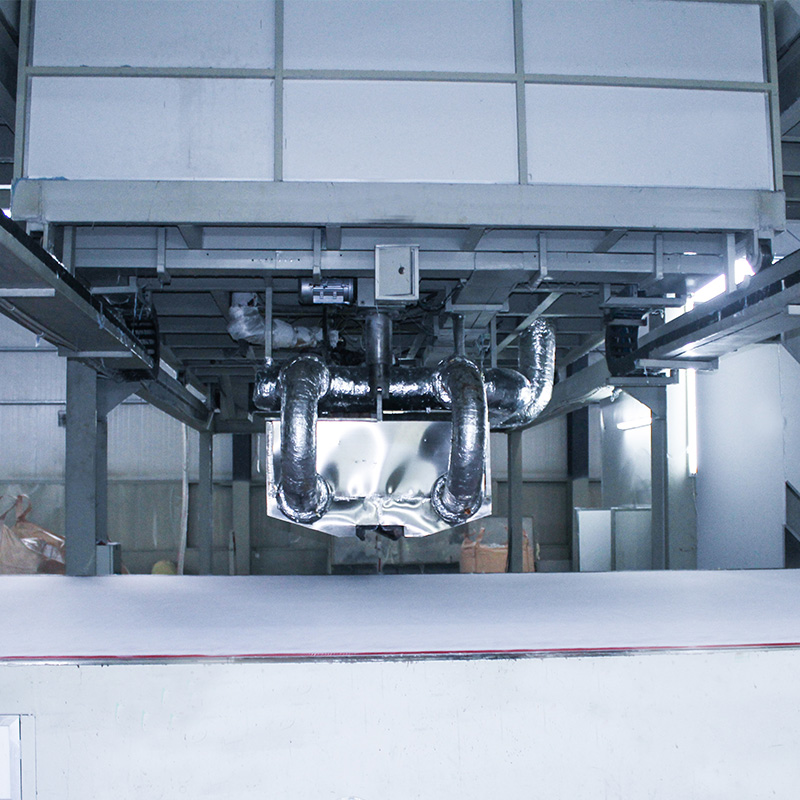 Wholesale Melt Blown Machine Manufacturers, OEM FactoryJIASHAN HH Nonwovens Machinery CO., Ltd is China melt-blown machine manufacturers and OEM melt-blown machine factory. we offer wholesale ...View Product →
Cost, Speed, and Manufacturing Economics
The manufacturing route explains most of the cost difference. Weaving requires yarn preparation, creeling, and the mechanical interlacing of warp and weft, all of which are comparatively slow. Nonwoven production combines extrusion, web formation, bonding, and winding into one continuous, highly automated process. A spunbond line can produce rolls at speeds that a weaving mill cannot match, which is why nonwoven fabric is usually the lower-cost option at a given basis weight.
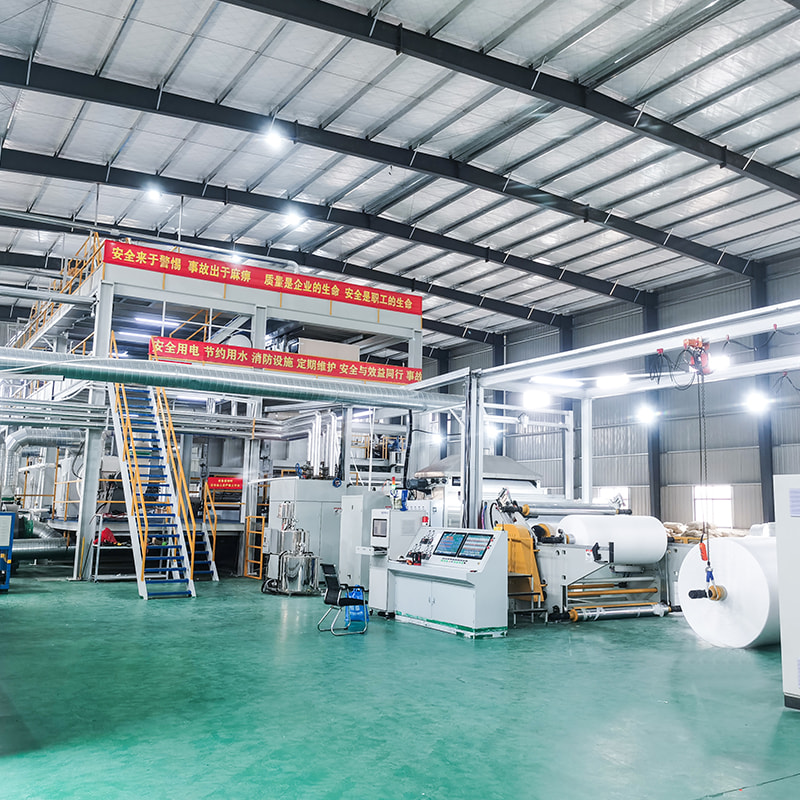
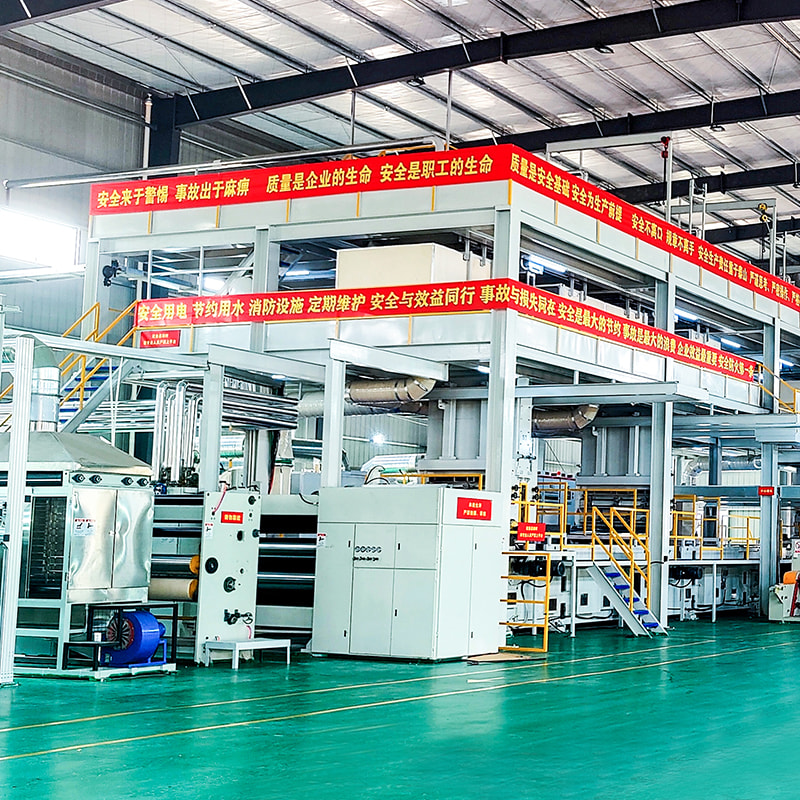
That said, a nonwoven plant requires higher upfront capital investment because it includes extruders, beam assemblies, calenders, and winding systems. As a nonwoven production line manufacturer, we see many customers weighing line width, beam configuration, and automation level before committing to a project. Standard widths such as 1600 mm, 2400 mm, 3200 mm, 4000 mm, and 4200 mm allow producers to match capacity to their target market.
The cost comparison also depends on volume. For short production runs or highly specialized woven products, weaving remains economical. For high-volume disposable or single-use products, nonwoven is almost always the more cost-effective route.
Common Applications and How to Choose
No single test like tearing or stretching will tell you which fabric is correct. Instead, work through the end-use requirements in order: mechanical loading, exposure to liquid, filtration needs, comfort, and allowable cost.
Choose woven fabric when
- The product must support heavy or repeated loads, such as transport bags and tarpaulins.
- Dimensional stability is required so the material does not stretch out of shape.
- Long-term durability justifies a higher material cost.
Choose nonwoven fabric when
- The product needs filtration, drainage, or liquid barrier performance.
- Softness, absorbency, or drape is more important than tensile strength.
- The product is disposable or has a short service life, such as wipes, masks, and hygiene articles.
- Cost per unit area must be minimized at high production volumes.
There is also overlap. Spunbond polypropylene is widely used for reusable shopping bags, and multilayer nonwovens are specified in medical packaging and protective apparel. The best way to decide is to test prototypes under real-use conditions rather than relying on a generic fabric category.
Choosing the Right Production Route
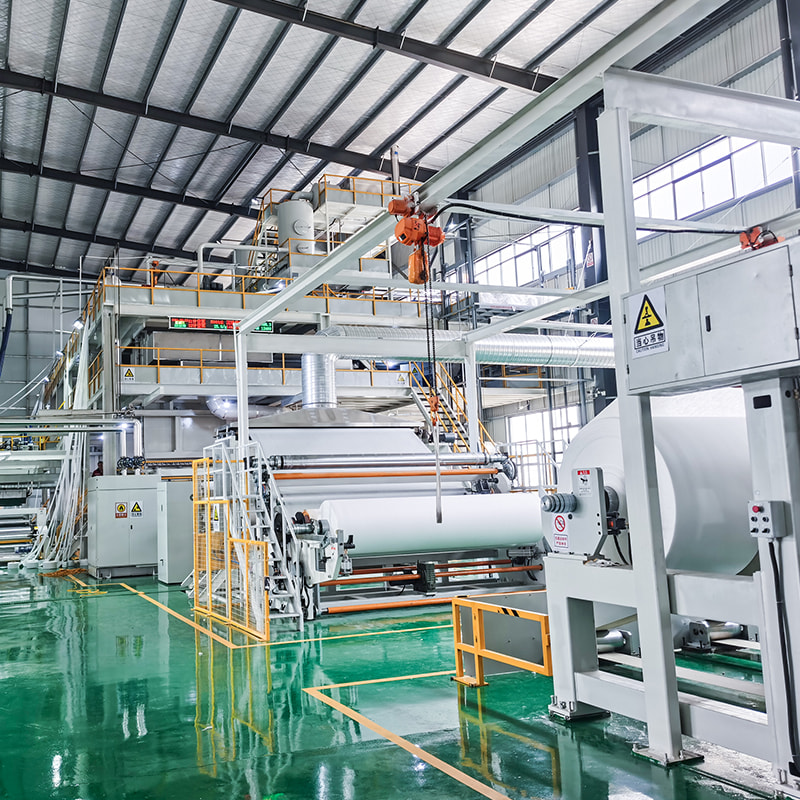
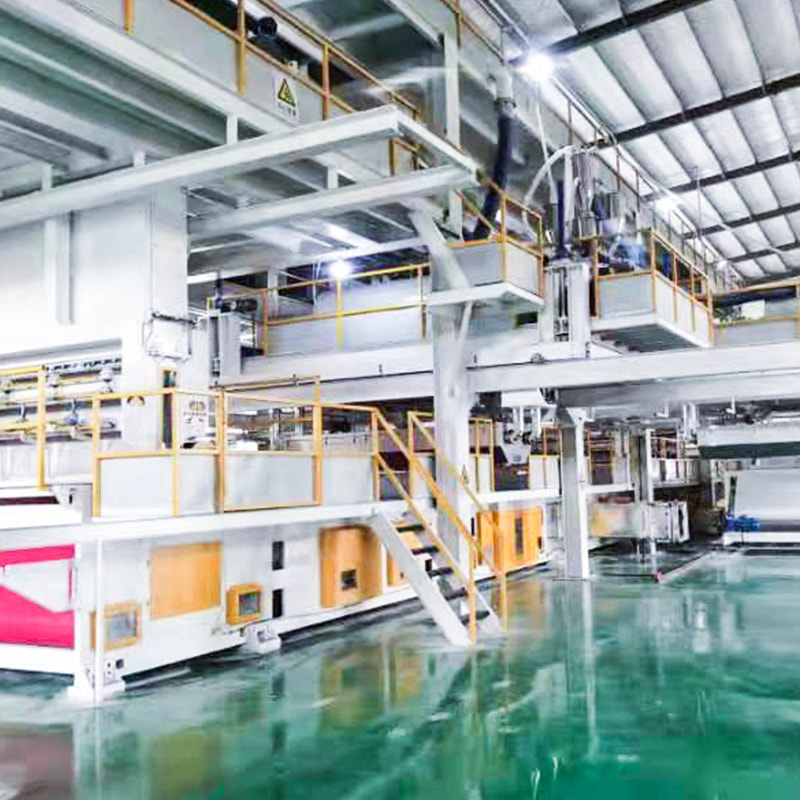
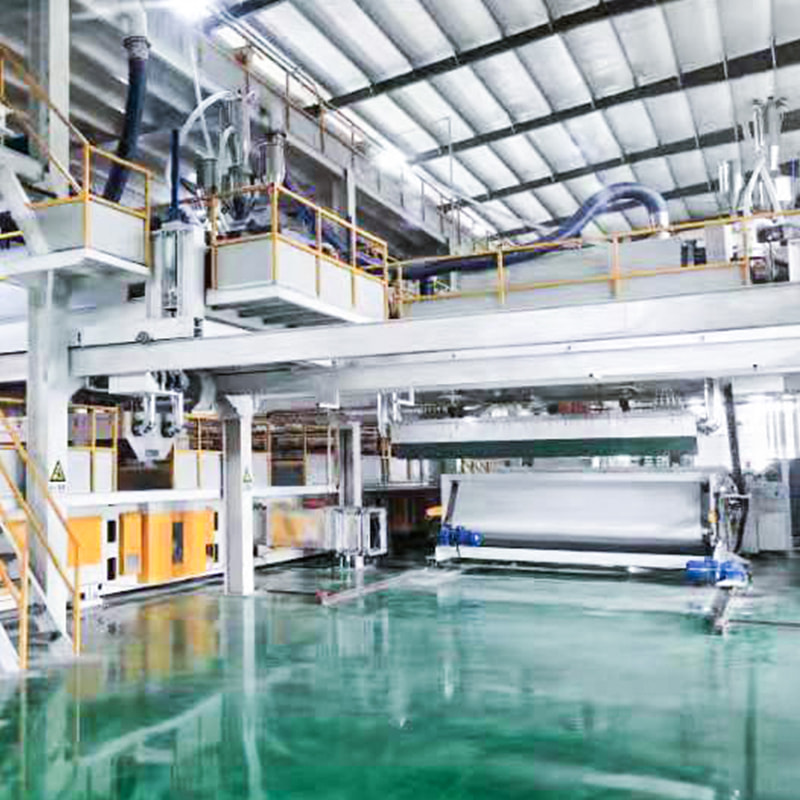
For manufacturers entering the nonwoven sector, the choice of production line determines the properties the finished fabric will have. A single-beam S spunbond nonwoven machine is a practical entry point for bags, agricultural covers, and simple packaging materials where filtration is not required. Adding a second or third spunbond beam improves throughput and web uniformity. Adding meltblown beams creates SMS, SMMS, or SSMMSS configurations that serve medical, hygiene, and filtration markets.
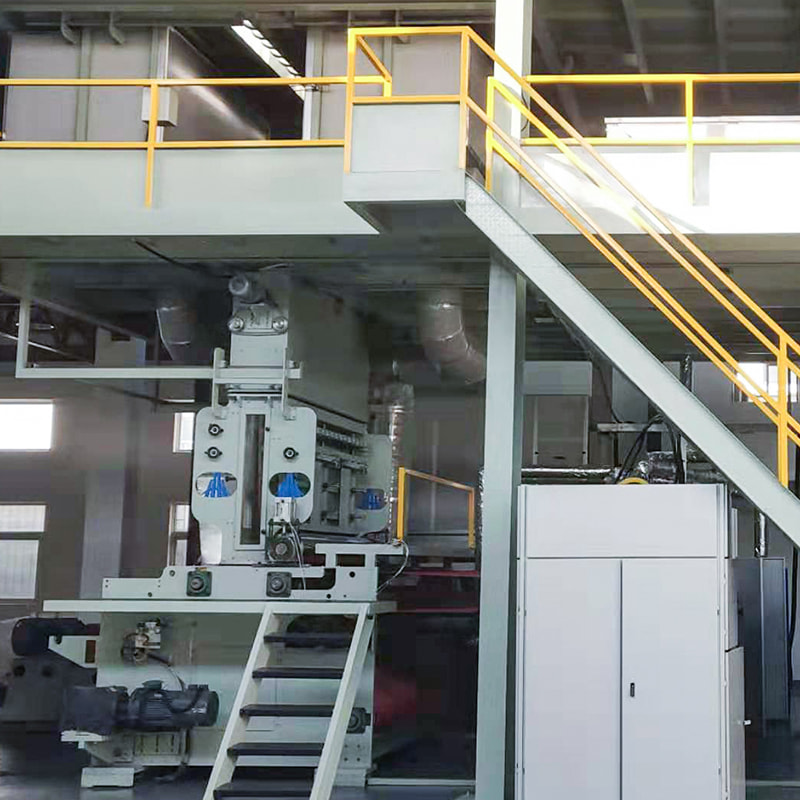 Single Beam Spunbond Nonwoven Machine, Production Line SuppliersJIASHAN HH Nonwovens Machinery CO., Ltd is China custom single beam spunbond nonwoven machine suppliers and OEM single beam nonwoven prod...View Product →
Because every product category has different requirements for basis weight, width, and layer structure, we recommend defining the target application before selecting equipment. If you are weighing machine configurations or need help estimating capacity, contact our engineering team, and we can walk through the technical options with you.


 +8613621544385
 No.29 Xinhua Road, Jiashan Village,Jiaxing City Zhejiang P.R., China