



 English
 中文简体
中文简体 русский
 عربى
عربىS vs SS vs SSS vs SMMS vs SMMSS: Which Nonwoven Machine Is Right for Your Line?
Content
- 1 Understanding the Naming Convention: What Do S and M Stand For?
- 2 S Machine (Single Beam Spunbond)
- 3 SS Machine (Double Beam Spunbond)
- 4 SSS Machine (Triple Beam Spunbond)
- 5 SMMS Machine (Four Beam Spunmelt)
- 6 SMMSS Machine (Five Beam Spunmelt)
- 7 Side-by-Side Comparison: All Five Configurations
- 8 How to Choose: A Decision Framework
- 9 Common Applications by Machine Type
- 10 Why Machine Configuration Also Affects Fabric Properties
- 11 Ready to Select the Right Machine for Your Production Line?
If you are planning to invest in a nonwoven production line, one of the first decisions you will face is choosing the right machine configuration. S, SS, SSS, SMS, SMMS, SMMSS — these abbreviations can be confusing at first glance, but each one represents a specific beam structure that determines what kind of fabric the machine produces, how fast it runs, and which industries it serves best.
This guide breaks down each configuration in plain terms, compares their key specifications, and helps you match the right machine to your production goals. All specifications referenced below are based on the product lines offered by JIASHAN HH Nonwovens Machinery CO., Ltd., a professional OEM manufacturer of PP spunbond and spunmelt nonwoven fabric machines based in Jiaxing, Zhejiang, China.
Understanding the Naming Convention: What Do S and M Stand For?
Before comparing machines, it helps to understand what the letters mean:
- S stands for Spunbond — a process where polypropylene granules are melted, extruded into continuous filaments, and laid down to form a web. Spunbond layers provide strength, softness, and structural integrity.
- M stands for Meltblown — a process where filaments are further attenuated by high-velocity hot air into ultra-fine fibers (1.6~4 micrometers). Meltblown layers provide filtration, barrier protection, and fluid resistance.
The machine name simply lists the beam sequence from top to bottom. An SMMS machine, for example, has four beams arranged as Spunbond + Meltblown + Meltblown + Spunbond. The number of beams directly affects output volume, fabric quality, and the range of applications the machine can serve.
S Machine (Single Beam Spunbond)
What it is
The S machine is the most entry-level configuration in the spunbond family. It uses a single spunbond beam to produce 100% polypropylene spunbond fabric.
Key Specifications
| Parameter | Specification |
|---|---|
| Machine Speed | 9 – 150 m/min |
| Fabric Weight | 10 – 200 GSM |
| Daily Output | 3 – 10 tons (varies by effective width) |
| Filament Denier | 1.8 – 2.5 D |
| Raw Material | 100% PP granule, MFI 30–40 |
Best For
- Shopping bags and reusable bag manufacturers
- Agriculture covering fabrics and crop protection
- Home decoration and furniture backing
- Startups or businesses entering the nonwoven market for the first time
Limitations
The S machine produces only spunbond layers. It cannot produce meltblown fabric, which means it is not suitable for applications requiring filtration or barrier performance, such as medical or hygiene products. Output capacity is also the lowest among all configurations.
SS Machine (Double Beam Spunbond)
What it is
The SS machine adds a second spunbond beam. With two beams working together, the fabric web is formed by two overlapping layers of filaments, resulting in better uniformity and higher production speed compared to a single-beam machine.
Key Specifications
| Parameter | Specification |
|---|---|
| Machine Speed | 9 – 350 m/min |
| Fabric Weight | 9 – 100 GSM |
| Daily Output | 6 – 20 tons (varies by effective width) |
| Filament Denier | 1.8 – 2.5 D |
| Raw Material | 100% PP granule, MFI 30–40 |
Best For
- Producers scaling up from single-beam output
- Packaging applications requiring consistent, even fabric
- Geotextile and construction applications
- Businesses needing mid-range throughput without the cost of spunmelt technology
SSS Machine (Triple Beam Spunbond)
What it is
The SSS machine uses three spunbond beams. This is the highest-output pure spunbond configuration available from HH Nonwovens Machinery. Three layers of filaments create exceptional fabric uniformity and tensile strength, even at lighter fabric weights.
Key Specifications
| Parameter | Specification |
|---|---|
| Machine Speed | 9 – 450 m/min |
| Fabric Weight | 9 – 70 GSM |
| Daily Output | 9 – 26 tons (varies by effective width) |
| Filament Denier | 1.8 – 2.5 D |
| Raw Material | 100% PP granule, MFI 30–40 |
Best For
- High-volume spunbond fabric producers
- Lightweight fabric applications (as low as 9 GSM) requiring excellent uniformity
- Garment, packaging, and industrial fabric markets
- Operations focused entirely on spunbond output at scale
Like all pure spunbond configurations, the SSS machine does not include meltblown capability and is therefore not designed for filtration-grade or medical-grade fabric production.
SMMS Machine (Four Beam Spunmelt)
What it is
The SMMS machine is a four-beam spunmelt nonwoven machine configured as Spunbond + Meltblown + Meltblown + Spunbond. The two meltblown layers sandwiched between the outer spunbond layers create fabric with strong barrier and filtration performance while maintaining the soft hand feel and structural strength of the spunbond outer layers.
This is the most widely used configuration for medical and hygiene applications globally. The dual meltblown layers provide significantly enhanced barrier performance compared to a single-M configuration (SMS).
Key Specifications
| Parameter | Specification |
|---|---|
| Machine Speed | 9 – 350 m/min |
| Fabric Weight | 9 – 70 GSM |
| Daily Output | 6 – 20 tons (varies by effective width) |
| Spunbond Denier | 1.5 – 2.5 D |
| Meltblown Fiber Diameter | 1.6 – 4 μm |
| Raw Material (Spunbond) | PP granule, MFI 25–40 |
| Raw Material (Meltblown) | PP granule, MFI 800–1600 |
| Delivery Time | 6 – 7 months |
Best For
- Surgical gowns, drapes, and medical protective apparel
- Face masks (including surgical-grade masks)
- Diapers and adult incontinence products
- Feminine hygiene products
- Any application requiring a certified barrier against fluids and particles
The SMMS is typically favored over the SMS (three-beam) configuration when higher filtration efficiency and stronger barrier performance are required in the final product, without moving to the heavier investment of a five-beam line.
SMMSS Machine (Five Beam Spunmelt)
What it is
The SMMSS machine is the most advanced configuration in the HH Nonwovens product range, structured as Spunbond + Meltblown + Meltblown + Spunbond + Spunbond. It combines the barrier advantages of dual meltblown layers with an additional spunbond beam that further boosts fabric strength, uniformity, and output capacity.
With a maximum speed of 550 m/min and a daily output of up to 28 tons, this is the highest-throughput machine in the lineup — designed for large-scale industrial operations that need both quality and volume.
Key Specifications
| Parameter | Specification |
|---|---|
| Machine Speed | 9 – 550 m/min |
| Fabric Weight | 9 – 70 GSM |
| Daily Output | 10 – 28 tons (varies by effective width) |
| Spunbond Denier | 1.5 – 2.5 D |
| Meltblown Fiber Diameter | 1.6 – 4 μm |
| Raw Material (Spunbond) | PP granule, MFI 25–40 |
| Raw Material (Meltblown) | PP granule, MFI 800–1600 |
| Delivery Time | 6 – 7 months |
Best For
- Premium-grade medical fabrics and high-performance protective apparel
- Large-scale diaper and hygiene product manufacturers
- Enterprises with high daily throughput requirements
- Operations targeting both domestic and export markets simultaneously
The SMMSS represents the highest capital investment among all configurations, but also delivers the lowest cost-per-ton at high volumes. For businesses with sufficient market demand and factory space, it is the most efficient long-term choice.
Side-by-Side Comparison: All Five Configurations
| Config | Beams | Max Speed | Fabric Weight | Max Output/Day | Meltblown? | Primary Use |
|---|---|---|---|---|---|---|
| S | 1 | 150 m/min | 10–200 GSM | ~10 tons | No | Bags, agriculture, decoration |
| SS | 2 | 350 m/min | 9–100 GSM | ~20 tons | No | Packaging, geotextile |
| SSS | 3 | 450 m/min | 9–70 GSM | ~26 tons | No | High-volume spunbond |
| SMMS | 4 | 350 m/min | 9–70 GSM | ~20 tons | Yes (×2) | Medical, hygiene, masks |
| SMMSS | 5 | 550 m/min | 9–70 GSM | ~28 tons | Yes (×2) | Premium medical, large-scale hygiene |
How to Choose: A Decision Framework
Selecting the right machine configuration comes down to three core questions:
1. Does your end product require filtration or barrier performance?
If yes — you need a meltblown layer. This rules out the S, SS, and SSS configurations entirely. For standard medical or hygiene products, the SMMS is typically sufficient. For premium-grade or high-throughput operations, the SMMSS is the better long-term investment.
If no — pure spunbond configurations (S, SS, SSS) offer lower equipment cost, shorter delivery time (3–5 months vs. 6–7 months for spunmelt lines), and simpler operation.
2. What is your target daily output?
Output capacity scales with the number of beams and effective machine width. As a general guideline: if your factory requires fewer than 10 tons per day, an S or SS machine may be sufficient. Between 10 and 20 tons, the SS or SMMS is appropriate depending on whether you need meltblown capability. Above 20 tons per day, the SSS or SMMSS configurations should be evaluated.
Machine width also plays a critical role. HH Nonwovens offers standard widths of 1600mm, 2400mm, 3200mm, 4000mm, and 4200mm. Wider machines produce significantly more fabric per minute and are better suited for large-scale operations. Custom width configurations can also be designed based on customer requirements.
3. What is your budget and timeline?
Spunmelt machines (SMS, SMMS, SMMSS) require higher capital investment and a longer delivery time. If you are entering the market for the first time or testing a new application, starting with a spunbond-only line and upgrading later is a common approach. If your market demand is already confirmed and your target application requires barrier performance, investing directly in an SMMS or SMMSS line avoids the cost of a future equipment replacement.
Common Applications by Machine Type
The six main application areas served by HH Nonwovens machines include:
- Medical industry — surgical gowns, drapes, caps, shoe covers. Requires SMMS or SMMSS with certified barrier performance.
- Face masks — the meltblown layer is the core filtration component of any mask. An SMMS or SMMSS machine is required.
- Shopping bags — reusable non-woven shopping bags are typically made on S or SS machines using heavier GSM fabric.
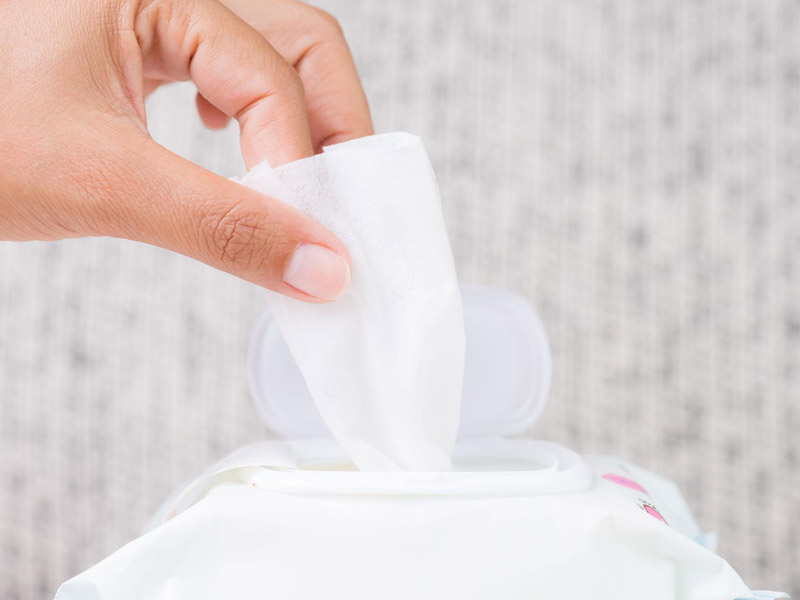
- Wipes — dry and wet wipes use spunbond fabric; SS or SSS machines are common choices.
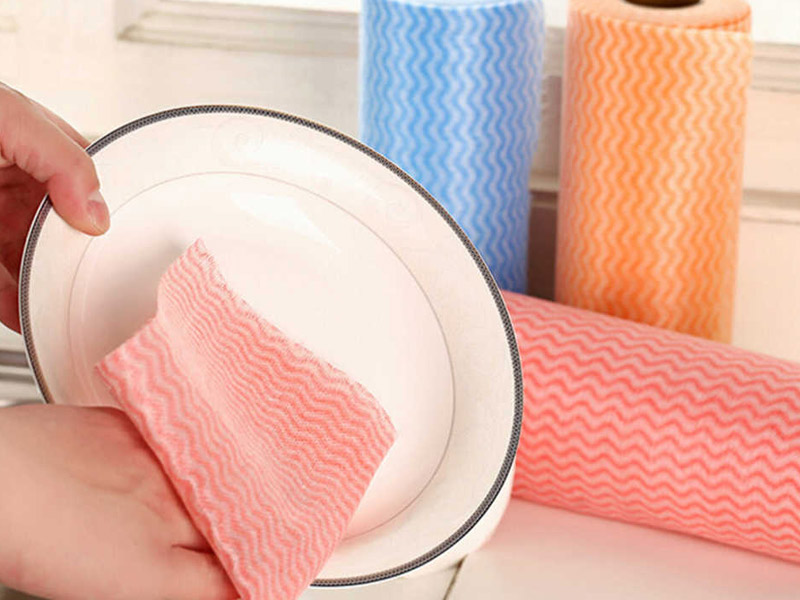
- Kitchen towels — similar to wipes in material requirements; SS machines are a practical choice.
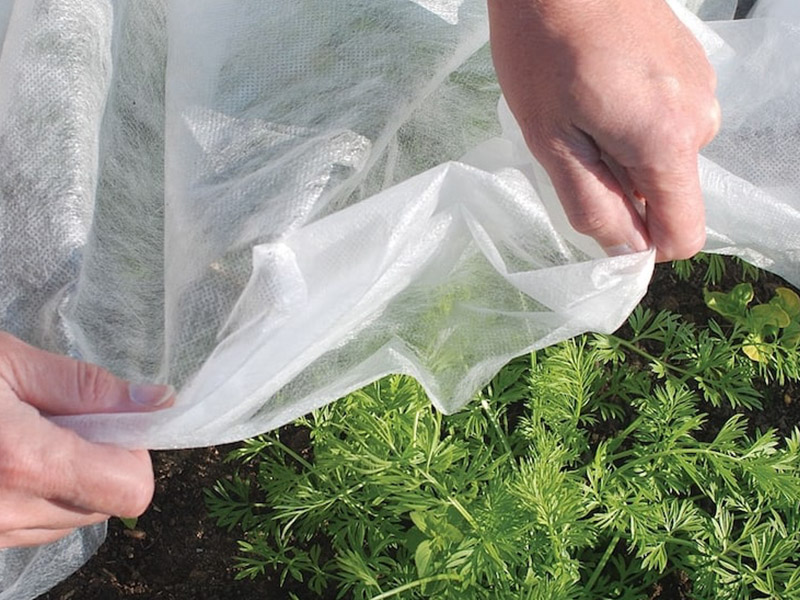
- Agriculture — crop protection, seedling bags, and landscape fabric are produced on S or SS machines at heavier weights.
Why Machine Configuration Also Affects Fabric Properties
The number of beams does not only affect output — it also affects the physical properties of the fabric produced. With more spunbond layers, the filaments in the web overlap more densely, improving tensile strength and reducing pinholes. This is why a triple-beam SSS machine can produce higher-quality 9 GSM fabric than a single-beam S machine running at the same weight.
For spunmelt fabrics, the meltblown fiber diameter (1.6~4 micrometers) is the key variable for filtration efficiency. Thinner fibers create a denser barrier with smaller pore sizes, which is critical for medical and respiratory protection applications. The dual meltblown layers in SMMS and SMMSS configurations allow for either a thicker combined barrier layer or a more graduated filtration structure depending on how the meltblown beams are configured.
All HH Nonwovens machines use Siemens motors and Siemens or ABB drivers for motor control, and the entire line is operated via PLC with a touch-screen interface. This ensures consistent fabric properties across long production runs, which is essential when producing to tight specifications for medical or hygiene customers. For a deeper look at spunbond nonwoven machines and their technical parameters, the product page includes detailed specifications for each model.
Ready to Select the Right Machine for Your Production Line?
JIASHAN HH Nonwovens Machinery CO., Ltd. has been manufacturing PP spunbond and spunmelt nonwoven fabric machines for customers in the medical, hygiene, agriculture, packaging, and industrial sectors. All production lines have passed ISO 9001 quality system management certification, and the equipment can be customized in terms of width, beam configuration, and auxiliary systems to match each customer's specific requirements.
Whether you are setting up a new production line or upgrading an existing one, the right configuration depends on your end product, your output targets, and your investment capacity. The team at HH Nonwovens is available to provide technical consultations and help you identify the most cost-effective solution for your factory. Contact us directly to discuss your project requirements in detail.


 +8613621544385
 No.29 Xinhua Road, Jiashan Village,Jiaxing City Zhejiang P.R., China