


 English
 中文简体
中文简体 русский
 عربى
عربىSpunbond Nonwoven Machine for Packaging and Carpet Backing
Content
- 1 Why Spunbond Nonwoven Fits Packaging and Carpet Backing
- 2 Packaging Grades: What to Engineer For
- 3 Carpet Backing Grades: What to Engineer For
- 4 Machine Configuration Choices That Change Results
- 5 Material Selection for Packaging vs. Carpet Backing
- 6 Quality Targets and Test Methods
- 7 Troubleshooting: Defects That Hit Yield the Hardest
- 8 Implementation Checklist for a New or Optimized Line
- 9 Why Spunbond Nonwoven Fits Packaging and Carpet Backing
- 10 Packaging Grades: What to Engineer For
- 11 Carpet Backing Grades: What to Engineer For
- 12 Machine Configuration Choices That Change Results
- 13 Material Selection for Packaging vs. Carpet Backing
- 14 Quality Targets and Test Methods
- 15 Troubleshooting: Defects That Hit Yield the Hardest
- 16 Implementation Checklist for a New or Optimized Line
Why Spunbond Nonwoven Fits Packaging and Carpet Backing
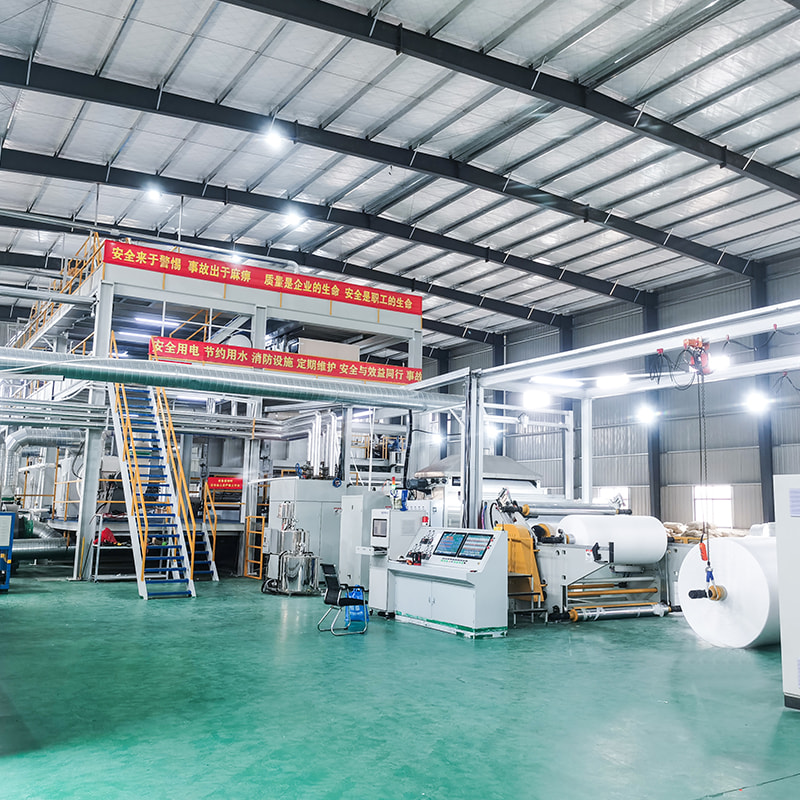
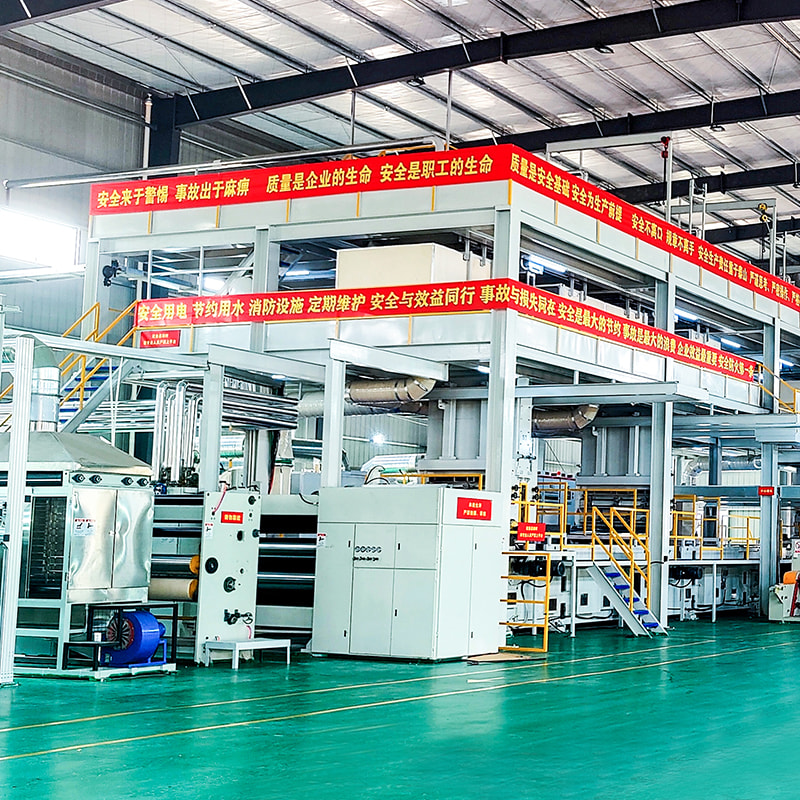
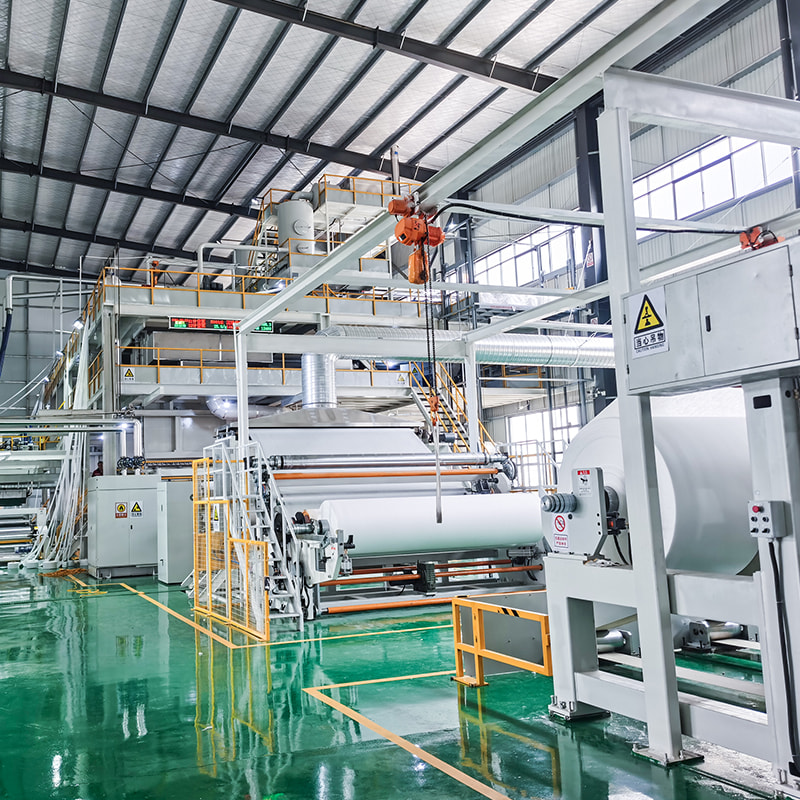
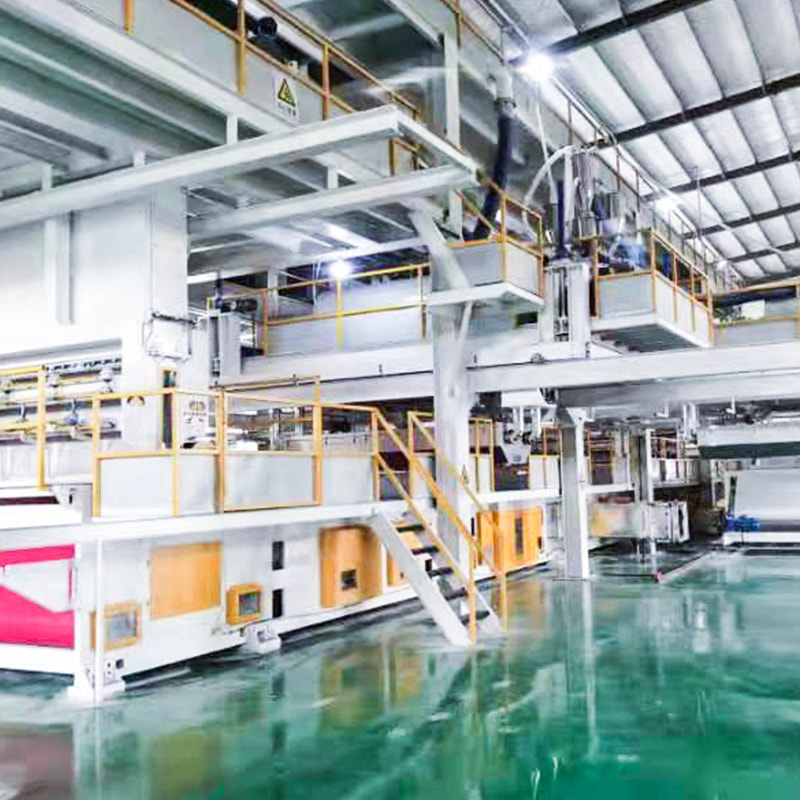
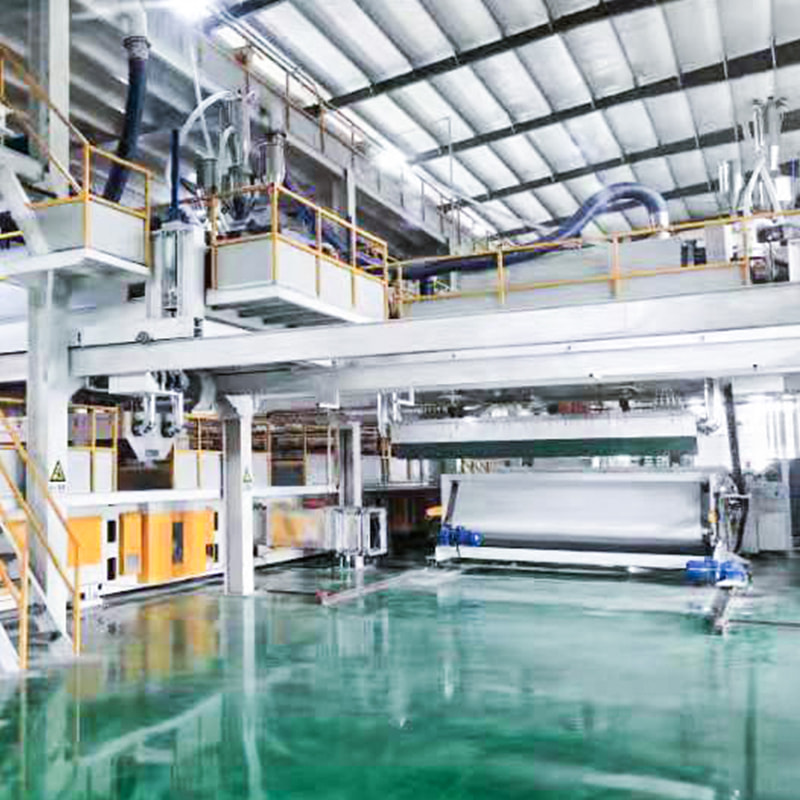
A Spunbond Nownoven Machine is widely utilised for packaging and carpet backing applications because it converts polymer into a continuous filament web in one integrated line—delivering stable output, consistent roll quality, and scalable economics for commodity-to-performance grades.
In practical terms, spunbond production provides three advantages that match these two end-uses: (1) controllable basis weight for cost-per-square-meter targets, (2) predictable tensile and tear for converting (cutting, sewing, lamination), and (3) surface uniformity that supports printing, coating, or adhesive bonding.
Quick process snapshot
- Extrusion and filtration: melt quality and cleanliness set the ceiling for defect rate.
- Spinning and quench: filament formation and cooling drive web evenness.
- Drawing and laydown: filament orientation and distribution drive tensile and MD/CD balance.
- Thermal bonding (calender): bond points determine stiffness, abrasion resistance, and tear behavior.
- Winding: roll density and edge quality determine downstream converting yield.
Packaging Grades: What to Engineer For
Packaging spunbond is usually optimized for convertibility (sealing or stitching), printability, and lightweight strength. Typical basis weights are often in the 20–80 gsm band depending on whether the product is a dust cover, sachet wrap, shopping bag laminate, or industrial protective wrap.
Common packaging constructions and targets
- Reusable shopping and promotional bags: prioritize tear resistance and print surface; often paired with film lamination for stiffness.
- Dust covers and protective wraps: prioritize low lint, consistent formation, and adequate puncture resistance.
- Industrial inner wrap or interleaving: prioritize low defect rate and stable roll hardness for high-speed unwinding.
Practical parameter levers that matter in packaging
If packaging is failing on tear or pinholes, the highest-return adjustments typically come from filtration discipline (gel reduction), laydown uniformity (streak control), and bonding point optimization (bond area vs. softness trade-off). A packaging line often benefits from tight basis-weight CV% to avoid weak lanes that become converting scrap.
Carpet Backing Grades: What to Engineer For
Carpet backing spunbond is generally engineered for dimensional stability, coating adhesion (often latex or similar systems), and high puncture/tear robustness during tufting and handling. Basis weights are commonly higher than packaging—often 80–200 gsm depending on carpet style, tuft density, and whether the backing is primary, secondary, or a reinforcement layer.
Key functional requirements in carpet backing
- Dimensional control: maintain stable width and minimal shrink under coating heat and drying.
- Bond integrity: calender bonds must resist delamination under repeated flexing.
- Coating compatibility: surface energy and texture must support consistent wet-out and anchoring.
- Tufting survivability: withstand needle penetration and tension without zippering or lane tearing.
A practical takeaway is that carpet backing frequently tolerates a firmer handfeel than packaging, allowing a bonding strategy that emphasizes higher tensile and puncture resistance over softness.
Machine Configuration Choices That Change Results
Even with the same polymer family, two spunbond lines can produce noticeably different packaging or carpet-backing outcomes depending on beam design, quench capacity, draw system, calender pattern, and winding controls. The most useful approach is to map each requirement to the section of the line that truly governs it.
Where properties are “made” on the line
- Uniformity and pinholes: filtration, spinneret condition, quench stability, and laydown airflow balance.
- MD/CD tensile balance: draw ratio and laydown distribution (plus line speed stability).
- Stiffness vs. tear: calender temperature/pressure and pattern bond area.
- Roll quality (telescoping, baggy edges): winding tension profile, nip settings, and edge trim control.
A grounded output example
As a rule-of-thumb illustration (actual values depend on polymer, spinneret, and draw system), a 3.2 m wide spunbond line running at 150–300 m/min on 20–60 gsm products can land in the broad range of 0.5–2.0 t/hour throughput when tuned for stable bonding and acceptable defect rates. This range is commonly used for planning winding capacity, warehouse flow, and converting takt time.
Material Selection for Packaging vs. Carpet Backing
Material strategy should reflect the end-use stress profile and any regulatory constraints. In many markets, polypropylene (PP) dominates spunbond for cost and processing stability, while polyester (PET) and bicomponent options are used when higher thermal resistance or specific bonding behaviors are required.
Practical selection guidance
- Packaging: prioritize clean melt flow, low gel tendency, and additives for slip/antistatic as needed for unwinding and printing.
- Carpet backing: prioritize thermal stability during coating/drying, stronger bonds, and controlled elongation to resist distortion.
- Both: use consistent masterbatch dispersion to avoid streaks and weak lanes; contamination control directly reduces scrap.
If sustainability goals are in scope, define recycled content by verified input quality and align filtration and spinneret maintenance frequency accordingly; poor-quality recycled feed tends to surface as holes, gels, and unstable pressure across screens.
Quality Targets and Test Methods
To keep production and converting aligned, define a small set of measurable KPIs and enforce them by roll. For packaging, converting yield (breaks, misfeeds, print defects) is often the best “true north.” For carpet backing, downstream performance during tufting/coating is the most meaningful validation.
| KPI | Packaging Spunbond (often 20–80 gsm) | Carpet Backing Spunbond (often 80–200 gsm) |
|---|---|---|
| Basis weight uniformity (CV%) | Low CV to reduce weak lanes and print variation | Low-to-moderate CV; focus on lane strength for tufting |
| Tensile strength (MD/CD) | Balanced to prevent converting tears and seam failures | Higher absolute tensile; resist distortion in coating and handling |
| Tear propagation resistance | High priority for bags and wraps | High priority to resist “zippering” during tufting |
| Pinholes / gel defects | Very tight limits for appearance and barrier laminations | Tight limits to avoid coating bleed-through and weak points |
| Surface compatibility | Print/lamination friendliness; controlled slip/COF | Coating adhesion and wet-out consistency |
Minimal, high-value test set per roll
- Basis weight mapping across width (to detect weak lanes early).
- MD/CD tensile and elongation (to enforce converting and tufting stability).
- Visual defect grading with reference photos (to standardize “acceptable” decisions).
- Roll hardness and edge quality checks (to prevent telescoping and unwind breaks).
Troubleshooting: Defects That Hit Yield the Hardest
Most profitability losses in spunbond for packaging and carpet backing come from converting downtime and roll rejects, not from small changes in raw material price. The corrective-action mindset should therefore prioritize repeatability and root-cause isolation.
High-frequency problems and practical fixes
- Holes/pinholes: check screen packs, melt cleanliness, and spinneret damage; stabilize quench airflow to reduce filament breakage.
- Weak lanes / streaks: verify die temperature uniformity, laydown airflow balance, and distribution plate cleanliness; confirm basis-weight profile control.
- Excess stiffness or brittle tear: reduce bond pressure/temperature or adjust pattern; consider polymer grade/additive impact on bonding window.
- Telescoping rolls / baggy edges: tune winding tension taper, nip load, and slit edge quality; confirm core and winding shaft alignment.
- Poor coating adhesion (carpet backing): validate surface condition (additives, bloom), calender pattern, and any corona/pretreatment strategy if used.
Implementation Checklist for a New or Optimized Line
Whether commissioning a new spunbond line or shifting grades between packaging and carpet backing, use a disciplined qualification plan that connects settings to end-use performance. The goal is to avoid “running stable” while still producing off-target material.
A practical qualification flow
- Lock raw material specs (MFI range, ash/contamination limits) and filtration standard work.
- Establish a “golden recipe” for each target gsm band with documented setpoints and acceptable windows.
- Run width profile mapping and confirm basis-weight uniformity before producing customer trial rolls.
- Validate converting (packaging) or tufting/coating (carpet backing) with structured feedback and defect tagging.
- Release grade only after repeatable KPI compliance across multiple rolls and shifts.
Conclusion: When a Spunbond Nownoven Machine is tuned through measurable KPIs—basis-weight uniformity, tensile balance, defect control, and roll quality—it becomes a reliable platform for both packaging and carpet backing, with clear levers to shift performance without sacrificing stability.
Why Spunbond Nonwoven Fits Packaging and Carpet Backing
A Spunbond Nownoven Machine is widely utilised for packaging and carpet backing applications because it converts polymer into a continuous filament web in one integrated line—delivering stable output, consistent roll quality, and scalable economics for commodity-to-performance grades.
In practical terms, spunbond production provides three advantages that match these two end-uses: (1) controllable basis weight for cost-per-square-meter targets, (2) predictable tensile and tear for converting (cutting, sewing, lamination), and (3) surface uniformity that supports printing, coating, or adhesive bonding.
Quick process snapshot
- Extrusion and filtration: melt quality and cleanliness set the ceiling for defect rate.
- Spinning and quench: filament formation and cooling drive web evenness.
- Drawing and laydown: filament orientation and distribution drive tensile and MD/CD balance.
- Thermal bonding (calender): bond points determine stiffness, abrasion resistance, and tear behavior.
- Winding: roll density and edge quality determine downstream converting yield.
Packaging Grades: What to Engineer For
Packaging spunbond is usually optimized for convertibility (sealing or stitching), printability, and lightweight strength. Typical basis weights are often in the 20–80 gsm band depending on whether the product is a dust cover, sachet wrap, shopping bag laminate, or industrial protective wrap.
Common packaging constructions and targets
- Reusable shopping and promotional bags: prioritize tear resistance and print surface; often paired with film lamination for stiffness.
- Dust covers and protective wraps: prioritize low lint, consistent formation, and adequate puncture resistance.
- Industrial inner wrap or interleaving: prioritize low defect rate and stable roll hardness for high-speed unwinding.
Practical parameter levers that matter in packaging
If packaging is failing on tear or pinholes, the highest-return adjustments typically come from filtration discipline (gel reduction), laydown uniformity (streak control), and bonding point optimization (bond area vs. softness trade-off). A packaging line often benefits from tight basis-weight CV% to avoid weak lanes that become converting scrap.
Carpet Backing Grades: What to Engineer For
Carpet backing spunbond is generally engineered for dimensional stability, coating adhesion (often latex or similar systems), and high puncture/tear robustness during tufting and handling. Basis weights are commonly higher than packaging—often 80–200 gsm depending on carpet style, tuft density, and whether the backing is primary, secondary, or a reinforcement layer.
Key functional requirements in carpet backing
- Dimensional control: maintain stable width and minimal shrink under coating heat and drying.
- Bond integrity: calender bonds must resist delamination under repeated flexing.
- Coating compatibility: surface energy and texture must support consistent wet-out and anchoring.
- Tufting survivability: withstand needle penetration and tension without zippering or lane tearing.
A practical takeaway is that carpet backing frequently tolerates a firmer handfeel than packaging, allowing a bonding strategy that emphasizes higher tensile and puncture resistance over softness.
Machine Configuration Choices That Change Results
Even with the same polymer family, two spunbond lines can produce noticeably different packaging or carpet-backing outcomes depending on beam design, quench capacity, draw system, calender pattern, and winding controls. The most useful approach is to map each requirement to the section of the line that truly governs it.
Where properties are “made” on the line
- Uniformity and pinholes: filtration, spinneret condition, quench stability, and laydown airflow balance.
- MD/CD tensile balance: draw ratio and laydown distribution (plus line speed stability).
- Stiffness vs. tear: calender temperature/pressure and pattern bond area.
- Roll quality (telescoping, baggy edges): winding tension profile, nip settings, and edge trim control.
A grounded output example
As a rule-of-thumb illustration (actual values depend on polymer, spinneret, and draw system), a 3.2 m wide spunbond line running at 150–300 m/min on 20–60 gsm products can land in the broad range of 0.5–2.0 t/hour throughput when tuned for stable bonding and acceptable defect rates. This range is commonly used for planning winding capacity, warehouse flow, and converting takt time.
Material Selection for Packaging vs. Carpet Backing
Material strategy should reflect the end-use stress profile and any regulatory constraints. In many markets, polypropylene (PP) dominates spunbond for cost and processing stability, while polyester (PET) and bicomponent options are used when higher thermal resistance or specific bonding behaviors are required.
Practical selection guidance
- Packaging: prioritize clean melt flow, low gel tendency, and additives for slip/antistatic as needed for unwinding and printing.
- Carpet backing: prioritize thermal stability during coating/drying, stronger bonds, and controlled elongation to resist distortion.
- Both: use consistent masterbatch dispersion to avoid streaks and weak lanes; contamination control directly reduces scrap.
If sustainability goals are in scope, define recycled content by verified input quality and align filtration and spinneret maintenance frequency accordingly; poor-quality recycled feed tends to surface as holes, gels, and unstable pressure across screens.
Quality Targets and Test Methods
To keep production and converting aligned, define a small set of measurable KPIs and enforce them by roll. For packaging, converting yield (breaks, misfeeds, print defects) is often the best “true north.” For carpet backing, downstream performance during tufting/coating is the most meaningful validation.
| KPI | Packaging Spunbond (often 20–80 gsm) | Carpet Backing Spunbond (often 80–200 gsm) |
|---|---|---|
| Basis weight uniformity (CV%) | Low CV to reduce weak lanes and print variation | Low-to-moderate CV; focus on lane strength for tufting |
| Tensile strength (MD/CD) | Balanced to prevent converting tears and seam failures | Higher absolute tensile; resist distortion in coating and handling |
| Tear propagation resistance | High priority for bags and wraps | High priority to resist “zippering” during tufting |
| Pinholes / gel defects | Very tight limits for appearance and barrier laminations | Tight limits to avoid coating bleed-through and weak points |
| Surface compatibility | Print/lamination friendliness; controlled slip/COF | Coating adhesion and wet-out consistency |
Minimal, high-value test set per roll
- Basis weight mapping across width (to detect weak lanes early).
- MD/CD tensile and elongation (to enforce converting and tufting stability).
- Visual defect grading with reference photos (to standardize “acceptable” decisions).
- Roll hardness and edge quality checks (to prevent telescoping and unwind breaks).
Troubleshooting: Defects That Hit Yield the Hardest
Most profitability losses in spunbond for packaging and carpet backing come from converting downtime and roll rejects, not from small changes in raw material price. The corrective-action mindset should therefore prioritize repeatability and root-cause isolation.
High-frequency problems and practical fixes
- Holes/pinholes: check screen packs, melt cleanliness, and spinneret damage; stabilize quench airflow to reduce filament breakage.
- Weak lanes / streaks: verify die temperature uniformity, laydown airflow balance, and distribution plate cleanliness; confirm basis-weight profile control.
- Excess stiffness or brittle tear: reduce bond pressure/temperature or adjust pattern; consider polymer grade/additive impact on bonding window.
- Telescoping rolls / baggy edges: tune winding tension taper, nip load, and slit edge quality; confirm core and winding shaft alignment.
- Poor coating adhesion (carpet backing): validate surface condition (additives, bloom), calender pattern, and any corona/pretreatment strategy if used.
Implementation Checklist for a New or Optimized Line
Whether commissioning a new spunbond line or shifting grades between packaging and carpet backing, use a disciplined qualification plan that connects settings to end-use performance. The goal is to avoid “running stable” while still producing off-target material.
A practical qualification flow
- Lock raw material specs (MFI range, ash/contamination limits) and filtration standard work.
- Establish a “golden recipe” for each target gsm band with documented setpoints and acceptable windows.
- Run width profile mapping and confirm basis-weight uniformity before producing customer trial rolls.
- Validate converting (packaging) or tufting/coating (carpet backing) with structured feedback and defect tagging.
- Release grade only after repeatable KPI compliance across multiple rolls and shifts.
Conclusion: When a Spunbond Nownoven Machine is tuned through measurable KPIs—basis-weight uniformity, tensile balance, defect control, and roll quality—it becomes a reliable platform for both packaging and carpet backing, with clear levers to shift performance without sacrificing stability.


 +8613621544385
 No.29 Xinhua Road, Jiashan Village,Jiaxing City Zhejiang P.R., China