

 English
 中文简体
中文简体 русский
 عربى
عربىPractical Examples of Non-Woven Fabric — Types & Uses
Content
- 1 Common Non-Woven Fabric Types and Real-World Examples
- 2 How Each Example Is Chosen for an Application (Practical Selection Criteria)
- 3 Quick Comparison Table: Examples, Methods, Fibers, Applications
- 4 Practical Manufacturing Notes (What Engineers and Buyers Should Know)
- 5 Testing, Care and Handling for Product Developers
- 6 Sustainability & End-of-Life Considerations
- 7 Supplier & Specification Checklist (Ready to Copy into RFQ)
- 8 Summary: Matching Examples to Needs
Common Non-Woven Fabric Types and Real-World Examples
Non-woven fabrics are produced by bonding or entangling fibers rather than weaving or knitting. Below are the most commonly used non-woven types with concrete examples of products you encounter every day.
Spunbond (Spunbonded Polypropylene)
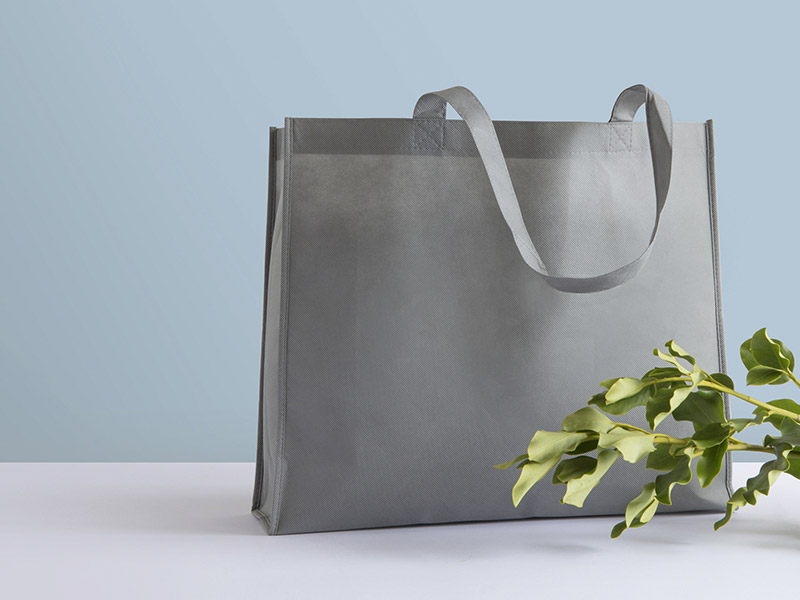
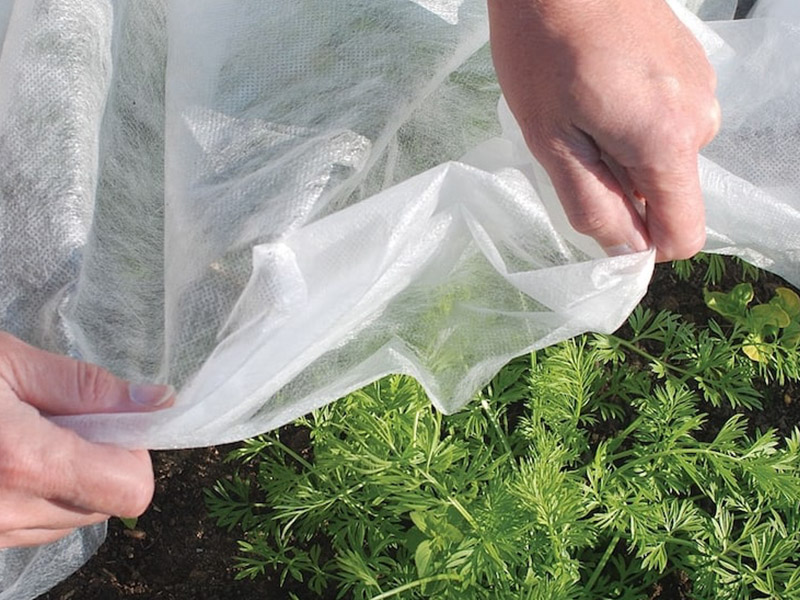
Spunbond is created by extruding continuous filaments and laying them into a web, then bonding thermally or chemically. Examples: reusable shopping bags, protective garment shells, agricultural weed-control fabrics and some medical gowns. Key advantages: good tensile strength, cost-effective for large-area coverage, and excellent dimensional stability.
Meltblown
Meltblown webs use very fine fibers produced by a hot air attenuation process. Examples: the filtration layer in surgical masks and respirators, high-efficiency air filters, and oil absorbent pads. Meltblown provides very fine fiber diameters, which give excellent filtration and barrier performance but lower mechanical strength unless combined with spunbond layers.
Spunbond-Meltblown-Spunbond (SMS) and Layered Composites
SMS composites combine spunbond outer layers for strength with a meltblown core for filtration/barrier. Examples: disposable surgical gowns, medical drapes, protective apparel and some industrial filters. They balance strength, breathability and barrier properties.
Spunlace (Hydroentangled)
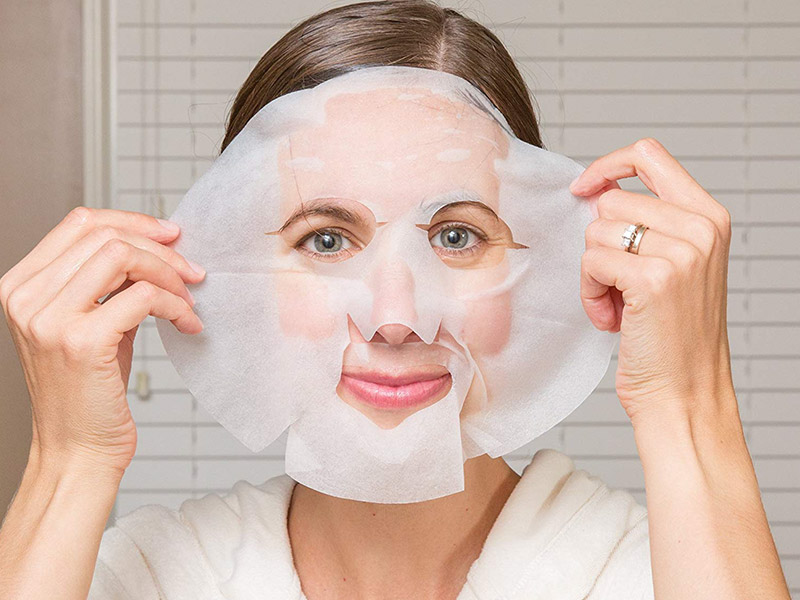
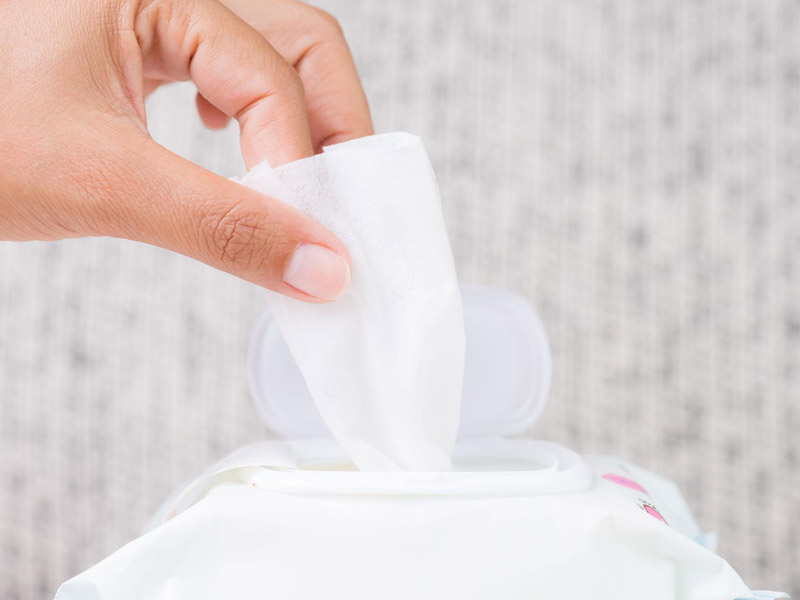
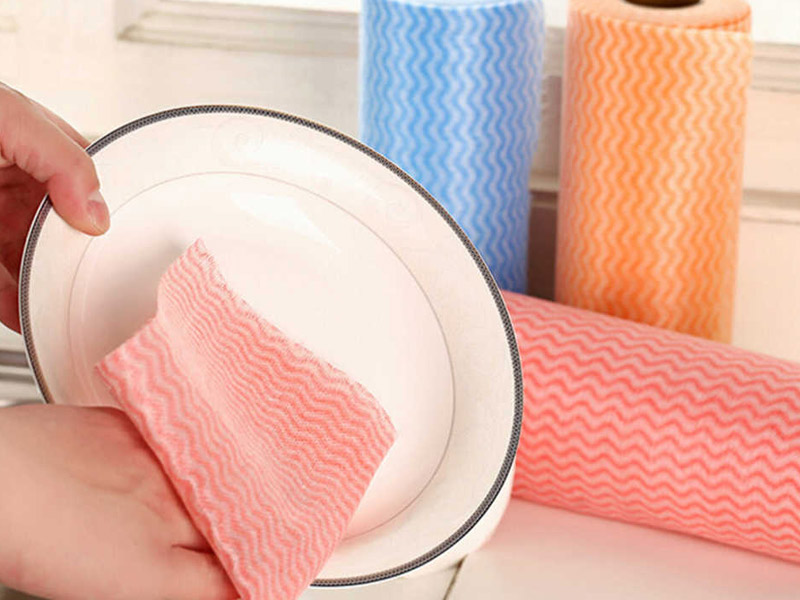
Hydroentangling uses high-pressure water jets to entangle fibers creating soft, cloth-like webs. Examples: wet wipes, cosmetic wipes, disposable table wipes, and some medical cleansing pads. Benefits: soft hand, high absorbency, and good drape.
Needle-punched (Needlefelt)
Needle-punched fabrics are mechanically interlocked by barbed needles. Examples: geomembrane underlays, carpet backings, insulation mats, automotive trunk liners and filtration felts. They offer excellent mechanical integrity, thickness and resistance to abrasion.
Airlaid
Airlaid webs are formed by dispersing short fibers in an air stream onto a moving belt; typically used for absorbent hygiene products (disposable diapers, incontinence pads), table napkins and heavy wipes. Characterized by high absorbency and bulk with a paper-like texture.
Stitch-bonded and Thermal Bonded Nonwovens
Stitch-bonding secures fibers with yarn stitches; thermal bonding fuses fibers at contact points. Examples: mattress interlinings, upholstery backings, and some technical textiles where composite layering and reinforcement are needed.
How Each Example Is Chosen for an Application (Practical Selection Criteria)
Selecting the right non-woven requires matching product requirements (strength, filtration, absorbency, softness, thermal resistance) to fabric type and production method. Use the following checklist when choosing:
- Define functional needs: barrier (liquid/gas), filtration efficiency, abrasion resistance, or absorbency.
- Estimate service life: single-use => spunbond/meltblown or spunlace; long-term => needle-punched or stitch-bonded.
- Consider hand and appearance: soft consumer goods favor spunlace; industrial applications prioritize durability.
- Check regulatory/industry standards: e.g., medical filtration or food contact requirements may limit material choices.
- Evaluate cost vs performance: composite webs (SMS) cost more but deliver combined properties efficiently.
Quick Comparison Table: Examples, Methods, Fibers, Applications
| Type | Production Method | Typical Fibers | Common Examples | Key Properties |
| Spunbond | Extrusion & thermal bonding | PP, PE | Reusable bags, geotextiles, outer gown layers | High strength, low cost, stable |
| Meltblown | Hot air attenuated fine fibers | PP | Mask filtration layer, HVAC filters | Excellent filtration, fine pore structure |
| Spunlace | Hydroentangling | Cellulosic/viscose blends, polyester | Wet wipes, cosmetic pads | Soft, absorbent, cloth-like |
| Needle-punched | Mechanical needling | Polyester, polypropylene, natural fibers | Carpet backings, geotextiles, filters | Thick, durable, good mechanical properties |
| Airlaid | Air-laid short fiber deposition | Cellulose, synthetic blends | Diaper cores, napkins, table wipes | High bulk, excellent absorbency |
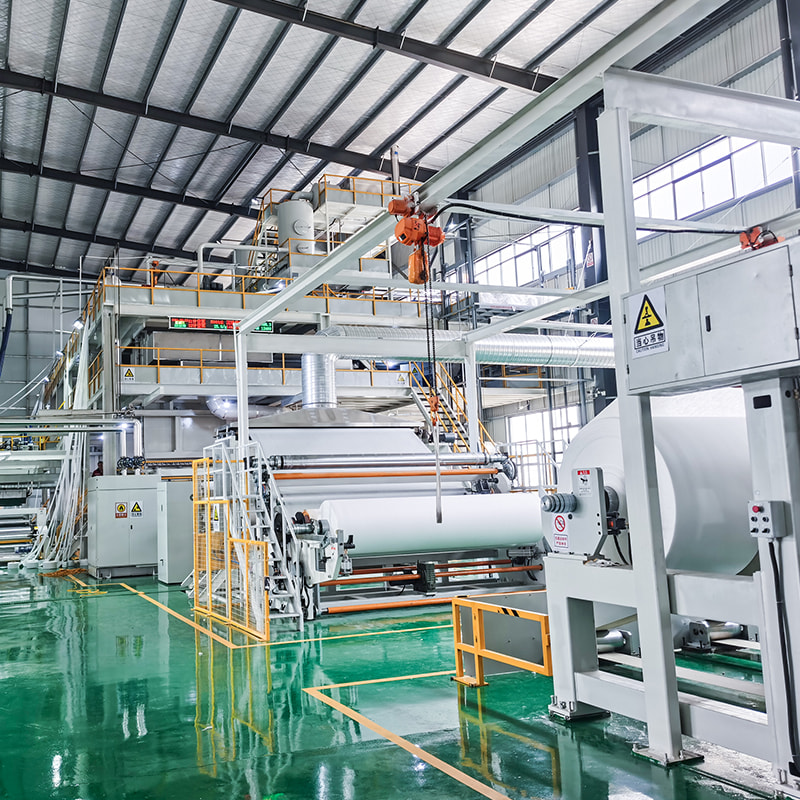
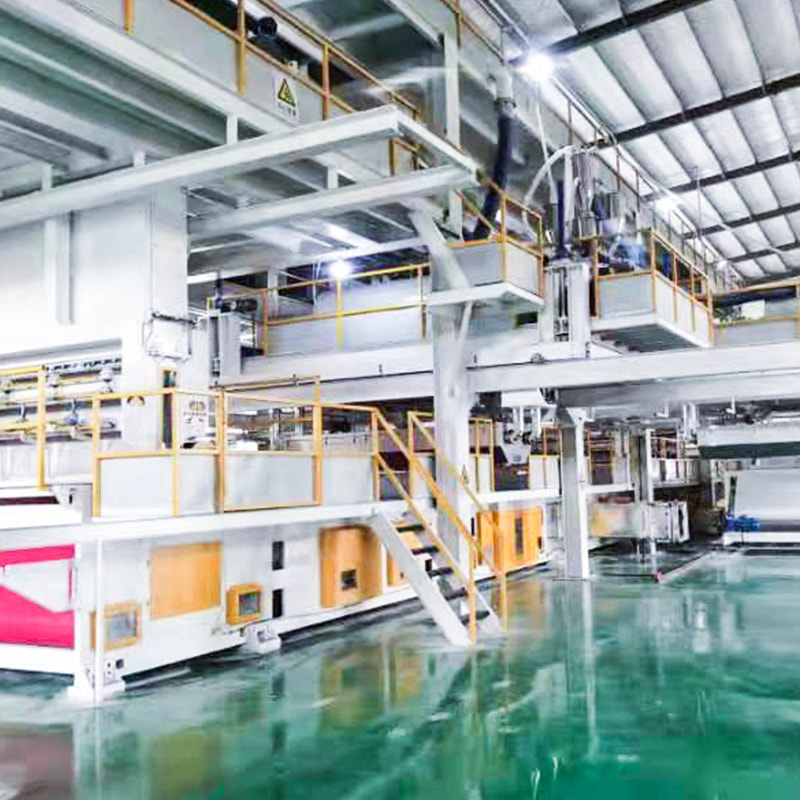
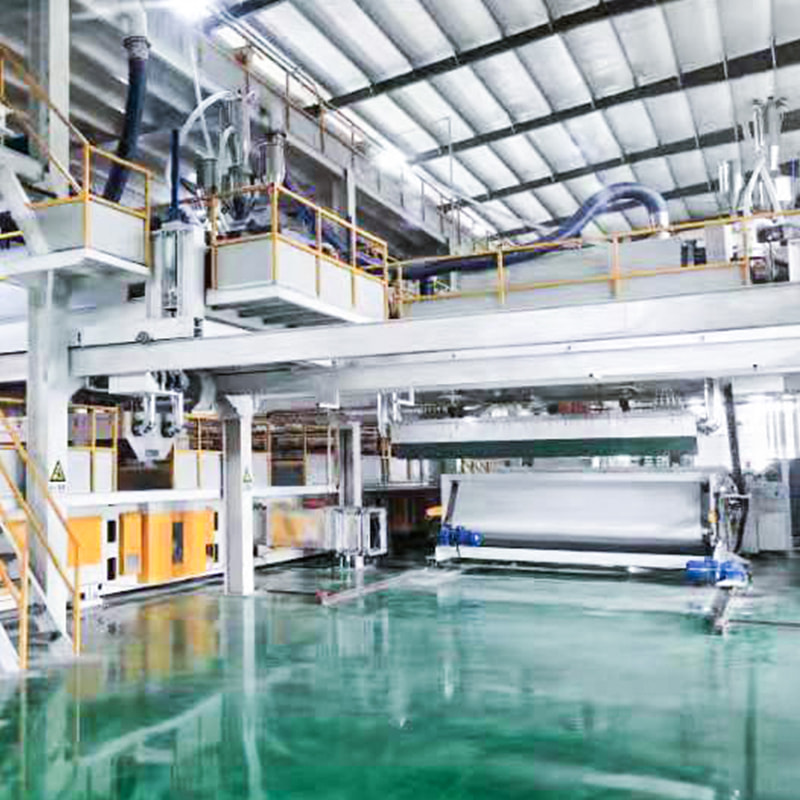
Practical Manufacturing Notes (What Engineers and Buyers Should Know)
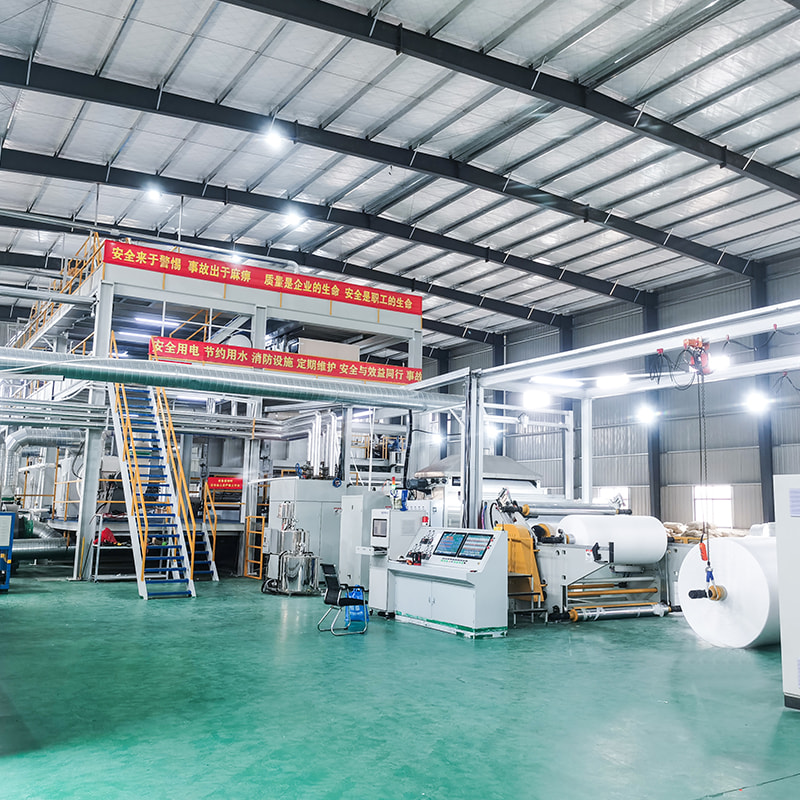
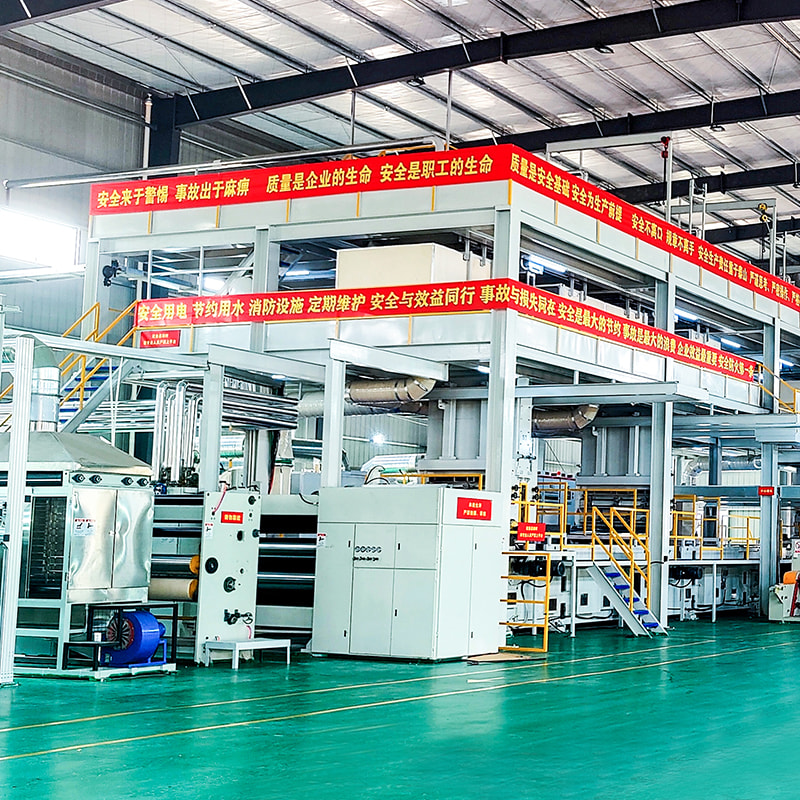
Production choices affect cost, tolerances and quality control. For example, spunbond lines require careful polymer feed and die control for consistent filament diameter; meltblown lines need precise air temperature and throughput controls to achieve target fiber diameters; hydroentangling requires pump and nozzle maintenance for uniform web entanglement. When specifying material, include target basis weight (g/m²), thickness (mm), tensile strength (MD/CD), and if needed, filtration efficiency or liquid barrier level.
Testing, Care and Handling for Product Developers
Standard tests to request or perform: basis weight, tensile (MD/CD), tear strength, hydrostatic pressure (for barriers), filtration efficiency (for filter media), and absorbency (for hygiene products). For handling: store rolls flat, avoid direct sunlight on polymeric webs (UV can degrade polypropylene/PE), and condition materials at production temperature/humidity to avoid dimensional surprises during converting or laminating.
Sustainability & End-of-Life Considerations
Non-wovens range from fully synthetic to blends with natural fibers. Practical sustainability steps:
- Specify mono-polymer constructions (e.g., 100% PP) where recycling streams exist to simplify reprocessing.
- Consider bio-based or compostable fibers only when the product will enter industrial composting and meet compostability certifications.
- Design for disassembly—avoid bonding incompatible layers where possible to enable material recovery.
Supplier & Specification Checklist (Ready to Copy into RFQ)
When you request quotes include: desired type (spunbond, meltblown, SMS, spunlace, needlepunched), basis weight (g/m²), fiber/polymer type, width, roll diameter, bonding method, required mechanical/filtration properties, any surface treatment (e.g., hydrophilic, hydrophobic, flame retardant), and expected annual volumes. This minimizes back-and-forth and speeds sampling.
Summary: Matching Examples to Needs
Use meltblown or SMS for filtration and medical barrier needs; spunlace for soft consumer wipes; airlaid for absorbent cores; needle-punched or stitch-bonded for durable industrial uses; spunbond for large-area low-cost panels like geotextiles and packaging. Clear specification of performance metrics and end-of-life expectations will produce the most cost-effective and functional non-woven choice.


 +8613621544385
 No.29 Xinhua Road, Jiashan Village,Jiaxing City Zhejiang P.R., China