




 English
 中文简体
中文简体 русский
 عربى
عربىDisposable Hygiene Products Market: Nonwoven Equipment Capacity Outlook for 2026
Content
- 1 Why the Disposable Hygiene Products Market Keeps Expanding
- 2 Reading Published Forecasts as a Planning Band
- 3 From Product Segments to Machine Configurations
- 4 Material Trends That Shape Line Selection
- 5 A Practical Checklist Before You Commit to a New Line
- 6 Regional Demand and the Case for Local Substrate Production
- 7 Why Buyers Work With Us
Every serious capacity decision in our industry starts with the same question: where is the disposable hygiene products market heading, and how much substrate will it need? We hear that question from customers in India, Pakistan, Turkey, Russia, Australia and, closer to home, across China. The forecast numbers they quote rarely match each other. The direction almost always does.
We build the equipment at the front of that chain. Our spunbond and meltblown production lines turn polypropylene granules into the nonwoven fabrics that end up in diapers, sanitary pads, adult incontinence products, wipes, face masks and a long list of everyday items. When a customer asks us to interpret a market report, we read it the way a machine builder reads it: as a demand signal that has to be translated into beams, working widths, filament deniers and control systems.
Why the Disposable Hygiene Products Market Keeps Expanding
Demand for disposable hygiene products is not driven by fashion. It is driven by demographics, income and daily routine, all of which shift slowly and predictably. The forces we discuss most often with customers are:
- Population growth and rising birth numbers across developing Asia Pacific, the Middle East and Africa, which keep diaper and pants volumes climbing.
- An ageing population in Europe, North America and parts of Asia, which has pushed retail adult incontinence into one of the fastest-growing categories.
- Greater female workforce participation and broader awareness of menstrual hygiene, which lifts sanitary protection demand in markets that were previously underserved.
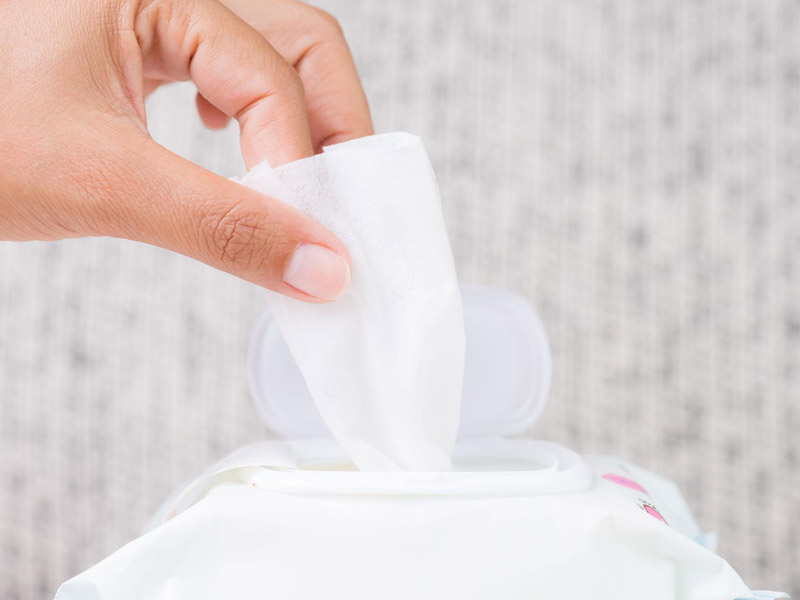
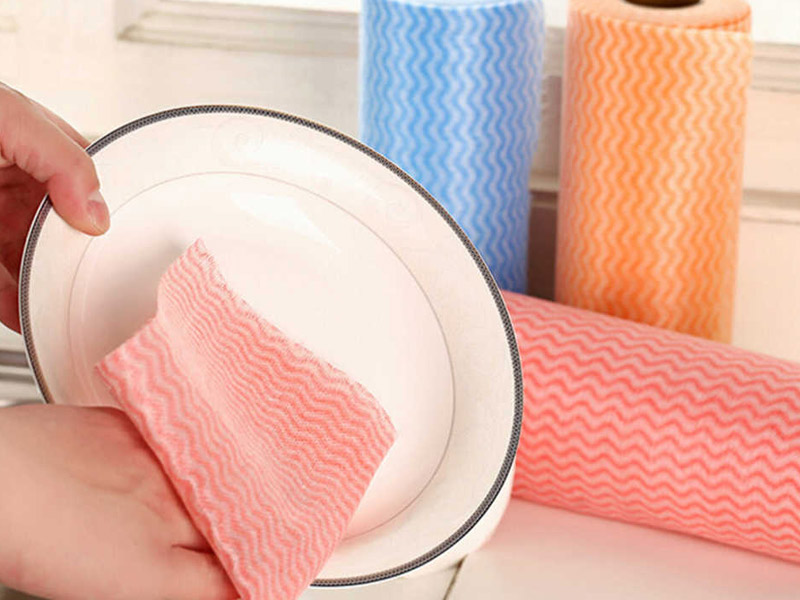
- Household and institutional consumption of wipes, kitchen towels and disposable cleaning products, which adds steady, recurring volume.
- Higher general health awareness, which supports single-use formats wherever hygiene control matters.
Two restraints deserve an honest mention. Regulation of single-use plastics is tightening in several regions, and consumers are increasingly attentive to skin-friendly formulations and material sourcing. Neither force removes demand. Both push manufacturers toward thinner, softer and more efficient substrates, and toward recyclable or degradable alternatives. For a machine buyer, that means the line ordered today has to be flexible enough to run tomorrow's materials without a rebuild.
Reading Published Forecasts as a Planning Band
Published studies of the disposable hygiene products market quote a wide spread of values, largely because they define the category differently and anchor on different base years. We usually compare several and treat the outcome as a band rather than a single figure.
| Indicator | Published range | What it means for equipment planning |
|---|---|---|
| Global market value, mid-2020s | roughly US$200 to 240 billion | Existing substrate demand already supports multi-line supply planning |
| Global market value, mid-2030s | roughly US$340 to 440 billion | Growth is structural, so capacity can be added in stages |
| Compound annual growth rate | about 5% to 8.3% | A steady climb favours phased expansion and retrofits |
| Fastest-growing product categories | adult incontinence, disposable pants, baby wipes | Pull-up formats and wipes need soft, low-denier, multi-layer substrates |
| Largest regional contribution | Asia Pacific, with India gaining in menstrual care | Local nonwoven production becomes a cost advantage, not a luxury |
| Principal material inputs | nonwoven fabrics, super absorbent polymers, fluff pulp, films | Spunbond and spunmelt capacity sits at the very start of this chain |
The practical reading is simple. A market expanding at mid-to-high single-digit rates does not reward one oversized bet; it rewards staged capacity that can be commissioned, validated and then duplicated. Producers who add one proven line, learn the process and follow with a second usually reach scale with far less commercial risk than those who commit to a very large block at once.
From Product Segments to Machine Configurations
Hygiene products look simple on a shelf and complicated on a drawing board. Every category places different demands on the fabric, and those demands translate directly into line configuration.
Base substrates for baby care
Diaper topsheets, backsheets and acquisition layers are normally made from light, soft spunbond fabric. A single-beam S line handles this work well. A double-beam SS machine, with two spinning beams feeding one web, improves coverage and raises output per hour while keeping filaments fine enough for a comfortable next-to-skin feel.
Feminine care, incontinence and multi-layer fabrics
Sanitary napkins and adult incontinence products have moved toward slim, body-hugging designs, and that shift has changed what producers need from a line. An SMS structure combines soft spunbond outer layers with an internal meltblown barrier, which is precisely the combination these products require. Where barrier performance must be pushed further, an SMMS configuration adds a second meltblown layer without sacrificing drape.
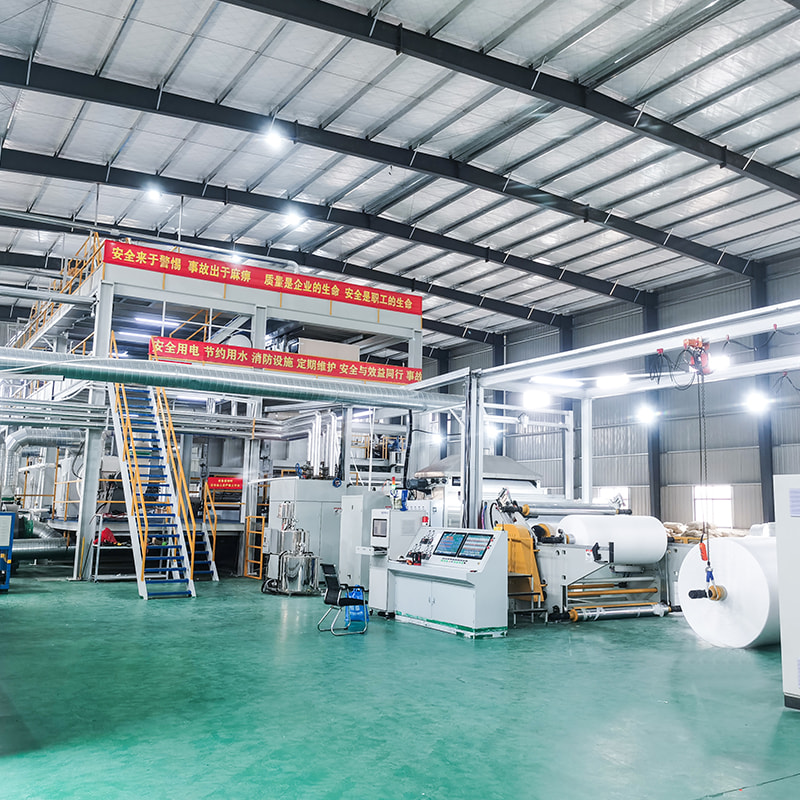
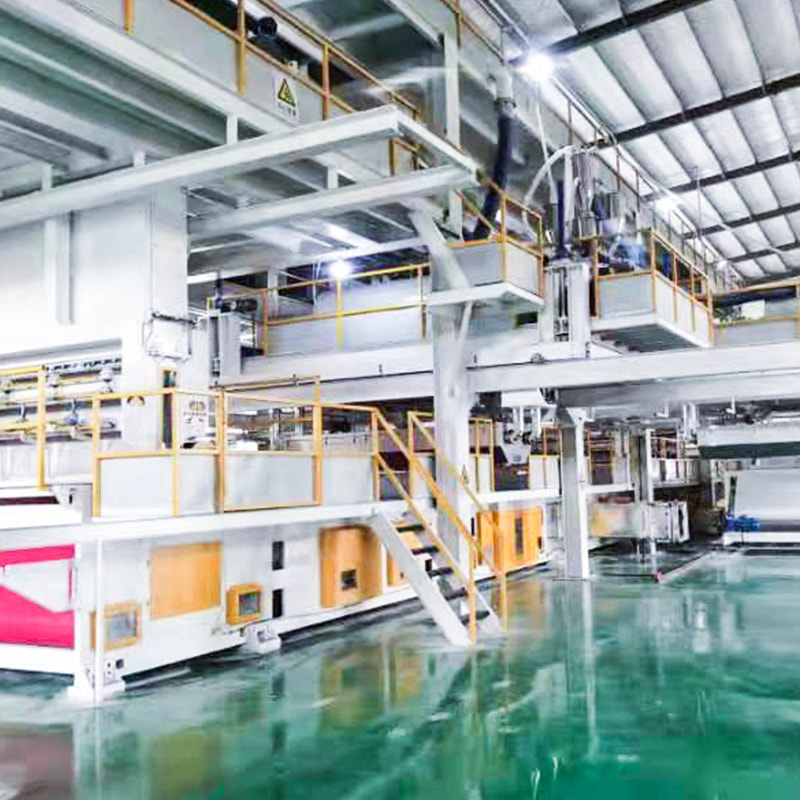
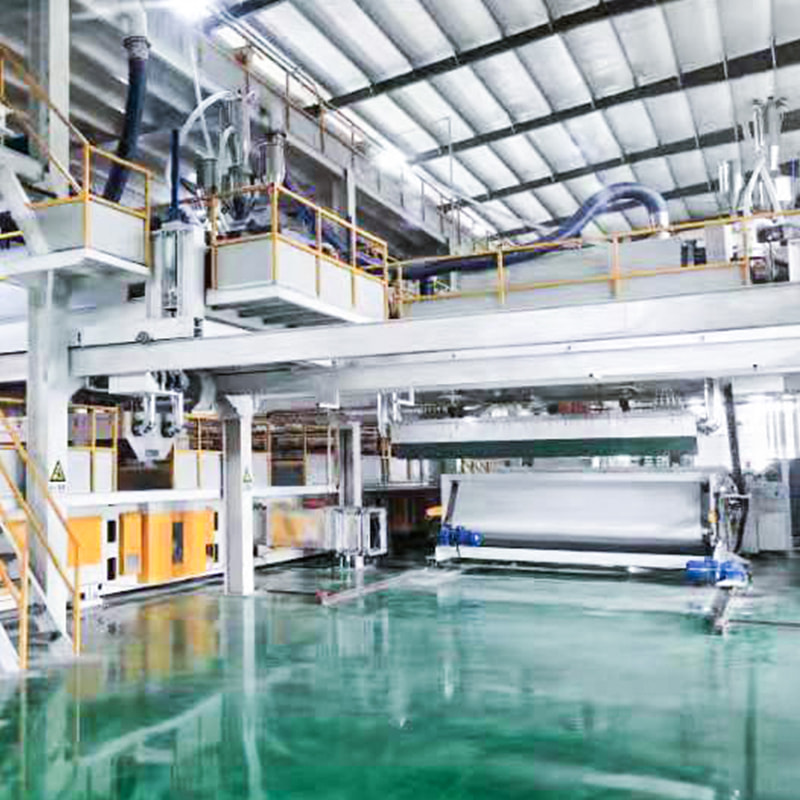
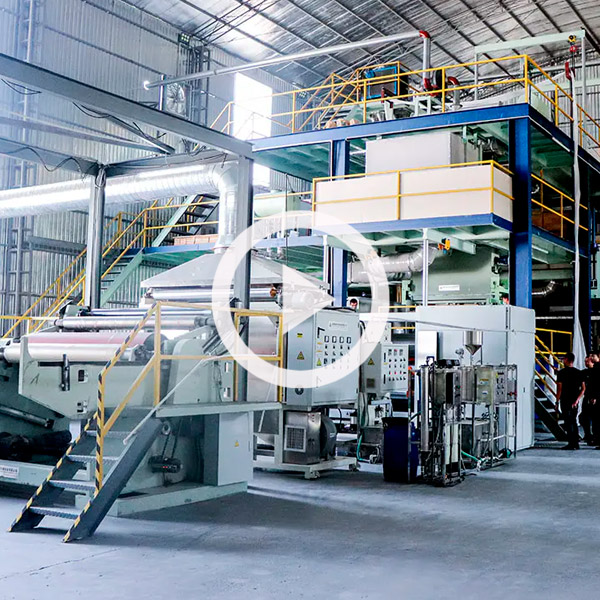 PP SMS Nonwoven Production Line for Hygiene FabricsSMS line combines spunbond and meltblown layers for soft, barrier-capable hygiene fabrics; specifications include 9–350 m/min, 9–70 GSM, 6–20 ton output, and 100% polypropylene.View Product →
Barrier layers and the meltblown backbone
Meltblown is the fine-fibre layer that gives SMS, SMMS and SMMSS fabrics their barrier properties. Buyers who want control over that layer in-house, or who supply filtration and protective applications alongside hygiene products, often choose a standalone meltblown line. Running it independently gives direct command of fibre diameter, web uniformity and air permeability, which is where most quality complaints begin.
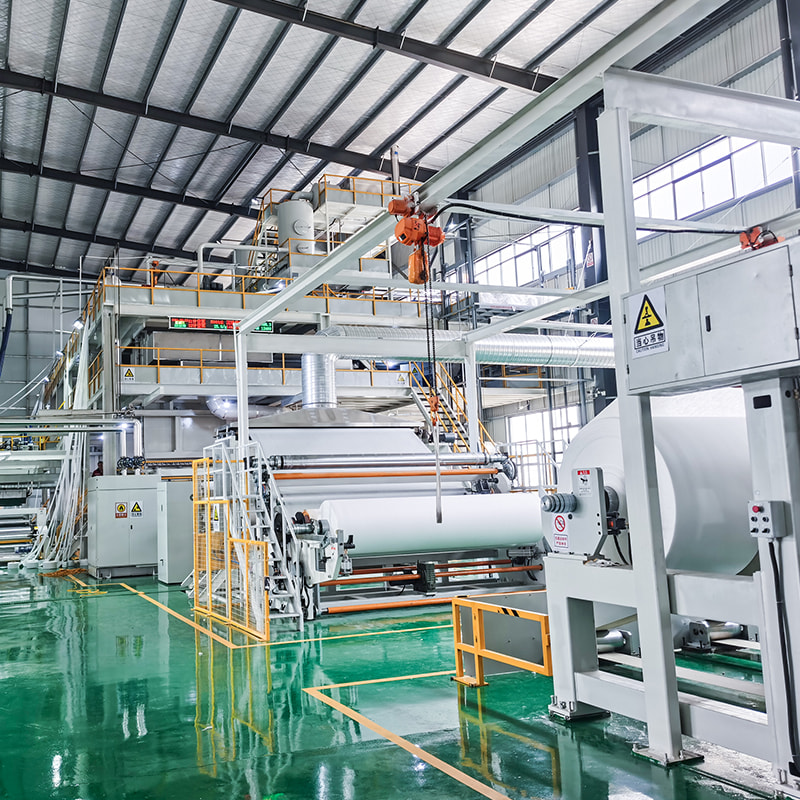
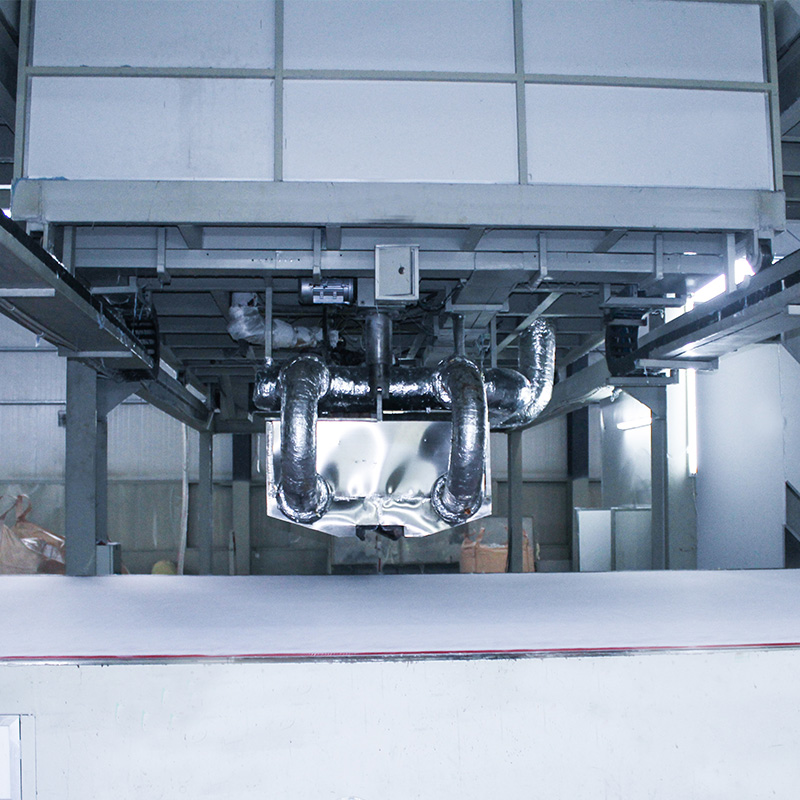 Meltblown Nonwoven Line for Fine-Fibre Barrier FabricStandalone meltblown line gives direct control of fine-fibre barrier layers, with 10–70 m/min speed, 1.6–4 μm filament, 18–300 GSM, and MFI 800–1600 polypropylene.View Product →
Material Trends That Shape Line Selection
Polypropylene remains the workhorse of the hygiene chain, and its behaviour on the line is governed largely by melt flow index. A granule grade that is wrong for the process shows up as filament breaks, inconsistent web formation and downtime, long before it shows up in a customer complaint.
Additives matter more than newcomers expect. Hydrophilic masterbatch turns a naturally hydrophobic spunbond into a fabric that wicks, which is essential for topsheets and acquisition layers. Flame retardant and antistatic packages open doors to industrial and protective applications. Interest in degradable and bio-based options continues to grow, and modern spunmelt lines can be configured to accommodate a reasonable range of these materials without a full rebuild. We follow the equipment side of that shift in our notes on polypropylene and the absorbent hygiene market.
A Practical Checklist Before You Commit to a New Line
When a customer has read the market studies and is ready to talk hardware, these are the points we work through together:
- Choose the structure: S, SS, SSS, SMS, SMMS or SMMSS, based on the products you intend to sell.
- Fix the working width: 1600 mm, 2400 mm, 3200 mm, 4000 mm or 4200 mm, matched to your downstream converting equipment.
- Define the fabric weight window and target filament denier rather than a single point.
- Confirm the raw material band, including melt flow index, and test it before shipment.
- Agree the automation level, from PLC control and touchscreen operation to data logging.
- Plan auxiliary equipment: unwinding, slitting, winding, edge trim and waste handling.
- Clarify installation, commissioning and long-term after-sales support in writing.
Regional Demand and the Case for Local Substrate Production
Asia Pacific contributes the largest share of global growth, and India in particular is moving quickly up the rankings in menstrual care. The Middle East and Africa offer some of the most under-served per capita consumption in the world. In mature markets, growth is quieter but more premium: thinner products, softer surfaces, higher barrier performance and a stronger emphasis on sustainability claims.
The common thread is that hygiene converters increasingly prefer to secure their own fabric supply rather than buy substrate on the open market. Controlling the nonwoven layer stabilises cost, protects quality and shortens the loop between a product change and its production. That is the real reason equipment demand in this sector has proven resilient through raw material shocks and softer retail years alike.
Why Buyers Work With Us
Our company designs and manufactures complete PP spunbond and meltblown nonwoven production equipment, from single-beam S lines through to five-beam SMMSS configurations, with working widths from 1600 mm to 4200 mm. We have supplied machines within China and to India, Pakistan, Turkey, Russia, Australia and other markets, which means we understand the practical differences between running a line in a mature converting hub and starting one in a new industrial zone.
Configuration is not fixed. Main units and auxiliary equipment can be adapted to your raw material, your fabric targets and your factory layout. Control elements come from established brands, and lines are built for straightforward operation and maintenance. You can read more about our team and manufacturing setup on our company profile page.
A market forecast is only useful once it becomes a decision: which structure, which width, which output, and which partner to build it with. If you are weighing up a new nonwoven line against the growth projections you have read, send us your target fabric specification and let our engineers come back with a configuration and a realistic view of what it will take to run it profitably.
You can reach our team through the contact channels listed on our contact page, and we will walk through the numbers with you.


 +8613621544385
 No.29 Xinhua Road, Jiashan Village,Jiaxing City Zhejiang P.R., China