




 English
 中文简体
中文简体 русский
 عربى
عربىNon Woven Textile Industry: Technologies, Markets & Production Guide 2026
Content
- 1 A Market Built on Engineered Performance
- 2 Core Production Technologies Explained
- 3 Machine Configuration and Product Performance
- 4 Key End-Market Applications and Their Requirements
- 5 Regional Dynamics: Where the Industry Is Growing
- 6 Sustainability and Regulatory Shifts Reshaping the Industry
- 7 Selecting the Right Production Line for Your Application
Polypropylene pellets feed into a spinneret at one end of a production line. Less than a minute later, a continuous sheet of bonded fabric emerges at the other — no spinning, no weaving, no knitting. This is the defining characteristic of the non woven textile industry: it produces fabric-like materials directly from fiber or polymer, bypassing the intermediate steps that define conventional textiles. That shortcut is not a compromise. It is an engineering advantage that has made nonwovens indispensable across hygiene, healthcare, filtration, construction, and automotive manufacturing. According to INDA, the Association of the Nonwoven Fabrics Industry, global nonwovens production has grown at roughly 5.4% annually over the past decade — a pace that consistently outstrips the broader textile sector. The non-woven fabric market was valued at approximately USD 60.9 billion in 2025 and is forecast to reach USD 86.5 billion by 2031, driven by sustained demand from hygiene, medical, and technical applications.
A Market Built on Engineered Performance
Unlike woven or knitted textiles, nonwovens are not defined by their structure — they are defined by their function. The ISO 9092 standard describes them as webs of fibers bonded by friction, cohesion, or adhesion, explicitly excluding interlacing or interloping of yarns. That open-ended definition is part of what makes the industry so versatile: manufacturers can engineer virtually any combination of softness, strength, absorbency, filtration efficiency, or barrier performance by adjusting fiber type, web formation method, and bonding technique.
Polypropylene accounts for roughly 60% of all nonwoven production by volume, prized for its low cost, chemical inertness, and compatibility with both spunbond and meltblown processes. Polyester (PET) holds a strong secondary position in technical applications where dimensional stability and higher temperature resistance are required. Rayon and viscose remain important in hygiene and wipes applications for their moisture absorbency and biodegradability. The fastest-growing material segment, however, is bio-based and recycled fibers — lyocell, polylactic acid (PLA), bamboo, and post-consumer PET — driven by regulatory pressure and brand sustainability commitments.
Core Production Technologies Explained
Four primary web-formation processes define the non woven textile industry, each suited to a different set of performance requirements and production economics. Understanding them is the starting point for any investment or procurement decision.
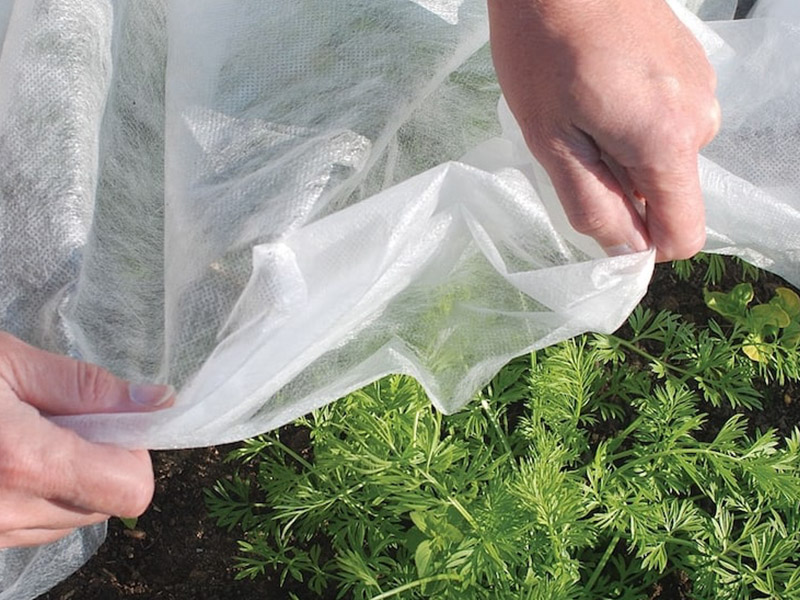
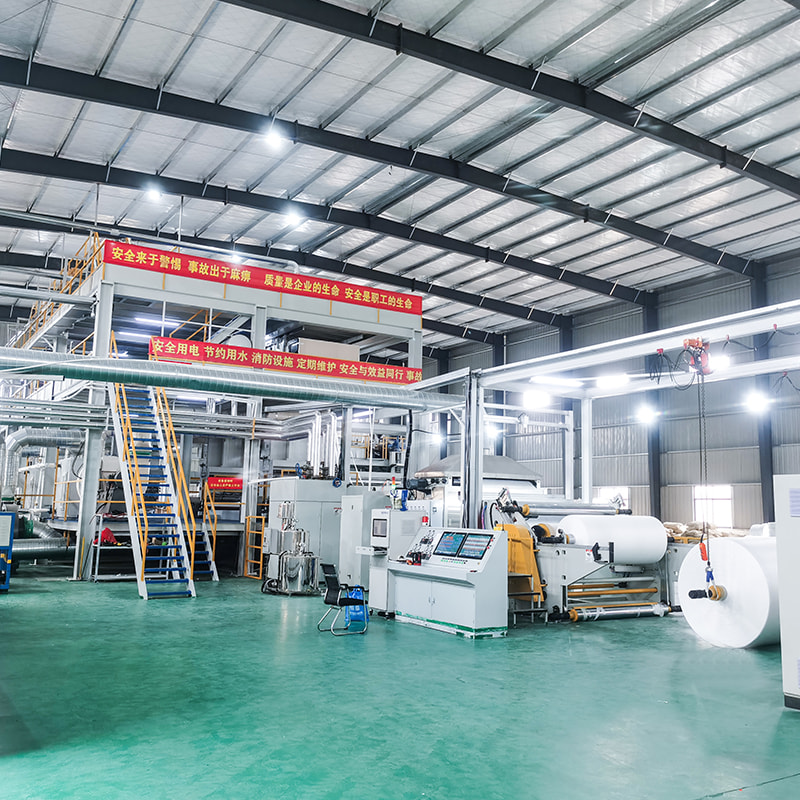
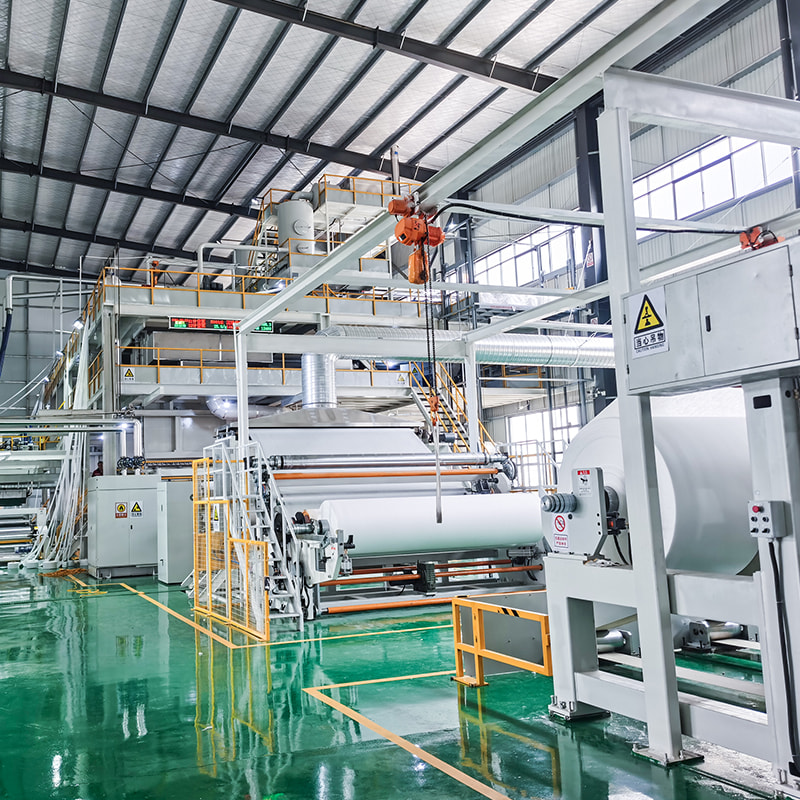
Spunbond is the industry's highest-volume process. Polymer pellets are melted, extruded through spinnerets, drawn into continuous filaments by high-velocity air streams, and deposited as a random web onto a moving conveyor. The web is then thermally or chemically bonded. Spunbond lines are fast — capable of exceeding 300 m/min — and cost-efficient, which is why polypropylene spunbond fabric dominates disposable hygiene products, agricultural covers, and geotextiles. Spunbond nonwoven production lines for high-volume fabric output are the backbone of most large-scale nonwoven manufacturing facilities globally.
Meltblown takes the process further: polymer is extruded through much finer dies into a high-velocity hot air stream, producing filaments typically below 2 microns in diameter. The result is an extremely fine, low-density web with outstanding filtration and barrier properties — but low tensile strength on its own. Meltblown is rarely used as a standalone fabric; instead, it is sandwiched between spunbond layers to create composite structures. Melt-blown machines for ultra-fine fiber filtration layers are essential equipment for any producer targeting medical or filtration applications.
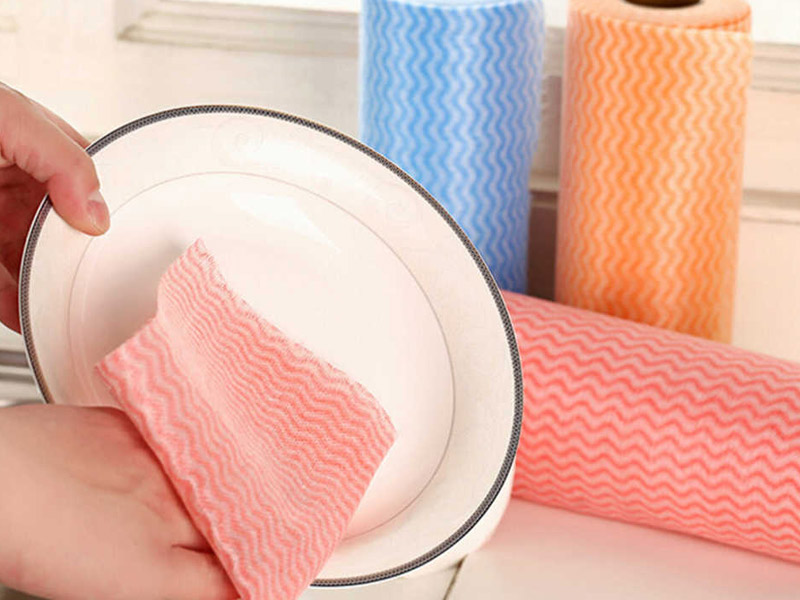
Hydroentangling (spunlace) uses high-pressure water jets to mechanically interlock fibers into a cohesive web without any binder or heat. The resulting fabric is exceptionally soft and drapeable — qualities that make it the preferred substrate for premium wet wipes, cosmetic pads, and medical dressings. Hydroentangling can process staple fibers, continuous filaments, or even pre-formed webs from other processes.
Needle punching mechanically bonds fiber webs by driving barbed needles repeatedly through the web, entangling fibers without any chemical or thermal bonding agent. Needle-punched fabrics are dense, durable, and dimensionally stable — ideal for geotextiles, automotive trunk liners, carpet backing, and industrial filtration felts. For a deeper exploration of the equipment landscape, the article on the types and applications of nonwoven machinery covers additional process variants and their industrial use cases.
Machine Configuration and Product Performance
Among the most consequential decisions in nonwoven production is how many process beams to combine — and in what sequence. This is where the shorthand of S, SS, SMS, SMMS, and SMMSS becomes critical to understand.
A single-beam S machine produces a fabric with one layer of spunbond web. It is the simplest and most economical configuration, suited to applications where barrier or filtration performance is not required — packaging, agricultural mulch, disposable shoe covers. Adding a second spunbond beam (SS) increases fabric uniformity and allows for lower basis weights without compromising coverage, making it widely used in hygiene coverstock.
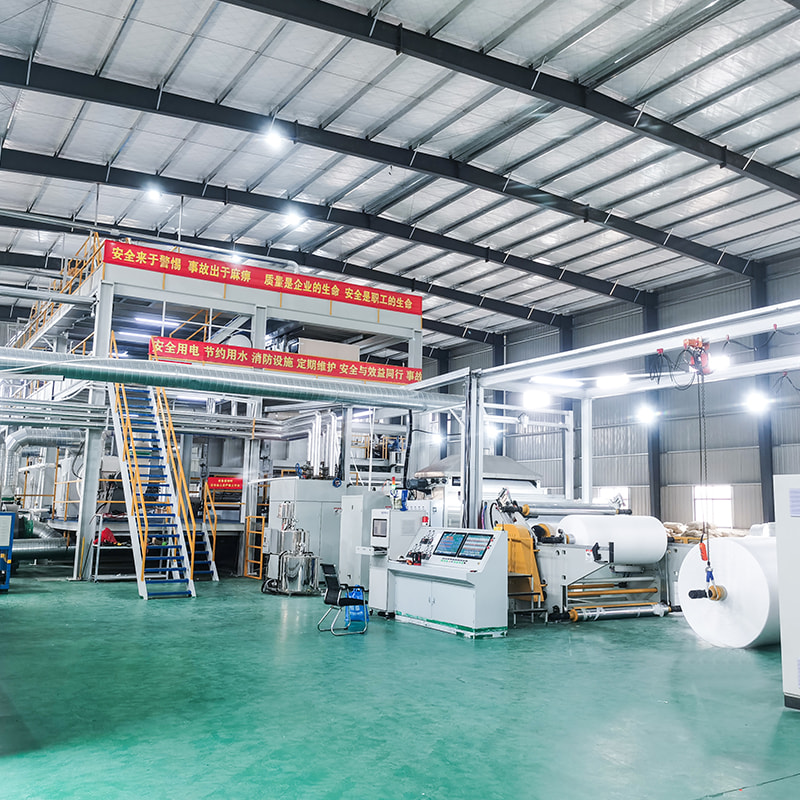
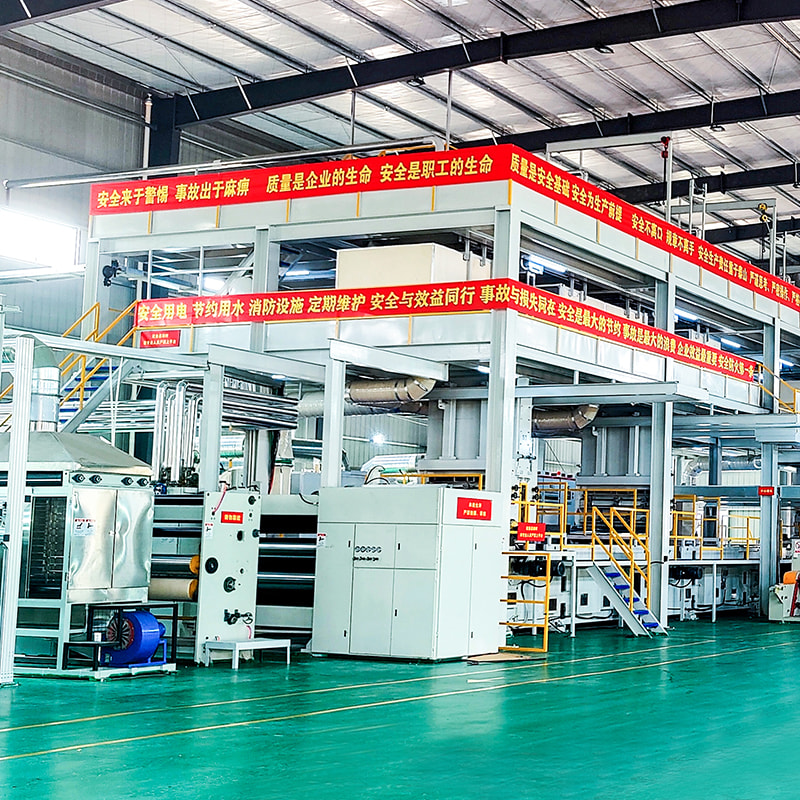
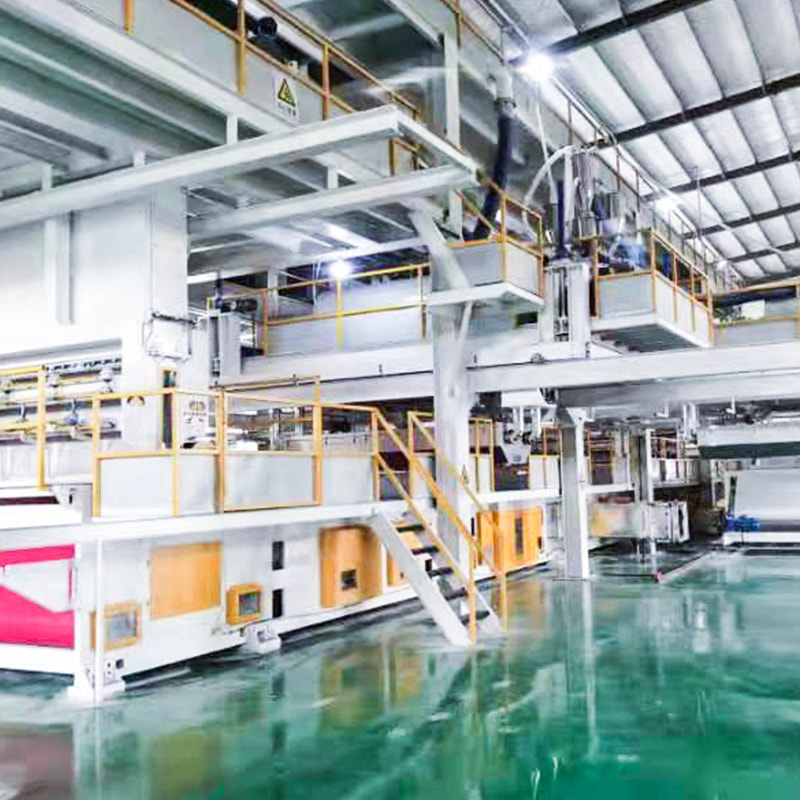
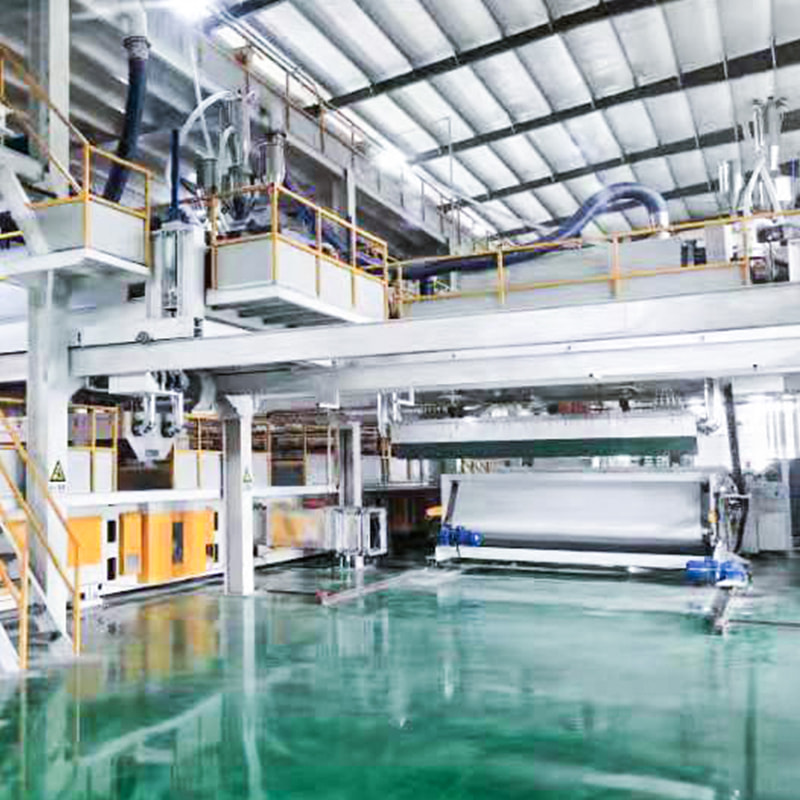
The SMS configuration — Spunbond-Meltblown-Spunbond — is where the real performance step change occurs. The meltblown core provides liquid barrier and filtration functionality; the outer spunbond layers contribute strength and abrasion resistance. This three-layer composite is the material specification behind surgical gowns, N95-class respirators, and premium baby diaper backsheets. The SMMS and SMMSS variants stack two or three meltblown layers between spunbond beams, progressively increasing barrier performance for the most demanding medical and filtration applications. SMS and SMMS spunmelt nonwoven machines integrate all beams into a single production line, ensuring precise inter-layer bonding and consistent composite properties at high throughput. For a technical breakdown of the chemistry and mechanics involved, how SMS nonwoven fabric is manufactured covers the process in detail.
| Configuration | Structure | Typical Applications |
|---|---|---|
| S | Single spunbond layer | Packaging, agricultural covers, shoe covers |
| SS | Double spunbond layers | Hygiene coverstock, shopping bags, geotextile underlays |
| SMS | Spunbond + Meltblown + Spunbond | Surgical gowns, respirators, baby diaper backsheets |
| SMMS | S + MM + S (two meltblown layers) | Medical drapes, high-barrier filtration media |
| SMMSS | S + MM + SS (five beams) | Critical-use PPE, advanced industrial filtration |
Key End-Market Applications and Their Requirements
The non woven textile industry does not serve a single market — it serves dozens. Each demands a different combination of material properties, and understanding these requirements is what separates commodity production from high-value specialization.
Hygiene is the largest segment by volume, capturing approximately 40% of total nonwoven consumption. Diapers, feminine hygiene products, and adult incontinence items all require softness at the topsheet layer (typically spunlace or SS spunbond), absorbency in the core (airlaid or SAP composites), and liquid impermeability at the backsheet (SMS or film laminate). The aging demographics of North America, Europe, and East Asia are sustaining strong adult incontinence growth, while rising birth rates across South and Southeast Asia continue to drive baby diaper demand. Manufacturers supplying this segment can source PP spunbond nonwoven fabric rolls that meet the specific softness and basis-weight specifications required for hygiene coverstock.
Healthcare accounted for roughly 49% of nonwoven revenue in 2025 by some market estimates, reflecting the permanent elevation of medical nonwoven consumption following the pandemic. Surgical gowns, drapes, face masks, wound dressings, and sterilization packaging all depend on SMS or SMMS composites for their fluid resistance and microbial barrier properties. Regulatory compliance with EN 13795 (surgical barriers) or ASTM F2100 (medical face coverings) sets minimum performance thresholds that directly dictate machine configuration choices.
Filtration is one of the fastest-growing segments, driven by air quality regulation, industrial process requirements, and the expansion of HVAC markets. Meltblown layers — particularly fine-fiber grades below 1 micron — are the functional core of most air and liquid filtration media. Electrospun nanofiber webs are an emerging premium tier, enabling sub-micron particle capture at lower pressure drop than conventional meltblown.
Construction and geotextiles rely primarily on needle-punched and spunbond fabrics for soil stabilization, drainage separation, erosion control, and roofing underlays. These products require high tensile strength and UV stability — properties that favor heavier basis weights (150–500 gsm) and sometimes bicomponent fiber systems.
Automotive interiors use a range of nonwoven formats for trunk liners, headliners, door panel inserts, and noise dampening. The sector demands heat resistance (up to 120°C in some applications), dimensional stability, and increasingly, recycled fiber content to meet OEM sustainability procurement requirements.
Regional Dynamics: Where the Industry Is Growing
Asia-Pacific dominates global nonwoven production, holding approximately 48% of market share in 2025. China is the largest single contributor, having added more than 450,000 tonnes of new spunbond and meltblown capacity in 2024 alone. The region benefits from lower labor costs, proximity to polypropylene feedstock, and massive domestic demand from hygiene and construction markets. India, Vietnam, and Indonesia are emerging as secondary production hubs as hygiene product penetration deepens and domestic manufacturing investment accelerates.
North America is the largest market by revenue per unit, driven by premium hygiene products and advanced medical nonwovens. Kimberly-Clark's USD 2 billion investment in North American manufacturing capacity announced in early 2025 — its largest domestic expansion in over 30 years — signals confidence in regional production for high-value applications that require proximity to brand-owner customers and strict regulatory oversight.
Europe plays a unique role as a regulatory leader whose standards shape global product design. EDANA's 2025 European nonwovens statistics reported production of approximately 2.9 million tonnes across Greater Europe, with personal care wipes showing modest growth (+0.9%) despite broader market pressures from competition and demand softness in construction and automotive segments. The EU's Strategy for Sustainable and Circular Textiles, which introduced Extended Producer Responsibility requirements for textiles effective January 2025, is forcing manufacturers everywhere to reconsider substrate choices and recyclability.
Sustainability and Regulatory Shifts Reshaping the Industry
Three regulatory forces are simultaneously reshaping material specifications across the non woven textile industry: plastic content restrictions, microplastic leakage rules, and Extended Producer Responsibility (EPR) frameworks.
Plastic content bans on wet wipes — already enacted in Northern Ireland and pending in England and other EU jurisdictions — are forcing substrate reformulation from polypropylene to plant-based alternatives. This is not a simple material swap. Cellulose-based or PLA-based nonwovens behave differently on converting lines: they are more fragile when wet, require adjusted line tensions, and need dispersibility testing built into quality control. Production equipment must accommodate these process differences without sacrificing output rates.
Microplastic regulations are targeting the spunbond and meltblown segments more broadly. France's requirement for microfiber filters on new washing machines (effective 2025) and the EU's draft pellet-loss regulation introducing mandatory containment and quarterly reporting for operators handling more than 5 tonnes of raw plastic annually are raising compliance costs and prompting R&D investment in natural fiber alternatives. Rayon is now on track for the fastest growth CAGR of any material segment through 2031, overtaking conventional synthetics in several hygiene sub-categories.
For manufacturers, the operational response involves both material substitution and process investment. Closed-loop water systems, energy-efficient bonding technologies, and design for recyclability are moving from voluntary commitments to procurement requirements from major brand owners. Companies that integrate these capabilities into their production specifications now — rather than retrofitting them under regulatory deadline pressure — gain a meaningful cost and lead-time advantage.
Selecting the Right Production Line for Your Application
Every investment in nonwoven production starts with the same question: what product, for which market, at what volume? The answer to that question determines the process, which determines the machine configuration, which determines the capital requirement and the operating cost structure.
A producer targeting commodity hygiene coverstock in a high-volume, cost-sensitive market will maximize return on a high-speed SS spunbond line running polypropylene at 3.2–4.0 m working width. A producer targeting medical SMS fabric for surgical gowns needs a multi-beam line with integrated meltblown and precise web weight control across all layers. A producer entering the premium wipes market needs a spunlace line with the fiber flexibility to process cotton, viscose, or bio-based blends. These are not interchangeable choices — and specifying the wrong configuration results in years of structural cost disadvantage.
The most effective way to align machine configuration with market opportunity is to work closely with an equipment partner that understands both the production engineering and the downstream application requirements. Process parameters — beam count, working width, line speed, bonding method, and fiber denier range — all need to be specified against a realistic production plan, not a theoretical maximum. Getting this specification right before capital is committed is the difference between a line that hits target economics on day one and one that requires years of costly trial-and-adjustment.


 +8613621544385
 No.29 Xinhua Road, Jiashan Village,Jiaxing City Zhejiang P.R., China