






 English
 中文简体
中文简体 русский
 عربى
عربىNonwoven Air Conditioning Filter Market 2025-2035: Trends & Equipment
Content
A residential filter manufacturer planning a new production line faces a clear signal: HVAC filter demand is projected to require nearly 9.3 million tonnes of nonwoven media annually by 2030. For equipment buyers, this statistic changes the conversation from “should we expand” to “which production technology captures the fastest-growing segments.”
Market Overview: Size, Growth & Key Drivers
The global nonwoven air conditioning filter market was valued at approximately USD 1.1 billion in 2024 and is forecasted to reach USD 2.0 billion by 2035, reflecting a compound annual growth rate of 6.0% (Global Market Insights). This sustained expansion rests on three structural drivers that are unlikely to reverse.
Regulatory tightening is the first. The U.S. EPA’s National Ambient Air Quality Standards and parallel indoor air quality guidelines from the WHO continue to push commercial and residential buildings toward higher MERV-rated filtration. Compliance mandates are effectively creating a replacement floor for existing filters, locking in baseline demand. Second, HVAC penetration in emerging markets is rising fast, especially in urban Asia-Pacific, where middle-class households install split and central air conditioning units for the first time. Every new AC unit represents a future stream of replacement filter media. Third, health awareness following respiratory disease outbreaks has permanently shifted consumer expectations; disposable filters now account for 57.8% of the market, and residential use alone makes up 46.3% of total demand (Future Market Insights).
Beyond volume, the quality requirement is shifting. End users and regulators increasingly focus on fine particle capture (PM2.5, bacteria, allergens), which directly shapes the mix of nonwoven technologies needed. Filter producers who rely solely on single-layer spunbond will lose share to those offering multi-layer composite media.
Technology Segmentation – Which Nonwoven Process Dominates?
Nonwoven filter media for air conditioning applications fall into three primary technology families: spunbond, meltblown, and multi-beam composites such as SMS or SMMSS. Grand View Research places the spunbond segment at 38.4% of the wider nonwoven filtration media market, but that statistical lead masks a more practical reality: modern high-efficiency AC filters almost never rely on one technology alone.
Spunbond Layers for Mechanical Strength
Spunbond nonwovens provide the backbone of any pleated or rigid panel filter. Their continuous filament structure delivers high tensile strength, low pressure drop, and dimensional stability — properties that prevent filter collapse under airflow. Single-beam, double-beam, and triple-beam spunbond lines (S, SS, SSS) remain the workhorses for high-volume production of coarse pre-filters and support layers. The economics are straightforward: a wide-beam spunbond line can produce up to several thousand tonnes per year, making it the logical first investment for companies targeting standard residential or light commercial filter grades.
Meltblown Layers for Fine Particle Capture
True filtration performance hinges on the meltblown layer. Meltblown fibers, typically 1–5 microns in diameter, form a dense, self-bonded web that captures sub-micron particles through mechanical and electrostatic mechanisms. For an AC filter to achieve MERV 11 or higher, a calibrated meltblown layer is typically essential. This places stringent demands on the production equipment. Meltblown nonwoven machines for filtration media must control die temperature uniformity within tight tolerances and deliver precise air quench parameters — variations of less than 2°C across the die width can shift average fiber diameter beyond specification. Investing in a meltblown line with real-time MFI (melt flow index) adaptation is becoming the price of entry for higher-margin filter grades.
Composite SMS/SMMSS for Multi-Stage Filtration
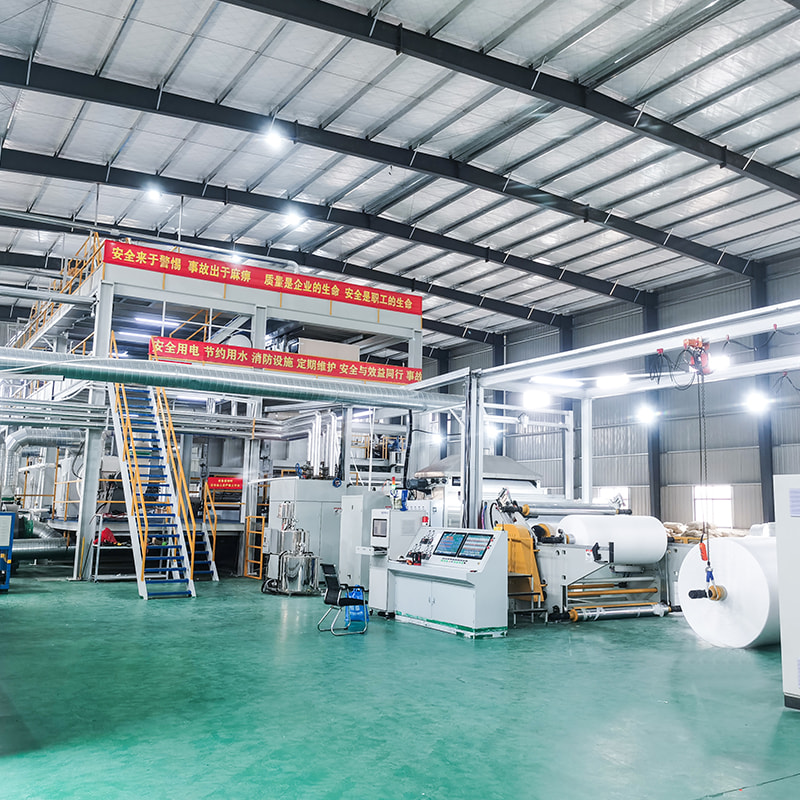
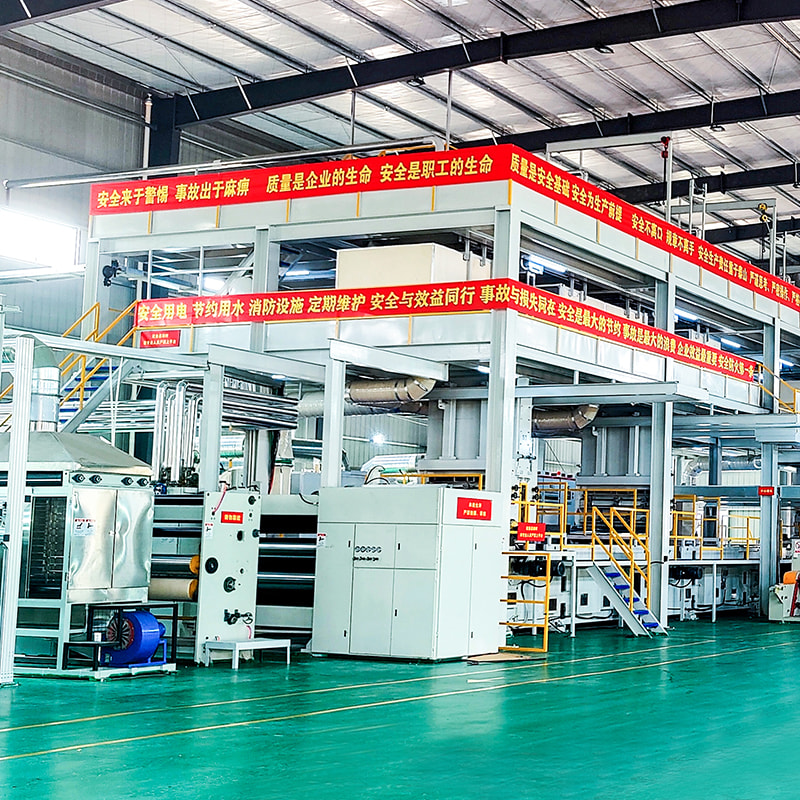
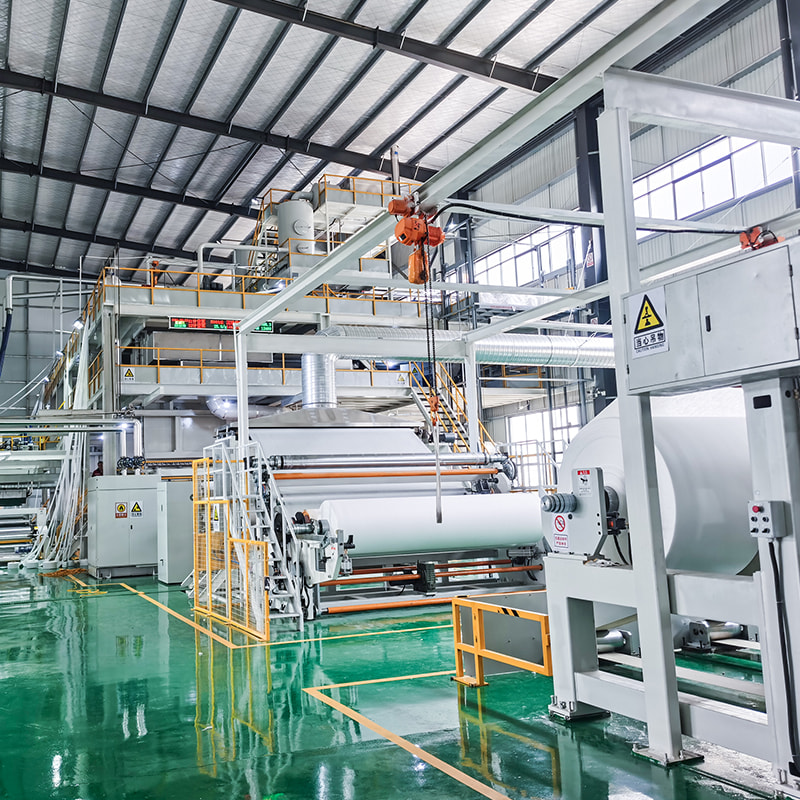
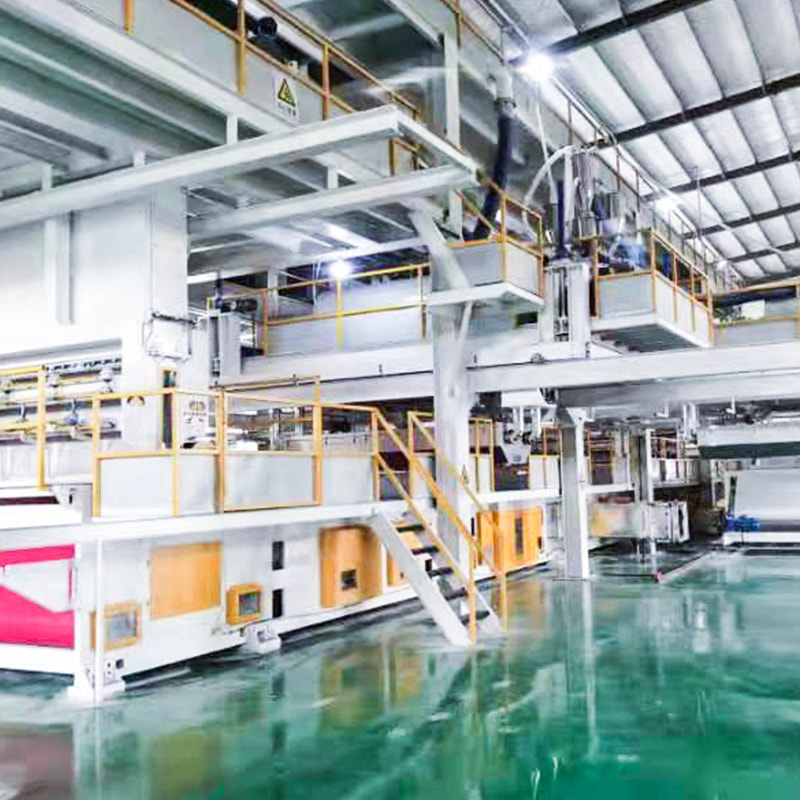
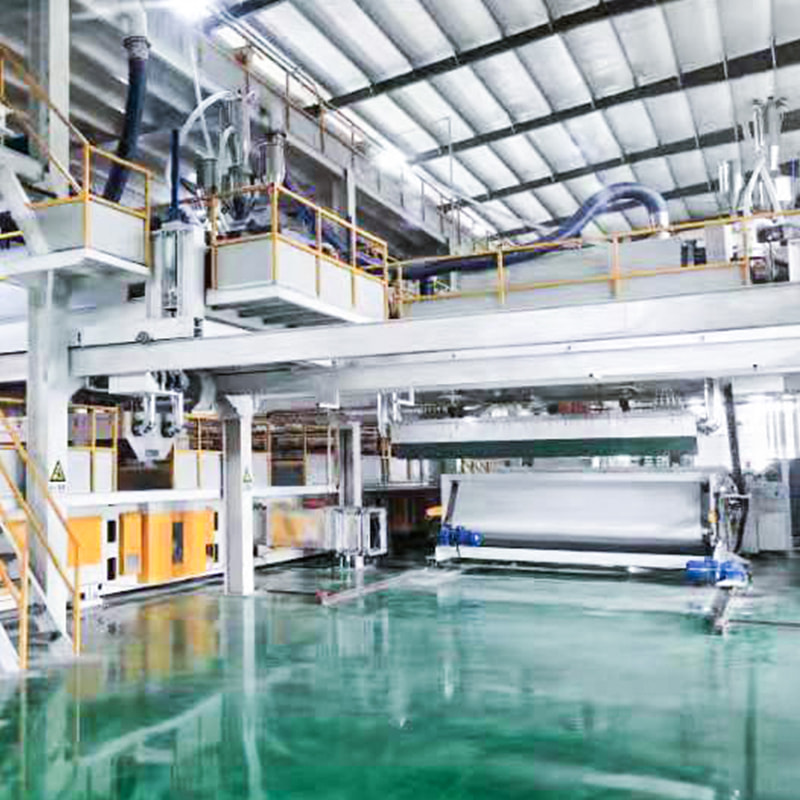
For premium residential, commercial, and industrial HVAC filters, composite structures that combine spunbond strength with meltblown efficiency represent the fastest-growing product category. A standard SMS (spunbond-meltblown-spunbond) line yields a three-layer media that balances mechanical integrity with single-stage fine particle capture. As filter rating requirements tighten, the market is moving toward SMMSS configurations — five-beam lines that add a second meltblown layer to raise capture efficiency without sacrificing dust-holding capacity. SMMSS nonwoven fabric production lines enable this gradient filtration architecture in one continuous process, reducing conversion costs and eliminating lamination steps. For volume producers serving ISO 16890 ePM1 or ePM2.5 filter classifications, the multi-beam approach is becoming the default capacity-planning assumption.
Regional & End-Use Insights: Where is the Demand Coming From?
Asia-Pacific held a 48.8% share of nonwoven filtration revenue in 2023 and is expected to maintain its lead through 2035, fueled by rapid urbanization, rising HVAC adoption, and expanding local filter converting capacity. China and India alone account for a disproportionate share of new AC installations, and domestic producers are increasingly transitioning from imported roll goods to locally produced nonwoven media — a shift that directly increases equipment demand in the region.
North America and Europe, while slower in unit growth, are witnessing a pronounced upgrade cycle. Aging commercial buildings are being retrofitted with higher-efficiency air handlers, and residential codes in states like California are gradually aligning with ASHRAE 52.2 minimums. This regulatory creep favors meltblown-containing composites and is compressing replacement cycles. On the end-use side, residential applications lead at 46.3% of volume, but the commercial and light industrial segments are gaining share as awareness of indoor air quality spreads to offices, schools, and retail environments.
Equipment Implications – How to Align Production Capacity with Market Growth
For nonwoven equipment buyers and plant planners, the market data translates into three concrete investment principles: scalability across filter grades, process flexibility for changing media specifications, and built-in quality controls that reduce off-spec waste.
Scalability & Flexibility
Serving a market that spans from low-cost residential panel filters to high-end commercial bag filters requires equipment that can be configured for multiple beam combinations. A single-beam S line may offer the lowest capital cost for entering the spunbond pre-filter segment, but producers who anticipate migrating into composite media often choose a platform that can be upgraded from SSS to SMS or eventually SMMSS without replacing the entire line. Filter media selection guides emphasize that fiber denier, layer structure, and basis weight profiles must shift significantly across end-use categories; a beam configuration that can produce 15 gsm meltblown for a MERV 8 filter may need to handle 25–30 gsm for a MERV 13 specification. Lines with independent beam tension control and interchangeable spin pumps provide the range needed to address this fragmentation without excessive downtime.
Quality & Efficiency Focus
As end-users move toward ISO 16890 classification systems, filter media uniformity becomes a commercial differentiator. Variations in basis weight, fiber diameter distribution, and porosity directly impact pressure drop and fractional efficiency curves. Modern spunmelt lines address this by integrating gravimetric feeding systems, closed-loop temperature control, and inline basis weight scanners. For meltblown, precise control of die-to-collector distance and quench air velocity determines the web’s filtration quality. Energy efficiency is equally strategic: with power representing a significant operating cost, buyers now evaluate dryer and air-handling systems not just for reliability but for specific energy consumption per kilogram of media produced. This shift is pushing equipment design toward integrated heat recovery and optimized airflow paths.
Conclusion & Future Outlook
The nonwoven air conditioning filter market’s 6% CAGR trajectory provides a stable backdrop for capacity investment, but the composition of that growth is shifting decisively toward higher-efficiency multilayer media. Spunbond will remain the volume backbone, yet the value growth lies in meltblown and composite SMMSS structures that meet tightening regulatory and consumer standards. Equipment decisions made today will shape competitive positioning through 2035; the most resilient strategies pair modular spunmelt platforms with standalone meltblown capability to serve the full spectrum of filter grades. Sustainable media — including bio-based and mono-material recyclable nonwovens — are emerging as a secondary driver, and equipment that can process alternative polymers with minimal retrofitting will be preferred in the next investment cycle.


 +8613621544385
 No.29 Xinhua Road, Jiashan Village,Jiaxing City Zhejiang P.R., China