





 English
 中文简体
中文简体 русский
 عربى
عربىUS Spunbond Nonwoven Market: Capacity, Technology and Equipment Choices
Content
- 1 What Is Moving the US Spunbond Nonwoven Market Right Now
- 2 Beam Configuration Decides What Your Fabric Can Do
- 3 Fabric Weight, Denier and the Real Cost of a Kilogram
- 4 The Barrier Layer and the Medical and Hygiene Case
- 5 Questions US Producers Ask Us Before Committing to a Line
- 6 Where HH Nonwovens Machinery Fits In
- 7 The Takeaway
Talk to anyone converting spunbond fabric in the United States and a familiar picture emerges. Demand is steady, margins are not generous, and the buyers on the other side of the table know exactly what they want. Hygiene producers, medical converters, filtration manufacturers and industrial roll goods suppliers all specify fabric weight, width and barrier performance before price is even discussed.
We build the machines those fabrics come off. Our company manufactures complete PP spunbond and meltblown production lines, from a single-beam S machine up to five-beam SMMSS composites, and we have supplied them to producers in India, Pakistan, Turkey, Russia, Australia and our home market in China. That gives us a ground-level view of the US spunbond nonwoven market: not as a forecast chart, but as a series of practical decisions about beams, widths, denier and uptime.
What Is Moving the US Spunbond Nonwoven Market Right Now
Published market studies place North America at roughly a third of global spunbond nonwoven revenue. The regional nonwoven fabrics market was valued at around USD 16 billion in 2025 and is projected to approach USD 20 billion by 2030, with spunbond holding the largest share of the product mix and polypropylene remaining the dominant polymer.
What makes the present moment interesting is the gap between demand and capacity. North American nonwovens capacity grew by less than one percent in 2025 while production slipped slightly. Growth is not being delivered by a wave of new mega-plants. It is being delivered by existing lines running better: fewer unscheduled stops, tighter weight control, less edge trim, faster grade changes.
The end-use demand behind that is stable and fairly easy to describe:
- Hygiene, including baby diapers, feminine care and adult incontinence, remains the largest single block and the most sensitive to fabric weight and softness.
- Medical, covering surgical gowns, drapes, sterilization wrap and protective apparel, where barrier performance is a specification rather than a preference.
- Filtration, spanning HVAC, air and liquid media, is one of the faster-moving segments and one of the most demanding on fibre uniformity.
- Industrial and agricultural, from geotextiles and landscape fabric to crop covers, packaging and carpet backing, absorbs the heavier end of the weight range.
Beam Configuration Decides What Your Fabric Can Do
The letter codes in equipment listings are not marketing shorthand. They describe how many spinnerets, or beams, feed the line and in what order the layers land on the forming belt. Adding a beam adds capital cost, energy consumption and maintenance surface, but it also buys strength, barrier or softness that a simpler line cannot reach.
| Line | Beam Structure | What It Buys You | Typical End Products |
|---|---|---|---|
| S | One spunbond beam | Lowest capital cost, simple operation, high output per beam | Bags, packaging, agricultural covers, basic backing |
| SS | Two spunbond beams | Better uniformity and a stronger weight-to-strength balance | Hygiene topsheet, wipes substrate, medical drapes |
| SSS | Three spunbond beams | Higher tenacity and finer denier control | Durable hygiene, geotextiles, filtration support |
| SMS | Spunbond, meltblown, spunbond | Liquid and particle barrier with spunbond strength | Surgical gowns, masks, protective apparel |
| SMMS | Two meltblown layers between spunbond | Higher barrier and filtration efficiency | Medical barriers, filtration media, premium hygiene |
| SMMSS | Five beams, composite structure | Maximum barrier and performance at the highest complexity | Critical medical, high-specification filtration |
The trade-off comes down to two questions. How much barrier does the finished product actually need, and what fabric weight can the customer sell at a profit? A converter making shopping bags, packaging and agricultural covers rarely needs meltblown capacity. A converter making surgical gowns cannot operate without it. If you want a longer walk-through, we have written about how beam count changes fabric performance.
For producers stepping into spunbond for the first time, a single-beam S line is usually the sensible entry point. It keeps the capital outlay modest, the operating crew small and the process window wide, which matters far more than headline speed in the first two years of production.
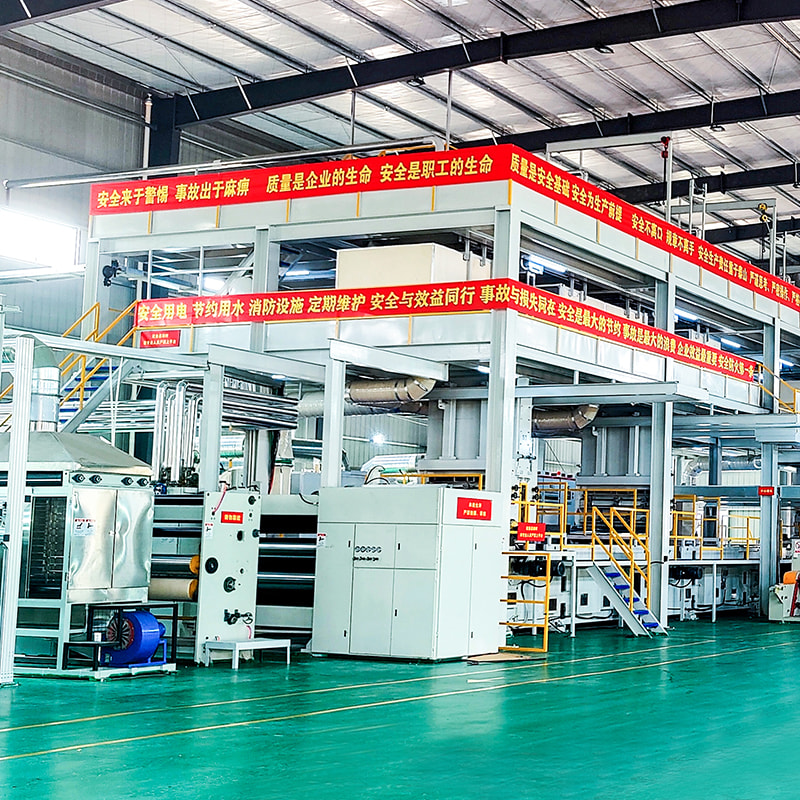
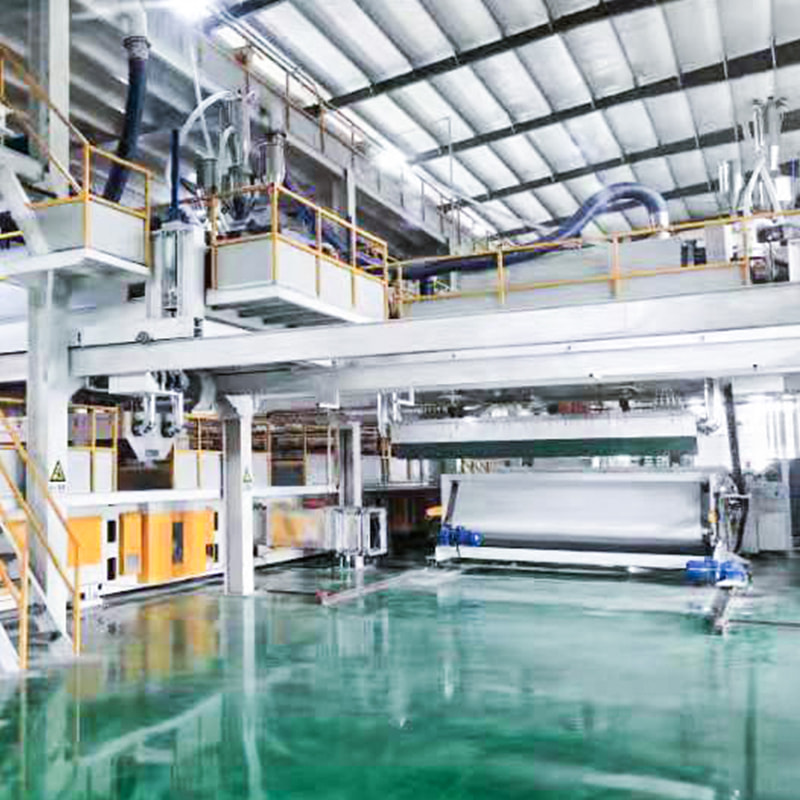
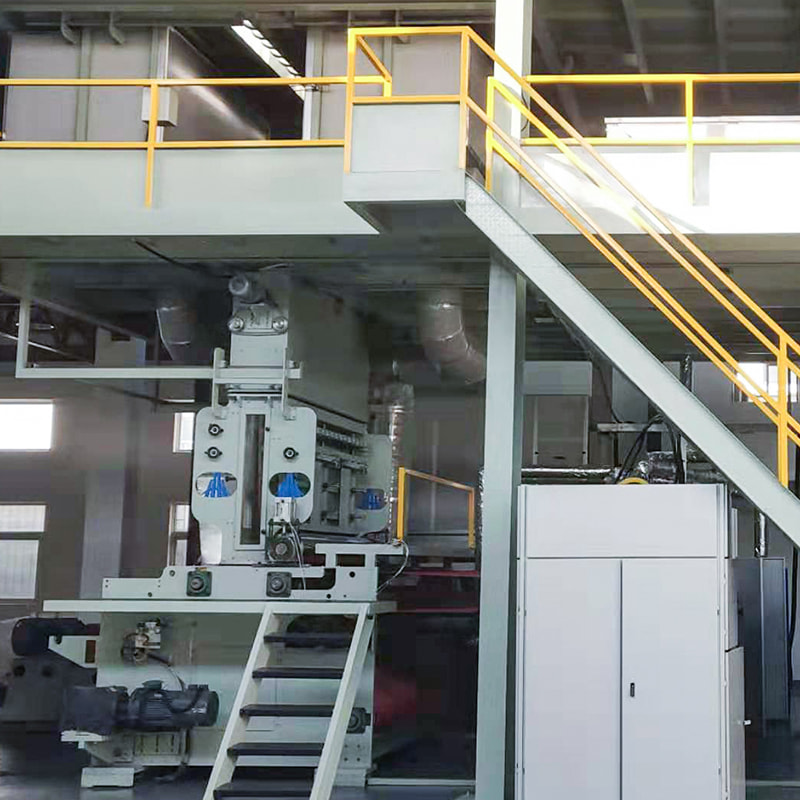 Single Beam S Spunbond Nonwoven Production LineSingle-beam spunbond line producing PP nonwoven via spun-laid and hot-rolled reinforcement, suited to first-time producers needing a wide process window and finer filament control.View Product →
Fabric Weight, Denier and the Real Cost of a Kilogram
Most spunbond production sits between 10 and 150 gsm, and the money is usually made at the lighter end. That is where filament denier becomes the controlling variable. Finer filaments give better coverage, a softer hand and improved barrier at the same weight, but they also demand tighter temperature control at the spin beam, cleaner quench air and stable drawing. Losing that stability shows up as pinholes, streaks and rejected rolls.
This is the argument for a double-beam SS configuration. Two spunbond beams let you build the target weight from two thinner layers instead of one thick one, which improves uniformity across the full width and reduces the chance of a single defect taking out an entire roll. It also gives the converter more room to trade hand feel against tensile strength without changing the polymer.
Width belongs in the same conversation. Standard working widths of 1600 mm, 2400 mm, 3200 mm, 4000 mm and 4200 mm are all available, and wider is not automatically better. A wide line producing a narrow finished roll generates trim waste on every metre; a narrow line chasing a large contract runs out of capacity. The right answer depends on the roll sizes the customer's own customers will accept.
The Barrier Layer and the Medical and Hygiene Case
Where the US market becomes unforgiving is around barrier. SMS structures sandwich a meltblown layer between two spunbond layers; SMMS adds a second meltblown layer. The spunbond layers carry strength and surface properties, while the meltblown layer does the actual blocking of liquid and particles. For surgical gowns, drapes, sterilization wrap and mask media, that structure is a requirement, not an upgrade.
Meltblown is also the least forgiving part of any line. Sub-micron fibre formation depends on the interaction of hot air pressure, die temperature, polymer throughput and collector distance, and small drifts in any one of them show up quickly in filtration efficiency. A line that holds those parameters repeatably is worth more than one with a higher number on the specification sheet.
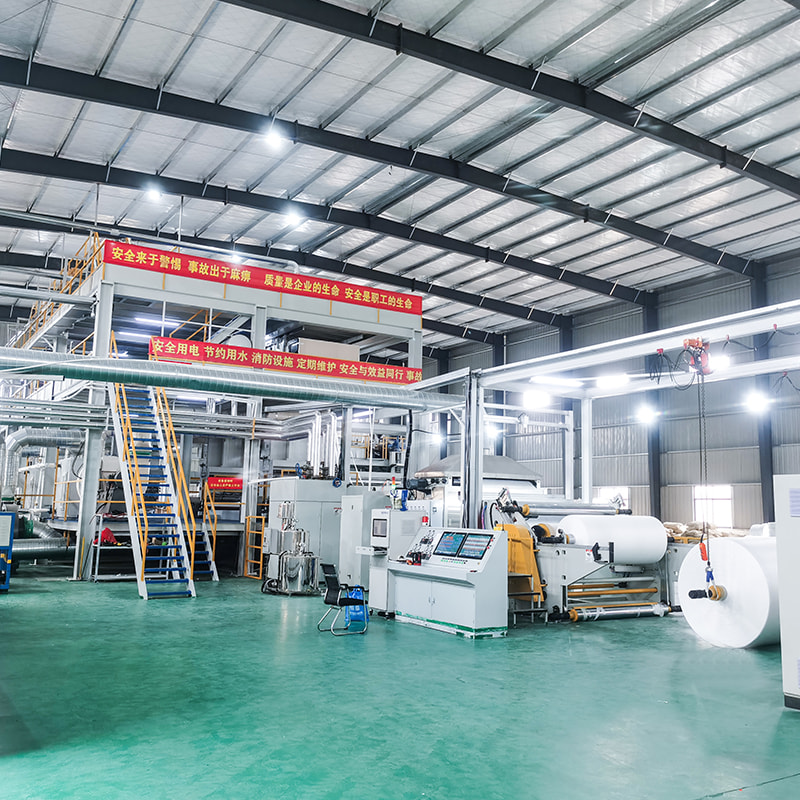
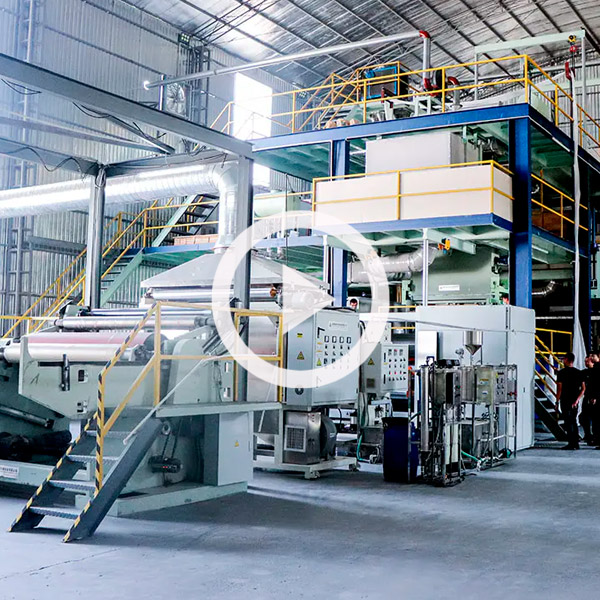 Three Beam SMS Spun-Melt Nonwoven Production LineSMS spun-melt line combining spunbond and meltblown beams for stable fine-fiber filtration layers and soft, consistent hygiene fabrics.View Product →
For hygiene applications the calculation is different but no less strict. Topsheet and backsheet fabrics have to feel right against skin, run without breaks through high-speed converting equipment and hold their weight after calendering. Softness, tensile strength and elongation all have to land inside a narrow band at the same time.
Questions US Producers Ask Us Before Committing to a Line
The conversations we have with buyers tend to follow a pattern. The useful questions are rarely about maximum speed. They are about fit:
- What working width matches the finished roll sizes I can actually sell, without turning half my output into trim?
- What output do I need on my real product mix, not on a demonstration fabric?
- What denier range must the line hold, and how much of that range will I use in a normal week?
- How much automation can my team support? PLC control and touchscreen operation reduce operator error but do not replace trained staff.
- Which components drive uptime, and what is the maintenance interval on each of them?
- How long is commissioning, and when does the first saleable roll come off the winder?
- What does the spare parts path look like in year three, when a pump or a die needs attention?
None of these questions has a universal answer, and any supplier who claims otherwise is selling a catalogue rather than a production plan. The most expensive mistake in this industry is buying capacity before deciding which fabric will pay for it.
Where HH Nonwovens Machinery Fits In
We do not claim to be a US converter, and we do not pretend to know the American market better than the people running lines in it. What we do know is how to build spunbond and meltblown equipment that holds its parameters. Our range covers S, SS, SSS, SMS, SMMS and SMMSS configurations in standard widths from 1600 mm to 4200 mm, with host and auxiliary equipment configured around a specific product plan rather than a fixed catalogue. You can read more about our background and export footprint here.
Every project starts the same way: a conversation about what the buyer intends to produce, at what weight, on what width, for which customer. From there, the specification largely writes itself.
The Takeaway
The US spunbond nonwoven market will not be satisfied by one enormous new plant. It will be served by producers who understand the relationship between beam configuration, fabric weight and cost per kilogram, and by equipment that lets them change one of those variables without wrecking the other two.
If you are planning a line, expanding one, or working out whether a meltblown layer is worth the capital, start with the fabric. The rest of the specification follows from there.


 +8613621544385
 No.29 Xinhua Road, Jiashan Village,Jiaxing City Zhejiang P.R., China