




 English
 中文简体
中文简体 русский
 عربى
عربىWhat You Need Before Starting a PP Nonwoven Production Line
Content
Why Preparation Matters Before You Order the Line
Most investors entering the PP nonwoven fabric industry focus their attention on choosing the right machine. That is a reasonable starting point — but it is rarely where the real challenges begin. The equipment is just one piece of a production system that also depends on your factory infrastructure, your compliance status, and a stable supply of correctly specified raw materials.
Getting any one of these three elements wrong can delay your launch by months, trigger costly retrofits, or lock you out of the markets you intend to serve. This guide walks through each area systematically, so that by the time your production line is installed, everything around it is already in place.
Factory Requirements: Space, Power, and Environment
The factory environment directly affects both machine performance and fabric quality. Before installation begins, your facility needs to meet minimum standards across three dimensions: physical space, utility supply, and environmental conditions.
Space and Layout
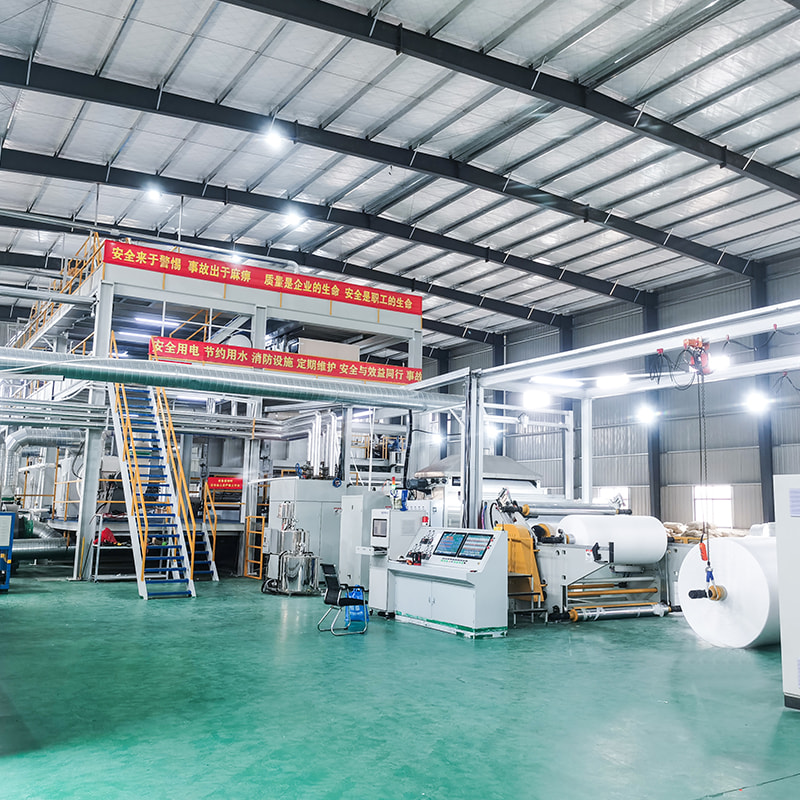
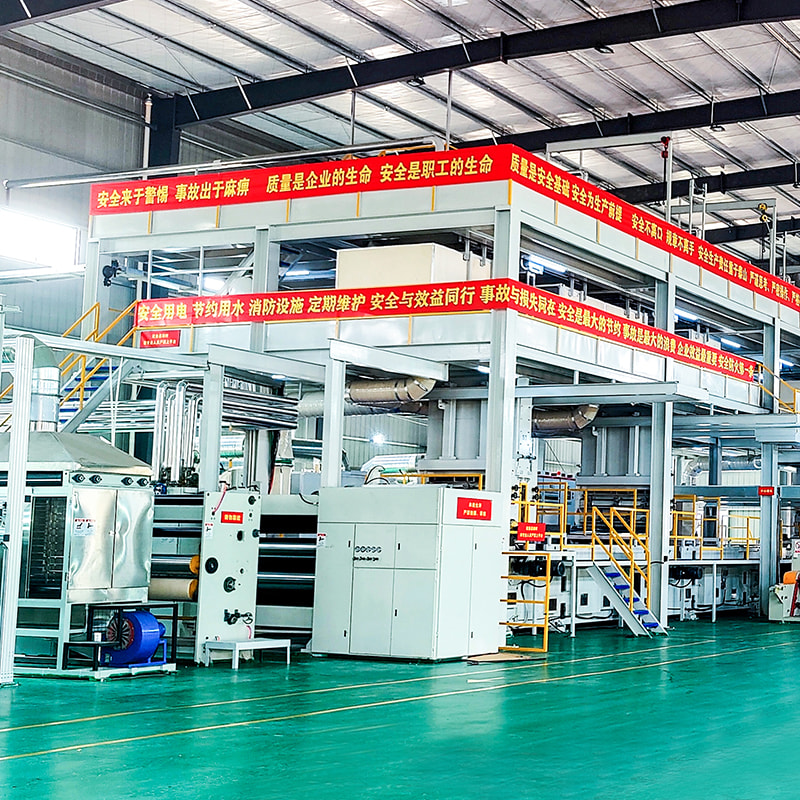
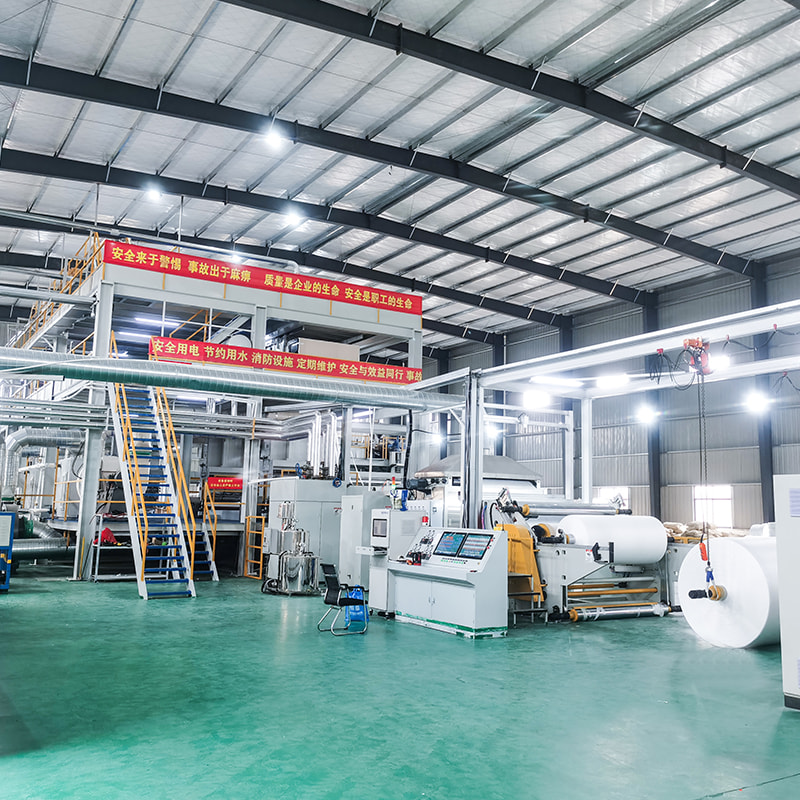
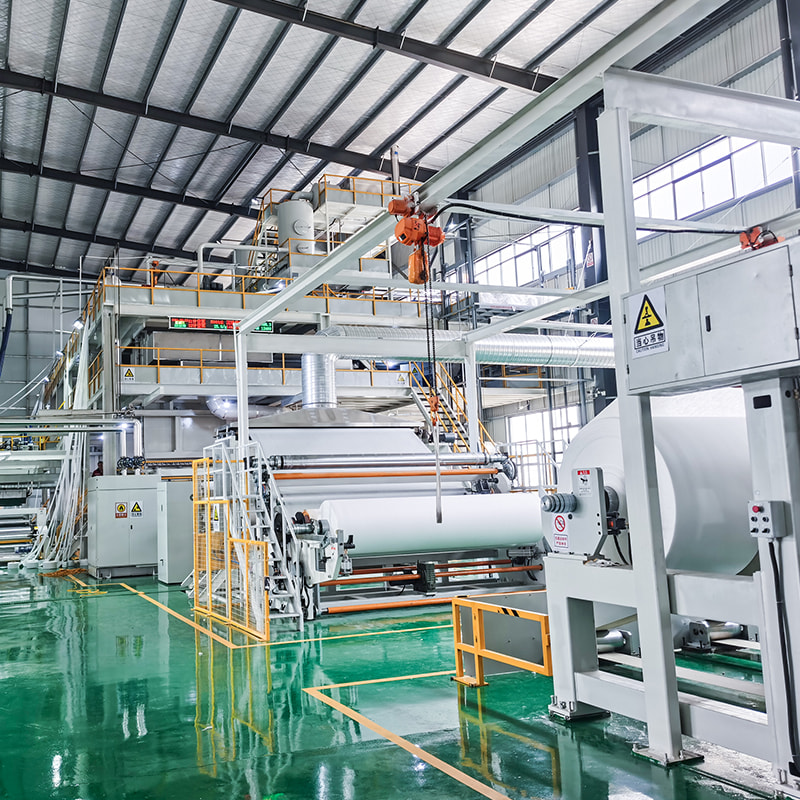
The footprint required depends on the machine configuration and working width you select. As a general reference, a three-beam SMS spunmelt line operating at a working width of 3,200 mm typically requires a workshop of approximately 35 m × 18 m × 12 m (length × width × height). Wider lines or multi-beam configurations such as SMMS and SMMSS will require proportionally more floor space and ceiling height to accommodate the additional beam assemblies and winding units.
Beyond the machine footprint itself, the layout must accommodate raw material storage (dry, climate-controlled), finished roll staging and packaging areas, an operator control station, and maintenance access corridors on all sides of the line. Cramped layouts are one of the most common reasons production efficiency underperforms relative to machine specifications. For a full overview of machine dimensions across the full range of spunbond production line configurations, reviewing the specifications for each beam count and width is a useful starting point during the facility planning stage.
Power Supply
PP nonwoven production lines are high-power systems. A 1,600 mm single-beam spunbond line typically draws between 200–350 kW under full operating conditions, while wider or multi-beam spunmelt machine configurations including SMS and SMMS can exceed 600–800 kW. Your factory's incoming power supply must provide stable three-phase power at the correct voltage (typically 380V/50Hz or as specified), with adequate capacity for both the main line and auxiliary systems such as air compressors, chillers, and dust extraction.
Power fluctuations are particularly damaging to metering pumps and PLC control systems. A voltage stabilizer or UPS backup for the control cabinet is worth considering, especially in regions where grid stability is inconsistent.
Environmental Conditions
The production area should maintain a controlled temperature range — typically 15°C to 35°C — and relative humidity below 70%. Higher humidity can cause static build-up in the fiber web and affect bonding uniformity. For production lines serving medical or hygiene applications, a cleanroom-grade environment or at minimum a dust-controlled enclosure is strongly recommended, as airborne particulates can contaminate the melt-blown layer and reduce filtration performance.
The air supply to melt-blown systems must be clean and dry. Air heaters used in meltblown processes require SUS304-grade internal components, and the input air source — whether from an air compressor or Roots blower — must pass through filtration before entering the heating circuit.
Certifications You Need — Matched to Your Target Market
Certifications serve two distinct purposes: they validate the quality of your production process, and they grant market access. The certifications you pursue should be determined by where you plan to sell, not by what sounds most impressive on a company profile.
| Target Market / Application | Key Certifications Required | Notes |
|---|---|---|
| European Union (general) | CE Mark, ISO 9001 | CE required for machine compliance; ISO 9001 for fabric quality management |
| North America | UL Certification, ISO 9001 | UL validates electrical and safety standards for the North American market |
| Medical / Surgical textiles (global) | ISO 13485, ISO 9001 | ISO 13485 is the medical device quality management standard; mandatory for surgical gowns, drapes, and masks |
| Environmentally positioned products | ISO 14001 | Demonstrates commitment to environmental management; increasingly required by large retail buyers |
| Export to global buyers (general) | ISO 9001, SGS testing reports | Third-party SGS test reports on grammage, tensile strength, and hydrostatic pressure are commonly requested by buyers |
ISO 9001 is the single most universally required certification across all markets. It signals that your quality management system is documented, auditable, and consistent — which is the baseline most international buyers expect before placing volume orders. If you are producing fabric for filtration, hygiene, or medical end-uses, pairing ISO 9001 with ISO 13485 is not optional in most regulated markets.
It is worth noting that the machine certifications (CE, UL, ISO 9001 on the equipment) and the fabric certifications (ISO 13485, SGS test reports on the output product) are separate requirements. Your machine supplier's certifications do not automatically transfer to your finished fabric. You will need to obtain product-level certifications through an accredited testing laboratory after your line is operational.
Machine configuration also affects which certifications are achievable. Pure spunbond lines (S, SS, SSS) are not capable of producing filtration-grade fabric, which means ISO 13485 for surgical applications would require a meltblown-capable line. For a detailed comparison of S, SS, SSS, SMMS, and SMMSS configurations and which applications each supports, reviewing the configuration guide before finalizing your machine selection will help align your equipment investment with your compliance roadmap.
Raw Materials: PP Grades, Additives, and Quality Checks
Polypropylene resin is the primary input for all PP nonwoven production, but not all PP is suitable for every process. Selecting the wrong grade is one of the most common and costly mistakes for new producers.
PP Grade and Melt Flow Index (MFI)
The single most important specification when sourcing PP resin is the Melt Flow Index (MFI), which measures how easily the melted polymer flows under heat and pressure. Different production processes require very different MFI ranges:
- Spunbond production typically requires PP with an MFI of 25–40 g/10 min, which produces continuous filaments with good tensile strength and uniformity.
- Meltblown production requires high-MFI PP, typically in the range of 1,200–1,800 g/10 min, to form the ultra-fine microfibers that give melt-blown production equipment its filtration capability.
Using spunbond-grade PP in a meltblown system will result in poor fiber attenuation, die clogging, and inconsistent web formation. Always confirm the MFI specification with your resin supplier and request a material data sheet with every batch.
PP resin is supplied in two physical forms: chips (pellets) and powder. Chips are more common and easier to handle in automated feeding systems. Powder can be used to reduce raw material costs but requires a dry, sealed storage environment and additional handling precautions to avoid inhalation and dust explosion risks.
Additives and Their Functions
Base PP resin alone rarely meets the performance requirements of finished fabric. The following additives are routinely incorporated at the raw material mixing stage:
- Color masterbatch — used to produce fabric in specific colors for product differentiation or end-use coding (e.g., blue surgical drapes, green agricultural covers).
- UV stabilizer masterbatch — extends the service life of fabric used outdoors, such as in agricultural covers, geotextiles, and construction underlays.
- Antistatic masterbatch — reduces static build-up during production and in the finished product, important for electronics packaging and certain hygiene applications.
- Electrostatic auxiliary masterbatch — used specifically in meltblown lines to enhance electret charging, which significantly improves filtration efficiency in face masks and air filters without increasing fabric weight.
- Flame retardant masterbatch — required for fabric used in automotive interiors, construction, and certain industrial applications where fire resistance standards apply.
Incoming Quality Control
Before committing to a resin supplier, request batch samples and have them tested by your equipment manufacturer or an independent laboratory. Key checks include MFI consistency across batches, ash content, moisture level (excessive moisture causes foaming in the extruder), and the presence of recycled content — which can introduce contamination and MFI variability. Establishing a supplier approval process before production begins will prevent costly downtime later.
Storage conditions also matter. PP resin must be stored in a dry, sealed environment away from heat sources and direct sunlight. Moisture absorbed during improper storage will degrade fiber quality even if the resin specification is correct.
Pre-Launch Checklist Before Production Starts
Use the following checklist to confirm readiness across all three preparation areas before machine commissioning begins:
Factory
- Workshop footprint confirmed against machine dimensions (length, width, ceiling height)
- Three-phase power supply installed with sufficient capacity for full-load operation
- Voltage stabilizer or UPS in place for the control cabinet
- Air compressor or Roots blower with filtration installed and tested (for meltblown lines)
- Temperature and humidity controls confirmed (15°C–35°C, RH below 70%)
- Raw material storage area designated (dry, climate-controlled, sealed)
- Finished roll staging and packaging area allocated
- Dust extraction and ventilation systems operational
Certifications
- ISO 9001 audit initiated or certification already in place
- CE or UL documentation obtained from machine supplier (depending on target market)
- ISO 13485 process initiated if medical or hygiene fabric is the target output
- ISO 14001 scope assessment completed if environmental claims will be used in marketing
- Third-party testing laboratory identified for post-production fabric certification (SGS or equivalent)
- Local environmental and operational permits secured for the production facility
Raw Materials
- PP resin grade confirmed against machine process (MFI 25–40 for spunbond; MFI 1,200–1,800 for meltblown)
- Resin supplier approved based on MFI consistency testing across at least two batches
- Required additive masterbatches sourced (color, UV, antistatic, electret, flame retardant as applicable)
- Incoming QC procedure documented for each raw material type
- Initial inventory sufficient for commissioning runs (typically 5–10 tons of base resin)
Completing this checklist before machine delivery will allow commissioning to proceed without interruption and reduce the time between installation and first commercial production. The investment in upfront preparation consistently produces a shorter ramp-up period and better fabric quality from the first production run.


 +8613621544385
 No.29 Xinhua Road, Jiashan Village,Jiaxing City Zhejiang P.R., China