




 English
 中文简体
 русский
 عربى
Adult Diaper Market Growth: Nonwoven Fabric Choices and Machine Planning for Producers
Content
- 1 Where Nonwovens Fit in an Adult Diaper
- 2 Matching Fabric Structure to Diaper Components
- 3 Why SMS and SMMS Lines Matter in the Adult Diaper Market
- 4 Line Configuration: More Beams, More Than Output
- 5 Quality Control Starts Before the First Roll
- 6 Practical Questions to Ask Before You Order
- 7 A Market That Rewards Fit, Not Guesswork
The adult diaper market has moved well beyond a niche category. Longer life expectancy, more active older adults, and broader retail acceptance have turned adult incontinence products into a steady, specification-driven segment of the hygiene industry. For nonwoven producers, that shift is not only about volume. It is about understanding which fabric layers go into an adult diaper, how those layers behave on a high-speed line, and what that means for machine configuration.
We build nonwoven production equipment for a living, and we have watched this category become more demanding. Adult diaper converters want softness at the skin side, reliable barrier performance at the backsheet, and consistent lot-to-lot quality. Those requirements travel upstream to the spunbond and spunmelt line. The decisions made at the machine specification stage often determine whether a producer can serve this market profitably, or spend years adjusting.
Where Nonwovens Fit in an Adult Diaper
An adult diaper is a layered product. The topsheet sits against the skin and needs to feel soft while letting liquid pass quickly. The acquisition and distribution layer has to move fluid away and hold it briefly. The backsheet and containment cuffs provide barrier performance. The frontal tape and landing zone need mechanical strength and a stable surface. Each layer has its own nonwoven specification, and each specification puts different demands on the line.
The absorbent core itself is not a nonwoven in the usual sense, but it works together with the nonwoven layers. SAP and fluff pulp handle absorption, while the nonwovens control fluid movement, comfort, and leakage protection. If you want a practical look at how those materials interact, our team has a useful explainer on absorbent core materials in diapers.
For softness-critical layers such as the topsheet and ADL, a three-beam SSS spunbond line gives producers more freedom to balance fine denier, coverage, and throughput. That flexibility matters because adult diaper designs vary widely between markets, retail brands, and private-label programs.
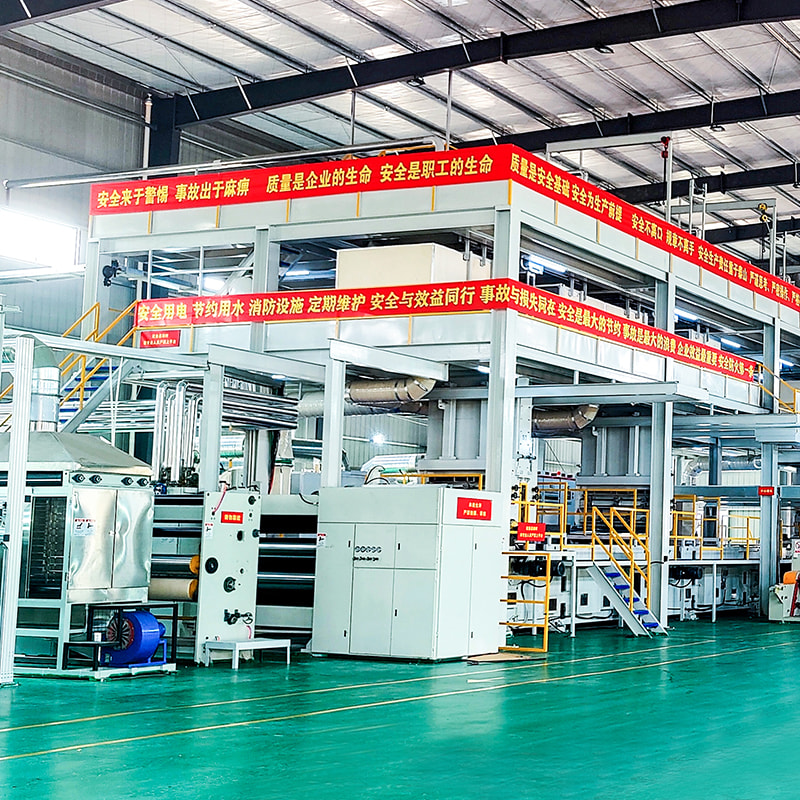
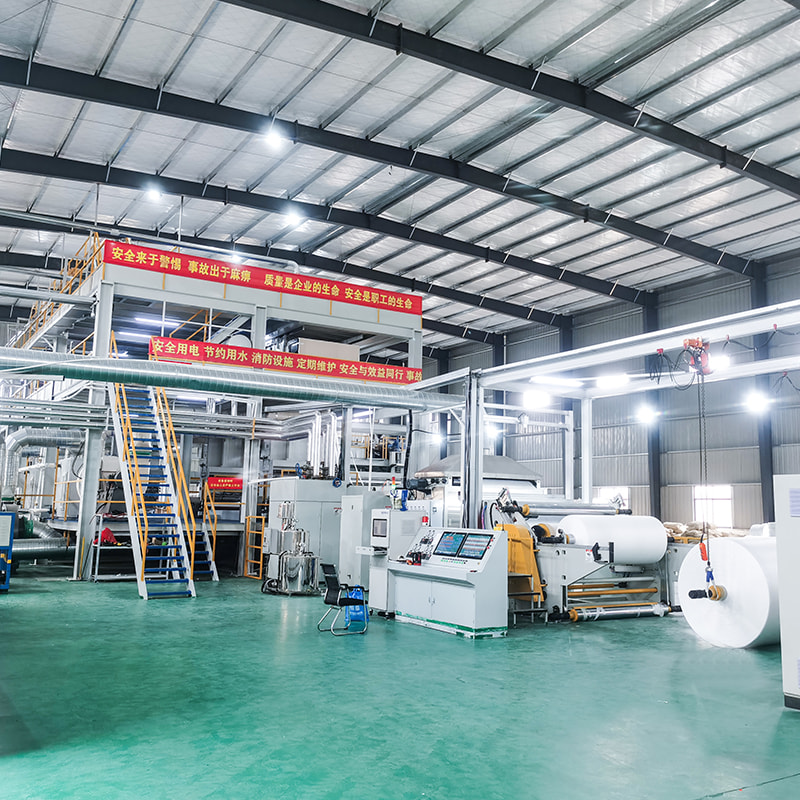
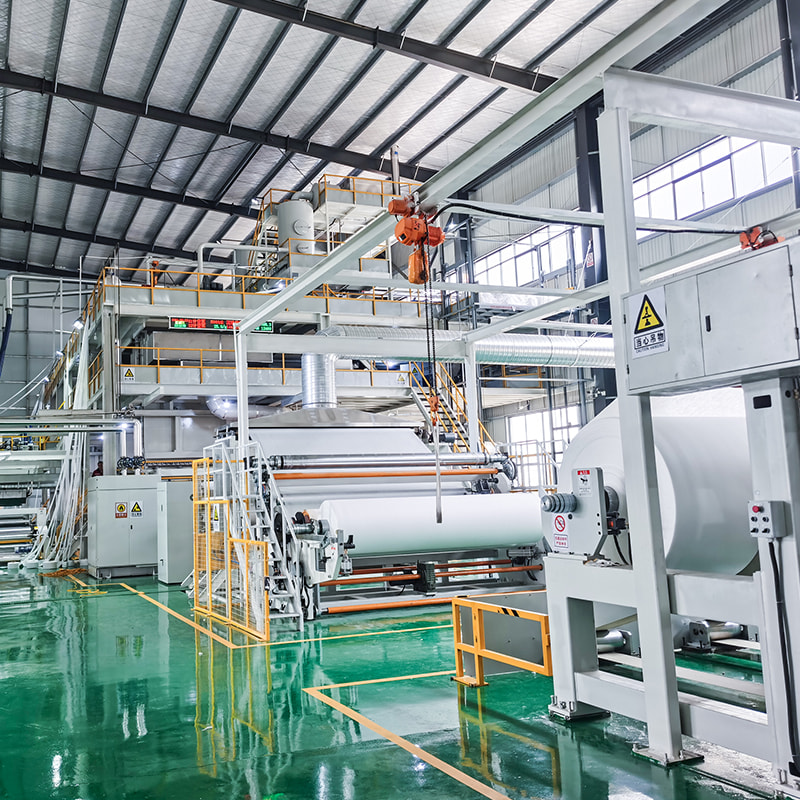
 Triple Beam SSS Spunbond Nonwoven MachineFor softness-critical topsheet and ADL layers, this three-beam SSS line offers fine-denier flexibility, coverage, and throughput balance for varied adult diaper designs.View Product →
Matching Fabric Structure to Diaper Components
There is no single nonwoven recipe for adult diapers. A line that makes a good topsheet may not be the best choice for a barrier backsheet. The table below is a practical starting point for conversations between product development and production teams.
| Diaper component | Typical nonwoven approach | Performance focus | Line consideration |
|---|---|---|---|
| Topsheet | SSS or SS spunbond, often fine denier | Softness, fast strike-through, low rewet | Uniform web, calender control, fine fiber capability |
| Acquisition and distribution layer | SSS or SS with loft | Fast fluid transfer and temporary storage | Denier balance, bonding pattern, basis weight range |
| Backsheet or barrier layer | SMS or SMMS | Hydrostatic resistance and controlled breathability | Meltblown uniformity, temperature and air control |
| Containment cuffs | SMS or elastic nonwoven | Soft stretch, leakage control, strength | Tension control, elastic attachment, width stability |
| Frontal tape or landing zone | Spunbond or spunmelt | Peel strength, printability, surface stability | Bonding consistency and surface uniformity |
The table is deliberately simple. In practice, basis weight, fiber denier, bonding pattern, and calender temperature all shift the balance between softness, strength, and barrier. A trial run with your own fiber grade and finish is still the most reliable way to lock a specification.
Why SMS and SMMS Lines Matter in the Adult Diaper Market
Barrier performance is where the adult diaper market becomes technical. A backsheet or containment cuff cannot fail under pressure, and it also has to feel acceptable against the body. SMS structures combine spunbond strength with one meltblown barrier layer. SMMS structures add a second meltblown layer for higher barrier demands and more room to tune breathability.
On the line, the meltblown section is sensitive to temperature, air flow, die-to-collector distance, and web uniformity. Small drifts can change hydrostatic head or air permeability. That is why adult diaper programs often ask for tighter process control, not just a faster line.
For producers entering barrier-heavy adult diaper applications, a three-beam SMS spunmelt line is a practical starting point. It gives a clear route to a spunbond-meltblown-spunbond structure without overbuilding the first investment.
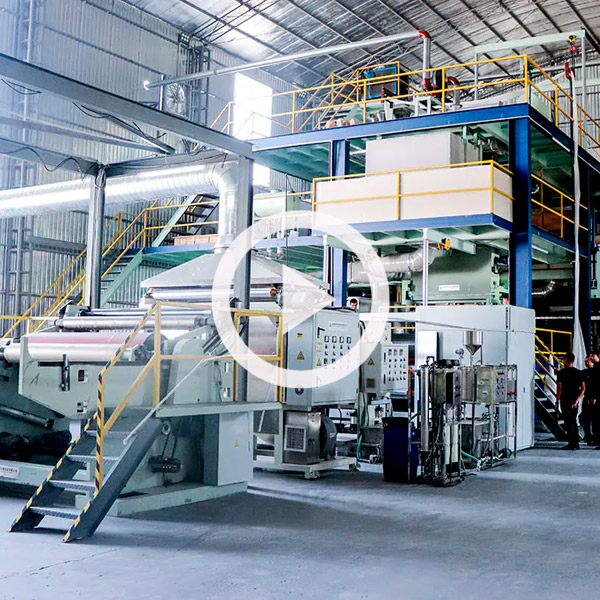 Three Beam SMS Spun-Melt Nonwoven MachineFor barrier-heavy adult diaper applications, this three-beam SMS line provides a practical route to spunbond-meltblown-spunbond fabric without overbuilding the first investment.View Product →
When the product plan includes premium backsheet or higher barrier requirements, a four-beam SMMS line adds another meltblown layer and more flexibility in layer balance. The right choice depends on the target fabric range, not on the number of beams alone.
 Four Beam SMMS Spun-Melt Nonwoven MachineWhen premium backsheet or higher barrier requirements arise, this four-beam SMMS line adds a meltblown layer and more flexibility in layer balance.View Product →
Line Configuration: More Beams, More Than Output
It is easy to read a machine brochure as a ladder: S, SS, SSS, SMS, SMMS, SMMSS, with each step assumed to be better. In reality, the beam configuration should follow the fabric structure you intend to sell. A single-beam S line can be a sensible choice for basic spunbond layers where softness and cost are the main drivers. A double-beam SS line adds coverage and strength. A three-beam SSS line gives more scope for fine-denier softness and layer balance. SMS and SMMS lines add meltblown barrier capability.
Width and speed also deserve careful thought. Our lines commonly cover working widths from 1600 mm to 4200 mm, and the right width is a function of your target output, roll size, and downstream converting equipment. A wide line with the wrong product mix can be just as expensive as a narrow line that cannot meet demand. Adult diaper programs often grow in stages, so it is worth asking whether the line can be configured for a realistic first product range and then expanded or rebalanced later.
Quality Control Starts Before the First Roll
Adult diaper producers rarely buy fabric on appearance alone. They test basis weight, tensile strength, elongation, strike-through time, rewet, air permeability, and hydrostatic head. Some also check softness, linting, and dimensional stability after converting. The nonwoven line has to deliver a window that is wide enough for normal operation but tight enough to protect the final product.
That is why we pay attention to PLC control, tension stability, calender temperature uniformity, and web formation quality. These are not marketing details; they are the variables that determine whether a fabric specification can be held shift after shift. If you are building a capacity plan for hygiene products, it is worth framing the demand side before you compare machine configurations.
Practical Questions to Ask Before You Order
Before a quotation becomes a project plan, it helps to answer a few practical questions. These are the same questions we normally walk through with customers during the early technical discussion.
- Which adult diaper components will you produce in-house, and which will you buy from converters or traders?
- What basis weight range and fiber denier do you expect for each layer?
- Do you need a single-layer spunbond line, an SSS line for softness, or an SMS/SMMS line for barrier performance?
- What working width fits your target output and downstream converting equipment?
- Which product changes will be routine, and how quickly must the line change over?
- What local service, spare parts, and operator training will you need after installation?
Answering these questions early keeps the machine specification grounded in the product, not in a generic capacity target. It also makes the trial plan more focused, which usually shortens the path from first roll to saleable fabric.
A Market That Rewards Fit, Not Guesswork
The adult diaper market is growing, but growth alone does not guarantee a good return on a new nonwoven line. The producers who do well tend to be clear about their fabric strategy. They know which layers they want to make, which performance targets matter, and how the line will be run day to day. That clarity makes the equipment decision much easier.
We have supplied nonwoven machinery to customers in China and overseas markets including India, Pakistan, Turkey, Russia, and Australia. That experience has taught us that no two adult diaper projects are identical. If you are planning a line for this market, we are glad to review your product plan and help you compare realistic configurations. Our contact page is a good place to start that conversation.




 +8613621544385
 No.29 Xinhua Road, Jiashan Village,Jiaxing City Zhejiang P.R., China
