



 English
 中文简体
 русский
 عربى
Air Permeable Textile Bonding: How Bonding Methods Shape Breathability in Nonwovens
Content
- 1 What Air Permeable Textile Bonding Actually Means
- 2 Bonding Routes Compared: Strength Versus Airflow
- 3 Why Spunbond and Spunmelt Lines Live or Die by Bonding
- 4 Settings That Move the Airflow Number
- 5 Matching Bonding to the End Use
- 6 Problems We See on the Line
- 7 Questions Worth Asking Before You Choose a Configuration
Ask anyone who has spent a shift at the end of a spunbond line what they are really chasing, and the answer is rarely just strength. It is a fabric that holds together through converting, feels right in the hand, and still lets air move through it. That balance is what air permeable textile bonding is about: joining fibers or layers firmly enough to survive real use, while deliberately leaving the structure open enough to breathe.
What Air Permeable Textile Bonding Actually Means
In a woven fabric, yarns interlace and the structure holds itself together. In nonwovens and most technical textiles there is no such architecture — the web is just a pile of fibers or filaments, and cohesion has to be created. That creation step is bonding, and it can be thermal, chemical or mechanical.
Here is the part worth internalizing: every bonding action adds contact points between fibers, and every contact point is a small obstruction to airflow. A fabric that is bonded 8% at the calendar can move three times the air of the same web bonded at 25%, even though both are made from identical polypropylene at identical weight. Air permeability is measured as the volume of air passing through a defined area in a set time at a given pressure differential — ISO 9237 and ASTM D737 are the standards most buyers reference. Because the number is so sensitive to bonding, it is one of the fastest ways to tell whether a line is running inside its process window or drifting outside it.
In practice we describe this as a bonding window. Below the window, the fabric dusts, delaminates or loses tensile strength. Above it, the fabric becomes papery, stiff and effectively closed. The whole craft sits in the middle band, and it moves whenever fiber denier, web weight or line speed changes.
Bonding Routes Compared: Strength Versus Airflow
There is no universally best bonding method — only the one that matches the fabric's job. The comparison below is the one we walk customers through when they are choosing a configuration for a new line or retrofitting an existing one.
| Bonding route | How it works | Effect on airflow | Typical use |
|---|---|---|---|
| Thermal calender (point) bonding | Heated embossed rolls fuse filaments at discrete points | Controllable; bonded area percentage is the main lever | Spunbond hygiene topsheets, medical gowns, bags |
| Through-air bonding | Hot air fuses bicomponent fibers throughout the web | Preserves loft and openness better than flat calendering | Lofted hygiene layers, filtration media, insulation |
| Ultrasonic bonding | High-frequency vibration generates local heat at the anvil | Very localized, so bulk permeability is largely untouched | Converting, laminating, masks, edge sealing |
| Adhesive lamination | Glue dots or spray join two substrates | Depends almost entirely on add-on weight and dot pattern | Breathable film laminates, medical drapes |
| Hydroentanglement | Fine water jets entangle fibers mechanically | Keeps high openness and softness without melting | Wipes, gauze, spunlace hygiene |
| Needle punching | Barbed needles physically interlock fibers | Open structure with high thickness | Geotextiles, carpets, agricultural fabrics |
The lesson from the table is simple: if airflow is the priority, you either bond at fewer points, bond locally, or bond mechanically rather than by melting. If strength and barrier are the priority, you accept the airflow cost and control it precisely.
Why Spunbond and Spunmelt Lines Live or Die by Bonding
In a spunbond process the filaments are continuous and drawn, laid into a web, and then consolidated. Because the filaments are long, a light point bond is often enough to give the fabric real tensile strength — which is exactly why spunbond is such a good candidate for air permeable bonding. A single-beam line produces a straightforward, uniform web where the calendar settings can be kept simple and stable shift after shift.
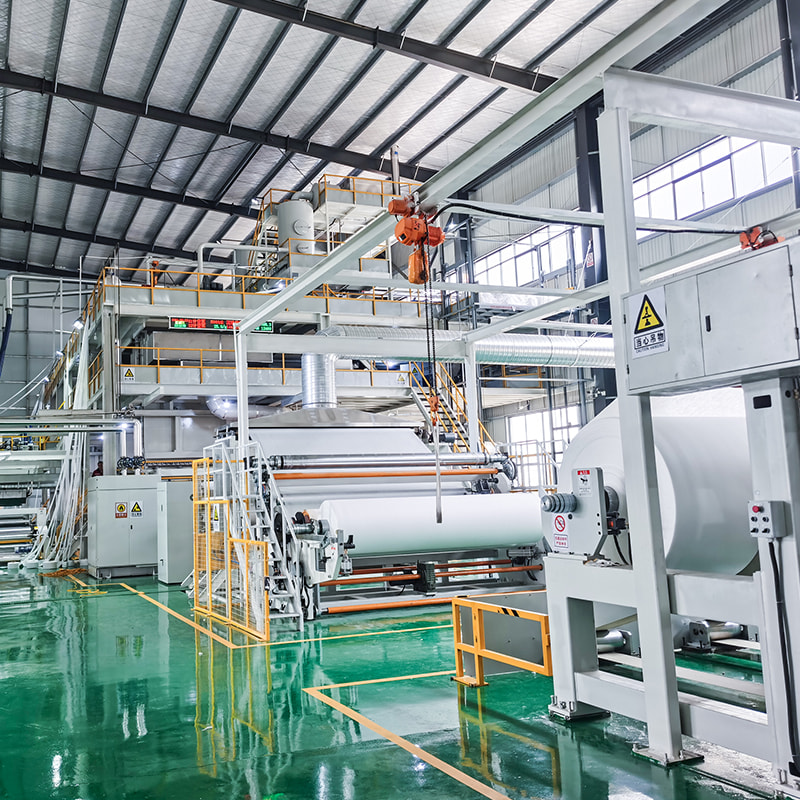
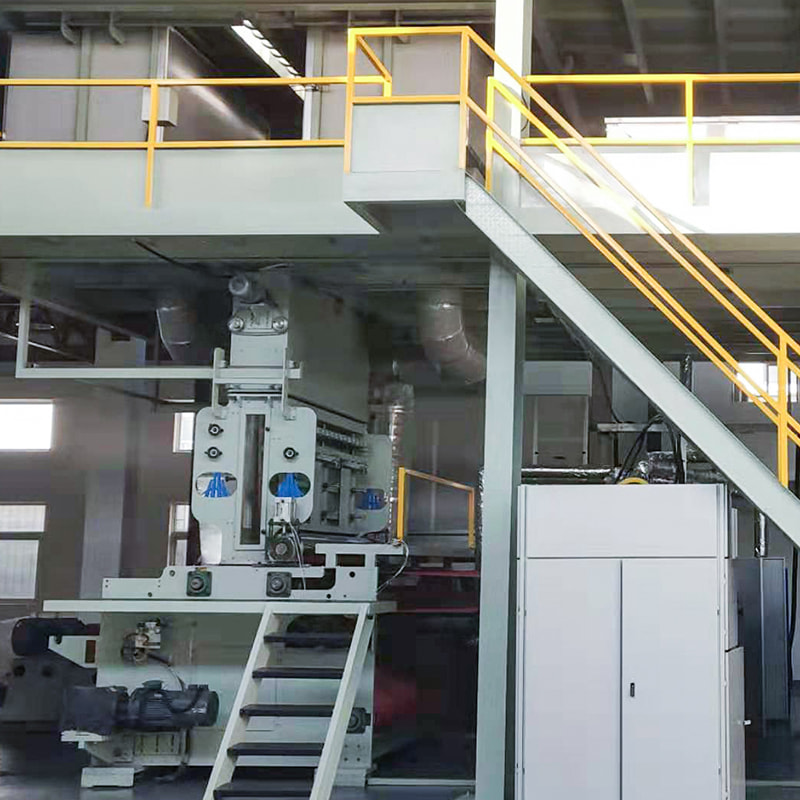 S Single Beam Spunbond Nonwoven Production LineThe S line produces polypropylene spunbond at 10–200 GSM with PLC control, suited to straightforward, stable single-beam production for bags, packaging and agricultural covers.View Product →
Double-beam SS configurations add a second filament layer, which gives more weight and coverage without needing heavier bonding. That matters when a customer wants a soft, high-airflow fabric at a heavier grammage: on an SS line you can add material rather than add heat, and the permeability stays where it should.
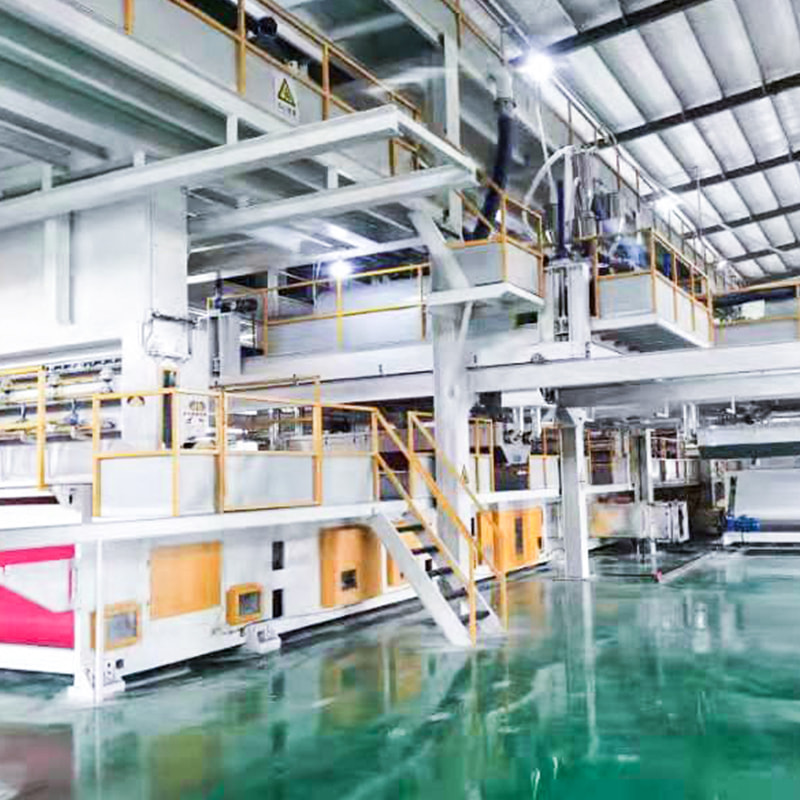
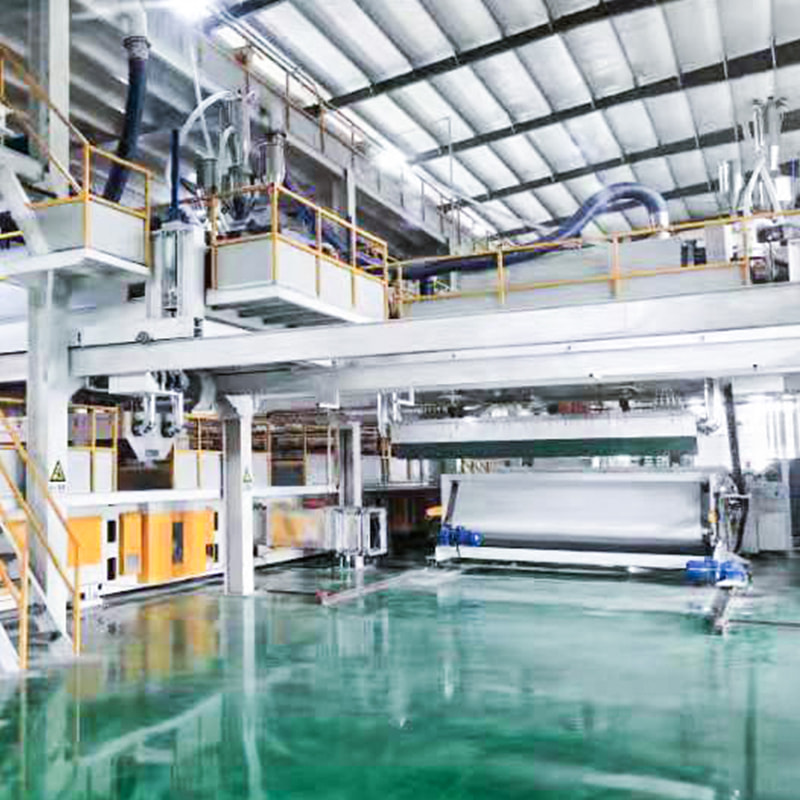
 SS Double Beam Spun-Melt Nonwoven Production LineAdds a second filament layer for heavier coverage without heavier bonding; produces 9–100 GSM polypropylene fabric for hygiene, medical and packaging uses.View Product →
Composite structures complicate things in a good way. When a meltblown layer sits between spunbond layers, that middle layer is made of sub-micron fibers and has naturally low permeability — it is the barrier. Bonding the whole composite too aggressively collapses the fine pore structure and destroys both filtration efficiency and breathability at once. This is why SMS and SMMS lines are usually run with carefully profiled calendar pressure and temperature, and why the bonding decision deserves as much attention as the beam configuration itself.
Settings That Move the Airflow Number
When a customer tells us their fabric is not breathing the way the sample did, we work through the same short list every time:
- Bonded area percentage — the emboss pattern's land area sets the ceiling on achievable airflow. Typical point-bond patterns sit in the low-to-mid teens.
- Calendar temperature — a few degrees can shift the fabric from under-bonded to over-bonded, especially with low-denier fibers.
- Nip pressure — higher pressure flattens the web and closes pores even when temperature is unchanged.
- Dwell time and line speed — faster lines reduce the heat each point receives, so speed changes and temperature changes must be made together.
- Filament denier — finer filaments pack more densely and reduce permeability for the same bonded area.
- Web weight and layer structure — heavier webs and added meltblown layers lower airflow predictably.
Recording these values alongside the measured permeability of each roll is the single most useful habit a production team can build. It turns bonding from a feeling into a recipe.
Matching Bonding to the End Use
Different markets want opposite things from the same machine, and it helps to be honest about that early.
- Hygiene topsheets need high airflow, softness and low bonded area — under-bonding is a bigger risk than over-bonding.
- Medical gowns and drapes need barrier performance plus measurable breathability, which is where SMS and SMMS earn their place.
- Filtration media treat permeability as pressure drop, so pore structure stability matters more than the raw number.
- Bags, agricultural fabrics and geotextiles prioritize strength, abrasion resistance and UV performance; airflow is secondary.
- Wipes and spunlace products rely on mechanical entanglement, so bonding and airflow barely interact.
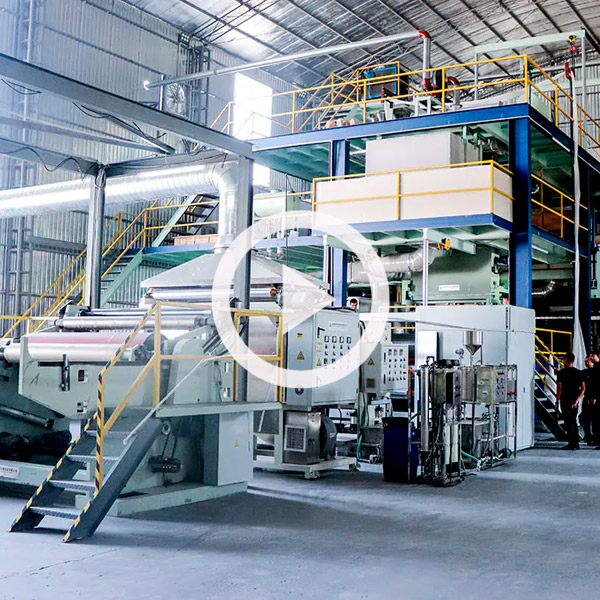 Three Beam SMS Spun-Melt Nonwoven MachineCombines spunbond and meltblown beams to make SMS fabric at 9–70 GSM, supporting face masks, medical products and hygiene applications across varied market needs.View Product →
If you are still mapping your product against these categories, our application overview shows how the different line configurations line up with real end uses.
Problems We See on the Line
Over-bonding is the most common fault, and it rarely announces itself. The fabric looks fine on the roll; it only fails when a converter reports stiffness, poor drape or a permeability reading below specification. Patchy airflow across the width is the second most common — usually a roller crown, a temperature profile issue or uneven nip loading rather than a formula problem.
Delamination in laminated structures is a different animal: the bond is strong where it exists but too sparse, so the layers separate under tension. And occasionally a roll measures perfectly on day one and low a month later, which usually points to residual stress relaxing in the web or to additives migrating. Reading up on air permeability testing standards and control is worthwhile before you write a specification, because the test conditions themselves explain a lot of the variation.
Questions Worth Asking Before You Choose a Configuration
- What permeability range must the finished fabric hit, and at what grammage?
- Is airflow or barrier the primary performance requirement?
- Which bonding method does the product family already use, and can the line be configured for it?
- How much flexibility do you need between product grades — one stable recipe or frequent changeovers?
- What width and output must the line sustain, and does the calendar handle that width uniformly?
Air permeable textile bonding rewards patience. The machines are capable of remarkable precision — PLC control, touchscreen operation, precisely profiled calendars — but precision only pays off when the team behind it knows which parameter to move and which to leave alone. That knowledge comes from running the line, watching the numbers, and adjusting one variable at a time.
If you are planning a new spunbond or spunmelt line and want to talk through how the bonding section should be set up for your target fabric, we are always glad to compare notes. Send us your fabric specification and we will tell you honestly what the line needs to look like.


 +8613621544385
 No.29 Xinhua Road, Jiashan Village,Jiaxing City Zhejiang P.R., China
